
Vouliagmeni Lake: the complete guide to Athens' thermal lake
What is it like to swim in Lake Vouliagmeni?
Lake Vouliagmeni is a brackish thermal lake inside a dramatic limestone gorge 25 kilometres south of Athens. The water sits at 22–29°C year-round, fed by underground thermal springs. Entry costs €15 in peak season. The experience — warm turquoise water enclosed by sculpted rock — is unlike anything else near the city.
What makes Lake Vouliagmeni unusual
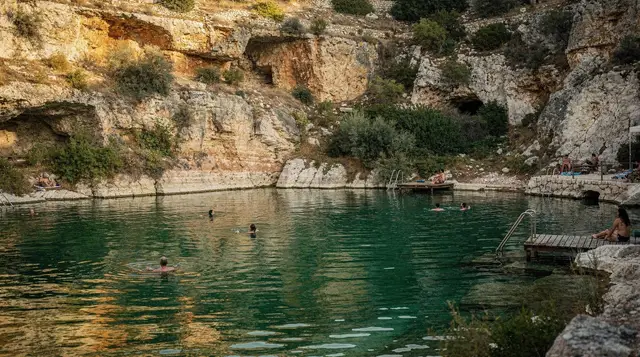
Twenty-five kilometres south of Athens, inside a collapsed limestone gorge beside the sea, is a lake that does not quite behave like a lake. The water is brackish — part seawater, part mineral spring — and warm throughout the year. The temperature never drops below 22°C, reaching 29°C in late summer. The colour shifts from pale jade near the surface to a deep aquamarine where the limestone walls plunge below the water line.
Lake Vouliagmeni has been used since antiquity. The Romans favoured it as a therapeutic bath. Today it operates as a private resort, carefully maintained, with a reputation for mineral-rich water that local doctors still recommend for skin conditions, arthritis, and post-injury rehabilitation. None of that means you need a medical referral to visit — most people come simply to swim in warm, translucent water in a strikingly beautiful setting.
The combination of natural gorge, overhanging rock, and that distinctive blue-green water makes this one of the most photographed spots on the Athens Riviera. In a region where the coast is largely open beach, the lake’s enclosed drama is genuinely different.
| Where | Leoforos Poseidonos, Vouliagmeni, Athens Riviera |
| Cost | €10–15 adult depending on season, €6 child |
| Time needed | 2–3 hours for swimming and a coffee break |
| Getting there | Bus A2 or tram + bus 122 from Athens ( |
| Best time | May, June, September mornings; open year-round |
Practical information for 2026
Address: Leoforos Poseidonos, Vouliagmeni. The lake is clearly signposted from the main Riviera coast road.
Opening hours: Open daily, 07:30–19:30 in summer (April–October), 08:00–17:00 in winter (November–March). The lake is open year-round, which makes it unusual among outdoor swimming spots near Athens.
Entry fees in 2026:
- Adults (peak season, June–August): €15
- Adults (shoulder season, April–May, September–October): €12
- Adults (winter, November–March): €10
- Children under 12: €6 year-round
- Infants under 5: free
What is included: Entry to the lake, use of sunloungers (limited — first-come), showers, changing rooms, and locker facilities (small deposit). The café/restaurant on site serves breakfast and light lunches.
What to bring: Swimwear, towel, and sandals or flip-flops for the changing area. The lake floor has some areas of loose sediment — water shoes are not necessary but are comfortable. Snorkelling masks are allowed and the visibility makes the underwater rock formations worth exploring.
Getting there from Athens
By bus: Bus A2 from Akadimias street in central Athens runs to Vouliagmeni. Journey time approximately 50 minutes. From the Vouliagmeni terminus, the lake entrance is a 10-minute walk along the coast road heading south (follow signs). Bus 122 from Glyfada tram stop also passes Vouliagmeni (20 minutes from Glyfada).
By tram then bus: Tram T4/T3 to Voula terminus (40 minutes from Syntagma), then bus 122 to Vouliagmeni (10 minutes). Total journey approximately 50–55 minutes.
By taxi or ride-share: Around €20–25 from central Athens. Bolt and FreeNow operate in the area.
By car: Parking is available along Leoforos Poseidonos and in a small lot near the entrance. In July and August, spaces fill by 10:00. Arrive early or take public transport.
Book a guided Athens Riviera and Vouliagmeni swimming excursionThe water: what the science says
The lake connects to the sea through a subterranean passage — exactly where is still not fully mapped by geologists. This explains the brackish salinity: slightly less salty than the open sea, but enough to make the water more buoyant than a freshwater lake. The thermal element comes from geothermal heating as the water passes through deep limestone formations.
The mineral content is measurably high in sulphur, calcium, and magnesium. The official depth is 22 metres in the deepest channel beneath the gorge walls. Visibility on a calm morning is typically 4–6 metres — remarkable for a standing body of water.
A small population of doctor fish (Garra rufa) lives in the lake. These tiny carp nibble at dead skin cells on legs and feet — the same species used in fish pedicure treatments. They are harmless, slightly ticklish, and generally a delight for children. They concentrate in the shallower zones near the shoreline.
What to do at the lake
Swimming: The main activity. The lake is long and narrow — roughly 300 metres from end to end — and you can swim its full length easily. The enclosed gorge walls create natural shade on the western side in the morning. The eastern shore is sunlit from early morning until afternoon.
Floating and relaxing: The slightly higher salinity makes floating effortless. Many visitors simply drift in the warm water for extended periods. The thermal temperature combined with mineral content produces a drowsiness that is difficult to explain — bring a towel for lounging afterwards.
Photography: The lake is extremely photogenic. Morning light (07:30–09:00) hits the rock walls at a low angle and creates reflections in the still water. The contrast of pale limestone with the aquamarine lake is at its most striking in the first hour after opening.
Fish pedicure: The doctor fish zone is in the shallower water near the café end of the lake. Simply stand still in knee-deep water and they will come to you within seconds.
Combining the lake with Vouliagmeni beach
The standard local approach is to spend the morning at the lake (it is best before midday when the surface warms and crowds arrive) and the afternoon at Vouliagmeni beach, which is a seven-minute walk away. The organised beach concession (Asteras) charges €8–10 for a sunbed. The bay has a good fish restaurant at its far end.
Alternatively, the small thermal beach called Heraion is located a few minutes south of the lake along the coast road. This is a rocky shore with very clear seawater warmed slightly by nearby thermal springs, less organised than the main Vouliagmeni beach but free to use.
Book a sunset swim at Heraion thermal beach near VouliagmeniWhen is the best time to visit?
Best months: May, June, and September. Water temperature is already 24–26°C, crowds are manageable, and the morning light in the gorge is exceptional.
Avoid: Summer Saturday and Sunday mornings in July–August. The lake becomes genuinely crowded by 10:00 and sunloungers are all taken. Arrive at opening (07:30) or visit on a weekday.
Winter: The lake is open year-round, and a winter visit is surprisingly rewarding. The water at 22°C feels warm against cool air. You may have the gorge largely to yourself between November and March. It is also cheaper.
Book a combined Vouliagmeni lake and beach swimming day tourThe lake versus the sea
A common question from first-timers: is the lake better than the sea beach next door? The honest answer is that they offer completely different experiences. The sea at Vouliagmeni bay is beautiful, with clear open water and a proper beach. The lake is enclosed, warmer, more mineral-rich, and unlike any other experience on the coast.
Most visitors find the lake more memorable. The combination of thermal warmth, the sculpted rock walls, and the unusual colour makes it the kind of place you tell people about when you return home. For a single morning in Vouliagmeni, the lake is the better choice.
| Factor | Lake Vouliagmeni | Vouliagmeni sea beach |
|---|---|---|
| Water temperature | 22–29°C year-round | Seasonal, cooler outside summer |
| Setting | Enclosed limestone gorge | Open bay, classic beach |
| Entry fee | €10–15 | €8–40 depending on beach club |
| Best for | Winter swims, unusual scenery, photography | Sunbathing, longer beach days, sea swimming |
| Crowds | Fills by mid-morning in peak season | Spreads across a longer shoreline |
A brief history: from Roman baths to modern resort
The lake’s therapeutic reputation is not a modern marketing invention. Ancient and Roman-era visitors to Attica already recognised the value of its mineral-rich, constantly warm water, and it has been used informally as a bathing spot for centuries before its 20th-century development into a managed facility. The transformation into today’s ticketed resort — changing rooms, cafés, sunbeds — happened gradually through the postwar decades as the Athens Riviera grew into a leisure destination for the city. Some of that same geothermal system feeds the Heraion thermal beach a short walk south, part of the same underground network rather than a separate phenomenon.
Further exploration
After the lake and beach, the area around Vouliagmeni has a handful of worthwhile tavernas along the seafront. Ithaki restaurant (on the main coast road, open from noon) serves consistently good fish at prices reflecting its location — expect €40–55 per person for a full fish meal with wine. Less expensive options exist along the side streets behind the beach.
For a broader day on the coast combining Vouliagmeni with other Riviera stops, see Athens Riviera beaches and the best beaches near Athens guide. The Cape Sounion bus passes through Vouliagmeni if you want to extend south to the temple.
Frequently asked questions about visiting thermal Lake Vouliagmeni
Is the lake suitable for non-swimmers?
Yes. There are shallow wading areas near the café end, and life rings are placed around the perimeter. The lake staff are attentive. Non-swimmers enjoy the doctor fish experience and the thermal wading without going into deep water.
Can I bring food and drink into the lake area?
Outside food and drink are technically not permitted inside the paid lake enclosure. The on-site café is well priced by Greek resort standards (coffee €3–4, salads €10–14). In practice, small snacks and water are tolerated.
Is there anything medically specific about the water?
The management recommends against visiting with open wounds or active skin infections, as the mineral water can irritate broken skin. There are no other medical restrictions for healthy adults and children. The doctor fish are harmless.
How long should I plan to spend at the lake?
Two to three hours is ideal: time for a proper swim, some floating, and a coffee or light lunch at the café. If you are combining with Vouliagmeni beach, plan for four to five hours in total.
Is the lake accessible for those with limited mobility?
The main swimming area is accessible via a sloped path from the entrance, and the lakeside terraces are flat. The changing facilities are on one level. There is no accessible hoist into the water, but the shallow entry area is gradual enough for most people.
Does the lake smell of sulphur?
Faintly, in the enclosed zones near the thermal outlets. It is not unpleasant and not as strong as the geothermal pools in Iceland or Italy. Most visitors barely notice it.
Is Lake Vouliagmeni better in the morning or afternoon?
Morning, for both practical and aesthetic reasons: crowds are lighter before 10:00, the water is calmer, and the low-angle light on the limestone walls is more dramatic than the flatter light of midday. Afternoon visits are fine but expect a busier lake in peak season.
Can I combine Lake Vouliagmeni with a Cape Sounion sunset trip?
Yes, and it’s one of the better half-day-to-full-day combinations on the Athens Riviera: swim at the lake in the late morning or early afternoon, then continue south along the coast road to Cape Sounion for sunset at the Temple of Poseidon, about an hour further south.
Athenian Riviera beach experiences
Verified deep-linked GetYourGuide tours. Book through these links and we earn a small commission at no cost to you.
GetYourGuide does not provide product photos: on its activity cards, the picture illustrates the type of experience and is not the operator's own photo.
More tours on Viator
Top-rated experiences with verified reviews, bookable on Viator (a Tripadvisor company).
 Viator
Sea kayaking Mykonos natural beauty beaches
FromEUR 90Check availability → Viator
Private Katakolon Excursion to Ancient Olympia, Winery and Beach
FromEUR 279Check availability → Viator
4 hour Katakolon shore excursion (Olympia - Winery - Beach)
FromEUR 270Check availability → Viator