
Athens Riviera beaches: the best stretches from Glyfada to Sounion
What are the best beaches on the Athens Riviera?
Vouliagmeni and Kavouri are the most polished options with clear water and full facilities. Varkiza suits families and windsurfers. For free access with fewer crowds, head to Lagonissi or the beaches just north of Cape Sounion. Most are 30–50 minutes by tram and bus from central Athens.
The Athens Riviera, beach by beach
The Athens Riviera runs roughly 60 kilometres along the Saronic Gulf from Faliro, just south of Piraeus, all the way to Cape Sounion at the tip of the Attica peninsula. For a capital city, Athens is unusually well served by the sea: you can be swimming in clear Aegean water less than 40 minutes after leaving Syntagma Square.
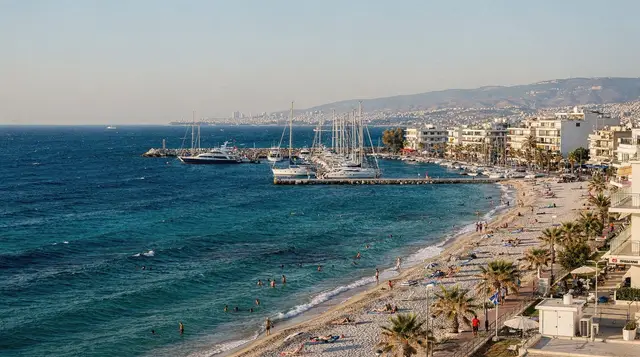
The coastline is not uniform. The northern stretch — Faliro, Alimos, Glyfada — is suburban, loud with jet-skis and beach bars, and draws an energetic Athenian crowd on summer weekends. Further south, around Kavouri, Vouliagmeni, and Varkiza, the atmosphere quietens, the water deepens in colour, and the tavernas become more serious. Beyond Varkiza the coast grows wilder, reaching its most dramatic at Cape Sounion where the Temple of Poseidon stands above the water on a limestone headland.
This guide covers the beaches worth stopping at in order from north to south, with honest notes on access, cost, and what actually makes each one worth the journey.
| Where | Faliro to Cape Sounion, ~60 km of coast |
| Getting there | Tram + bus, 40–75 min from Syntagma |
| Cost | Free public beaches, or around €8–10 (Vouliagmeni) to €30–60 (Astir) |
| Swim season | Late May–early October (sea 22–24°C peak) |
| Best all-rounder | Vouliagmeni bay |
Comparing the main beaches
| Beach | Cost | Vibe | Best for |
|---|---|---|---|
| Glyfada | Free public sections | Lively, resort-suburb | Tram access, cafés, shops |
| Kavouri | Free | Quiet, local | Families, weekday mornings |
| Vouliagmeni | ~€8–10 organised, free at north end | Polished, clear water | The all-round best day |
| Astir | €30–60 | Exclusive, quiet | A splurge day |
| Varkiza | Free | Young, windy | Windsurfing, wide sandy bay |
| Lagonissi/Sounion | Free (minimal facilities) | Wild, local prices | Combining with the temple |
Glyfada and Kavouri
Glyfada is the first major beach town south of Athens, reachable by tram from Syntagma in around 40 minutes (tram T4, change at SEF, single ticket €1.20). The beach itself is organised, sandy, and backed by cafés and designer shops. Vouliagmeni is not far from here — the whole area feels like a self-contained resort suburb.
Kavouri, a small peninsula just west of Vouliagmeni, is one of the Riviera’s underrated spots. Two free public beaches face either side of the headland. The northern side, Megali Kavouri, has shallow water that suits families. The southern side, Mikri Kavouri, catches less wind and has slightly clearer water. Neither has formal facilities beyond a few snack kiosks in summer, but both are free, rarely overcrowded on weekday mornings, and reachable by bus 122 from Glyfada tram stop.
Vouliagmeni: the Riviera’s polished centrepiece
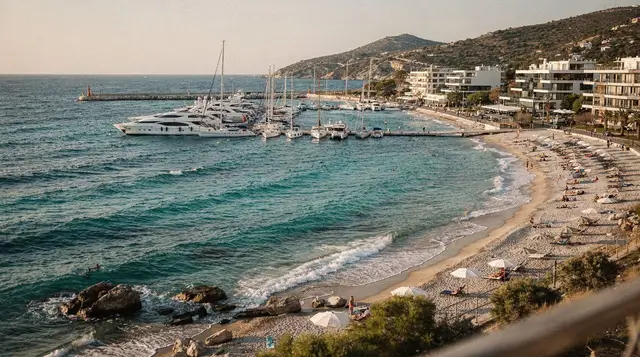
Vouliagmeni is where the Athens Riviera lives up to its reputation. The bay forms a near-perfect crescent of clear water, backed by low pines and a long line of sunbed-and-umbrella setups run by the municipal beach authority (Asteras). Entrance to the organised section costs €8–10 per person in 2026, which includes a sunbed. Free public access exists at the northern end of the bay.
The water visibility at Vouliagmeni is exceptional — 5 to 8 metres on calm days. The bay is sheltered enough to swim comfortably even in light northerly winds. There are proper changing rooms, showers, a decent café, and a restaurant at the far end of the beach with tables almost in the water.
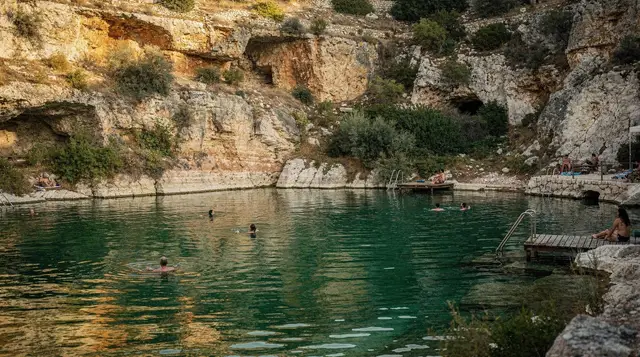
Immediately behind the beach, Lake Vouliagmeni — the brackish thermal lake — offers a completely different experience: warm, sulphur-mineral water in a limestone gorge. Combining a lake morning with a beach afternoon is the classic Vouliagmeni day.
Book a guided Athens Riviera and Vouliagmeni swimming dayGetting to Vouliagmeni from Athens: bus 122 from Glyfada tram stop, or bus A2 from central Athens (Akadimias) in approximately 50 minutes. Taxis from the city centre cost €18–22.
Astir Beach: the Riviera’s most exclusive stretch
On the promontory between Kavouri and Vouliagmeni bay, Astir Beach is operated by the Four Seasons hotel. Access for non-guests costs €30–40 per person on weekdays and €50–60 on weekends in 2026. That price includes a full-length lounger and umbrella. The water quality is the same as Vouliagmeni next door, but the clientele is quieter, the sunbeds are widely spaced, and the restaurant food is several grades above average. Worth it for a splurge day, not necessary for a beach swim.
Varkiza: the windsurfer’s choice
Ten kilometres south of Vouliagmeni, Varkiza opens into a wide, sandy bay with consistent north-northwest wind in summer. It has been a windsurfing and kitesurfing destination since the 1980s — several schools and rental centres operate along the beach (expect €50–70 for a beginner lesson and equipment in 2026). The free public beach is genuinely large and never feels overcrowded. Facilities include outdoor showers, a cluster of tavernas along the seafront road, and a bus stop served by the E22 express from central Athens (about 60 minutes from Akadimias, €1.20).
The sea here is slightly choppier than Vouliagmeni because the bay faces more directly west, but the sand is softer and the vibe is younger and more relaxed.
Book an Athens Riviera boat trip from Piraeus to VouliagmeniLagonissi and the quieter southern coast
Beyond Varkiza the coast road (Leof. Poseidonos, then the national road south) passes through a succession of smaller beaches: Anavyssos, Saronida, Lagonissi. These are not dramatic destinations in themselves, but they attract almost no foreign tourists, the tavernas charge local prices (a plate of grilled fish, salad, and carafe of wine for two: €30–40), and the sea is clean.
Lagonissi has a long sandy beach with minimal facilities — a couple of seasonal canteens and free sunbeds if you arrive early enough. It is the best option for anyone with a hire car who wants to combine the Cape Sounion temple visit with a proper swim on the same day. The beach at Sounion itself, directly below the temple, is pebbly but very clear.
How to reach the Athens Riviera without a car
The tram is the easiest route as far as Glyfada. From Syntagma, take T4 to SEF (32 minutes), change to T3 towards Voula. This gets you to the beaches around Glyfada and the start of the Kavouri peninsula.
Beyond Voula, the tram ends and you need buses:
- Bus 122: Glyfada to Vouliagmeni (20 minutes)
- Bus A2: Akadimias in central Athens to Vouliagmeni (50 minutes)
- Bus E22 express: Akadimias to Varkiza (60 minutes)
For Cape Sounion, bus KTEL from the junction of Leoforos Vouliagmenis and Filellinon street in central Athens — approximately 1 hour 45 minutes to Sounion, €6.60 each way, several departures daily.
Book a sunset sailing trip along the Athens RivieraWhen to visit
The beaches are open and swimmable from late May through early October. July and August are peak season: weekends at Vouliagmeni and Glyfada fill up by 10:00. Arrive by 09:00 to claim good free spots, or visit on weekdays.
June and September are the ideal months: sea temperatures around 22–24°C, fewer crowds, and prices at the beach tavernas noticeably lower than August. Late May is perfectly swimmable (water 19–21°C) and the Athens Riviera coast is strikingly green before the summer heat strips the hillsides.
November through March the sea is too cold for most swimmers (14–17°C), but the coastal walk between Vouliagmeni and Kavouri is beautiful on clear winter days and the lake stays open year-round.
Practical planning tips
Bring cash for the free public beaches — most canteen vendors do not take cards. Organised beaches (Asteras, Astir) accept cards for entry and food.
Parking in Vouliagmeni and Varkiza fills up completely by 11:00 on summer Saturdays. If you have a car, aim for early morning or arrive after 17:00 when some sunbeds clear.
Water shoes are worth carrying: some sections of the Kavouri headland and the rocks near Sounion have sharp limestone underfoot.
For a broader comparison of beaches reachable in a day from the city, see best beaches near Athens. For day trips further afield to the islands, the Greek islands from Athens guide covers ferry connections. More detailed information on the coastal towns themselves is in the Athens Riviera destinations section.
Combining a beach day with sunset at Sounion
One of the best full days on the Riviera pairs a morning swim with an evening at Cape Sounion: swim at Lagonissi or one of the beaches near Anavyssos in the morning, have a late lunch of grilled fish, then continue south for sunset at the Temple of Poseidon. This works well independently with a hire car, or as a guided combination — see the Cape Sounion sunset trip guide for the structured version.
Private Vouliagmeni beach and Cape Sounion sunset dayBeach clubs vs. free public beaches: which to choose
The organised beaches (Asteras at Vouliagmeni, Astir) trade a fee for facilities — proper showers, changing rooms, food service, and consistently raked sand. The free public sections at Kavouri, Varkiza, and the coast south of Lagonissi trade facilities for cost: bring your own towel, water, and cash for the occasional snack kiosk. Neither is objectively better — a family with small children often prefers the organised beach’s showers and shade, while a couple looking for a quiet, unstructured afternoon often prefers the free stretches at Kavouri or south of Varkiza.
Frequently asked questions about Athens Riviera beaches
Do Athens Riviera beaches charge entry fees?
Some do, some don’t. Free public access exists at Kavouri, parts of Vouliagmeni’s northern end, Varkiza, and most beaches south of there. Organised concessions at Vouliagmeni (Asteras) charge €8–10 per person in 2026 for a sunbed. Astir Beach charges €30–60 depending on day and season.
Is the sea clean enough to swim in?
Yes. EU blue flag status applies to multiple beaches along the Riviera and water quality monitoring is published regularly. Vouliagmeni and Kavouri have consistently high ratings. Glyfada is slightly more variable given proximity to Piraeus port traffic.
Can I do the Athens Riviera as a half-day trip?
Comfortably. Vouliagmeni beach is 50 minutes from central Athens by bus. Leaving at 09:00, swimming until 13:00, and returning to Athens by 15:00 is very manageable. The Athens Riviera area also has good fish restaurants for a lunch extension.
What is the best beach for families with young children?
Megali Kavouri has shallow, calm water and is free. Varkiza is wide and sandy. Vouliagmeni bay is calm enough for children and has proper facilities including showers and changing rooms. Avoid the rocky sections of the Kavouri headland with small children.
Is Vouliagmeni better than Glyfada?
For water quality and scenery, Vouliagmeni clearly wins. Glyfada is more convenient (tram access, shops, restaurants) but noisier and less attractive. For a proper beach day, the extra 20 minutes of travel to Vouliagmeni is always worth it.
Are there any naturist beaches on the Riviera?
There is no official naturist beach on the Riviera, but a small clothing-optional area exists on the rocks below the far eastern end of the Vouliagmeni bay (past the main organised beach). It has been informally tolerated for decades. It is not signposted.
Can I combine an Athens Riviera beach day with Cape Sounion in one trip?
Yes, and it’s one of the best full days available near Athens. Swim at a beach around Lagonissi or Anavyssos in the morning, have lunch nearby, then continue to Cape Sounion for sunset at the Temple of Poseidon. It works well with a hire car or as a single guided day trip.
Which is better for a family day trip, Vouliagmeni or Kavouri?
Both work well, but for different budgets. Vouliagmeni’s organised beach has showers, changing rooms and shallow, calm water for a fee of around €8–10 per person. Kavouri’s Megali Kavouri side offers similarly calm, shallow water for free, with far fewer facilities. If proper amenities matter more than saving the entry fee, choose Vouliagmeni.
Athenian Riviera beach experiences
Verified deep-linked GetYourGuide tours. Book through these links and we earn a small commission at no cost to you.
GetYourGuide does not provide product photos: on its activity cards, the picture illustrates the type of experience and is not the operator's own photo.
More tours on Viator
Top-rated experiences with verified reviews, bookable on Viator (a Tripadvisor company).
 Viator
Sea kayaking Mykonos natural beauty beaches
FromEUR 90Check availability → Viator
Private Katakolon Excursion to Ancient Olympia, Winery and Beach
FromEUR 279Check availability → Viator
4 hour Katakolon shore excursion (Olympia - Winery - Beach)
FromEUR 270Check availability → Viator