Delphi vs Meteora: which day trip from Athens should you choose?
Both are UNESCO World Heritage Sites. Both are genuinely extraordinary. Both require leaving Athens for the day. And many visitors — particularly those with only two or three days in Athens — only have time for one. So: Delphi or Meteora?
| Distance from Athens | Delphi ~180 km, Meteora ~350 km |
| Time needed | Delphi: full day; Meteora: full day (rushed) or 2 days |
| Cost | Guided day tours around €75–110/person, entrance fees extra |
| Getting there | Coach tour, guided train (Meteora), or hire car |
| Best time | April–May and Sept–Oct at both sites |
What each place actually is
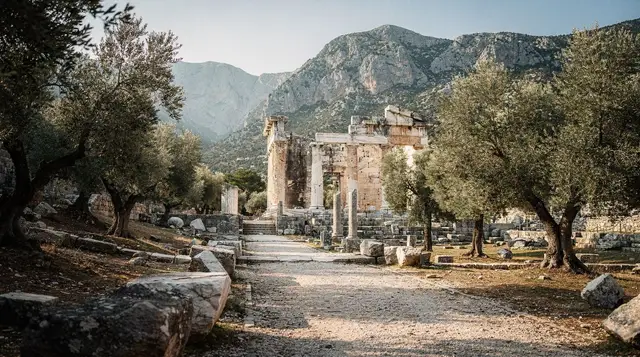
Delphi sits on the slopes of Mount Parnassus, about 180 kilometres northwest of Athens, at an elevation of roughly 570 metres. For several centuries in ancient Greece, it was the most important religious site in the known world — the Oracle of Apollo operated here, and Greek city-states, foreign kings, and private individuals came from across the Mediterranean to consult the Pythia and receive prophecy. The archaeological site, which climbs steeply up the hillside, contains the Temple of Apollo, a theatre with extraordinary mountain views, and one of the finest ancient stadia you’ll see anywhere. The museum at the base of the site is excellent — the bronze Charioteer of Delphi, cast around 474 BCE, is one of the great surviving works of ancient Greek sculpture.
Meteora is about 350 kilometres northwest of Athens, in the Thessaly plain near the town of Kalambaka. Here, a cluster of extraordinary sandstone pillars — some 400 metres tall, formed over millions of years — was colonised by Christian monks from the 9th century onward. They built monasteries on top of these formations, accessible originally only by rope-pulled baskets and later by steps carved into the stone. Six monasteries survive and remain active today. The combination of the geology and the human-made architecture is unlike anything else in Greece — or arguably anywhere else in the world.
The journey question
Delphi is about 2.5 hours from Athens by coach — a manageable day trip with a reasonably early start. You arrive at the site in late morning, spend three to four hours exploring the ruins and museum, eat lunch in the nearby village of Arachova, and return to Athens by early evening.
Meteora is a harder logistics question. The drive is four to four and a half hours each way — meaning an independent day trip from Athens requires leaving very early (by 6 am) and returning very late, with only a few hours at the site. The journey is long enough that many visitors who attempt it independently feel the day was primarily about transportation.
The organised day trips resolve this well: the Meteora train day trip from Athens uses the intercity train, which is both more comfortable and faster than the road coach for the outbound leg, and includes guided time at the monasteries. It transforms a gruelling logistics exercise into a structured, enjoyable excursion. If you want Meteora in a single day from Athens, take the train trip — or accept that two days (including an overnight in Kalambaka) would give you the experience more properly.
Delphi also benefits from a guided visit: the Delphi day tour from Athens includes transport, an expert guide at the site, and entrance fees, and the guided interpretation makes a significant difference to how much you get from the ruins. Delphi without context is interesting; Delphi with a good guide who explains the Oracle, the sacred way, and the political dynamics of the sanctuary is genuinely gripping.
What the experience feels like
At Delphi, the emotional register is classical awe. The site is dramatic physically — the hillside setting, the views over the olive-covered valley toward the Gulf of Corinth below, the Sacred Way climbing between ancient treasuries. The Theatre sits high on the slope above the Temple of Apollo, with a view that the ancient visitors would have found no less remarkable than modern ones do. Standing in the stadium at the top, where the Pythian Games were held every four years, you feel the weight of what this place meant — the entire Greek world, sending delegations, consulting the oracle, competing in athletic and artistic contests.
At Meteora, the emotional register is something more like disbelief followed by profound calm. The rock pillars are extraordinary to see from the road as you approach — strange and vertiginous, softened at their bases by pine forest. The monasteries themselves, some still inhabited by a handful of monks or nuns, have an atmosphere of genuine removed peace. The combination of extreme geology and extreme human devotion — someone built these places, hauled materials up these cliffs, lived here voluntarily — produces a specific kind of wonder that’s hard to achieve anywhere else.
Both places are busy in summer. Meteora has been discovered by tour groups in a big way, and the main viewpoints and the larger monasteries (particularly the Grand Meteoron) can feel crowded by mid-morning. Delphi is more spread-out and easier to move through comfortably even in peak season.
The direct comparison
If you’re primarily interested in ancient Greek history: Delphi. There is more classical historical and archaeological content per square metre at Delphi, the museum is excellent, and the site connects directly to the cultural and political history of ancient Greece in a way that Meteora does not.
If you want something visually unlike anything you’ve seen: Meteora. The rock formations alone would make the journey worthwhile; the monasteries make it unforgettable.
If your time is genuinely limited to a single long day: Delphi is more accessible as a pure day trip. Meteora rewards an overnight stay.
If you’re travelling with children: Delphi, where the walking is challenging but not extreme, and the archaeological story is compelling at any age. Meteora involves steep, sometimes uneven steps between monasteries.
If October travel is part of the plan: both sites are beautiful in October, with the light changing and the crowds thinning. Meteora in autumn, when the morning mist sits between the pillars, is a particular classic.
Tickets and entrance fees
Delphi’s archaeological site and museum charge a combined entrance fee, currently €20 for adults and €10 reduced; the Delphi day trip from Athens guide has the current pricing and any discount categories (EU students, under-25s, and free days for some age groups). Meteora’s active monasteries each charge a small separate entrance fee, usually €3–5 per monastery, and most also enforce a modest dress code — covered shoulders and knees, with wraps often available at the door for anyone caught out. Budget €15–25 if you plan to visit two or three monasteries in a day.
If you’d rather not manage tickets, dress codes, and transfers yourself, both destinations have a dedicated combo option: the Delphi and Meteora combo guide covers multi-day trips that link both sites without doubling back through Athens, and the standalone Meteora day trip guide breaks down the single-day version in more detail than the comparison above.
Can you do both?
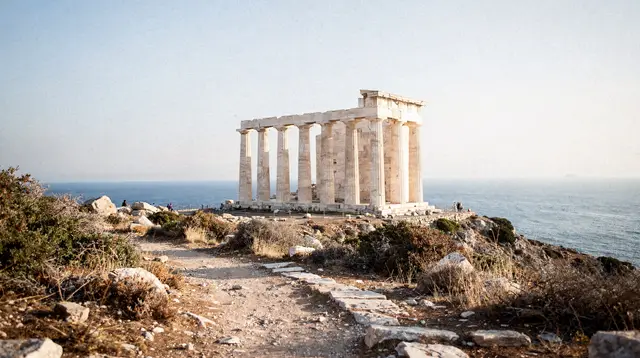
If you’re spending four or five days in Athens, yes — comfortably. Most visitors who have that much time do one day trip to each. The best day trips from Athens guide covers both in detail alongside the other options from the city, including Cape Sounion and Nafplio and Mycenae.
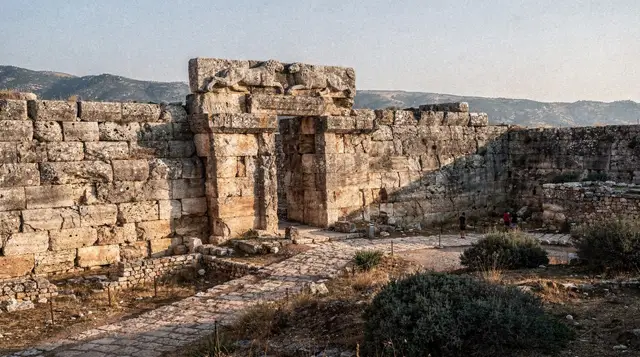
The Nafplio, Mycenae, and Epidaurus small-group tour is another excellent option for the classically inclined — the Mycenaean citadel and Lion Gate at Mycenae, the ancient theatre at Epidaurus, and the beautiful Venetian town of Nafplio all in a single day.
A note on seasonal timing
Both sites are rewarding in different seasons. Delphi in spring (April–May) is particularly beautiful — the slopes of Parnassus have wildflowers, the light is soft, and the sites are not yet at summer capacity. Delphi in autumn (September–October) has excellent weather and the thinner crowds that make it easier to experience the sacred way and the theatre with some quiet.
Meteora in autumn is something of a cliché, but the cliché exists because it’s true: the morning mist that sits between the rock pillars in September and October, catching the light as it burns off, is one of those natural-plus-human-made spectacles that you don’t forget. In winter (December–February), Meteora is accessible and sometimes snow-covered, which produces its own remarkable effect, though some monasteries have reduced opening hours.
Both sites are worth visiting regardless of season, but if you have flexibility, spring and autumn are significantly more pleasant than July and August for outdoor site exploration at both locations.
What to do in Arachova (near Delphi)
If the Delphi day tour from Athens includes time in the area, the mountain village of Arachova, about 10 kilometres east of the archaeological site, is worth at minimum a short stop. It’s a proper Greek village that happens to also be a ski resort in winter — the streets are narrow and cobbled, the local cheese (formaella) is produced here, and the tavernas serve lamb and game in the mountain style. In summer the village is relaxed; in winter it’s a scene.
Eating at Arachova after the Delphi site, rather than at the tourist-oriented restaurants immediately adjacent to the ruins, gives you a better meal and a better sense of the mountain landscape that surrounds the site.
Practical logistics side-by-side
| Factor | Delphi | Meteora |
|---|---|---|
| Distance from Athens | ~180 km | ~350 km |
| Travel time | ~2.5 hours | ~4+ hours |
| Difficulty as day trip | Manageable | Challenging |
| Recommended approach | Day tour or hire car | Guided train trip or overnight |
| Site walk difficulty | Steep uphill | Steep steps between monasteries |
| Best time of year | April–May, Sept–Oct | Sept–Oct, Dec–Feb |
If you genuinely only have time for one, go with your instinct: which image pulls you more strongly — the ancient Oracle’s sanctuary on a Greek mountainside, or Byzantine monasteries balanced on vertical rock pillars a hundred metres above a valley? Both choices are good ones. Neither will disappoint.
Frequently asked questions about Delphi vs Meteora
Is Meteora doable as a day trip from Athens without an overnight? Yes, but it’s a long day — the Meteora train day trip uses the intercity train to cut the outbound leg, and most versions get you back to Athens by late evening. If your schedule allows it, the 2-day Meteora trip is noticeably less rushed and includes an overnight in Kalambaka.
Which is better for someone who gets travel-sick on long coach rides? Delphi, without question — the 2.5-hour journey is far more manageable than Meteora’s 4-plus hours each way by road. If Meteora is still the priority, the train option reduces the discomfort considerably compared to the coach.
For other single-day options from Athens that don’t involve this trade-off, the best day trips from Athens guide also covers Cape Sounion, which is under two hours away and pairs well with a half-day rather than a full one.
Best day trips from Athens on GetYourGuide
Verified deep-linked GetYourGuide tours. Book through these links and we earn a small commission at no cost to you.
GetYourGuide does not provide product photos: on its activity cards, the picture illustrates the type of experience and is not the operator's own photo.