Santorini vs Mykonos: which Greek island should you choose?
Should I choose Santorini or Mykonos?
Santorini is for the view, the volcanic drama, and couples seeking romantic sunsets. Mykonos is for beach clubs, nightlife, and a more social, party-forward atmosphere. Both are expensive and crowded in July–August. If you can only go to one and want the quintessential Greek island image, Santorini wins. If you want beaches and a social scene, Mykonos.
Two very different islands with overlapping reputations
Santorini and Mykonos share the title of “famous Greek island” but they are genuinely different places. The confusion comes from proximity (both are in the Cyclades, both reachable from Athens in under an hour by plane) and from the fact that they top every “best Greek islands” list simultaneously.
Choosing between them is not a question of which is better. It is a question of which matches what you actually want from the experience.
| Where | Cyclades, Aegean Sea — both roughly 45 min flight or 4.5–5 hr fast ferry from Athens |
| Best for | Santorini: couples, sunsets, wine. Mykonos: beach clubs, nightlife, groups |
| Cost (peak) | Both around €€€€ — among the priciest islands in Greece |
| Time needed | 3 nights each is the sweet spot; 2 feels rushed |
| Best season | Santorini: Apr–Jun, Sep–Oct. Mykonos: May–Jun, Sep |
Santorini: the dramatic volcanic island
Santorini is a volcanic caldera — the remnant of a massive Bronze Age eruption that may have ended the Minoan civilisation. The famous crescent shape you see from above is the edge of that collapsed caldera, and the town of Oia perches on the rim with a sheer 300-metre drop to the sea below.
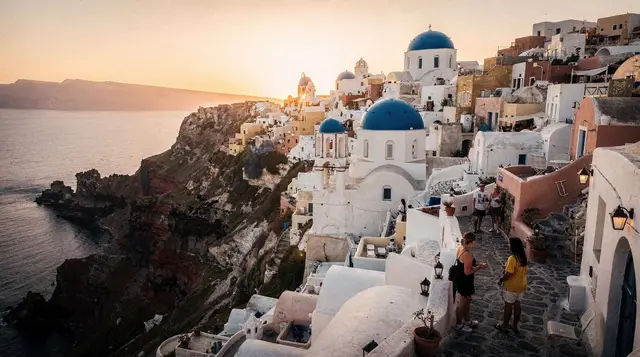
The core experience: The caldera view from Oia or Fira is genuinely extraordinary — nothing in the Cyclades matches it for visual drama. At sunset, the sky turns orange over a volcanic sea, with the white-and-blue cluster of Oia’s cubic houses and blue-domed churches in the foreground. This is the image on the postcards and it is real; the photographic record does not lie.
Beaches: Santorini’s beaches are volcanic — black sand (Perissa, Perivolos), red sand (Red Beach), and white pumice pebbles (Vlychada). They are unusual and beautiful but not the turquoise-over-white-sand Cycladic beach of imagination. Sea entry on black sand beaches can be uncomfortable in summer heat because the sand absorbs heat to painful temperatures. Water quality is excellent.
Food and wine: The volcanic soil produces some of Greece’s most distinctive wines — Assyrtiko white wine from Santorini has a mineral quality found nowhere else. The island’s cherry tomatoes, white aubergines, and fava beans are genuine culinary specialities used by the island’s restaurants in ways that distinguish Santorinian cuisine from generic Greek taverna food.
Activity level: Santorini is primarily a sensory and romantic experience — sunsets, wine, caldera views, boat trips on the caldera. It is not an island for non-stop activity. Hiking the caldera rim from Fira to Oia (10 km, 2.5 hours) is excellent. A catamaran tour of the caldera is one of the best half-days in the Cyclades.
Santorini caldera sailing at sunset — the signature island experienceCrowds and prices: Santorini in July–August is significantly overcrowded relative to its infrastructure. The streets of Oia are impassable at sunset without aggressive positioning. Caldera-view hotels cost €400–800+ per night in peak season. This is one of Europe’s most expensive islands for accommodation.
Best for: Couples, honeymoons, romantic travel, photography enthusiasts, wine lovers, those who want the Greek island image.
Worst for: Budget travellers, party seekers, families with young children (limited shallow beach options, no real nightlife infrastructure for younger crowds), those wanting social atmosphere.
Mykonos: the social, beach-forward island
Mykonos is a wind-swept, barren island famous for three things: its Cycladic architecture (white cubic houses, pelicans wandering the waterfront), its beach club scene, and its historically liberal nightlife and LGBTQ+ welcoming reputation.
The core experience: Mykonos Town (Chora) is architecturally beautiful — the windmills overlooking “Little Venice” are genuinely photogenic, and the labyrinthine streets are designed to confuse the winds (and pirates, historically). But the island’s real character is the beach and social scene. Paradise Beach and Super Paradise Beach are organised beach clubs with music, sunloungers, bars, and a party atmosphere that begins at noon and extends until midnight.
Beaches: Mykonos has the sandy, turquoise-water Cycladic beaches that match the postcard imagination of Greek islands. Ornos Beach is family-friendly with shallow water and full facilities. Paradise Beach is party-oriented, loud, and social. Psarou Beach is upscale and quieter. The sea temperature in July–August reaches 25–26°C.
Activity level: High. Mykonos rewards visitors who want to fill every hour: beach clubs, boat trips to Delos (the sacred island directly opposite Mykonos, with some of the best-preserved ancient ruins in Greece), water sports, nightlife, restaurant hopping. The island is compact and the bus network connects the main beaches reliably.
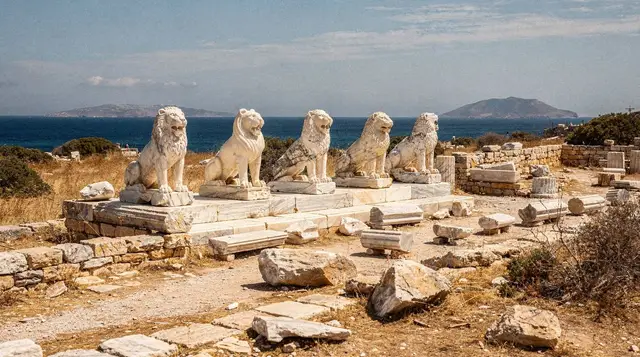
Delos day trip: The uninhabited island of Delos, 5 km from Mykonos Town, is one of the most significant archaeological sites in the Greek world — the mythological birthplace of Apollo and Artemis, and the ancient Cyclades’ commercial and religious centre. A half-day trip from Mykonos covers the ruins comprehensively.
Delos guided day trip from Mykonos — unmissable archaeological site, half-dayCrowds and prices: Mykonos is as expensive as Santorini for accommodation (€300–600 per night in peak season at caldera-view equivalent) and similarly crowded in July–August. The difference is that Mykonos’ crowds are younger and more socially oriented; the island is noisy by design.
Best for: Younger travellers, beach lovers, LGBTQ+ travel, groups of friends, those who want social atmosphere alongside beautiful scenery.
Worst for: Those seeking quiet romance, families with young children (nightlife infrastructure is incompatible), budget travellers, those who dislike loud beach clubs.
Head-to-head comparison
| Factor | Santorini | Mykonos |
|---|---|---|
| Visual drama | Extraordinary (caldera views) | Beautiful but less dramatic |
| Beaches | Volcanic (unusual but hot) | Sandy, classic Cycladic |
| Nightlife | Limited (some bars; not a party island) | Strong (beach clubs, clubs open all night) |
| Couples/romance | Ideal | Less suited |
| Families | Manageable with planning | Better (more beach infrastructure) |
| LGBTQ+ travel | Welcoming | Historically welcoming, iconic scene |
| Food/wine | Distinctive local cuisine | Good restaurants, less distinctive |
| History/culture | Akrotiri (Bronze Age ruins), prehistoric | Delos (world-class ancient ruins) |
| Accessibility from Athens | 45 min flight, 4.5 hr fast ferry | 45 min flight, 4.5 hr fast ferry |
| Accommodation cost (peak) | €€€€ (among highest in Greece) | €€€€ (equivalent) |
| Best season | April–June, September–October | May–June, September |
Can you do both from Athens?
Yes. The classic Athens + islands itinerary for a 7–10 day trip:
- 2–3 days Athens
- 3 nights Santorini
- 2 nights Mykonos
- Return to Athens from Mykonos
Ferries connect Santorini and Mykonos (3.5–5 hours depending on vessel) and there are direct flights (40 minutes). This island-hopping circuit is extremely well-trodden for good reason — it covers both the volcanic drama and the social beach experience in a logical sequence.
Santorini highlights tour: Oia, wine tasting, caldera sunset Mykonos catamaran cruise — Cycladic waters, meal, and drinks includedFor logistics on reaching the islands from Athens, see Santorini from Athens and Mykonos from Athens.
Which is better in shoulder season?
Both islands are significantly better in May–June and September–October than in July–August:
Santorini in May–June: Accommodation prices are 40–50% lower, Oia is walkable at sunset, hiking the caldera rim is possible in comfortable temperatures, and the wine harvest begins in late August with the island at its most alive locally.
Mykonos in September: Beach clubs wind down, but the beaches are still warm (water temperature 24–25°C), the town regains some local character, and prices drop significantly. The Delos day trip is more comfortable without summer heat.
The verdict for shoulder season: Both are better, but Santorini gains more from reduced crowds than Mykonos does. Santorini in October is genuinely beautiful and peaceful; Mykonos in October loses much of its appeal because the beach club scene is the main draw and it winds down from mid-September.
Cutting costs on either island
Both islands punish last-minute, high-season bookings the hardest, so the biggest single saving is timing rather than destination. Booking accommodation 3–4 months ahead for July–August typically saves 20–30% versus booking a month out, and shifting your trip to late May, June, or the second half of September can cut room rates by 40% on Santorini and slightly less on Mykonos, where the beach-club season compresses the discount window.
On the ground, a few habits stretch a budget further on both islands: eat one taverna meal per day away from a caldera or beach-club view (prices drop noticeably a street or two back), use the local bus network instead of taxis for short hops (both islands run cheap, if infrequent, KTEL services), and treat the Santorini highlights tour or a Mykonos half-day sightseeing tour as a way to see the island’s spread-out sights without renting a car for the whole stay. Rental ATVs and small cars are cheaper than taxis if you’re staying more than two nights and want flexibility for beaches or wineries.
Adding a third island to the trip
Neither island exists in isolation, and travellers with 10+ days often add a third stop rather than choosing a binary. Paros and Naxos sit between the two on the ferry network and offer a calmer, more local counterpoint to Santorini’s crowds and Mykonos’s intensity — useful if the goal is one dramatic island, one social island, and one that simply feels like everyday Greece. The island-hopping from Athens guide lays out realistic multi-island routes and how many nights each stop actually needs, which is worth reading before locking in a Santorini-Mykonos-only itinerary.
Making the final decision
Choose Santorini if:
- The caldera view is your primary motivation
- You are travelling as a couple or on a honeymoon
- You care about food and wine with a strong local identity
- You want the quieter evenings and focus on sunsets over nightlife
- You are a photographer or care deeply about landscape
Choose Mykonos if:
- Beaches (proper sandy beaches) are your priority
- You want a social, energetic atmosphere
- You are travelling as a group of friends
- Nightlife is part of your trip
- You want to combine with Delos (world-class ruins, no equivalent in Santorini)
Choose both if:
- You have 7 or more days that include island time
- You have not been to either before
- You want the definitive Greek island experience
For more on reaching both islands from Athens, see the Greek islands from Athens guide and the islands hub.
Frequently asked questions about Santorini vs Mykonos
Which is more expensive, Santorini or Mykonos?
They are similarly expensive in peak season — both are among the most expensive island destinations in Greece and Europe. Caldera-view rooms in Santorini (July–August) and equivalent pool villas in Mykonos run €400–1,000+ per night. Restaurants in both islands are significantly more expensive than the Greek mainland. Mykonos beach clubs add a layer of optional spending that Santorini largely lacks.
Which Greek island is better for families with children?
Mykonos has better beaches for families (sandy, shallow, organised beach clubs). Santorini’s volcanic beaches with black sand that heats to painful temperatures in August are less comfortable for young children. That said, neither island is ideally designed for families with young children — the Athens Riviera and less touristic islands like Aegina or Naxos are better family choices.
How many days do I need on Santorini?
Three nights is the standard and is sufficient for: Oia sunset, a caldera boat trip, Akrotiri ruins, one or two beaches, and the wine-tasting circuit. Two nights feels rushed; four nights allows a genuinely relaxed pace. More than five nights, and most visitors find Santorini’s limited geographic variety starts to feel repetitive.
Is Mykonos worth it in July?
Mykonos in July is at maximum energy and maximum chaos simultaneously. If the beach club atmosphere and social scene are your reason for going, July delivers exactly what it promises. If you want a beautiful, peaceful Cycladic island, July Mykonos is not that — it is a party destination that happens to have spectacular scenery.
Is there a ferry between Santorini and Mykonos?
Yes. Several ferries per day connect the two islands in summer, operated by Hellenic Seaways, SeaJets, and others. High-speed ferries take approximately 2 hours; conventional ferries take 3.5–5 hours. Book in advance in summer — these routes fill quickly on weekends.
Is Santorini or Mykonos better for a honeymoon?
Santorini, by a clear margin. The caldera-view rooms, the Oia sunset, and the generally quieter evenings suit a honeymoon far better than Mykonos’s beach-club energy. Couples who also want some nightlife sometimes add two or three nights in Mykonos after Santorini, but as a standalone honeymoon island, Santorini wins.
Can I do Santorini and Mykonos as a cruise-ship stop instead of staying overnight?
Some Mediterranean cruise itineraries call at both islands for a day each, which is a reasonable way to sample them without committing to island-hopping logistics. You’ll see the headline sights — Oia’s caldera view, Mykonos Town and a beach — but miss the sunset-to-dinner experience that many visitors rate as the best part of each island, since ships typically depart before dark.
Greek island adventures on GetYourGuide
Verified deep-linked GetYourGuide tours. Book through these links and we earn a small commission at no cost to you.
GetYourGuide does not provide product photos: on its activity cards, the picture illustrates the type of experience and is not the operator's own photo.