The city that made Homer credible
In 1876, Heinrich Schliemann dug into the soft earth inside the Lion Gate of Mycenae and found gold. Not metaphorically — actual gold: death masks, cups, diadems, swords, and enough royal grave goods to fill several rooms of the National Archaeological Museum in Athens. He immediately telegraphed the Greek king: “I have gazed upon the face of Agamemnon.” The mask he found almost certainly predates Agamemnon by 300 years, but the discovery did something more important than confirming Homeric legend: it proved that Mycenae, the city Homer described as “rich in gold” and seat of the most powerful king in Bronze Age Greece, had actually existed.
That is the animating fact of a visit here. Mycenae is not a ruin in the conventional sense — a beautiful fragment of something that was once whole. It is an excavated city that was deliberately destroyed by its Argive neighbours around 468 BC and then essentially forgotten for two millennia, until Schliemann turned up with a spade and an obsession. The Lion Gate still stands at near-original height. The corbelled galleries of the Treasury of Atreus are intact. The citadel walls — built from stones so large that later Greeks assumed giants must have placed them — still surround the hilltop summit.
Mycenae is 26km north of Nafplio and makes an obvious pairing with Epidaurus in a full day out of the Nafplio base, or as a stop en route from Athens to the southern Peloponnese.
| Where | Argolis, Peloponnese — 26km north of Nafplio |
| Cost | €12 adult / €6 reduced, covers citadel + museum |
| Time needed | 2–3 hours for citadel and one tholos tomb |
| Getting there | ~1.5h by car from Athens; 30 min from Nafplio |
| Best time | Opens 08:00; arrive early — no shade after 10am |
The Lion Gate and the citadel walls
The approach to the main entrance reproduces the experience of arriving at a Bronze Age citadel exactly as intended: you walk toward a massive triangular relieving arch above which two headless lionesses flank a central column, the symbol of Mycenaean royal power. The heads were separate pieces, probably bronze, long since lost. The gate itself is three and a half metres wide — wide enough for a chariot — and the lintel stone above the doorway weighs an estimated 20 tonnes.
The walls of the citadel, called Cyclopean because classical Greeks believed only Cyclopes could have moved stones this large, average six metres thick and reach eight metres in height in some sections. Walking along the interior face, you can see the construction technique clearly: large irregular stones fitted without mortar, smaller stones wedged into gaps, a system that has survived 3,200 years of earthquakes. The Mycenaeans built in the 13th century BC better than many later civilisations managed.
Entry costs €12 adults, €6 reduced (2026 rates); the ticket covers both the citadel and the archaeological museum on site. Opening hours are 08:00–20:00 April–October, 08:00–15:00 November–March.
Grave Circle A and Schliemann’s discovery
Just inside the Lion Gate, to the right, a circular enclosure of standing slabs marks Grave Circle A — the shaft graves where Schliemann excavated in 1876. The graves themselves are below current ground level; you look down into them from the enclosure path. Six shaft graves were found here, containing 19 bodies and approximately 14kg of gold objects — the richest Bronze Age burial assemblage ever found in Europe at the time of discovery.
The grave goods are now in Athens at the National Archaeological Museum (Room 4, the Mycenaean collection — one of the finest single-room displays of ancient artefacts anywhere). If you plan to visit Athens before or after, seeing the originals in their museum context makes the Mycenae site dramatically more legible.
Grave Circle B, excavated in the 1950s, lies outside the citadel walls to the west; it predates Circle A by about 100 years and is accessible but less visited.
The Treasury of Atreus
Do not leave without walking 500 metres south of the main entrance gate to the Treasury of Atreus, also known as the Tomb of Agamemnon (neither name is archaeologically accurate, but both have stuck). This is a tholos tomb — a beehive-shaped underground chamber built around 1250 BC, accessed through a 36-metre stone-lined dromos or entrance passage.
The numbers are worth knowing before you enter: the corbelled dome rises 13.5 metres above the floor and spans 14.5 metres at its base, making it the largest domed space in the ancient world for roughly 1,300 years — not surpassed in diameter until the Pantheon in Rome. The construction required stones progressively cantilevered inward over 33 courses until they meet at a point. The effect inside is of standing in the ribcage of some enormous creature. There is no light source except what enters from the dromos, which makes the transition from bright Argolic sunlight to the cool dark interior appropriately dramatic.
A second tholos tomb, the Treasury of Klytemnestra, is adjacent and equally impressive. Both are included in the main site ticket.
Visiting Mycenae on a guided tour
The site covers a large area on an exposed hillside with no shade. On a summer afternoon, the heat on the limestone paths is fierce and the lack of interpretation panels makes the ruins hard to contextualise without prior reading. A guided tour solves both problems: you move efficiently, stop in the right places, and the archaeology comes alive with the stories.
The small-group Mycenae, Nafplio and Epidaurus day trip from Athens is the most popular format — a full day that combines all three major Argolis sites with expert commentary. For a more focused Mycenae experience, the private half-day Mycenae tour allows you to spend the full time at the citadel and tombs without rushing to the next stop.
For a comprehensive circuit that adds Ancient Corinth, the Corinth Canal, Mycenae and Nafplio tour covers the canal and the Argolis circuit in a single day. The detailed planning for this route is covered in the Argolis day trip guide.
Getting there and combining with other sites
By car from Athens, the route runs via the Corinth Canal (a stop of 15–20 minutes is easy to arrange), then south on the E65 and E94 to the Mycenae exit — roughly 1.5 hours from central Athens. From Nafplio, it’s 30 minutes north on the old Argos–Corinth road.
The practical sequence for a single day: arrive Mycenae at 08:30 when the site opens and the heat is manageable, spend two to three hours on the citadel and both major tholos tombs, drive to Nafplio for lunch (25 minutes), then continue to Epidaurus for the afternoon. This is a full but not punishing day.
Detailed logistics and accommodation options for the Argolis region are in the Athens Peloponnese 5-day itinerary. Broader context on what to see throughout the region is at destinations.
The on-site museum
The small archaeological museum at the entrance, included in the site ticket, is easy to skip in the heat but worth ten minutes: it holds finds too fragile or too specific to the site to have moved to Athens, including pottery, seal stones, and reconstructions explaining the citadel’s layout that make the ruins outside considerably easier to read. Go through the museum first if you can manage the discipline — the context makes the walk up to the Lion Gate more meaningful rather than less.
How to read the site as you walk it
Mycenae rewards a slow, deliberate route rather than a rush from highlight to highlight. Start at the Lion Gate and let the approach do its work: the entrance was designed to make a visitor feel small, and it still does. Once inside, follow the ramp upward and keep turning round. The view over the plain towards the sea explains why this hilltop was chosen: whoever held it could see anyone coming and control the routes between the Peloponnese and the rest of the Greek world.
On the summit, the foundations of the palace are far less dramatic than the gate and the tombs, and many visitors walk past them too fast. Take a moment to trace the outline of the great hall and imagine the painted walls and the hearth at its centre. The scale is modest compared with the later palaces of Crete, such as Knossos, but that is part of the point: Mycenae was a fortress-palace, built for defence and control rather than for sprawling ceremony. If you have visited Knossos, or plan to, the contrast between the open, labyrinthine Minoan palace and this hard-edged, walled citadel is one of the most revealing comparisons in Greek archaeology.
Allow time to look at the underground cistern near the northeastern edge of the citadel. It is a reminder that a fortress is only as strong as its water supply, and that the people who built these walls planned for a siege. Bring a torch or use your phone light, and mind your footing on the uneven steps.
Mycenae in the story of ancient Greece
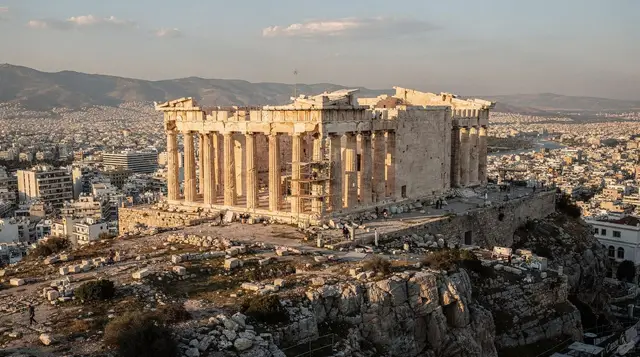
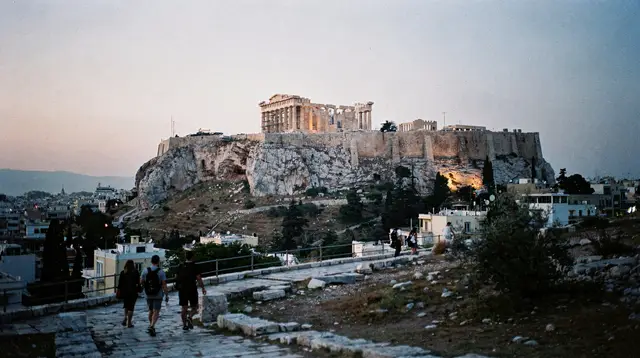
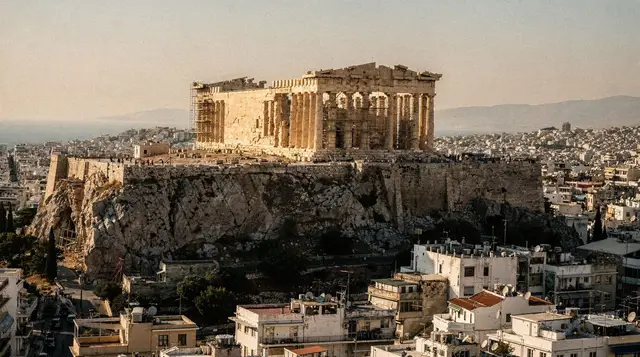
It helps to place Mycenae in the longer sweep of Greek history before you arrive. The citadel belongs to a world that came well before the Classical city-states, the theatre and the philosophy that most visitors associate with Greece. The Parthenon on the Acropolis belongs to a later, very different age, and the Athens history timeline is a useful way to see how far apart these two worlds sit. Mycenae is the older civilisation that the Classical Greeks looked back to with awe, and whose myths they kept retelling.
Those myths are a big part of the appeal. Agamemnon, Clytemnestra, Orestes and Electra were figures of Mycenaean legend that became the raw material for the great tragedies performed on the Athenian stage. If the stories are new to you, the Greek mythology in Athens guide offers a friendly way in, and reading a short summary of the House of Atreus the night before makes the walk through the citadel far richer. Standing at the gate with the story of a doomed royal family in your head turns a pile of old stones into a stage.
Planning the visit around the seasons
Because the hillside is open and exposed, the season you choose shapes the whole experience. In spring the surrounding slopes are green and the light is soft, which is also the best time for photographs of the Lion Gate. In high summer the site is best treated as an early-morning stop, followed by a long lunch somewhere shaded. For wider advice on timing a trip, see the best time to visit Athens, and if you are travelling at the hottest point of the year, Athens in summer heat covers how to pace the day, and the same principles apply on the road to Argolis.
Wear sturdy shoes with a good grip: the stone paths are worn smooth in places and can be slippery. Bring water, a hat and sun protection, since there is little to buy once you are inside the citadel. In cooler months a light layer is useful, as the wind can pick up on the summit and the interior of the tholos tombs stays cool all year.
Fitting Mycenae into a wider trip from Athens
Many travellers treat Mycenae as one stop on a bigger Peloponnese loop. If you are building a longer trip, the best day trips from Athens compares the main options so you can weigh Argolis against Delphi, Meteora or the islands, while the Nafplio, Mycenae and Epidaurus day trip guide lays out the classic combination step by step. Travellers without a car will find practical options in day trips from Athens without a car, and those who prefer to drive can check renting a car in Athens before they commit.
If Mycenae is one chapter of a longer history-focused stay, the Athens history lovers 5-day itinerary shows how to thread the Bronze Age citadel together with the Classical sites in the capital. And for a slower pace, a night in Nafplio, described in a weekend in Nafplio, lets you see Mycenae first thing in the morning before the crowds, then spend the afternoon on the seafront.
Seeing the finds in Athens
The finds from the shaft graves are among the most famous objects in Greek archaeology, and they sit in the capital rather than on the hill. The National Archaeological Museum guide explains how to find the Mycenaean collection and how much time to give it. Whether you go before or after your trip to Argolis is a matter of taste: going first gives you a mental picture of what was buried at the site, while going afterwards lets you recognise the place where each object was found. Either way, pairing the two makes the whole story coherent.
Mycenae vs Tiryns: is the second citadel worth it?
Twenty minutes south toward Nafplio, the smaller citadel of Tiryns has its own Cyclopean walls — thicker, in places, than Mycenae’s — and a lower profile that means far fewer visitors. It lacks Mycenae’s Lion Gate and tholos tombs, so it’s a genuine “second course” rather than an alternative: worth adding only if your Argolis day has room for it, not a substitute if time is tight. History enthusiasts doing the full circuit typically fold it into the same day as Mycenae, Nafplio and Epidaurus rather than visiting alone. Nafplio’s own layered history — Venetian, Ottoman and the first capital of modern Greece — makes a good contrast to the Bronze Age focus of the day; see the Nafplio destination guide for how the two combine.
Frequently asked questions about Mycenae
Is Mycenae worth visiting if I’ve already seen the Acropolis and other Greek ruins? Yes — Mycenae predates the Classical Acropolis by roughly 800 years and represents an entirely different civilisation (Bronze Age Mycenaean Greece rather than Classical Athens), with different building techniques, mythology and historical stakes. The Lion Gate and the Treasury of Atreus don’t resemble anything from the Classical period, which makes the site feel genuinely distinct rather than repetitive.
Can I visit Mycenae without a car or organised tour? It’s difficult but not impossible — public buses from Nafplio and Argos to the site run on a limited schedule, and there’s no train service to Mycenae itself. Most independent travellers either rent a car for the Argolis day or join one of the small-group day trips from Athens or Nafplio, which is considerably simpler given the site’s distance from any train line.