Why Athens rewards those who look past the obvious
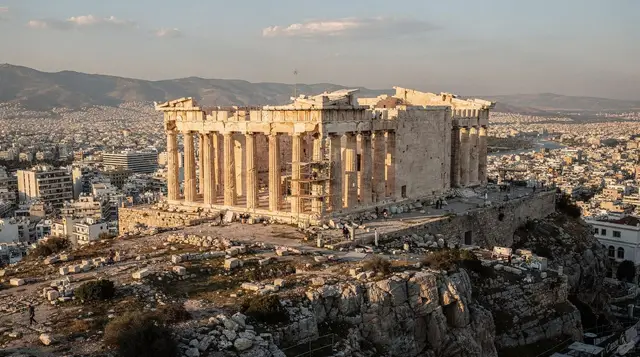
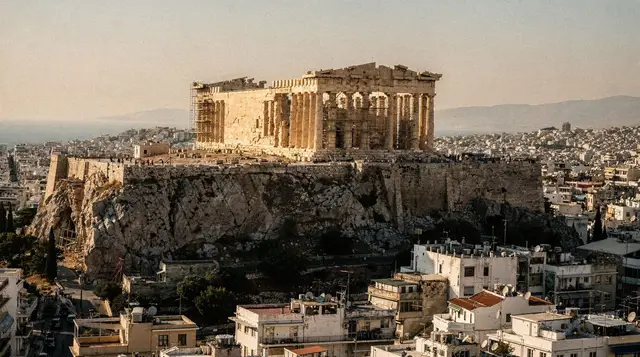
Athens is a city that resists the postcard version of itself. Yes, the Parthenon rises above every rooftop and the view from the rock stops you in your tracks — but the parts of Athens that tend to stay with visitors are the narrower things: the smell of oregano coming from a grill in Psyrri, an argument between old men at a marble-topped kafeneio, a street corner in Exarchia thick with wheat-paste murals. The Acropolis is the reason people come. The city underneath is the reason they stay longer than planned.
Athens is also one of the most walkable major European capitals. The pedestrian boulevard that sweeps from Thissio through Monastiraki and below Plaka to the new Acropolis Museum is one of the finest urban promenades on the continent. Most of the central neighborhoods are 20–30 minutes on foot from each other. The metro is efficient and cheap. Getting disoriented is not a problem; getting lost is genuinely enjoyable.
| Airport transfer | Metro Line 3, ~40 min, €9; taxi flat rate €50 (day) / €65 (night) |
| Single metro ticket | €1.20; 24-hour pass €4.10 |
| Acropolis ticket | €30 full, €15 reduced |
| Where to stay | Plaka (atmosphere), Koukaki (value/quiet) |
| Time needed | 3–5 days for the essentials |
The Acropolis and the ancient city
No visit to Athens makes sense without the Acropolis, but the way you visit it matters enormously. The site opens at 8 am and the first hour is genuinely different from everything that follows. By 10 am the main path to the Propylaea is shoulder to shoulder; by noon on a July day the exposed limestone reflects heat like a kiln.
First-access Acropolis entry lets you walk the summit in relative quiet. If you want context alongside the visuals, a skip-the-line guided Acropolis tour combines fast-track entry with a qualified archaeologist who can explain why the slight upward curve of the Parthenon’s stylobate is not an accident of stone-cutting.
The Acropolis page has the full breakdown on tickets, the €30 adult ticket (each site sells its own ticket on the official Hellenic Heritage ticketing portal), and the best viewing spots. After coming down, the Acropolis Museum is one of the best archaeology museums in Europe — the building itself, designed by Bernard Tschumi directly over a partially excavated residential quarter, is worth the visit.
The Ancient Agora — the civic and commercial heart of classical Athens — sits just below the north slope. It is far less crowded than the Acropolis and has more to actually walk through and read. The Stoa of Attalos reconstruction gives you a rare sense of scale. Plan an hour minimum.
Neighborhoods: a practical map
Athens does not have a single center so much as a cluster of distinct villages that have grown into each other. Understanding which one you are in shapes every hour of the visit.
Plaka is the oldest continuously inhabited neighborhood in the city, draped across the northeast slope of the Acropolis rock. The main lanes — Adrianou and Kydathineon — fill with tourists from mid-morning, but the streets a block away from them are genuinely quiet. Plaka is the right base for first-time visitors and the most logical place to eat on your first evening.
Monastiraki is immediately north and operates at a faster, louder pitch. The flea market around Ifestou street runs every day; the Sunday version spreads far up Ermou and into the surrounding alleys. The rooftop bars around Monastiraki square give Acropolis views that, in the late-afternoon light, look like a travel magazine cover.
Anafiotika is the least-known pocket in central Athens: a clutch of whitewashed cube houses built by 19th-century Cycladic craftsmen on the upper slope of the Acropolis hill, above Plaka’s tourist lanes. It takes ten minutes to walk through and produces the best photographs in the city.
Psyrri is the city’s most convincing bohemian quarter, one metro stop north of Monastiraki. The streets around Agia Irini square are clogged with outdoor tables from early afternoon; the kitchen and meze restaurants behind them are some of the best-value food in central Athens.
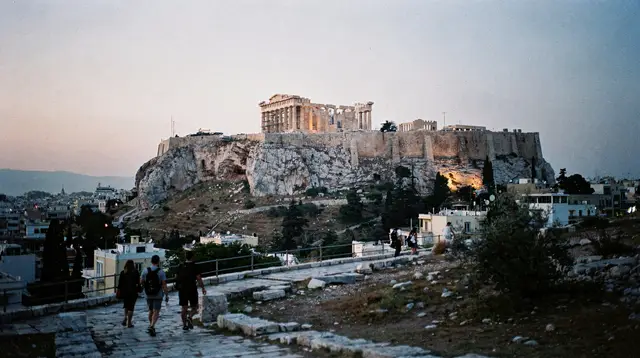
Thissio runs along the south side of the Ancient Agora and is home to the pedestrian promenade. It is the best spot in Athens to watch the Acropolis change colour at dusk. The cafes along Apostolou Pavlou street are decent; the view from them is exceptional.
Koukaki sits south of the Acropolis Museum and is the neighbourhood where most of the better guesthouses and small hotels have opened in the last decade. It has a local, residential feel — the kind of street-corner grocery and hardware-shop normality that neighbouring Plaka lost years ago.
Kolonaki is east of Syntagma, uphill, unmistakably moneyed. Boutiques, international restaurants, the Benaki Museum and the Byzantine and Christian Museum are all here. It is also the jumping-off point for the funicular to Lycabettus Hill.
Exarchia is the square kilometre northwest of the National Archaeological Museum that tourists tend to skip and many Athenians consider the most interesting part of the city. It is politically charged, visually wild with murals, and full of excellent cheap food.
Syntagma is the transport hub and symbolic centre — Constitution Square, the Parliament building, and the Changing of the Guard ceremony. It is not a place to linger but it is unavoidable and useful.
Food: what to eat and where to find it
The most satisfying food in Athens is not in a sit-down restaurant. A souvlaki pita wrapped at a stand on Mitropoleos — the one that has been there since the 1980s — costs €3 and is better than most things that cost ten times as much. Tiropita (cheese pie) and spanakopita from a bakery at 8 am before the crowds arrive is the correct breakfast. Mezedes — small plates of taramosalata, grilled octopus, fried zucchini — are how Athenians actually eat and are meant to take two hours.
The original Athens street food tour covers the Central Market (Varvakios), the souvlaki strip on Mitropoleos and several stops in the Monastiraki-Psyrri corridor — a good orientation to the city through its food.
For a more structured evening, the food and wine night tour works well as a second-or-third-night activity when you know your way around well enough to appreciate the context.
Getting around Athens
The metro is clean, punctual and covers the main tourist areas well. The three intersecting lines connect the airport (Line 3) to central stations: Syntagma (interchange), Monastiraki (Line 1 and 3), and Akropoli (Line 2, five minutes’ walk from the Acropolis entrance on Dionysiou Areopagitou street). Single tickets are €1.20; the 24-hour pass is €4.10.
Most of the tourist core is walkable. The pedestrian zone linking Thissio, Monastiraki, Plaka, Koukaki and the Acropolis Museum is 3–4 km end to end and takes about an hour without stops. The getting around Athens guide covers taxis, trams and buses for routes the metro does not serve.
For a different perspective, an e-bike tour of the city and Acropolis area covers more ground in less effort and keeps you off the busiest pedestrian corridors during peak heat.
Day trips from Athens
Athens is well-placed for one-day excursions. Cape Sounion — the cliff-top Temple of Poseidon 70 km south — is an hour by bus and makes a superb late-afternoon-to-sunset trip. Delphi is two and a half hours northwest, demanding a full day but completely worthwhile. Nafplio, the first capital of modern Greece, is 90 minutes in the Peloponnese and arguably the most beautiful small city in the country.
The best day trips from Athens guide ranks the options by effort and payoff. The day trips hub has individual pages for the most popular routes.
Practical notes
The 2-day Athens itinerary and 3-day version give sequenced plans you can follow without rethinking every morning. The where to stay guide covers each neighbourhood’s trade-offs — Plaka is atmospheric but noisy; Koukaki is the better-value, quieter alternative; Monastiraki puts you next to everything but sleeps badly.
Tap water is drinkable everywhere in Athens. Restaurants almost always charge a €0.50–1 bread/cover charge (kouver) per person automatically — it is not a scam. Tipping is appreciated but not mandatory; rounding up is sufficient.
The best time to visit Athens guide has monthly breakdowns for anyone planning around weather, events or the Opera and Epidaurus festival season.
First-timers versus repeat visitors
A first Athens visit should prioritise the Acropolis, the Acropolis Museum, an evening in Plaka or Psyrri, and one day trip — Cape Sounion is the easiest payoff for the effort. Repeat visitors, or those staying five days or more, get more out of Exarchia’s street art and cheap food, a proper food tour through the Central Market, and a longer day trip such as Delphi or a Saronic island. Athens rewards a slower pace on a second visit more than most European capitals — the city’s real texture is in neighbourhood detail rather than a checklist of monuments, and that detail only reveals itself once the obvious sites are out of the way.
Weather and what to pack by season
Summer (June–August) means consistent heat above 30°C and occasional spikes past 38–40°C during heatwaves; plan all outdoor sightseeing before 11am or after 5pm, and treat air conditioning as essential rather than a luxury when choosing accommodation. Spring and autumn (April–June, September–October) are the most comfortable, with occasional rain in April and October worth a light layer for. Winter (December–February) is mild by northern European standards — rarely below 5°C — but genuinely wet at times, and many outdoor sites are more pleasant without the crowds even if a jacket is needed. Whatever the season, comfortable walking shoes matter more than any other packing decision — the ancient sites are uneven stone and the city itself is best explored on foot.
Frequently asked questions about Athens travel guide
How many days do I need in Athens? Three days covers the essentials comfortably: the Acropolis and museum, a couple of central neighbourhoods, and one day trip such as Cape Sounion. Five days allows a second day trip (Delphi or a Saronic island) and more relaxed neighbourhood exploration without rushing.
Is Athens safe for tourists? Yes, broadly — central tourist areas like Plaka, Monastiraki, Syntagma and Koukaki are safe for normal precautions at any hour. As in any major city, watch for pickpockets in crowded areas like the metro and the flea market, and exercise normal judgment around Exarchia and Omonia late at night.