Athens in 2 days: the ideal first-time visitors itinerary
How this itinerary works
Two days gives you just enough time to see Athens properly rather than frantically. Day 1 focuses on the ancient city — the Acropolis, the museum, the Agora — so you understand what Athens was. Day 2 shifts to what Athens is today: a food-obsessed, design-forward city where neighbourhood life unfolds at its own unhurried pace. The total walking distance is around 10–12 km over two days. Pre-book the Acropolis and, if you want a guided experience, book your tour at least 48 hours ahead. This itinerary suits most fitness levels; the only real climbs are the Acropolis ramp on Day 1 and the path to Lycabettus on Day 2 (both are optional by cable car or lift).
| Best for | First-time visitors and couples with a short window |
| Cost | Around €350–500pp for 2 days incl. entries, meals and one museum |
| Getting around | On foot and metro, 10–12km total over two days |
| Best time | April–May or September–October |
| Book ahead | Acropolis ticket 48hrs; guided tours if wanted, same window |
| Day | Focus | Theme |
|---|---|---|
| 1 | Acropolis, museum, Ancient Agora, Psyrri | Ancient Athens |
| 2 | Central Market, Kolonaki, Lycabettus, Benaki | Living Athens |
Day 1: The ancient city
Morning — Acropolis at first light (07:30–12:00)
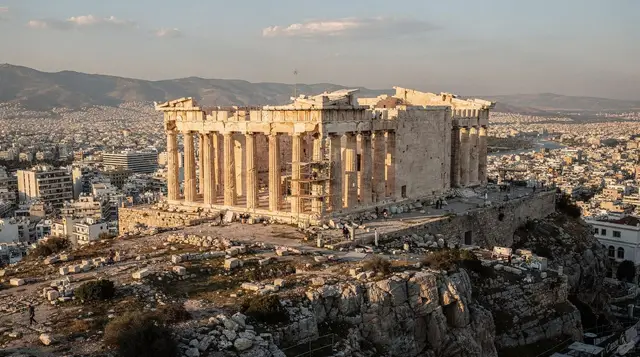
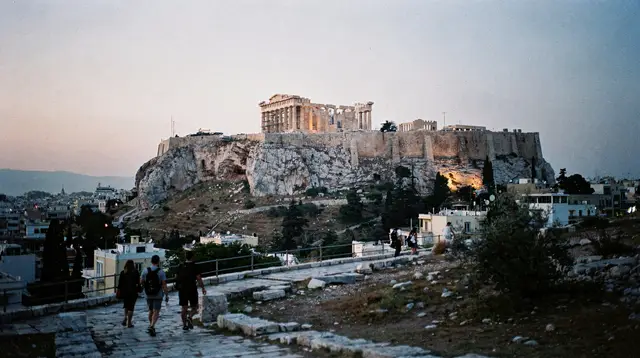
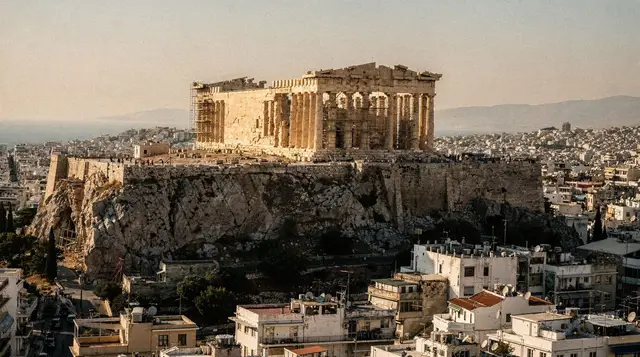
Be at the Beulé Gate by 07:30. The Acropolis opens at 08:00 and the first hour is the quietest you will ever experience a Unesco World Heritage site of this magnitude. The Parthenon’s marble glows amber in the low morning sun, and the panorama — Plaka below, Piraeus and the Saronic Gulf on the horizon — sets the entire city in geographic context.
Pre-book your ticket. In high season the walk-up queue can be 60–90 minutes:
Pre-book your Acropolis ticket and skip the queueSpend 90 minutes on the hill. Highlights: the Propylaea (monumental gateway), the Erechtheion with its famous Caryatid porch, the Temple of Athena Nike, and the Parthenon itself. A professional guide transforms the stones into a living story:
Guided Acropolis tour with skip-the-line accessBy 09:30 descend the south slope past the Theatre of Dionysus (the world’s oldest stone theatre, 4th century BC) and walk five minutes to the Acropolis Museum. Allow 75 minutes. The highlight is the Parthenon Gallery on the top floor, lit entirely by natural light, with the real hill visible through the glass walls behind the frieze sections. Entry €20.
Read our detailed Acropolis Museum guide before you go.
Afternoon — Ancient Agora and Monastiraki lunch (12:30–17:00)
Grab a quick lunch in Plaka — a souvlaki pita from a takeaway window costs €3.50, or sit down for a full taverna lunch for €14–16 — then walk 15 minutes north-west to the Ancient Agora.
The Agora (entry €20) was the bustling civic and commercial heart of classical Athens. Socrates held court here. The reconstructed Stoa of Attalos shelters an impressive museum of everyday Athenian life: bronze ballots, terracotta lamps, children’s toys, a klepsydra (water-clock). The Temple of Hephaestus on the hill above is one of the most complete Doric temples in Greece. Budget 60 minutes.
From the Agora, walk into Monastiraki square. Browse the flea market along Ifestou Street, pick up a coffee from one of the standing espresso bars, and watch the city flow past. The view back to the Acropolis from the square — with the metro trains gliding through the foreground — is one of Athens’s defining photographic moments.
Evening — Psyrri for dinner and street art (17:30–21:30)
Walk ten minutes west into Psyrri, the city’s former warehouse district turned creative neighbourhood. The street art here is among the best in southern Europe: enormous murals cover entire building facades. Follow Leokoriou and Miaouli streets.
For dinner, Psyrri has a good range from budget gyros joints to mid-range creative mezze restaurants. Budget €35–45 for two for a proper sit-down meal with wine. The neighbourhood is liveliest after 20:00 when Athenians themselves arrive.
Day 2: The living city — food, hills, and rooftop views
Morning — Central Market and Omonia breakfast (08:30–11:30)
Start at the Athens Central Market on Athinas Street (open 07:00–15:00, closed Sunday). This is Athens unfiltered: whole lambs hanging beside bins of dried herbs, fishmongers shouting prices over ice-filled displays, cheese vendors slicing wedges of graviera for tasting. It is exhilarating and slightly overwhelming — ideal. The adjacent spice market on the same street sells dried oregano, saffron, and mastic resin.
Breakfast: the market’s working-class eateries open at dawn. A bowl of patsas (tripe soup, an acquired taste but a local tradition) or a simpler plate of eggs with loukanika (pork sausages) costs €5–7.
If you would rather explore Athens’s food culture with a local who knows every stall, a guided food tour is genuinely the best investment of the trip:
Athens original food tour — markets, mezze, local secretsLate morning — Syntagma and a stroll through Kolonaki (11:30–14:00)
Walk south-east to Syntagma Square. Watch the Evzones change guard at the Tomb of the Unknown Soldier (every hour on the hour; the full ceremonial change is on Sunday at 11:00). The National Garden, immediately behind the parliament building, provides ten minutes of genuine shade and birdsong — a civilised interlude.
Head up Vassilisis Sofias Avenue into Kolonaki, Athens’s smartest residential quarter. The neighbourhood is built on the lower flanks of Lycabettus Hill and the streets climb gently between Parisian-style apartment buildings, independent art galleries, and excellent coffee shops. Tsakalof Street is the epicentre: small design boutiques, gelato bars, bookshops. A cold freddo espresso (Athens’s signature summer drink) costs €3–4.
Afternoon — Lycabettus Hill and the panorama (14:00–17:00)
Take the funicular railway (€7 return, roughly every 20 minutes) from Aristippou Street up to the summit of Lycabettus Hill at 277 metres — the highest point in Athens. The panorama is staggering: the entire Attic basin laid out like a map, the Acropolis reduced to a small plateau, and on clear days (best in spring and autumn) the mountains of the Peloponnese visible to the south-west.
The Chapel of St George at the summit dates to the 19th century. The hilltop café is overpriced but the terrace view makes it worthwhile for a single coffee (€6).
Alternatively, walk up the pine-shaded path from Lycabettus Street — 20 minutes of gentle switchbacks through a rare patch of urban greenery.
Descend and walk south through Kolonaki to the Benaki Museum (entry €12, closed Tuesday). Athens’s finest private collection covers everything from neolithic pottery to Byzantine jewellery to a stunning collection of Greek folk costumes. The rooftop café-restaurant has a terrace worth sitting on.
Evening — Athens riviera or old city for dinner (18:30–22:00)
For a final evening, return to Plaka for the classic Athens dinner experience. The neighbourhood is touristy, but tuck two streets back from the main drag and the quality is genuine. Order lamb chops (paidakia) grilled over charcoal, a Greek salad with aged feta, and a glass of assyrtiko white wine. Budget €30–45 for two.
If you prefer the local experience over the scenic one, make for Koukaki just south of the Acropolis — the neighbourhood equivalent of Kolonaki but younger and less expensive. The restaurants around Veikou Street serve excellent creative Greek food to a neighbourhood crowd.
End the evening on a rooftop bar with the Acropolis in lights. The floodlit marble against a dark sky is every bit as good as the dawn view, just warmer.
What to pack and what to skip
Bring closed shoes with real grip for the Acropolis’s polished marble, sunscreen and water for the hilltop, and a slightly smarter outfit if you plan an evening at a Kolonaki restaurant. With only two days, resist the temptation to add the National Archaeological Museum or a day trip — both deserve more time than this schedule has and are better saved for a longer visit; see Athens 5 days with day trips if that is the trip you actually want. Our Athens packing list covers the full seasonal checklist.
Frequently asked questions about Athens in 2 days
Is two days enough for a first visit to Athens? It is enough for a satisfying introduction, not a complete one. Two days covers the Acropolis, its museum, the Ancient Agora, and a full day of food and neighbourhood life — the essentials that define the city. A third day would add Cape Sounion or the Riviera without feeling rushed; see Athens in 3 days for that extension.
Should I book a guided tour or explore independently? Either works well for this itinerary. A guided Acropolis tour adds historical context that is hard to get from information panels alone and is worth it for history-minded visitors; independent exploration with our Acropolis Museum guide open on your phone covers most of the same ground for free.
Practical tips
Tickets: Each site is booked separately on the official Hellenic Heritage ticketing portal; check there whether a multi-site ticket is offered. See our Acropolis tickets.
Metro vs walking: The metro (€1.20 per journey, €9 for 24 hours) connects Monastiraki, Syntagma, and Acropolis stations. Most sights between these points are within a 15-minute walk of each other, so a good pair of shoes is your main transport.
When to visit: April–May and September–October are the sweet spots. Summer (June–August) is hot (36–40°C), crowded, and expensive. Winter (December–February) is cool, quiet, and offers shorter queues. Full breakdown in our Best time to visit Athens guide.
Where to stay: Plaka and Koukaki are ideal for this itinerary — both are within 10 minutes of the Acropolis on foot. See our Where to stay in Athens guide for neighbourhood comparisons and hotel picks.
Extending to 3 days? Add a day trip to Cape Sounion or the Athens Riviera. See the Athens in 3 days itinerary for the full plan.
Popular Athens tours on GetYourGuide
Verified deep-linked GetYourGuide tours. Book through these links and we earn a small commission at no cost to you.
GetYourGuide does not provide product photos: on its activity cards, the picture illustrates the type of experience and is not the operator's own photo.