The neighbourhood that absorbed three thousand years
Plaka has been continuously inhabited longer than almost any urban district in Europe. The lanes you walk today follow paths trodden during the Roman period — the ground level was lower then, which is why the Tower of the Winds in the adjacent Roman Agora feels like it is sinking. The neighbourhood’s survival through Ottoman occupation, Independence-era demolition and 20th-century development owes something to its awkward geography: the steep slope beneath the Acropolis rock was never easy to rebuild.
The result is the most visually coherent historic neighbourhood in Athens — whitewashed houses with blue shutters, bougainvillea spilling over garden walls, cats on every step — alongside the inevitable tourist pressure. Plaka handles this better than many comparable European old towns because its streets are genuinely interesting rather than merely preserved.
| Where | Below the Acropolis, central Athens |
| Getting there | Metro Akropoli or Monastiraki, ~10 min walk |
| Cost | Free to wander; back-street tavernas €12–18 pp |
| Time needed | Half day for wandering; evening for dinner |
| Best time | Before 10am or after 6pm |
The main lanes and what to find there
Adrianou street is the backbone of the neighbourhood, running west to east from Monastiraki square toward the Tower of the Winds. It is lined with shops selling everything from decent ceramics to low-quality souvenirs; the quality rises as you move east away from the Monastiraki end. The middle section, where Adrianou passes between the Ancient Agora wall and small Byzantine churches, is the most photogenic part of the street.
Kydathineon street runs south from Mitropoleos cathedral toward the Acropolis Museum and is the main dining artery. The tavernas on either side range from reliable to tourist-trap — the ones with touts standing outside aggressively flagging passers-by are generally the ones to avoid. The lanes branching left and right of Kydathineon into Anafiotika and the upper slope tend to have quieter, better-value places.
Lysikratous street and the area around the Monument of Lysikrates (334 BC, the best-preserved ancient monument in the neighbourhood) are worth finding deliberately. It is five minutes from the tourist main drag and reliably quiet.
Mitropoleos cathedral — the large 19th-century Orthodox cathedral on the square of the same name — is less interesting architecturally than the tiny 12th-century church embedded in its south wall (the Gorgoepikoos, also called the Little Metropolis), which is made of reused ancient and Byzantine marble panels. Stop there before the big cathedral.
Eating in Plaka without being fleeced
The neighbourhood’s tourist concentration means you have to be slightly selective. A few guidelines:
Lunch on Kydathineon or Adrianou at a table with a laminated photo menu and an English-only waiter will cost €20–25 per person for indifferent moussaka. Ten minutes further into the back streets and the same money gets you a genuinely cooked meal at a taverna whose clientele is largely Greek.
For a structured evening in the neighbourhood, the evening Plaka dinner experience takes you to places locals actually eat — worth it on a first visit when you don’t have the confidence to walk away from the main drag.
The local Athens food tour covers Plaka alongside the Central Market and Psyrri, giving useful context for what you are eating and why it tastes the way it does.
Souvlaki: the best pita wraps in the area are at the stand on Mitropoleos, just west of the cathedral square. Queue, point, eat on your feet. Around €3.
If you want to eat like a local rather than a visitor, the broader picture in the guide to the best tavernas in Athens and the ouzo and meze guide will teach you what to order and how a Greek table is meant to work: several small plates in the middle, bread to share, and no rush to leave. For a quick bite between sights, the street food guide and the best souvlaki in Athens list cover the cheap end of the spectrum. Vegetarians will find that Greek cooking is generous to them, and the vegetarian and vegan guide points out which dishes to look for. Coffee is its own ritual here, and the coffee culture guide explains why a single cup can justify an hour at a café table.
A useful habit is to read the room before you sit down. A taverna that is half full of Greek families at a late hour, with a short handwritten menu and a waiter who simply tells you what is good today, is usually a safer bet than one with a glossy menu in six languages. Do not be shy about asking what is fresh, and do not feel obliged to order every course at once; Greek meals unfold slowly, and the staff expect you to add dishes as you go.
Shopping: what is worth buying
Plaka is one of the few places in Athens with a genuine concentration of craft shops. The better ones are:
Komboloi (worry beads) — the Cycladic and amber versions from specialist shops on Adrianou are genuine craft objects. The backlit plastic ones from the souvenir trucks are not.
Ceramics — several workshops on the upper streets between Plaka and Monastiraki make and sell their own work. Look for the “handmade” signs and check that the pieces are actually individual rather than mass-cast.
Herbs and spices — the small grocers on the edges of Plaka stock proper Greek mountain tea, thyme honey and dried oregano at much lower prices than airport shops.
Gold and silver jewellery: there is a concentration of silversmiths on the Adrianou-Ifestou axis going into Monastiraki. Prices are negotiable on larger pieces and quality is genuinely high.
A practical note on buying: carry a little cash for the smaller workshops, take your time, and feel free to walk out of a shop and come back. Because the same kinds of objects are sold on every lane, it pays to look at three or four shops before you commit, and to pick up the piece to judge its weight and finish. Anything fragile is worth asking to have wrapped properly for the flight home.
Plaka after dark
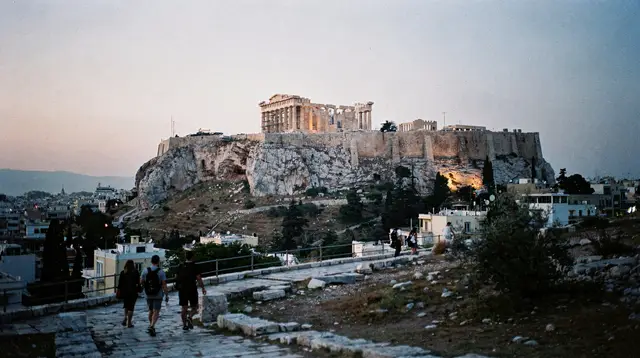
Once the day-trip groups have drained away, the neighbourhood changes character. Lanterns come on, the Acropolis is lit above the rooftops, and the lanes that felt crowded at noon become pleasant to stroll. Evening is the best time to see why Plaka has held people’s affection for so long. A slow walk along Adrianou at dusk, with the rock glowing above the roofs, is among the most rewarding free things you can do in the city. If you want to continue the night elsewhere, Psyrri is a short walk away and has a livelier bar scene, while the Athens nightlife guide and the rooftop bar guide help you choose between a quiet drink with a view and something louder. For a gentler option, the night walking tour guide describes how to see the lit monuments without a late finish.
Plaka for different travellers
First-timers should treat Plaka as the easy introduction to Athens: it is walkable, central and forgiving. Pair it with the Athens first-timers weekend itinerary and read the first-time mistakes before you arrive.
Cruise visitors with only a few hours between the port and the ship can fit Plaka into a short loop. The one day in Athens from the port guide shows how to link it with the Acropolis without rushing, and the Athens cruise port itinerary turns that into a timed plan.
Families will find the traffic-free lanes relaxing, since children can walk without constant worry about cars. Cats, steps and ice cream stops keep younger travellers entertained, and the Athens with kids guide has further ideas for the rest of the day.
History lovers can use Plaka as a base for the surrounding antiquities: the Roman Agora, Hadrian’s Library and the Temple of Olympian Zeus are all close enough to string together on foot, and the Ancient Agora is a natural next stop.
Walking it your own way
You do not need a guide to enjoy Plaka. The self-guided walk through Athens and the Plaka walking tour guide both offer routes you can follow at your own pace, and the neighbourhood is small enough that getting lost is part of the fun. The slope is gentle on the lower streets and steeper as you climb toward Anafiotika, so wear comfortable shoes with a decent grip; the old stones can be polished and slippery. Bring water in summer and take shade breaks in the small squares.
If you are planning how Plaka fits into your whole trip, the Athens itinerary planning guide and where to stay in Athens are good places to start, and staying nearby lets you enjoy the lanes in the quiet early and late hours that make them best. Photographers should also look at the best photo spots in Athens, since many of them sit within walking distance. And if your visit falls in high season, the advice in Athens in summer heat will help you plan shade, water and the right hours of the day.
Connecting to the rest of the historic centre
Plaka is the natural pivot of the ancient city. The Acropolis entrance on Dionysiou Areopagitou is 10 minutes south. Anafiotika begins immediately above on the rock’s slope — the entrance is up the steps on Stratonos street. Monastiraki is five minutes west along Adrianou. The Acropolis Museum is 12 minutes south on Kydathineon.
The Plaka and Monastiraki walking tour connects the two neighbourhoods with context from a local guide — useful on a first visit for orienting yourself to the geography before you explore independently.
For the full picture of the historic centre, the 2-day Athens itinerary routes you through Plaka as part of a sequenced walk that covers the Acropolis, Agora and the main landmarks in a logical order.
A morning in Plaka, hour by hour
A well-paced morning here starts around 8am at Mitropoleos square for the Little Metropolis church before the cathedral square fills, continues up Kydathineon toward Anafiotika for the whitewashed Cycladic lanes while the light is still soft, loops back down through the quieter side streets for a coffee away from the main tourist drag, and finishes with a browse of the Adrianou craft shops as they open around 10am. The first-person account of a perfect day in Plaka covers this same sequence with more texture on where exactly to stop.
Plaka vs Monastiraki vs Anafiotika: picking your pace
Plaka, Monastiraki and Anafiotika sit within minutes of each other but ask for different paces. Plaka rewards a slow wander and a proper sit-down meal; Monastiraki is faster and louder, built around the market and street food; Anafiotika, tucked into the rock above Plaka, is smaller still — a fifteen-minute detour rather than a destination in its own right, best combined with a Plaka visit rather than planned separately. If you only have an hour, Anafiotika plus the upper Plaka lanes gives the highest concentration of atmosphere per minute.
Frequently asked questions about Plaka
How much time do I need in Plaka? A focused wander through the main lanes, the Little Metropolis and a stop in Anafiotika takes about two to three hours; a half day lets you add proper shopping time and a sit-down lunch. Most first-time visitors underestimate how much longer a slow, unhurried visit takes compared to a quick photo-stop walk-through.
Is Plaka too touristy to be worth visiting? The main streets — Adrianou near Monastiraki and central Kydathineon — are genuinely touristy, but the side lanes just off them are not, and that contrast is part of what makes Plaka interesting rather than a reason to skip it. Walking even one block off the main drag changes the character of the visit considerably.