A perfect slow day in Plaka — Athens's oldest neighbourhood
People will tell you that Plaka is touristy and you should go somewhere more authentic. These people are not wrong, exactly — but they’re missing something.
Yes, Plaka has shops selling evil eye keychains and magnets shaped like the Parthenon and linen shirts at prices calibrated for visitors who won’t be back to complain. Yes, the main drag on Adrianou Street is thick with tourist-facing restaurants. All of this is true.
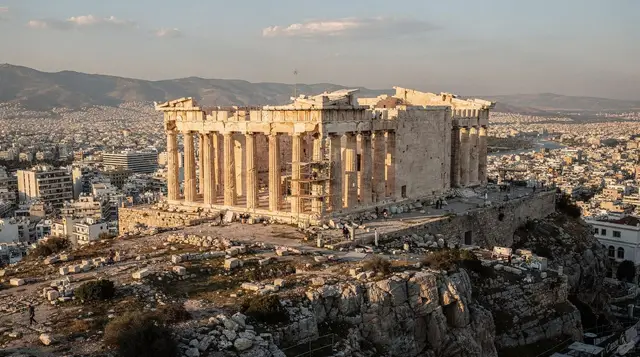
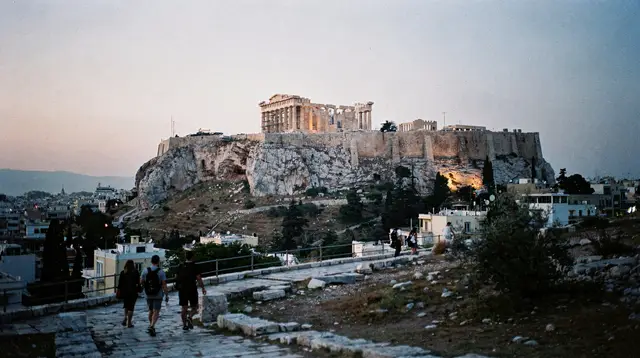
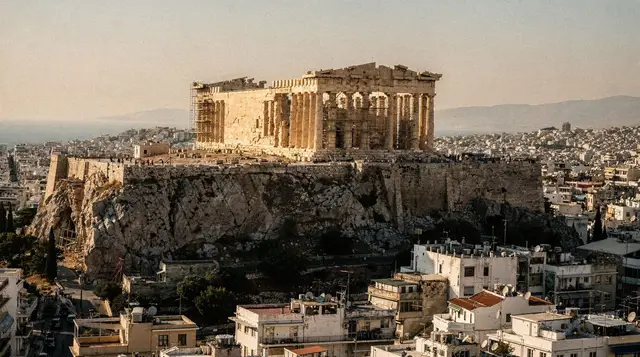
But Plaka is also Athens’s oldest continuously inhabited neighbourhood, built into the northern slopes of the Acropolis hill, layered with Byzantine churches and Neoclassical mansions and Ottoman-era remains and small squares shaded by trees that predate your grandparents. It rewards slowness in a way that many more “authentic” neighbourhoods don’t, because it has more layers to reveal.
| Where | Plaka, below the Acropolis’s northern slope, Athens |
| Time needed | A full day, from around 6:30 a.m. to evening |
| Cost | Mostly free wandering; museum around €3, lunch around €15–20 |
| Getting there | Monastiraki or Acropolis metro stations, both a short walk in |
| Best time | Spring or autumn mornings, to catch the light before the heat |
Here’s how a perfect day in Plaka actually goes.
Early morning: before the crowds arrive
6:30 a.m. sounds extreme. It isn’t, in April. The light at this hour comes low and gold across the marble paving stones, the streets are empty except for shop owners hosing down pavements, and the Acropolis above you is just beginning to catch the first direct sun.
Walk up Theorias Street along the northern edge of the Acropolis hill. This is Plaka’s quietest route — residential, shaded, with glimpses of the archaeological zone through gaps in the walls. The cats of Athens are active at this hour: serious, purposeful, conducting their own itineraries without reference to yours.
Stop at the Monument of Lysicrates on Herefondos Street — a small circular monument from 334 BC that looks like a scaled-down temple, perfectly preserved, slightly absurdly located in the middle of a residential street. Without a crowd around it, you can actually stand and think about the fact that this has been here for 2,300 years.
Get coffee from a bakery on Mnisikleous Street — the neighbourhood starts waking up around 7 a.m. and there will be somewhere selling frappe and tiropita (cheese pie) to the early risers. This is the most important meal of the day, eaten standing at a counter.
Late morning: the museums and the side streets
The Museum of Greek Folk Art is on Kydathineon Street and opens at 8 a.m. It’s rarely crowded, relatively affordable, and houses an extraordinary collection of shadow puppet theatre pieces, regional costumes, ceramics and embroidery that show you the culture that existed around and below the ancient world everyone else comes to see. Two hours here will genuinely alter your perspective on what Greek civilisation means beyond the Parthenon.
After the museum, get deliberately lost. Plaka’s side streets — particularly those climbing toward the Acropolis — are dense with small Byzantine churches. Most are unlocked during daylight hours, most have frescoes in varying states of preservation, and almost none are on any map you’ll be given. The Church of the Holy Apostles at the ancient Agora boundary is the most formally significant, but the tiny unnamed chapels you’ll find up climbing lanes are often more affecting.
The Acropolis itself is a fifteen-minute walk from anywhere in Plaka, and if you haven’t been yet this is the obvious morning activity. Pre-book tickets — the timed entry system is now mandatory and the queues for walk-up tickets can swallow an hour.
Lunch: the case for Plaka’s quieter restaurants
Adrianou Street can be skipped for lunch. The better meal is found by walking one or two streets back from the main tourist drag — specifically toward Kydathineon and the streets around Plateia Filomousou Etaireias (the square with the old building with the arched windows).
The restaurants here still cater partly to tourists but have enough repeat local business to keep standards honest. Order moussaka if it’s on a handwritten board as a daily special — that means it was made this morning, not yesterday. Order a Greek salad and be prepared for it to be enormous. Order house wine in a small ceramic pitcher and take your time.
For a version of this lunch with local guidance and deeper neighbourhood context, the Plaka evening dinner experience takes the same neighbourhood and adds storytelling about the history of the houses and squares you’re sitting among — excellent for a first night in Athens.
Getting there and timing it right
Both Monastiraki and Acropolis metro stations sit within a five-minute walk of Plaka’s edge, which makes this one of the easiest neighbourhoods in the city to reach without a car — see the Athens metro guide if the ticketing system is new to you. Aim for a weekday if you can; Saturdays bring more day-trippers up from the cruise port via Piraeus, and the narrow lanes fill up faster. If your visit is short, the Athens in one day from the port plan shows how to fold a Plaka morning into a single cruise-stop itinerary without feeling rushed. Budget-wise, a day like this — free wandering, a €3 museum ticket, a sit-down lunch — fits comfortably inside the ranges laid out in the Athens on a 3-day budget guide.
Afternoon: the part nobody does properly
Most visitors do Plaka in a few hours and move on. This is the mistake.
The afternoon — particularly in spring when the temperature is mild — is when Plaka becomes something else. The coach-tour groups have left by 2 p.m. The remaining visitors are slower, more self-directed. The neighbourhood reveals a different character: quieter streets, actual residents emerging with shopping bags, old men playing backgammon at café tables in the small squares.
Walk down to the Roman Agora — the market district built during Roman occupation, including Hadrian’s Library and the Tower of the Winds, which is a remarkable first-century marble clocktower that tracked time by the sun, wind and water. This area sits between Plaka and Monastiraki and is technically a separate site but connects naturally to an afternoon walk.
Continue into Monastiraki for the late afternoon flea market atmosphere, then return to Plaka for the evening light on the Acropolis.
Evening: the view from a rooftop or a quiet square
As the afternoon light softens, the choice between a rooftop bar and a quiet square in Plaka depends on your mood. The rooftops in Monastiraki — particularly those with direct Acropolis sight lines — are spectacular at dusk. Or you can find one of Plaka’s small squares, order something from a café, and watch the floodlights come on across the hill above.
The Athens in 3 days itinerary gives the full context for how a Plaka day fits into a broader Athens visit. And for those planning a longer neighbourhood focus, the walking tour of Plaka and Monastiraki connects the culinary and architectural story of both districts.
By the time you walk back to your hotel — slightly footsore, full from lunch, carrying something small bought from a craftsperson who was actually making the thing in a shop behind you — you’ll understand why Plaka persists despite the tourist pressure. It’s still a neighbourhood. It’s just one that the whole world wants to visit. On a slow day with the right approach, it shares itself generously.
Frequently asked questions about perfect slow day in Plaka — Athens’s oldest neighbourhood
Is one day enough to see Plaka properly? Yes, if you start early and don’t try to combine it with too much else. A single unhurried day — arriving before 7 a.m. and staying through the evening — covers the museum, the churches, a proper lunch and the Roman Agora comfortably. Trying to squeeze in the Acropolis Museum and a day trip on top usually means rushing the neighbourhood itself.
Is Plaka safe to wander at 6:30 in the morning? Yes. Plaka is one of the most heavily walked and well-lit central neighbourhoods in Athens, and at that hour you’ll mostly encounter shop owners opening up and other early risers, not an empty or risky street scene. Normal city-centre awareness is all that’s needed.
Guided Plaka and Monastiraki walking tourPopular Athens tours on GetYourGuide
Verified deep-linked GetYourGuide tours. Book through these links and we earn a small commission at no cost to you.
GetYourGuide does not provide product photos: on its activity cards, the picture illustrates the type of experience and is not the operator's own photo.