Athens in 3 days: the classic Athens trip itinerary
How this itinerary works
Three days is the sweet spot for Athens. You have time to explore the ancient sites without rushing, to get genuinely lost in the city’s neighbourhoods, and to take one day trip beyond the city limits. This itinerary pairs two full days in the city with an afternoon excursion to Cape Sounion for what many regard as the most dramatic sunset in Greece. Total walking: 14–16 km spread over three days. All on foot and by metro — no car needed.
| Best for | First-time visitors wanting the full classic Athens experience |
| Cost | Around €400–600pp for 3 days incl. entries, meals and Cape Sounion tour |
| Getting around | On foot and metro, 14–16km total; Sounion by tour or KTEL bus |
| Best time | April–May or September–October |
| Book ahead | Acropolis 48hrs; Cape Sounion sunset tour 1–2 days |
| Day | Focus | Evening highlight |
|---|---|---|
| 1 | Acropolis, museum, Ancient Agora, Thissio, Monastiraki | Night walking tour or Psyrri |
| 2 | Central Market, Kolonaki, Lycabettus, Benaki | Cooking class or wine tasting |
| 3 | Koukaki morning, Kerameikos, Cape Sounion sunset | Final Monastiraki/Psyrri dinner |
Day 1: The ancient city in full
Morning — Acropolis at dawn (07:30–12:00)
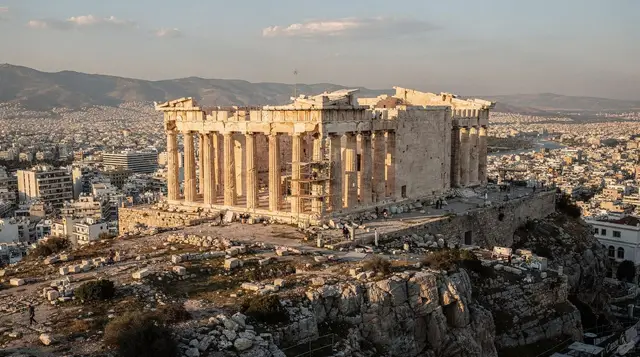
Arrive at the south-west entrance (Beulé Gate) by 07:30. The site opens at 08:00. Arriving in this first window means you experience the Parthenon at its quietest and most atmospheric, the marble catching early light before the cruise-ship groups arrive around 10:00.
Pre-booking your ticket is essential — the walk-up queue in summer can run to 90 minutes:
Skip the queue with a pre-booked Acropolis ticketFor context that makes the ruins come alive, a skip-the-line guided tour with a licensed archaeologist is genuinely transformative:
Guided Acropolis tour — history brought to lifeSpend 90 minutes on the hill, then descend the south slope past the Theatre of Dionysus and walk to the Acropolis Museum (entry €20). The top-floor Parthenon Gallery — a glass room lit by the sky with the actual Parthenon visible behind the frieze — is one of the great museum experiences in Europe. Allow 75 minutes. Read our Acropolis Museum guide for what not to miss inside.
Afternoon — Ancient Agora, Thissio, and Monastiraki (12:30–17:30)
Lunch in Plaka: sit at a pavement table for grilled fish or a proper moussaka (€14–18 per person). Then walk into the Ancient Agora — the city’s original marketplace (entry €20). The reconstructed Stoa of Attalos museum and the superbly preserved Temple of Hephaestus reward an hour’s careful exploration. See the Acropolis tickets for how to book each ancient site on the official Hellenic Heritage ticketing portal.
From the Agora walk north into Thissio, a quiet residential neighbourhood whose café terraces face directly up at the Acropolis. The combination of marble columns and espresso is very Athens. Apostolou Pavlou Street (the pedestrianised “marble promenade”) is the place to sit.
Continue north into Monastiraki: browse the flea market along Ifestou Street, admire the Roman Agora and the octagonal Tower of the Winds (2nd century BC), then follow Adrianou Street back through Plaka.
Evening — Night walking tour of Athens (19:30–22:00)
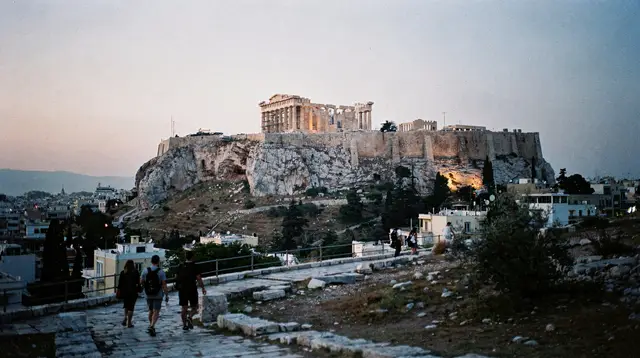
Athens after dark is a different city. The floodlit Acropolis transforms the sky above the old town, the tavernas fill with Athenians eating late, and the heat of the day drops to something almost pleasant.
Athens night walking tour — the city after darkAlternatively, dinner in Psyrri independently: order mezze (grilled octopus, saganaki, dakos, stuffed vine leaves, a Greek salad) for €35–45 for two with a carafe of local wine. The neighbourhood fills up after 20:30.
Day 2: Neighbourhoods, food, and hilltop views
Morning — Central Market and food culture (08:30–11:30)
Start at the Athens Central Market on Athinas Street (open from 07:00). The noise, smell, and energy of this covered market is an introduction to the Greek relationship with food: unhurried, serious, deeply enjoyable. The fish hall and the meat hall occupy separate covered wings; the adjacent spice market on the street spills onto the pavement. Breakfast from the working-class canteens on the ground level costs €5–7.
A guided food tour here connects you to the stalls, the flavours, and the stories behind them:
Original Athens food tour — markets, mezze, and local secretsLate morning — Syntagma and Kolonaki (11:30–14:00)
Walk south-east to Syntagma Square for the guard change at the Tomb of the Unknown Soldier (hourly; full ceremony on Sundays at 11:00). Cut through the National Garden — 15 hectares of greenery in the heart of the city, worth 20 minutes of shade — and emerge on the far side near the Zappeion congress hall.
Head uphill into Kolonaki. Athens’s smartest neighbourhood is built on the lower slopes of Lycabettus Hill and the streets climb gently past marble apartment buildings, gallery windows, and very good coffee shops. Tsakalof Street is the heart of it. A freddo espresso (cold, shaken, the Athenian way) costs €3.50. Browse the Goulandris Museum of Cycladic Art on Neophytou Douka Street (entry €12) — the collection of marble Cycladic figurines from 3000–2000 BC is haunting and unexpectedly modern in aesthetic.
Afternoon — Lycabettus summit and evening Benaki (14:30–18:30)
Take the funicular (€7 return) from Aristippou Street to the peak of Lycabettus Hill at 277 metres. The view on a clear day stretches to the Peloponnese mountains and the islands of the Saronic Gulf. The hill is Athens’s highest point and gives the full geographic picture that the Acropolis rock alone does not provide.
Descend on foot via the wooded path (20 minutes) and walk back through Kolonaki to the Benaki Museum on Koumbari Street (entry €12, closed Tuesday). The collection ranges from Neolithic artefacts to Byzantine goldwork to an extraordinary floor of Greek folk costumes and textile embroidery. The rooftop café-restaurant is worth the detour.
Evening — Cooking class or wine tasting (19:30–22:30)
For a deeper engagement with Greek food culture, a hands-on cooking class is one of the best ways to spend a second evening in Athens:
Athens cooking class with dinner — learn to cook Greek foodAlternatively, pair Greek wines with views of the Acropolis at a rooftop wine experience in Plaka:
Athens wine, cheese, and Acropolis views tastingDay 3: Cape Sounion sunset and a final morning in the city
Morning — Koukaki neighbourhood and a slow breakfast (09:00–11:30)
Take your third morning at the pace of a neighbourhood Athenian. Koukaki, immediately south of the Acropolis, is the city’s most genuinely liveable quarter for visitors: independent coffee shops, good bakeries, a Saturday farmers’ market on Drakou Street. Breakfast from a local bakery (a koulouri sesame ring and a freddo cappuccino) costs €3–4.
Visit the Kerameikos archaeological site (entry €10) — Athens’s ancient cemetery, beautifully maintained and usually crowd-free. The funerary stelae (grave markers) and the Sacred Gate where the Panathenaic procession began are quietly moving.
Afternoon and evening — Cape Sounion at sunset (13:00–21:00)
The Temple of Poseidon at Cape Sounion stands on a sea-cliff 70 km south of Athens. Lord Byron carved his name in the marble (you can still see it). At sunset, the columns turn deep amber against a violet sea and the view — 360 degrees of Attic coast and Aegean islands — is as dramatic as Greece gets.
The easiest option is a small-group guided excursion from central Athens:
Cape Sounion sunset small-group tour from AthensThe tour typically departs around 14:00–15:00, visits the temple (entry ~€10), watches the sunset, and returns to Athens by 21:00. The coastal road south passes through the Athens Riviera — stop for a swim at one of the beach clubs if you are driving independently. See our full Cape Sounion sunset trip guide for bus and taxi options.
Back in Athens, dinner near Monastiraki or in Psyrri makes the perfect final meal: a long table, grilled lamb, a bottle of agiorgitiko red from Nemea, and the floodlit Acropolis visible from the restaurant terrace.
Cape Sounion vs a fourth city day
If Cape Sounion does not appeal — perhaps you have seen it before, or you are travelling with young children who would find the round trip tiring — spend Day 3’s afternoon on a slower alternative instead: the Athens Riviera for a swim, or a return to whichever museum you rushed. But for most first-time visitors, Sounion’s combination of a genuine ancient temple and one of the best sunsets in Greece makes it worth keeping. If you would rather add a fourth day instead of choosing, see Athens in 4 days, which fits both the Riviera and Sounion into the schedule.
Frequently asked questions about Athens in 3 days
Is Cape Sounion worth the half-day round trip? Yes, for most visitors — the Temple of Poseidon on its clifftop, and particularly the sunset, is one of the most memorable single experiences near Athens, and the round trip (about 3 hours travel plus 90 minutes at the site) fits comfortably into an afternoon and evening. It is a fair trade-off against an extra hour of city sightseeing on the same day.
Do I need to book Cape Sounion in advance? A day or two ahead is sufficient for the small-group sunset tour in most seasons; book 3–4 days ahead in July–August when it is more popular. The independent KTEL bus option needs no booking at all, just the timetable checked in advance.
Practical tips
Tickets: Pre-book the Acropolis ticket and any guided tours at least 48 hours ahead in summer. Each site is booked separately on the official Hellenic Heritage ticketing portal; check there whether a multi-site ticket is offered. See our Acropolis tickets.
Getting around: A 72-hour public transport pass costs €20 and covers metro, bus, and tram — practical over three days. Most sights are walkable from each other. Read our Getting around Athens guide.
Heat: In July and August, plan outdoor ancient sites for 07:30–10:00 or after 17:00. Carry water everywhere. Midday is for museums and shaded cafés.
Cape Sounion independently: KTEL buses depart from the Pedion Areos terminal (Line E22) roughly every hour (€6.90 one way, 90 minutes). Ideal for a half-day trip. The temple entry fee (€10) is separate.
Extending your trip: Add a day trip to Delphi on Day 4 or continue to a Greek islands from Athens itinerary. See Athens in 4 days for the natural next step.
Where to stay: Plaka for ambience and proximity to ancient sites; Koukaki for a quieter, more local feel at slightly lower prices. Full breakdown at Where to stay in Athens.
Popular Athens tours on GetYourGuide
Verified deep-linked GetYourGuide tours. Book through these links and we earn a small commission at no cost to you.
GetYourGuide does not provide product photos: on its activity cards, the picture illustrates the type of experience and is not the operator's own photo.