Where to stay in Athens: the best neighbourhoods explained
What are the best areas to stay in Athens?
Koukaki is the best all-round choice: quiet, safe, walkable to the Acropolis and Acropolis Museum, with excellent local restaurants and competitive hotel prices. Plaka and Monastiraki are great for atmosphere and location but noisy at night. Kolonaki suits upmarket travellers wanting boutique hotels and a local residential feel. Syntagma is convenient but generic.
Why your neighbourhood choice matters in Athens
Athens is a compact city in its tourist core, but the neighbourhoods surrounding that core have very different characters — different noise levels, different price points, different proximity to specific sites, and very different vibes at 11 pm. A hotel in Plaka will put you 200 metres from the Acropolis entrance but 50 metres from the tavernas that play Greek pop until 2 am. A hotel in Koukaki will give you quiet sleep, a local neighbourhood and a 10-minute walk to the same entrance.
This guide covers every main area honestly — location, character, realistic price ranges, and who each neighbourhood suits.
| Best overall | Koukaki — quiet, walkable, good value |
| Best for atmosphere | Plaka — Acropolis views, noisier at night |
| Best for budget | Monastiraki — hostels and budget hotels, lively |
| Best for luxury | Syntagma or Kolonaki — grand hotels, boutique options |
| Best for families | Koukaki — quiet nights, short walk to the sights |
Koukaki: the best all-round base
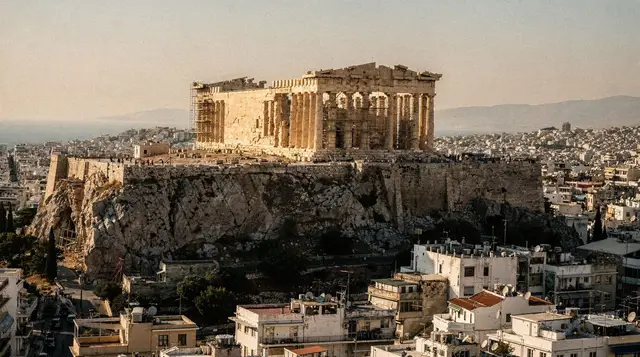
Koukaki is the neighbourhood most local Athenians recommend to visiting friends. It sits immediately south of the Acropolis and Acropolis Museum, is walkable to Monastiraki and Plaka in 15 minutes, and has a genuine neighbourhood character: good bakeries, local tavernas with no tourist markup, excellent independent coffee shops, and streets quiet enough to sleep in.
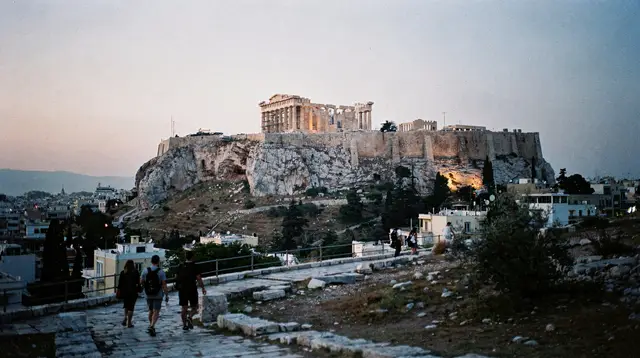
The Acropolis Museum is a 5-minute walk from the northern edge of Koukaki. The main Acropolis entrance (Dionysiou Areopagitou, the pedestrianised walkway) runs along the neighbourhood’s northern boundary. You can be at the Acropolis gate before the queues form without consulting a map.
Price range: Midrange to upper midrange. A good 4-star hotel in Koukaki runs €90–€160 per night in shoulder season, €130–€220 in July–August. Budget guesthouses and apartments start around €55–€75.
Best for: First-time visitors, couples, anyone prioritising comfort and easy access to the major sites without the noise of the tourist core.
Downsides: Fewer restaurant options than Monastiraki or Psyrri at night; a little quieter for those wanting to be in the thick of things.
Plaka: postcard Athens
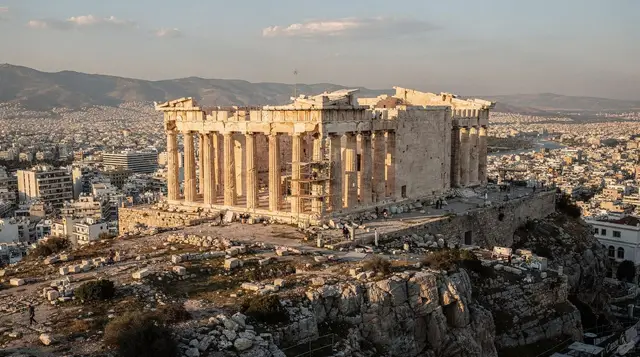
Plaka is the old neighbourhood that climbs the northeast slope of the Acropolis. It is genuinely beautiful — neoclassical and vernacular architecture, bougainvillea-covered lanes, small Byzantine churches — and it offers the most atmospheric walking in the city. Hotels with Acropolis views from their terraces are concentrated here.
The trade-off is the tourist pressure. Plaka’s main streets are lined with souvenir shops and tourist-facing tavernas charging 30–50 % more than equivalent restaurants two neighbourhoods away. It is noisy until midnight in summer. Despite this, many first-time visitors consider Plaka the obvious choice and are not wrong to do so — the atmosphere on a warm evening, with the Acropolis lit overhead, is genuinely special.
If you stay here, an evening stroll is the natural way to enjoy the lanes once the day-trippers have left, and a guided night walk through Plaka, Monastiraki and Anafiotika shows you corners you might otherwise miss.
Price range: Higher than you’d expect for the quality. A decent 3-star in Plaka costs €120–€180 in peak season because of location premium. Budget options are limited.
Best for: Atmosphere seekers, couples celebrating occasions, first-time visitors who want the full “this is Athens” feeling.
Downsides: Noise from tourist-strip tavernas and nightlife; restaurant quality-to-price ratio is generally poor; some streets feel like theme-park Greece rather than lived-in Athens.
Monastiraki: central, lively, noisy
Monastiraki is the most central neighbourhood in Athens: on top of the metro hub (Monastiraki station serves two lines), surrounded by the flea market, the bazaar, street food, and with the Ancient Agora directly adjacent. The neighbourhood pulses constantly — it is among the liveliest urban environments in Europe on a summer evening.
Hotels here are genuinely well-located for sightseeing. The Ancient Agora is a 3-minute walk; Psyrri and its restaurants are immediately north; Plaka is immediately east; the metro to Piraeus or Syntagma is at your feet.
The downsides are real: Monastiraki is noisy until 3 am on weekends (and sometimes weeknights in summer), street level can feel crowded and commercial, and the accommodation options are heavily weighted toward hostels and budget hotels. Better midrange and boutique options have opened in recent years, but the neighbourhood rewards those who can sleep through urban noise — or who are not returning to the hotel until late.
Price range: Wide. Hostels from €25 per dorm bed. Budget hotels €50–€90. Midrange boutiques €110–€160 in peak season.
Best for: Budget travellers, solo travellers, young visitors who want to be in the centre of Athens’s nightlife and market scene.
Downsides: Noise, crowds, some accommodation is genuinely old and poorly maintained.
Psyrri: hip, local, good food
Psyrri is the neighbourhood immediately north of Monastiraki, characterised by a mix of genuine local residential streets, excellent tavernas and mezedopolia, and a thriving bar and creative scene. It has been gentrifying gradually for fifteen years without losing its rough edges.
Accommodation in Psyrri is sparser than Monastiraki but increasing. Small boutique hotels and renovated neoclassical apartments have opened in recent years. It is a 3-minute walk to Monastiraki metro and 10 minutes to the Acropolis entrance.
Price range: Midrange boutiques €90–€140. Some characterful apartments via short-let platforms.
Best for: Return visitors to Athens, food-motivated travellers, people who want local character alongside convenience.
Downsides: Fewer hotel options; some streets are still rough around the edges; parking is terrible (not relevant if you’re not renting a car).
Syntagma: convenient but characterless
Syntagma Square is the transport and civic hub of Athens. The metro connects here to the airport line and multiple cross-city routes. The Parliament building and changing of the guard are here. Major international hotel chains cluster around the square.
As an accommodation base it is perfectly functional but lacks neighbourhood character. It is surrounded by government buildings, corporate headquarters, banks and chain stores. The restaurants near Syntagma are generally mediocre and overpriced. But if you are travelling for business, arriving at unusual hours, or simply want the safety and predictability of a major international hotel, Syntagma works.
Price range: Wide — the grand hotels (Hotel Grande Bretagne, the King George) charge €350–€700 per night in peak season. Business hotels and midrange chains: €100–€180.
Best for: Business travellers, people who prioritise transport connections above all else, those who want the reassurance of a major international hotel brand.
Downsides: Generic, tourist-priced dining nearby; less walkable to the ancient sites than Koukaki or Plaka; lacks neighbourhood character.
Kolonaki: upmarket and residential
Kolonaki is Athens’s most upmarket residential neighbourhood — boutique-lined streets climbing the slopes below Lycabettus Hill, art galleries, the best coffee shops in the city, the Museum of Cycladic Art, and the Byzantine and Christian Museum on its eastern flank.
It is slightly further from the Acropolis (a 20–25 minute walk) but well-connected by metro (Evangelismos station). The neighbourhood suits visitors who want to experience Athens as a European capital city rather than purely as an ancient monument complex.
Boutique hotels in Kolonaki are excellent and often better value than equivalent properties in Plaka.
Price range: Boutique hotels €110–€200 in peak season. Some luxury apartments and longer-stay options.
Best for: Upmarket travellers, art and culture focused visitors, those who want a residential neighbourhood feel, repeat Athens visitors who have already done the main sites.
Downsides: Further from the Acropolis and Monastiraki; fewer budget options.
Exarchia: for the adventurous
Exarchia is Athens’s historically anarchist, student and alternative neighbourhood, immediately north of the National Archaeological Museum. It is genuinely characterful — excellent cheap tavernas, independent bookshops, live music venues — but it can feel intimidating and is not the smooth tourist experience that characterises the neighbourhoods above.
Accommodation here is mostly low-budget guesthouses and hostels. Not recommended for families or for anyone who will be stressed by an environment that does not cater to tourists.
All neighbourhoods compared
| Neighbourhood | Price (peak) | Walk to Acropolis | Best for |
|---|---|---|---|
| Koukaki | €90–220 | 5–10 min | First-timers, couples, families |
| Plaka | €120–180+ | 5 min | Atmosphere, special occasions |
| Monastiraki | €25 (dorm)–160 | 10–15 min | Budget travellers, nightlife |
| Psyrri | €90–140 | 10 min | Food, return visitors |
| Syntagma | €100–700 | 20 min | Business, transport connections |
| Kolonaki | €110–200 | 25–30 min | Upmarket, art and culture |
| Exarchia | Budget guesthouses | 30–35 min | Adventurous, budget-first |
Hotels vs short-let apartments
Athens has a large, well-developed short-let apartment market alongside its hotels, and the choice between the two matters more here than in many cities. Apartments in Koukaki, Psyrri and Kolonaki often occupy renovated neoclassical buildings with real character and can work out cheaper per person for groups or families of three or more, since you avoid paying for multiple hotel rooms. The trade-off is no daily housekeeping or front desk as standard, and quality varies more than with a rated hotel — check recent reviews carefully rather than photos alone.
Hotels remain the safer choice for solo travellers, short stays of one or two nights, or anyone who values a staffed front desk for luggage storage, late check-in, or local advice. For a first Athens visit where you want zero uncertainty, a well-reviewed 3- or 4-star hotel in Koukaki or Psyrri is the low-risk option; for a week-long stay with a kitchen and living space, an apartment often serves better.
Matching your neighbourhood to your itinerary
The best base depends less on the neighbourhood’s reputation than on how you plan to spend your days. If your trip is built around the ancient sites, Koukaki and Plaka put you closest to the Acropolis, the Parthenon and the Acropolis Museum, and make early starts easy; with a base this close, it is worth booking a guided Acropolis visit with skip-the-line entry ahead of time and walking up first thing. Our Athens in 2 days and Athens in 3 days itineraries both work well from any of these bases.
If you are in Athens for a short first visit, the first-timers weekend itinerary shows how much of the core you can cover on foot, which is a good argument for sleeping in Koukaki, Plaka or Monastiraki rather than somewhere that needs a metro ride every morning. Visitors with more time can combine a central base with day trips from Athens without needing to change hotels.
Food and evenings matter too. If dining is a priority, Psyrri and Monastiraki put you among the best tavernas in Athens and the Psyrri bar crawl route, while Plaka suits a slow evening stroll, as described in the Plaka walking tour. Anyone who plans late nights should read the Athens nightlife guide before choosing, because the liveliest streets are exactly the ones you may want to sleep away from.
Getting around also shapes the decision. Staying near a metro station gives you flexibility even if you are not within walking distance of the sites, and the Athens metro guide and getting around Athens explain how the network connects the neighbourhoods above. When you arrive, the airport to city guide and airport transfers cover the practical side of reaching your hotel.
Timing of the year can change the answer as well. In high summer, a quieter street and good air conditioning count for more than a rooftop view, so see Athens in summer and the best time to visit Athens when you decide how much to spend. Travelling with children? The Athens with kids guide has more on what makes a base comfortable for families. And if you are weighing the whole trip, how many days in Athens is a useful companion to this page.
Practical accommodation tips
Book early for summer. Good midrange hotels in Koukaki and Plaka sell out in July and August by March. If your travel dates are in peak season, lock in accommodation 3–4 months ahead.
Look beyond the hotel search defaults. Athens has excellent small boutique hotels and neoclassical apartment conversions that often do not appear prominently in algorithm-sorted results. Searching specifically for Koukaki or Kolonaki properties will surface options you would otherwise miss.
Check for Acropolis views. Several Koukaki and Plaka properties have roof terraces or upper-floor rooms with direct Acropolis sight lines. This is worth paying a small premium for — watching the Acropolis lit at night from your terrace is a distinctive Athens experience.
Consider the noise. Athens is a loud city at night. Properties on the Dionysiou Areopagitou pedestrian walkway (the main boulevard below the Acropolis south slope) face the promenade directly and can be noisy. The side streets of Koukaki immediately behind are much quieter.
For budgeting your accommodation as part of a full trip cost, see the Athens 3-day budget guide and the Athens trip budget calculator.
Using Athens as a base for day trips
If part of your time in Athens will be spent on day trips — Cape Sounion, Delphi, Nafplio or Saronic island cruises — proximity to Piraeus (for ferry departures) and Monastiraki (for bus and tour departures) is useful. Koukaki, Monastiraki and Syntagma are all well-connected to these departure points.
The Athens City Pass includes hop-on hop-off bus access across multiple days and is worth considering if you want maximum flexibility for moving between your accommodation and the main sites.
Frequently asked questions about where to stay in Athens
Is it safe to stay in Monastiraki?
Yes. Monastiraki is a busy, urban neighbourhood that has some petty crime typical of any tourist-heavy area — pickpocketing at the flea market, the occasional scam at tourist-facing bars — but is not a dangerous neighbourhood. Standard urban awareness applies. See is Athens safe for specifics.
Which neighbourhood is best for families?
Koukaki is the most family-friendly: quiet at night, walkable to the main sites, with a neighbourhood feel that provides a gentler environment than the bustle of Monastiraki. Plaka can also work for families, as long as you are not on the main nightlife streets.
Can I walk from my hotel to the Acropolis?
From Koukaki, Plaka or Monastiraki: yes, comfortably, in 5–15 minutes. From Syntagma: 20 minutes. From Kolonaki: 25–30 minutes. From Exarchia: 30–35 minutes. Athens’s archaeological core is compact.
Is there a hostel district in Athens?
Monastiraki has the highest concentration of hostels, followed by the area around Victoria Square. Psyrri has a few newer, well-reviewed hostels. The area around the National Archaeological Museum also has budget accommodation options.
How far is the airport from central Athens?
The Athens Metro Airport Line runs between Athens International Airport (Eleftherios Venizelos) and Syntagma in approximately 40 minutes (€9 per person). Taxis take 35–55 minutes depending on traffic and cost a flat €50 by day (05:00–24:00) or €65 at night (00:00–05:00) to the city centre. Most central neighbourhoods are within a 10-minute taxi from Syntagma. See the full Athens airport to city guide.
Are there good hotels in Athens with Acropolis views?
Yes — specifically in Koukaki, southern Plaka, and along the Dionysiou Areopagitou walkway. Properties to search specifically include boutique hotels on Rovertou Galli street and the Makrygianni area of Koukaki. Several roof-terrace hotels in this zone offer direct sightlines to the Parthenon. Book early; these rooms sell quickly for July and August.
Is it better to stay near Piraeus for a cruise or ferry departure?
Only if your ferry or cruise departs very early or your onward flight is right after. Central Athens neighbourhoods like Koukaki and Monastiraki are 20–30 minutes from Piraeus by metro, which is manageable for most departures; staying in Piraeus itself trades sightseeing convenience for marginal transport savings and is rarely worth it unless you’re arriving late at night or leaving before dawn.
Should I split my stay across two neighbourhoods?
For trips of 4+ nights, it can work well — for example, 2–3 nights in Koukaki or Plaka for the ancient sites, then a switch to Kolonaki for a more residential final stretch. For shorter stays (2–3 nights), the hassle of moving hotels usually outweighs the benefit; pick one well-located base like Koukaki and stay put.
Popular Athens tours on GetYourGuide
Verified deep-linked GetYourGuide tours. Book through these links and we earn a small commission at no cost to you.
GetYourGuide does not provide product photos: on its activity cards, the picture illustrates the type of experience and is not the operator's own photo.