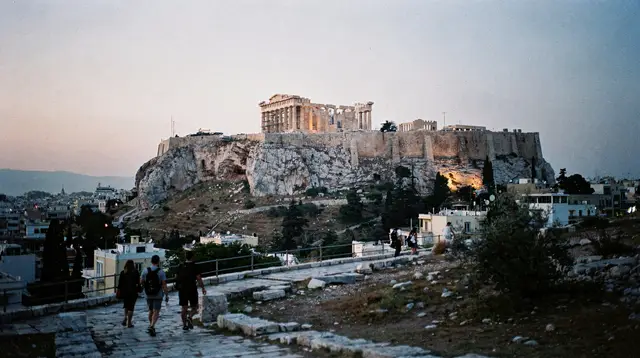
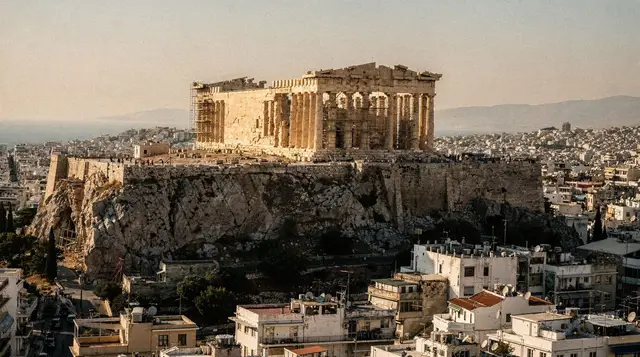
Best time to visit Athens: month-by-month guide
What is the best time of year to visit Athens?
April–May and October–early November are the sweet spots: temperatures are comfortable (18–26 °C), the Acropolis and archaeological sites are fully open, crowds and prices are lower than summer, and Athens is genuinely pleasant to walk. July and August are manageable but hot (35–40 °C) and busy. December–February is the quietest, cheapest period — cool but rarely cold, with very few tourists.
Why timing matters more in Athens than most European cities
Athens bakes in summer. The Attic Basin sits in a natural bowl of limestone hills that trap heat, and temperatures between late June and late August routinely hit 38–42 °C during afternoon heatwaves. Combine that with full sun on white marble and you get outdoor sightseeing conditions that are genuinely challenging for anyone not used to Mediterranean summers. Athens also has one of Europe’s most concentrated collections of outdoor ancient sites — the Acropolis, the Ancient Agora, the Temple of Olympian Zeus — so your comfort level on foot in the heat has a direct impact on how much you enjoy the city.
Getting timing right also affects your wallet. Hotel prices in July and August can be two or three times the rates charged in November or February. Combine that with smaller crowds at the sites and it is clear that the shoulder seasons offer a dramatically better value-for-experience ratio.
This guide gives you an honest, month-by-month picture so you can decide when to go for your priorities.
| Best overall | Late April–May or late September–October |
| Cheapest | January–February (hotels 40–60% lower than August) |
| Hottest | July–August (heatwaves of 38–42°C) |
| Best for islands | June–September (widest ferry frequency, warmest sea) |
| Acropolis ticket | €30, same price all year (no winter half-price) |
Month-by-month breakdown
January and February
These are the quietest, cheapest months in Athens. The city is genuinely uncrowded — many popular restaurants are still full of locals, but tourist-heavy spots in Plaka feel almost empty. Expect daytime temperatures of 10–14 °C, occasional rain (Athens averages around 12 rainy days per month in winter), and evenings down to 5–8 °C.
Every archaeological site stays open, though the Acropolis is occasionally closed for a few hours during rare high-wind events. The Acropolis ticket costs €30 all year (there is no longer a winter half-price). The Acropolis Museum charges the same year-round (€20), but you’ll have the galleries to yourself.
Budget travellers will find hotel rates 40–60 % lower than July. Good central hotels that cost €160 per night in August can fall to €70–90. Flight prices to Athens from most European hubs are also at their annual low. If your primary interest is museums, archaeology and Athenian neighbourhood life — rather than beach days and island ferries — January and February are genuinely excellent.
March
Spring arrives tentatively in March. Temperatures rise to 14–18 °C by the end of the month, occasional rain still features, and the archaeological sites start filling up on Greek school-holiday weekends. The Greek national holiday on 25 March brings parades and some site closures. Easter (if it falls in late March in a given year) creates a short spike in domestic tourism.
Prices are still low and the city is only mildly busy. Almond trees bloom around the Acropolis hill; the light softens from the hard winter glare. A good shoulder-season choice.
April and May — the spring sweet spot
This is consistently the best period for most visitors. Temperatures climb from around 18 °C in early April to 27 °C in late May — warm enough to be pleasant outdoors from morning to evening, cool enough to climb the Acropolis without suffering. The long afternoons allow you to visit two or three sites in a single day without exhaustion.
Wildflowers cover the slopes around the Acropolis and Cape Sounion. The sea temperature reaches a swimmable 19–20 °C by mid-May, making a day trip to the Athens Riviera or a Saronic island cruise a realistic addition to your trip. Ferry services to Santorini and Mykonos ramp up significantly from April, with better frequency and prices than peak season.
Crowds are building through May — expect queues at the Acropolis entrance if you arrive without pre-booked tickets — but nothing like the July–August peak. Hotel prices are moderate. If you have flexibility, the last two weeks of April and the first two weeks of May represent the optimal Athens window in most years.
The early-morning Acropolis and museum tour is well worth booking in May: you get the site in golden light before the bulk of the day’s visitors arrive.
June
June is the transition month. The first two weeks feel like extended late spring: 28–30 °C, low humidity, long light. By the final week, summer has fully arrived and temperatures push past 33 °C. Crowds grow steadily throughout the month; prices follow.
Pros: the light is exceptional for photography, the sea is warm, ferry routes to all the Greek islands are at full frequency, and the Athens open-air cinema season begins (a genuinely special Athens experience — watching a film in a garden under the Acropolis lit up at night).
Cons: the last week of June brings the first genuine summer heat and the start of the serious tourist surge. If you can go in early June rather than late June, do.
July and August — peak summer
These are the busiest, hottest, most expensive months. Average highs in July reach 33–34 °C; August pushes to 35–36 °C, with heatwaves regularly hitting 40–42 °C for days at a time. The midday sun on the marble pathways around the Acropolis is punishing — a 90-minute guided tour in early August is a serious physical commitment.
The crowds are substantial. On a busy summer morning, 10,000–15,000 visitors pass through the Acropolis site. Without a pre-booked timed ticket, you can queue 60–90 minutes at the gate. The skip-the-line guided Acropolis tour is virtually essential in July and August — it bypasses the walk-up queue and comes with expert commentary that transforms the visit.
If you’re visiting in summer, apply the Athens in summer heat tactics: start sites by 8 am before the heat builds, retreat to a museum or air-conditioned cafe from noon to 4 pm, then do evening exploration. Athens nightlife, rooftop bars, and outdoor restaurants are all at their best in July and August, so the city rewards evening energy. Prices for flights and hotels are at their annual peak.
One underrated summer benefit: island connections are superb. If Athens is part of a wider Greece trip, the frequency of ferries and flights to every island from Piraeus is at its maximum.
September and October — the autumn sweet spot
September is increasingly considered Athens’s best month by experienced Greece travellers. The heat softens: 30–32 °C in early September, falling to a very comfortable 25–27 °C by early October. The sea stays warm (24–26 °C in September, 22–23 °C in October). Summer crowds begin dispersing from mid-September, prices drop noticeably, and the city retakes some of the local feel that evaporates in July.
October continues the benign trend: temperatures settle around 20–23 °C, hotel rates fall back to spring levels, and the Acropolis is once again walkable in the middle of the day. A handful of rainy days start appearing, but Athens in an October shower is still very pleasant. By late October, the light has taken on a warm, low-angle quality that photographers love.
The Athens street food tour is particularly good in September and October when the heat doesn’t make outdoor eating uncomfortable — you’ll cover more ground, taste more, and enjoy the neighbourhood atmosphere more fully.
For island trips, September is ideal: the sea is still warm, ferries still run frequently, but prices are lower than August and the crowds have thinned.
November and December
Early November still carries some warmth (18–20 °C), but the season turns definitively from mid-month. The tourist industry is winding down: some Santorini hotels close, island ferry frequencies drop, and tourist-facing restaurants in Plaka start keeping shorter hours. But Athens itself — the city, its museums, its restaurants, its neighbourhoods — stays alive.
December temperatures sit around 14–16 °C by day, 8–10 °C at night. Athens decorates for Christmas, Syntagma Square gets a large Christmas tree and market, and the city is genuinely festive. Hotel prices in December (outside the Christmas–New Year week, when they spike slightly) are the lowest of the year after January–February.
For visitors interested primarily in archaeological museums — the National Archaeological Museum, the Acropolis Museum, the Byzantine and Christian Museum — there is a real argument for December: you’ll walk through extraordinary collections without the crowd pressure of any other time of year.
Quick comparison table
| Period | Avg high (°C) | Crowds | Hotel cost | Acropolis ticket |
|---|---|---|---|---|
| Jan–Feb | 12–14 | Very low | Lowest | €10 |
| Mar–Apr | 17–22 | Low–moderate | Low | €10 (Mar) / €20 (Apr) |
| May–Jun | 26–31 | Moderate–high | Moderate | €20 |
| Jul–Aug | 34–36 | Very high | Highest | €20 |
| Sep–Oct | 25–30 | Moderate | Moderate | €20 (Sep) |
| Nov–Dec | 14–18 | Low | Low | €20 (Nov) / €10 (Dec) |
Best time by travel type
Budget travellers: January–February or November. The combination of lowest hotel and flight prices and the quietest sites is unbeatable. See the Athens 3-day budget guide for exact numbers.
First-time visitors wanting the full experience: Late April or October. Comfortable temperatures, all sites open, manageable crowds, moderate prices.
Photography: April (wildflowers, soft light) or October (warm afternoon angles, thin crowds).
Families with children: May or September. Warm enough for beach days, not so hot that outdoor ancient sites become an ordeal. See Athens with kids for site-by-site advice.
Greek island combination: June–September for the widest ferry frequency, cheapest fares, and warmest sea.
Museum focus: November–February. The collections are world-class and you’ll almost have them to yourself.
What to book regardless of when you go
Pre-booking the Acropolis is essential from April through October. Even in spring and autumn, walk-up queues form by mid-morning on busy days. The pre-booked Acropolis entry gives you a timed slot and you walk straight in.
If you want an overview of the city on arrival, the Athens hop-on hop-off bus covers the main sites on a single circuit and helps orientate a first-time visitor quickly.
For more on building your trip structure, see the how many days in Athens guide and the Athens itinerary planning hub.
Timing around Greek public holidays and festivals
A few dates are worth planning around specifically. Greek Orthodox Easter brings candlelit midnight processions and roast lamb on Easter Sunday, but it’s also the busiest domestic travel weekend of the year — book the Acropolis and accommodation months ahead. The Athens Epidaurus Festival runs through summer, staging performances at the ancient theatre of Epidaurus and at the Odeon of Herodes Atticus below the Acropolis — worth checking the programme if you’re visiting June–August anyway. If you’re combining Athens with island-hopping around a specific date, cross-check ferry schedules early, since Cyclades routes thin out considerably outside April–October.
Frequently asked questions about the best time to visit Athens
Is Athens too hot to visit in summer?
It is genuinely hot — 35–40 °C during heatwaves — but not impossible. The key is adjusting your schedule: visit outdoor sites before 10 am and after 5 pm, spend midday in museums or air-conditioned cafes, and accept that the afternoon is for rest. Athens with a smart summer strategy is very enjoyable; see Athens in summer heat for the full playbook.
When are crowds at the Acropolis at their lowest?
January and February are the quietest months of the year. Even in those months, arrive before 10 am to avoid the small wave of morning visitors. October and November are also very quiet compared to summer.
Does the Acropolis close in winter?
No. The Acropolis is open year-round, every day (Monday–Sunday), including most public holidays. The only closures are occasional emergency shutdowns due to high winds or rare maintenance days. Winter hours are typically 8 am–5 pm; summer hours extend to 8 pm or 9 pm.
When do hotel prices drop the most?
The sharpest drop happens from late October through February, excluding the Christmas–New Year period. The difference between August and January rates at the same central Athens hotel can be 50–60 %.
Is Easter a good time to visit Athens?
Greek Orthodox Easter (which rarely coincides exactly with Western Easter) is a genuinely special experience — midnight processions, candlelit streets, the smell of roasting lamb on Easter Sunday. However, it is also the busiest domestic travel weekend of the year. Book accommodation and the Acropolis months ahead if you plan to visit during Easter week.
What about visiting Athens as part of a Greece trip including islands?
For island combinations, late May to early October gives you the best ferry connections and warmest sea. Late June and September offer the best balance of good weather, full ferry schedules and lower-than-August prices. See Greek islands from Athens for ferry routes and island timing advice.
How many days in Athens is enough regardless of season?
Most first-time visitors do well with 3–4 days for the city itself, plus additional days for day trips or islands. See the how many days in Athens guide for a season-adjusted breakdown, since summer’s heat schedule (mornings and evenings only) effectively shortens each usable day.
Is spring or autumn the better shoulder season overall?
Both are excellent and very close. Spring (April–May) has wildflowers and slightly lower humidity; autumn (September–October) has a warmer sea and a longer, more comfortable evening season. If island time matters more, lean autumn; if it’s purely about the city, either works equally well.
Popular Athens tours on GetYourGuide
Verified deep-linked GetYourGuide tours. Book through these links and we earn a small commission at no cost to you.
GetYourGuide does not provide product photos: on its activity cards, the picture illustrates the type of experience and is not the operator's own photo.