Athens itinerary planning: how to build your trip
How do I plan an Athens itinerary?
Start with the Acropolis on day one (pre-booked, early morning) and buy tickets site by site on the official portal. Spend day two on the Acropolis Museum and one of the overlooked ancient sites (Kerameikos or Ancient Agora in depth). Day three is a day trip or museum day. Build your specific sequence around your trip length, season, and whether you want islands, ancient sites or neighbourhood depth.
The framework: how Athens itineraries actually work
Planning an Athens itinerary is simpler than it appears once you understand two things: the site geography, and the sequencing logic.
| Minimum useful trip | 2 full days |
| Comfortable trip | 3–4 days |
| With islands | Add 3+ days per island stop |
| Must pre-book | Acropolis timed entry (Apr–Oct) |
| Best planning window | 2–3 months ahead in summer, 4–6 weeks shoulder, last-minute fine in winter |
The site geography: Athens’s ancient core is compact. The Acropolis, Ancient Agora, Roman Agora, Kerameikos, and Temple of Olympian Zeus are all within a 1.5-kilometre radius of Monastiraki. You can physically reach all five in a single day. The question is whether you should, and the answer is usually no — depth over coverage produces better travel memories.
The sequencing logic: Start with the Acropolis, always. It is the defining experience of Athens and should anchor your first morning before anything else. Everything else sequences around it.
Step 1: Fix your priorities
Before building a day-by-day sequence, decide what you want from Athens. This question has different answers for different visitors:
Ancient archaeology focus: Acropolis → Acropolis Museum → Ancient Agora → Kerameikos → Delphi day trip. The National Archaeological Museum is essential. Budget 4 days minimum.
City + archaeology balance: Acropolis → Acropolis Museum → Plaka and Monastiraki in depth → Kolonaki → Lycabettus Hill → one ancient site per day. Works well in 3–4 days.
Island combination: Athens 2–3 days for key sites, then ferry to Santorini, Mykonos or a Saronic island. The Greek islands from Athens guide covers all ferry connections.
Food and culture: Athens food tours, taverna exploration, coffee culture, markets, neighbourhood walking. 3–4 days works well, with the Acropolis and Acropolis Museum as structural anchors.
Family trip: Athens with kids requires specific site selection and pacing. The Acropolis, Ancient Agora and National Archaeological Museum all work well for older children; Kerameikos and Byzantine sites are harder to sustain interest.
Step 2: Know what requires pre-booking
The planning step that most people skip and most regret: pre-booking the Acropolis.
From April through October, the walk-up queue at the main Acropolis gate runs 45–90 minutes. A pre-booked timed entry slot eliminates this entirely. The cost is identical to the walk-up ticket. The pre-booked Acropolis entry is the most important booking in your Athens trip.
If you want a guided interpretation of the site (recommended for first-time visitors), the skip-the-line guided Acropolis tour combines queue bypass with expert commentary.
Everything else in Athens can be booked on the day or a day ahead in most seasons. Day trips to Delphi should be booked 2–3 days ahead in high season; Saronic island cruises often depart daily and can be booked the evening before.
Step 3: Build the core sequence
This framework adapts to any trip length.
Day 1 — The Acropolis and the ancient walk
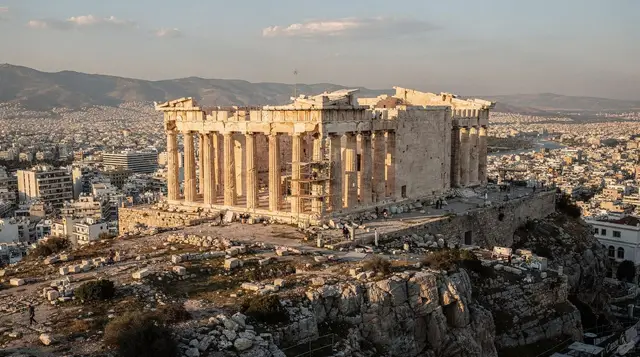
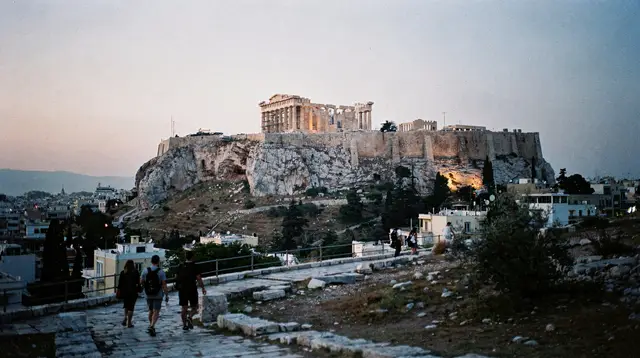
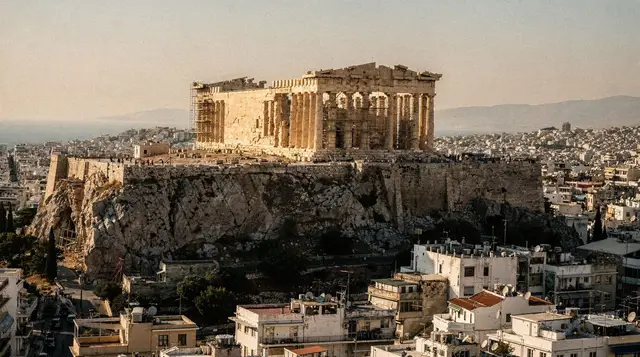
8:00 am: Acropolis (pre-booked, early slot). Allow 90–120 minutes on the summit. The Propylaea, Temple of Athena Nike, Erechtheion and Parthenon are the primary structures. The views from the summit over Athens — in every direction — are extraordinary and worth taking time with rather than rushing between marble monuments.
10:00–10:30 am: Descend via the south slope, passing the Theatre of Dionysus (the world’s oldest purpose-built theatre, from 330 BC) and the Odeon of Herodes Atticus (still used for summer concerts).
11:00 am: Ancient Agora — the civic heart of classical Athens. The Temple of Hephaestus is the best-preserved ancient temple in Greece; the Stoa of Attalos museum houses artefacts excavated from the site. Allow 90 minutes.
12:30 pm: Lunch in Monastiraki or Psyrri — away from the tourist strip, toward the local restaurants.
Afternoon (if energy and heat allow): Roman Agora and Hadrian’s Library (both compact and quick — 30–45 minutes each). Alternatively, save these for a cooler morning later in your trip.
Evening: Monastiraki flea market, Plaka evening walk, dinner at 9 pm.
Buy today: The Acropolis and five-site combo ticket. Each site is booked on the official Hellenic Heritage ticketing portal; check there whether a multi-site ticket is offered.
For a fully structured Day 1 itinerary, see Athens in 2 days.
Day 2 — The Acropolis Museum and neighbourhood depth
9:00 am: Acropolis Museum. Allow 2–2.5 hours minimum. Many visitors allocate one hour and regret it. The third-floor Parthenon Gallery — a continuous glass hall with the surviving frieze sections displayed in their original sequence, interspersed with plaster casts of the London sections — is one of the most powerful museum experiences in Europe.
12:00 pm: Lunch in Koukaki or back toward Monastiraki.
Afternoon: Two options, depending on priorities:
Option A — Kerameikos: Athens’s ancient cemetery, almost always uncrowded, with an excellent small museum and atmospheric ruins. Allow 90 minutes. Then explore Psyrri.
Option B — Kolonaki: The upmarket residential neighbourhood with the Museum of Cycladic Art (exceptional collection of prehistoric Cycladic art; 90 minutes) and the Byzantine and Christian Museum. Lycabettus Hill at sunset.
Evening: The Athens food tour runs most afternoons and evenings, covering multiple neighbourhoods and providing an excellent map of the city’s food culture. The original Athens food tour from Monastiraki is one of the city’s best-value experiences.
Day 3 — Day trip or museum day
Option A — Cape Sounion: Half-day or afternoon trip to the clifftop Temple of Poseidon. Combine with a beach stop on the Athens Riviera. A sunset arrival at Sounion is the ideal; afternoon departures (around 3 pm) work for sunset timing. See the Cape Sounion guide.
Option B — Delphi: Full-day trip (depart 7:30–8 am, return 7–8 pm). The site and museum combined are among the best classical experiences in Europe. Worth the full day. See the Delphi day trip guide.
Option C — Nafplio, Mycenae and Epidaurus: Full-day trip, the complete Argolid circuit. Ancient Mycenae (the Lion Gate, the Treasury of Atreus), Epidaurus (the ancient theatre with perfect acoustics), and Nafplio (the most charming small city in Greece). A full and demanding day; excellent.
Option D — National Archaeological Museum in depth: A deliberate slow day for the best museum in the Hellenic world. The Mycenaean gold, the bronze Zeus or Poseidon (8th-century BC), the Antikythera mechanism, the Minoan frescoes from Akrotiri — allow 3 hours minimum. Then afternoon in Exarchia or back to the central neighbourhoods.
Day 4 and beyond — adding depth or islands
A fourth day allows you to complete sites you have not yet visited, do a Saronic island trip (ferry from Piraeus to Hydra, Aegina or Poros — each 90 minutes to 2 hours), or simply slow down and enjoy Athens at street level.
For a structured 4-day plan, see Athens in 4 days.
The core sequence at a glance
| Day | Morning | Afternoon | Evening |
|---|---|---|---|
| 1 | Acropolis (early slot) | Ancient Agora, lunch in Monastiraki | Plaka walk, dinner 9 pm |
| 2 | Acropolis Museum | Kerameikos or Kolonaki + Cycladic Art | Food tour or Lycabettus sunset |
| 3 | Day trip (Sounion, Delphi or Argolid) or National Archaeological Museum | — | Return, quiet dinner |
| 4+ | Saronic island, unfinished sites, or slower street-level Athens | — | — |
This table is a starting sequence, not a rulebook — swap days around freely if a day trip’s departure time or your energy level makes more sense in a different order.
Adjusting for season
Summer (June–September): Apply the early-morning outdoor / midday indoor / late-afternoon outdoor structure described in Athens in summer heat. Every day, plan to be at outdoor sites by 8 am and indoors or resting from noon to 4:30 pm. Extend your evenings — Athens in summer is genuinely beautiful after 7 pm.
Spring and Autumn (April–May, September–October): Standard scheduling works. Comfortable temperatures allow midday site visits without issue. Buy your site tickets, pre-book the Acropolis, and you can execute the core sequence in any order.
Winter (November–March): No scheduling constraints from heat. The Acropolis ticket is €30 all year, with no winter half-price. Crowds are minimal. The National Archaeological Museum and Acropolis Museum are at their least crowded. A winter Athens trip focused on museums and ancient sites with no heat pressure is underrated.
See best time to visit Athens for the full seasonal breakdown.
Adjusting for interests
Walking tour as structure: The Athens highlights walking tour and the Plaka walking guide provide structured pedestrian routes through the city’s historical core. These work well as day-one orientation before self-guided exploration.
Food-focused itinerary: Build around the food tour (day one or two evening), then add best souvlaki, Athens street food, Greek wine and Athens coffee culture as supplementary activities between site visits. Varvakios central market is excellent for a morning food experience.
History depth: Add the Athens history timeline and Parthenon guide as pre-reading, then sequence your site visits chronologically: Kerameikos (burials from 12th century BC), Acropolis (5th century BC), Ancient Agora (ongoing from 5th century BC), Roman Agora (1st century BC–2nd century AD). The National Archaeological Museum spans all periods.
Combine with Greek islands: Plan Athens as a 2–3 day introduction, then ferry onward. Santorini from Athens by high-speed ferry takes 4.5–5 hours; Mykonos from Athens is 2.5–3 hours by high-speed. Book ferries in advance for July–August (they sell out). See the islands hub and Greek islands from Athens for logistics.
Practical logistics checklist
Before your trip:
- Book Acropolis entry with timed slot (April–October)
- Book ferry tickets to islands if applicable (especially July–August)
- Download offline Athens maps
- Check best time to visit Athens for seasonal context
- Estimate budget using the Athens trip budget calculator
- Check the Athens packing list for site-appropriate gear
On arrival day:
- Buy your site tickets on the official Hellenic Heritage ticketing portal (if not already done with the pre-booked Acropolis slot)
- Identify a local souvlaki or bakery near your hotel for breakfast
- Check any Acropolis-adjacent updates (occasionally closed for wind events or maintenance)
Building in slack — and a rainy-day backup
Every itinerary above assumes good weather and full energy. Neither is guaranteed. Build one flexible half-day into any trip of 3 days or more — a buffer for a longer-than-expected Acropolis Museum visit, a missed ferry connection, or simply fatigue. If rain hits on a day you had planned outdoors, the Athens on a rainy day guide has a ready-made museum-and-covered-market alternative that slots into any day of this sequence without wasting the day.
If you’re travelling with children, resequence rather than skip: the Athens with kids guide suggests shorter museum blocks and earlier starts, which usually means splitting Day 2’s museum-plus-neighbourhood combination across two half-days instead of one full day.
A note on private tours if you want the sequence handled for you
If assembling this yourself feels like too much logistics for a short trip, a private guide can execute the same priorities — Acropolis first, then museum, then a chosen day trip — without you having to sequence anything. The Athens private tours guide covers when that trade-off is worth the cost versus doing it independently.
Full-day private Athens sightseeing — a guide builds the sequence for youFrequently asked questions about Athens itinerary planning
What order should I visit the Athens sites?
Acropolis first, always. It is the anchor of any Athens visit and the context for everything else. After that: Ancient Agora (walks naturally after the Acropolis, connected on foot), then Acropolis Museum (best on day two so you’ve seen the site first). Kerameikos and the Roman Agora can go at any point in your trip.
Should I hire a guide for the Acropolis?
For first-time visitors, yes. The Acropolis is deeply layered — the sequence of buildings, the sculptural programme of the Parthenon, the multiple building phases, the religious significance — and guidebook reading alone rarely conveys this as vividly as a good guide. The Athens highlights walking tour covers the Acropolis hill alongside the city’s other major landmarks in a single half-day. For repeat visitors or history specialists, self-guided works well.
How far in advance should I plan an Athens trip?
For summer (July–August): 2–3 months ahead for accommodation and Acropolis tickets. For shoulder season (April–May, September–October): 4–6 weeks is comfortable. For winter: last-minute planning works easily.
Is Athens better as a standalone trip or combined with islands?
Both work well, for different traveller types. A focused Athens trip gives you depth in one of Europe’s most historically rich cities. An Athens-plus-islands trip gives you breadth across the range of what Greece offers. The most common regret is giving Athens too few days when combining with islands — allow at least 3 days in Athens before island-hopping.
Can I plan Athens without booking a tour?
Entirely. Athens is a self-explanatory, well-signed city with excellent public transport and walkable archaeological zones. The main non-negotiable pre-booking is the Acropolis timed entry slot; the rest can be done independently. Tours add interpretive value at the Acropolis and food experience value in the market and neighbourhood context, but they are not logistically necessary.
What is the Acropolis ticket calculator and when should I use it?
The Acropolis ticket calculator helps you identify the right ticket combination — standard entry or a tour package — based on your trip length and planned site visits. Use it before booking if you are uncertain which option makes more sense for your specific itinerary.
How many days is too few for Athens?
A single day is workable only as a cruise-port or layover stop — see Athens in one day from port for that specific case. For a standalone trip, fewer than 2 full days means skipping either the Acropolis Museum or a proper neighbourhood walk, which most visitors regret. Build to at least 2 full days before adding day trips or islands.
Should I build my itinerary around one big day trip or several short ones?
It depends on the day trip. Delphi and the Argolid (Mycenae, Epidaurus, Nafplio) are full-day commitments and don’t combine well with anything else that day. Cape Sounion is a half-day, so it pairs naturally with a morning museum visit or a beach stop on the Athens Riviera. Don’t schedule two full-day trips back to back — you’ll spend the trip on buses rather than in Athens itself.
Popular Athens tours on GetYourGuide
Verified deep-linked GetYourGuide tours. Book through these links and we earn a small commission at no cost to you.
GetYourGuide does not provide product photos: on its activity cards, the picture illustrates the type of experience and is not the operator's own photo.