
Greek wine guide: a beginner's introduction to the essentials
What are the key Greek wines a beginner should know?
Start with three: Assyrtiko from Santorini (crisp, mineral white), Xinomavro from Naoussa (structured red, similar to Barolo), and Agiorgitiko from Nemea (approachable red, easy entry point). Moschofilero from Mantinia adds a fragrant, floral white. All four are now available across Athens wine bars and restaurants.
Greek wine: the basics
Greek wine has been made for at least 6,500 years on the same soil where contemporary winemakers now work. The variety count is extraordinary: Greece has over 300 indigenous grape varieties, most of which are found nowhere else on earth. The majority of them are unpronounceable to non-Greek speakers and unknown outside specialist wine circles. But a handful have broken through to international recognition in the past two decades, and those handful are worth understanding before you visit.
| Where | Athens wine bars citywide; source regions Santorini, Naoussa, Nemea, Mantinia |
| Cost | €8–16/glass, €25–60/bottle for quality PDO wines in Athens |
| Time needed | A single tasting session (1.5–2 hrs) covers the essentials |
| Getting there | Any central Athens wine bar; guided tastings include pickup or a set venue |
| Best time | Evening, paired with a meal for the fullest context |
The restructuring of Greek winemaking happened in the 1990s and accelerated through the 2000s. A generation of Greek winemakers trained in Burgundy, Bordeaux, and Napa, then returned to Greece and applied contemporary techniques to indigenous varietals that had been producing characterless bulk wine for decades. The result is a wine culture with genuine depth — traditional varieties expressing terroir, new appellations, and a domestic market that has begun drinking Greek wine out of preference rather than necessity.
This guide covers the key varieties, the main regions, and how to access Greek wine in Athens.
Assyrtiko: the benchmark white
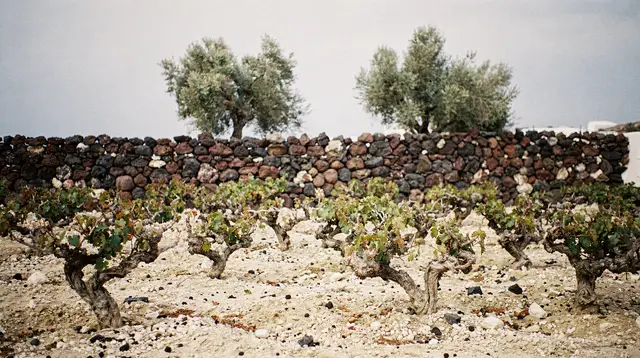
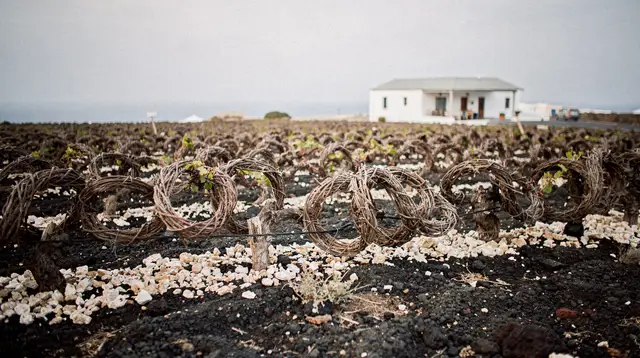
Assyrtiko is Greece’s most internationally recognised white grape variety, and the one that has done more than any other to establish Greek wine’s credibility abroad. It grows primarily on Santorini, where the volcanic soil, the fierce Aegean sun, and a winemaking tradition of training vines in low baskets (kouloura) to protect against the wind produce a wine with unusual characteristics.
What it tastes like: High acidity, bone dry, intensely mineral — volcanic stone, citrus zest, sea salt. Unoaked versions are bracingly clean; barrel-aged versions (Nykteri, the traditional Santorini white, fermented and aged in oak) develop honey, toast, and a rich weight while maintaining the acid backbone.
Price range in Athens: A Santorini Assyrtiko from a quality producer (Sigalas, Argyros, Hatzidakis) costs €20–45 in a restaurant, €15–30 in a wine shop. The top cuvées (Argyros Monsignori, Sigalas Kavalieros) reach €60–100 in restaurants.
Where to taste it: Any wine bar in Athens will carry Santorini Assyrtiko. For a dedicated tasting on the island itself, the Santorini wine tours guide covers the cellar-door experience. In Athens, the Athens wine tasting experiences cover guided Assyrtiko tastings with context.
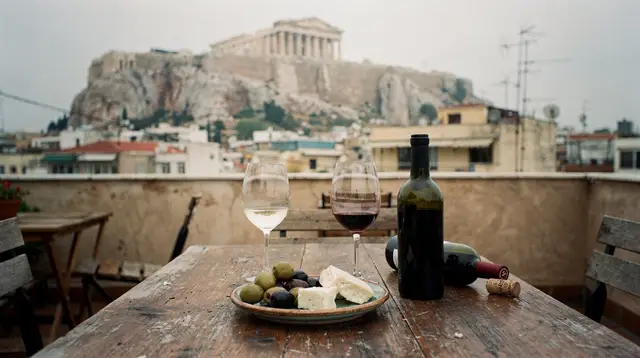
Athens Wine and Acropolis Cheese TastingXinomavro: the structured red
Xinomavro is the great indigenous red variety of northern Greece, grown primarily in Naoussa in Macedonia and in Amynteo near the Albanian border. Its name means “acid-black,” which is an honest description of its profile: high acidity, high tannin, deep colour, and a capacity for ageing that draws inevitable comparison to Nebbiolo (the grape of Barolo and Barbaresco).
What it tastes like: Tomato, dried cherry, earth, and a firm tannic grip when young. With five to ten years in bottle, Xinomavro develops secondary complexity — leather, dried herbs, olive — while the tannins soften into something approaching the Burgundian texture that attracted comparisons to Pinot Noir. Young Xinomavro is sometimes sold as a rosé (Xinomavro Rosé from Amynteo), which is lighter, fresh, and immediately accessible.
Price range in Athens: A Naoussa PDO from a quality producer (Kir-Yianni, Thymiopoulos, Dalamara) costs €18–40 in a restaurant. The top single-vineyard expressions reach €60–80.
Food pairing: Grilled lamb, slow-cooked rabbit stifado, aged graviera cheese. The acidity of Xinomavro cuts through rich meat dishes in a way that softer Greek reds cannot.
Agiorgitiko: the approachable entry point
Agiorgitiko (the grape of St George) grows in Nemea in the Peloponnese and produces the most immediately accessible of Greece’s major red varieties. Lower acid than Xinomavro, softer tannins, a fruit profile running from plum and cherry to the dark berries of a warmer-climate red.
What it tastes like: Red cherry, vanilla (particularly in the more internationally-styled expressions), smooth tannins, medium body. At its best (Gaia Agiorgitiko, Papaioannou Terroir, Semeli Mountain Sun) it shows real complexity; at its most commercial, it can veer toward sweet-and-simple.
Why start here: For visitors unfamiliar with Greek wine, Agiorgitiko is the obvious entry point — familiar enough in profile to be approachable, interesting enough in its better expressions to reward attention. A glass of Nemea PDO in a good Athens restaurant costs €8–14.
Moschofilero: the fragrant white
Moschofilero grows primarily in Mantinia in the central Peloponnese at altitude (650 metres), which preserves its floral aromatics and natural acidity. It produces a wine in the Alsatian style — aromatic, fragrant, dry, with rose petal and citrus blossom notes that make it one of the most immediately pleasant whites in the Greek portfolio.
What it tastes like: Rose water, pink grapefruit, white pepper, fresh herbs. Dry but perfumed. Best drunk young and cold.
Where to find it in Athens: Most wine bars and good-quality restaurants carry a Moschofilero from Mantinia. Tselepos Amalia is the reference producer; Spiropoulos and Boutari Mantinia are widely distributed. €10–18 per bottle in a restaurant; €8–12 in a wine shop.
Food pairing: Raw seafood, grilled prawns, fresh cheese, spring salads. The florality pairs well with any dish that would conventionally take a Gewürztraminer or Pinot Gris from Alsace.
Other varieties worth knowing
Malagousia: a white grape rescued from near-extinction in the 1990s by Gerovassiliou in Macedonia. Peach, apricot, and herbs — an aromatic white with more weight than Moschofilero and less acid than Assyrtiko. Excellent with grilled fish and vegetable dishes.
Robola: the white variety of Kefalonia island. Citrus-dominant, mineral, dry. Best known as Robola of Kefalonia PDO (Gentilini is the leading producer). €20–35 in Athens restaurants.
Mavrodaphne: a sweet red from Patras in the Peloponnese, made from partially dried grapes in a process similar to Recioto or Port. Dark, syrupy, with raisin and coffee notes. Drunk as a dessert wine or with baklava and rich cheese. Available at most wine shops; €15–30 per bottle.
Retsina: the misunderstood Greek white
Retsina is white wine made with Savvatiano grapes, traditionally treated with Aleppo pine resin during fermentation. The result is a wine that tastes of pine sap, turpentine, and herbs — acquired, genuine, and inseparable from the specific experience of eating grilled fish at a Greek seaside taverna.
The tourist-facing bulk versions of retsina are poor advertisements for the category. The craft revival — producers like Gai’a (Ritinitis Nobilis), Vassiliou, and Papagiannakos making premium retsina with quality Savvatiano and restrained pine dosing — has produced wines that are genuinely interesting rather than merely traditional.
A glass of good retsina with fried marithes (whitebait) is one of Greece’s specific pleasures. €6–12 per glass in restaurants.
Greek wine in Athens: where to taste
Athens has developed a wine bar scene that gives focused access to the Greek portfolio. The Athens wine tasting guide covers the dedicated experiences; the Athens food tours often incorporate wine stops into the broader food circuit.
Athens Wine Tasting Small GroupFor a guided wine education session with a sommelier:
Athens Wine Tasting with SommelierThe wine-and-food combination tours that run in the evening give the most natural context for tasting Greek wine — alongside the food it was designed to accompany, in the city that has been producing and drinking it continuously for millennia.
Browse all wine tasting experiences in Athens or read the Santorini wine tours guide for the island cellar-door experience. The ouzo and meze guide covers Greek spirits alongside the wine tradition, and the best tavernas in Athens explains how wine is served in the context of a traditional meal. Explore Athens and the full Athens destinations list for neighbourhood-level food context. For cooking with Greek wine ingredients, the Athens cooking classes guide shows how regional varieties are used in the kitchen.
Greek wine varieties at a glance
| Variety | Style | Region | Typical restaurant price |
|---|---|---|---|
| Assyrtiko | Dry, mineral white | Santorini | €20–45 |
| Xinomavro | Structured, tannic red | Naoussa, Macedonia | €18–40 |
| Agiorgitiko | Soft, approachable red | Nemea, Peloponnese | €8–14 |
| Moschofilero | Fragrant, floral white | Mantinia, Peloponnese | €10–18 |
| Malagousia | Aromatic white | Macedonia | €15–25 |
| Retsina (craft) | Pine-resin white | Attica | €6–12/glass |
Taking the wine trail further
If a single Athens tasting leaves you wanting more, the source regions themselves are within reach. Santorini has the most developed cellar-door scene, with wineries built into the caldera cliffs offering tastings alongside sunset views — see the Santorini from Athens guide for getting there. Closer to the city, day trips toward Nafplio and the Peloponnese pass through Nemea, Agiorgitiko’s home region, though a dedicated winery stop usually needs its own detour rather than fitting into an archaeological day trip.
Frequently asked questions about Greek wine
Is Greek wine good quality?
Yes. The quality revolution of the 1990s–2000s transformed Greek winemaking from bulk production to appellation-focused, quality-driven viticulture. The top estates (Argyros, Kir-Yianni, Gaia, Gerovassiliou, Sigalas) produce wines that compete with European benchmarks at their price points. The key is knowing which producers and appellations to look for — this guide covers the essentials.
How much does Greek wine cost in Athens restaurants?
A glass of quality Greek wine (PDO appellation, named producer) runs €8–16 in a mid-range Athens restaurant. A bottle costs €25–60 for quality expressions; the very top cuvées reach €80–120. House wine by the carafe in a traditional taverna runs €5–8 for a half-litre and is typically a simple regional wine — honest rather than sophisticated.
What Greek wine pairs best with Greek food?
Assyrtiko with grilled fish and seafood; Xinomavro with lamb and slow-cooked meat dishes; Agiorgitiko with moussaka and pasta dishes; Moschofilero with fresh cheese, prawns, and spring salads; barrel-aged whites with roast chicken and pork. The rule of thumb is to follow the regional pairing — Santorini fish with Santorini Assyrtiko; Nemea lamb with Nemea Agiorgitiko.
Can I buy Greek wine to take home from Athens?
Yes. Athens has several well-stocked wine shops — Oinoscent near Syntagma, Fine Wines in Kolonaki, and the market stalls around Varvakios carry a range from accessible everyday bottles to collectible aged wines. Greek wines travel well and are generally cheaper in Athens than in export markets. Check airline liquid restrictions before purchasing.
What is the difference between Assyrtiko from Santorini and Assyrtiko from elsewhere?
Assyrtiko is now grown in various parts of Greece — Macedonia, Crete, Halkidiki — but the Santorini-grown version is considered the benchmark because of the volcanic soil (pumice, ash), the low yields forced by the harsh growing conditions, and the phylloxera-free ungrafted vines that date in some cases to over 100 years old. Mainland Assyrtiko can be excellent but lacks the specific mineral signature of the island version.
Should I do a wine tasting in Athens or wait for Santorini?
Do both if you can. An Athens tasting gives you a structured, comparative introduction to varieties from across Greece in one sitting — genuinely useful before you visit any specific region. A Santorini cellar-door visit adds the terroir context (the volcanic soil, the basket-trained vines) that no Athens tasting room can replicate, but it only covers Assyrtiko and a couple of related whites, not the fuller range.
Greek food & wine experiences on GetYourGuide
Verified deep-linked GetYourGuide tours. Book through these links and we earn a small commission at no cost to you.
GetYourGuide does not provide product photos: on its activity cards, the picture illustrates the type of experience and is not the operator's own photo.
More tours on Viator
Top-rated experiences with verified reviews, bookable on Viator (a Tripadvisor company).
 Viator
Cretan Wines & Olive oil tour - The treasures of Crete
FromEUR 120Check availability → Viator
Santorini Wine Stories: Daytime Tour with Tasting & Lunch
FromEUR 150Check availability → Viator
Kalamata- Olive oil & Wine Tour with traditional lunch
FromEUR 110Check availability → Viator