
Best tavernas in Athens: where locals actually eat
Where are the best tavernas in Athens?
The most respected traditional tavernas cluster in Psyrri (Dipotto, Taverna tou Psara), Koukaki (To Kati Allo, Spondi's more casual sibling operations), and the market area around Varvakios. Avoid the tourist-facing terraces around Syntagma and the Acropolis main drag — prices are higher and quality lower.
What makes a great Athenian taverna
The word taverna covers a vast spectrum in Athens. At one end: a family-run room with six tables, a handwritten menu that changes daily, a freezer full of fish and a grill that has been running since the 1960s. At the other: a tourist-facing terrace with laminated menus, imported ingredients, and a waiter whose opening line is “You are from England? Very good.” Learning to tell the difference is the most useful skill you can develop before arriving.
A real taverna operates on a few principles. The menu is short and honest: what is fresh today, what came in from the farmer or fisherman this week. The wine is often from a single region, served in a jug or carafe rather than individual bottles. The owner or a family member is usually visible — cooking, managing the floor, or simply sitting at a corner table reading the newspaper. And the prices reflect the neighbourhood rather than the proximity to attractions.
This guide covers the best areas and specific restaurants to look for, calibrated for 2026 prices and current quality. Athens food tours are a good starting point if you want a guided introduction before dining independently.
| Where | Psyrri, Koukaki, Plaka, Exarchia, Monastiraki |
| Cost | Around €20–35 per person for a full meal with wine |
| Time needed | 1.5–2.5 hours for a proper sit-down meal |
| Booking | Recommended for weekends in Psyrri; walk-ins fine before 20:30 |
| Best time | Athenians eat late — restaurants peak 22:00–midnight |
Psyrri: the taverna heartland
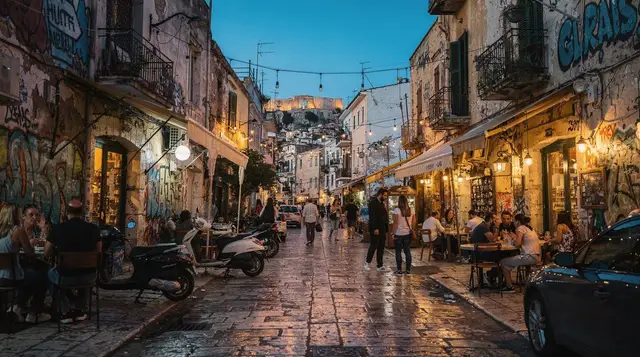
Psyrri is the neighbourhood where serious Athenian eating has concentrated for decades, despite repeated attempts by trend forecasters to declare it dead. The streets between Ermou and Athinas hold a dense grid of tavernas, ouzeries, and mezedopoleia that serve the market workers, the late-night crowd, and anyone who finds their way past the graffiti-covered facades.
Dipotto on Theatrou Square is perhaps the most famous working-class taverna in the city. It opens for lunch only, it runs out of food by early afternoon, and the menu is four or five dishes written on a board. Fried salt-cod with skordalia (garlic-potato dip), slow-cooked gigantes beans in tomato, grilled lamb chops, and a rough barrel wine that costs around €5 for a half-litre. Lunch for two with wine runs €25–35.
Taverna tou Psara operates from a set of narrow alleys in Psyrri and draws a mixed crowd of market traders, architects, and visiting chefs. The grilled octopus — charred, tender, dressed with nothing but vinegar and oregano — is frequently cited as a benchmark. Expect €40–55 for two with a half-litre of house white.
For a guided evening in Psyrri that covers multiple stops rather than committing to one restaurant, see the Psyrri bar crawl guide.
Koukaki: the neighbourhood that grew up
Koukaki south of the Acropolis transformed between 2015 and 2022 from a quiet residential district to one of Athens’s most interesting eating neighbourhoods. The Airbnb effect brought visitors, which brought restaurants, which brought a second wave of visitors specifically for the food. The best places opened before the wave crested and have maintained quality despite the attention.
Bacaro on Markou Mousourou Street serves a menu that bridges the Venetian cicchetti tradition and Greek mezedes — small plates, natural wines, daily specials written on a chalkboard. The cured tuna with pickled fennel, the charred aubergine with tahini, and the loukaniko with mustard greens are all excellent. A full meal with wine runs €35–50 per person.
Fabrika tou Efrosinou, in a converted workshop space, specialises in slow-cooked dishes: stifado (beef or rabbit braised with pearl onions and cinnamon), moussaka made with béchamel rather than the tourist shortcut of plain cream, and a daily soup that changes with the season. Two courses with wine, €30–40 per person.
Monastiraki and the central market area
The streets immediately around Monastiraki are tourist-dense, but one block back from the square the character changes quickly. The stalls around Varvakios market attract wholesale buyers who want to eat well and cheaply before or after their shopping.
Epirus on Athinas Street is a lunch-only operation that has been serving the market crowd since the 1980s. The offal dishes — kokoretsi (spit-roasted intestine-wrapped organs), patsas (tripe soup, typically a post-midnight staple) — are an acquired taste, but the lamb with orzo and the grilled fish are safe, excellent bets. Lunch for two, €20–30.
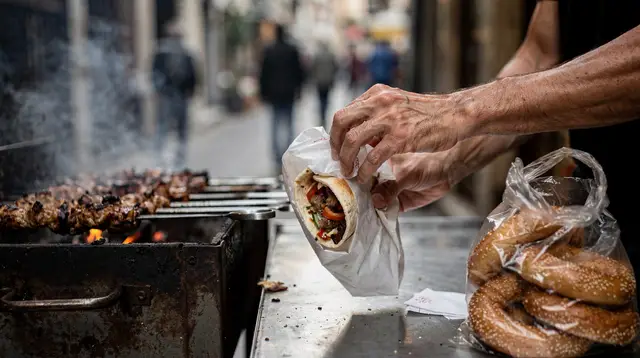
O Thanasis at the bottom of Mitropoleos is the most discussed souvlaki-and-kebab counter in Monastiraki — not because it is the best in Athens (the best souvlaki guide covers that debate), but because it is the reference point around which all other comparisons are made. The spetsofai (spicy sausage-and-pepper stew) is the underrated order.
Plaka: how to find the good ones
Plaka is the city’s most heavily touristed neighbourhood, and the majority of its restaurants reflect that. Bright menus with photographs, generic moussaka, overpriced Mythos beer. But a handful of genuinely good places have survived precisely because their reputations predate the current tourist infrastructure.
Scholarchio on Tripodon Street in the heart of Plaka has been running since 1935. The menu has not changed dramatically in that time: taramosalata, tzatziki, dolmades, grilled lamb, fried kalamari. Nothing sophisticated, everything correct. Two people, mezedes and a main each with wine, €45–60.
Filippou near the Zappeion Gardens is technically in the Kolonaki orbit but worth including here because its kitchen represents the old-school Athenian style precisely: roast chicken with lemon and oregano, lamb fricassee with avgolemono (egg-lemon sauce), stuffed peppers with rice and herbs. Lunch is better than dinner. €35–50 for two.
Exarchia: the anarchist neighbourhood with excellent food
Exarchia is Athens’s politically radical district — a neighbourhood of bookshops, independent cafés, protest graffiti, and some of the best-value tavernas in the city. The political climate means developers and chains avoid it, which has preserved a grid of genuine neighbourhood restaurants.
Yiantes on Valtetsiou Street serves Greek home cooking in a room that feels like someone’s grandmother’s house. The bean soup (fasolada) is a Wednesday fixture; the stuffed courgettes with avgolemono appear on Fridays. Two people, three courses, €25–35.
Rozalia on Valtetsiou Street (metres from Yiantes) is the outdoor-seating taverna version, with fairy lights, barrel wine, and a menu that covers grills, mezedes, and daily specials. The neighbourhood feels more relaxed here than anywhere in central Athens — tables stay occupied until well past midnight without anyone hurrying you out.
How to navigate a taverna menu
Greek menus in traditional tavernas are structured around a logic that differs from the French or Italian three-course model. You order several mezedes to share (dips, salads, small plates), then a main — typically fish or meat from the grill — and often nothing for dessert beyond a piece of fruit brought by the house.
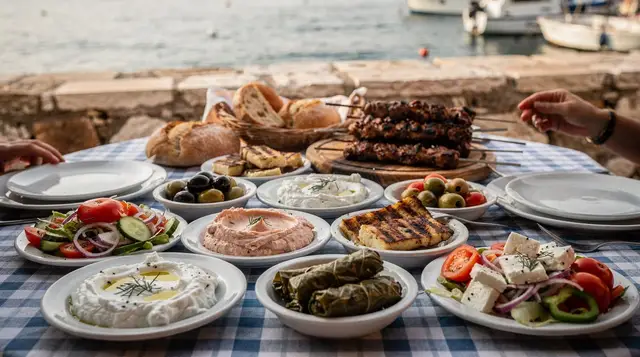
The Greek salad (horiatiki) is a core order: tomato, cucumber, onion, kalamata olives, green pepper, a thick slab of feta, olive oil. Do not ask for it dressed — it arrives as described, and you dress it yourself at the table with the oil already present.
Barrel wine (hima) ordered by the half-litre carafe is typically the correct wine choice in a traditional taverna. It will be local, unfiltered, possibly rough, and cost €5–8. Bottled wines are available everywhere, but the house carafe reflects what the owner drinks.
For context on the broader food scene, the Athens food tours guide covers guided experiences, and Greek street food covers the casual end of the spectrum. Full neighbourhood guides are available for Psyrri, Koukaki, and Monastiraki.
For a guided evening that routes through tavernas with an expert explaining the menu, the evening Plaka dinner format is one of the most popular introductions:
Athens Evening Plaka Dinner ExperienceFor a food tour that begins in the market and ends at a taverna table:
Athens Local Food TourChoosing a neighbourhood: quick comparison
| Neighbourhood | Atmosphere | Typical price (2 people, with wine) | Best for |
|---|---|---|---|
| Psyrri | Working-class, market-adjacent | €50–90 | Serious, unfussy Greek cooking |
| Koukaki | Younger, design-conscious | €70–100 | Small plates and natural wine |
| Plaka | Historic, tourist-heavy | €90–120 | A few genuine survivors amid the crowd |
| Exarchia | Bohemian, politically charged | €50–70 | Best value, home-style cooking |
| Monastiraki | Busy, market-facing | €40–60 | Quick, honest lunches near the sights |
If you’re planning a full evening rather than a single meal, the where locals eat in Athens guide and a perfect day in Plaka both suggest realistic pairings of taverna with what comes before and after. For a lighter, standing-up alternative to a sit-down taverna, see the best souvlaki in Athens guide.
Frequently asked questions about the best tavernas in Athens
What time do Athenians eat dinner at tavernas?
Greeks eat late by northern European standards. Restaurants begin filling around 21:00 and peak between 22:00 and midnight. Arriving before 20:30 marks you as a tourist — but it also means you get a table without waiting. Most tavernas are happy to serve earlier; they just won’t be buzzing.
How much should a meal at an Athens taverna cost?
A full meal at a traditional taverna — shared mezedes, a main course, bread, and a half-litre of house wine — runs €20–35 per person in 2026. In Psyrri and Koukaki, this is a generous estimate; in Plaka or Kolonaki, prices tend to run 20–30% higher. Tourist-facing restaurants around the Acropolis can charge double for inferior food.
Do I need to book at Athens tavernas?
For the most popular spots on weekends — particularly in Psyrri — a reservation helps, especially after 21:00. Most traditional tavernas do not take online reservations and prefer phone bookings or walk-ins. Arriving at 19:30–20:00 usually secures a table without booking; arriving at 22:00 on a Friday without one is a gamble.
What dishes should I order at a traditional Athens taverna?
Start with tzatziki, taramosalata, and horiatiki (Greek salad). Add tiropita or spanakopita if available. For mains, grilled lamb chops (paidakia), baked lamb with orzo (arnaki giouvetsi), or fresh fish sold by weight are the benchmark orders. Moussaka and pastitsio appear on most menus but reflect the day’s kitchen effort — ask your waiter which dishes were made fresh that morning.
Are Athens tavernas good for vegetarians?
Yes. The Orthodox fasting tradition has produced a rich canon of plant-based dishes — gigantes beans, imam baildi (stuffed aubergine), horta (boiled greens), revithada (chickpea stew), and various stuffed vegetables. Most tavernas can build a full vegetarian meal from their standard menu. See the Athens vegetarian and vegan guide for dedicated options.
Which neighbourhood has the best value tavernas in Athens?
Exarchia consistently offers the best value — home-style cooking at Psyrri-level prices or lower, without the tourist markup found closer to the Acropolis and Plaka. Psyrri is a close second, particularly for lunch-only spots like Dipotto.
Should I avoid tavernas right next to the Acropolis?
Generally yes, or at least go in with realistic expectations. The terraces with direct Acropolis views charge a premium for the location, and the kitchens are geared toward high turnover rather than the daily-changing menu that defines a genuine taverna. Walk two or three streets back into Plaka, Psyrri or Koukaki for better food at a fairer price.
Athens food experiences on GetYourGuide
Verified deep-linked GetYourGuide tours. Book through these links and we earn a small commission at no cost to you.
GetYourGuide does not provide product photos: on its activity cards, the picture illustrates the type of experience and is not the operator's own photo.
More tours on Viator
Top-rated experiences with verified reviews, bookable on Viator (a Tripadvisor company).
 Viator
The Greek Food Experience (Max 8 persons)
FromEUR 108Check availability → Viator
Cretan Wines & Olive oil tour - The treasures of Crete
FromEUR 120Check availability → Viator
Kalamata- Olive oil & Wine Tour with traditional lunch
FromEUR 110Check availability → Viator