
Greek street food in Athens: what to eat and where
What street food should I try in Athens?
Start with souvlaki (grilled pork skewers in pita), tiropita (cheese pie from a bakery counter), loukoumades (honey-soaked fried dough), and koulouri (sesame-ring bread). Monastiraki is the densest concentration; Psyrri has the most authentic counters.
Athens as a street-food city
Street food is not a concept Athens imported from anywhere. The city has been feeding people on the move for thousands of years — the ancient agora had food stalls; Byzantine Constantinople (whose food culture flows directly into modern Greek cooking) had a sophisticated takeaway economy; the Ottoman period added its own layers of flatbread, sesame-coated rings, and fried pastry.
| Where | Monastiraki to Psyrri corridor, plus Varvakios market |
| Cost | €0.50 (koulouri) to €5 (souvlaki wrap or loukoumades) |
| Time needed | A 20–30 minute walk covers the main corridor |
| Getting there | Walk from Monastiraki Metro station |
| Best time | Morning (koulouri, bougatsa) through late evening (souvlaki) |
What you eat standing up or walking through Monastiraki today is a direct line from all of that. The koulouri seller at the metro exit, the tiropita from the drawer-heated counter, the souvlaki wrapped in grease-translucent paper — these are not tourist inventions. They are the working city’s fuel.
This guide covers the essential items, where they are best, and what they cost in 2026.
Souvlaki and gyros: the essential distinction
Every visitor to Athens eventually confronts this question: what is the difference between souvlaki and gyros?
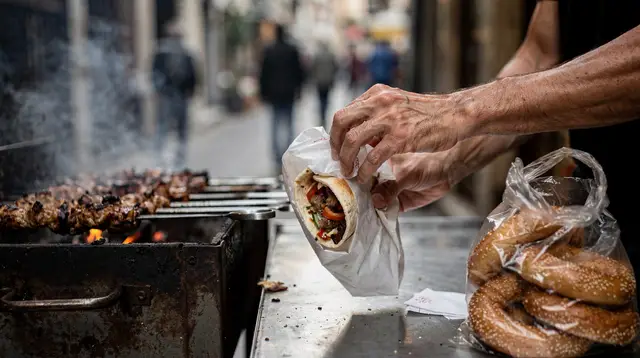
Souvlaki is grilled meat on a skewer — typically pork, occasionally chicken. You can eat it off the skewer (souvlaki sticks, around €2 each) or wrapped in pita bread with tomato, onion, fried potatoes, and tzatziki (a souvlaki wrap, around €3–4).
Gyros is meat slow-cooked on a vertical rotisserie — the same principle as Turkish döner kebab, because the technique arrived via the large Greek communities in Anatolia after the 1922 population exchange. Pork gyros is the Athens standard; chicken is available; lamb is found mainly in the north of Greece.
Both can be served in a pita wrap or on a plate (a gyros piato or souvlaki piato with salad, chips, and pita on the side). The plate version runs €9–13; the wrap version €3–5.
The Monastiraki strip — particularly the stretch of Mitropoleos and Agias Filotheis — has the highest concentration of souvlaki counters in Athens. Kostas on Agias Irinis Square in Monastiraki is one of the city’s most photographed souvlaki counters, operating since 1950, closing when it runs out. The best souvlaki in Athens guide covers the full landscape.
Tiropita: the cheese pie at every corner
Tiropita is a filo-pastry pie filled with feta and egg. It exists in two forms: the triangular slice cut from a large tray (the bakery version, €1.50–2.50), and the individual twisted or rolled pastry sold at street kiosks (€1–1.80).
The bakery version is superior. Look for bakeries with counters that display pies in heated drawers — the good ones have spanakopita (spinach and feta), bougatsa (custard cream), and tiropita all at once, drawn from the oven in rotation throughout the morning. The pastry should be shatteringly crisp, not soft. The cheese filling should be salty and egg-set, not watery.
Arakathotis on Solonos Street in Kolonaki and multiple unnamed neighbourhood bakeries in Exarchia are among the most respected. In Monastiraki, the bakery immediately behind the flea market square (look for the queue) reliably produces a correct tiropita.
Spanakopita (spinach and feta pie) follows the same logic but with a slightly less salty, more herbed filling. Kreatopita (meat pie) is rarer and worth seeking out when available.
Bougatsa: the cream-filled rival
Bougatsa is a filo pastry filled with semolina custard cream, dusted with icing sugar and cinnamon. It originated in Thessaloniki and was introduced to Athens by northern Greek migrants, which is why the best bougatsa shops in Athens are often run by families with Thessaloniki roots.
Bougatsa Iordanis in the central market area is the most-cited Athens outpost of the Thessaloniki tradition. A portion costs around €3–4 and is cut from a large tray and served in wax paper. It is a morning food — ideally eaten by 10:00 when the pastry is freshest.
The savour version with feta (rather than cream) is called tyropita bougatsa and is technically the same pastry with a different filling. Order either.
Loukoumades: honey doughnuts
Loukoumades are deep-fried dough balls, served hot from the oil, drizzled with honey, and dusted with cinnamon. They are ancient — variants appear in records from the first Olympic Games — and they remain one of the most satisfying street foods the city produces.
The classic version uses Attica thyme honey and a dusting of sesame or crushed walnut. Modern variants at dedicated loukoumades shops add chocolate, tahini, ice cream, and other toppings that outrage purists and delight everyone else.
Loukoumades on Pallados Street near the Roman Agora, which has been operating since 1884, is the historical reference point. A portion of ten pieces with honey costs around €5. Expect a queue at any hour.
Athens Street Food TourKoulouri: the breakfast ring
Koulouri is a sesame-coated ring bread sold from street carts, primarily around metro stations, markets, and bus stops in the morning. It costs €0.50–0.80 and is eaten plain — no butter, no filling. It is the commuter’s breakfast, the market worker’s first food of the day, and one of the most reliable quick bites in the city.
The texture should be chewy rather than bready, with a concentrated sesame crust. The Thessaloniki-style koulouri is thicker and doughier; the Athens version is thinner and crispier. Both are present in the city.
Skewers and offal: the market tradition
Around Varvakios and in Psyrri, the street food tilts toward grilled offal — kokoretsi and soutzoukakia. Kokoretsi is organ meat (liver, kidney, sweetbreads) wrapped in intestine and grilled on a long skewer over charcoal. It sounds confrontational, smells extraordinary, and tastes of concentrated meatiness with a charred exterior. A portion costs €3–5.
Soutzoukakia are spiced oblong meatballs — pork or beef, seasoned with cumin and cinnamon — served in tomato sauce or off the grill. They originate in Smyrna (Izmir) and arrived with the 1922 refugees who settled in Piraeus and Athens.
For a structured introduction to these dishes alongside the more approachable items, a guided street food experience covers the market and Psyrri circuit with a local to explain context.
Athens Food Tour OdysseyKalamaki: the skewer distinction
In Athens specifically, a kalamaki is a souvlaki served on the skewer, without pita — essentially the meat alone. This matters at ordering counters: asking for “souvlaki” often implies a wrap; asking for “kalamaki” or “kalamakia” specifies the bare skewer. Two or three kalamakia with a cold beer, eaten standing at a counter, is a legitimate Athenian lunch.
Sweet street food beyond loukoumades
Halvas — a dense paste of semolina or tahini, sweetened and spiced with cinnamon and clove — appears in bakeries and market stalls, often sold by the slice for €1–2. The semolina version (halvas farsalon) is softer and more dessert-like; the tahini version is firmer, nuttier, and often found in health-food contexts.
Pasteli is sesame and honey brittle, compressed into bars and sold in small packets at market stalls and kiosks. It is protein-dense and tooth-testing, the Greek equivalent of an energy bar. €0.80–1.50 per bar.
Amygdalota are almond-paste sweets, particularly associated with island confectionery traditions. In Athens they appear in specialist pastry shops in Plaka and Monastiraki, costing €1.50–3 per piece.
Navigating the street food scene independently
The most concentrated street food corridor runs from Monastiraki square north through the flea market to the edge of Psyrri. This twenty-minute walk passes koulouri carts, souvlaki counters, cheese pie bakeries, loukoumades shops, and the market stalls of Varvakios within easy reach.
A guided tour calibrates this experience: a local guide can distinguish the fresh-baked from the warmed-over, knows which counter is family-run versus tourist-optimised, and has pre-arranged stops that guarantee the best version of each item. See Athens food tours for the top options, or browse all food and drink experiences.
For the full Varvakios market context, and for a deeper dive into the souvlaki question, the best souvlaki in Athens guide is the natural follow-on read.
Street food price and timing at a glance
| Item | Typical price | Best time to eat it |
|---|---|---|
| Koulouri | €0.50–0.80 | Morning, from 07:00 |
| Tiropita / spanakopita | €1.50–2.50 | Any time, freshest before midday |
| Bougatsa | €3–4 | Morning, ideally by 10:00 |
| Souvlaki / gyros wrap | €3–5 | Late morning through midnight |
| Loukoumades | ~€5 for ten pieces | Any time; queues are constant |
| Kokoretsi (skewer) | €3–5 | Lunchtime around the Varvakios market |
Pairing street food with a sit-down meal
Street food works best as a running tasting across a day rather than a single sit-down meal, but if you want to compare it against Athens’s taverna scene, the best tavernas in Athens guide and the ouzo and meze guide cover the slower, seated side of the same food culture. Many visitors combine a street-food breakfast (koulouri, bougatsa) with a proper taverna dinner rather than treating the two as competing options.
Frequently asked questions about Greek street food in Athens
How much does street food cost in Athens in 2026?
A koulouri costs €0.50–0.80. A tiropita or spanakopita slice from a bakery runs €1.50–2.50. A souvlaki wrap (pita with meat, tomato, tzatziki) is €3–5. Loukoumades (ten pieces with honey) cost around €5. You can eat an excellent street-food lunch for €8–12 in Monastiraki or Psyrri.
Where is the best area for street food in Athens?
The Monastiraki-to-Psyrri corridor is the densest and most reliable. Psyrri has the most authentic working-neighbourhood counters; Monastiraki has the highest concentration of souvlaki options. The Varvakios market area adds grilled offal and market-style eating to the mix.
Is Athens street food safe to eat?
Yes. Greek food hygiene standards are in line with EU regulations, and the high turnover at busy street counters means food is rarely sitting for long. Heated bakery drawers and fresh-from-the-oil frying are both reliable safety indicators. Trust the queues — a counter with a queue is almost always good.
What is the difference between souvlaki and a gyros in Athens?
Souvlaki is meat grilled on a skewer; gyros is meat cooked on a vertical rotisserie. Both are served in pita with tomato, onion, chips, and tzatziki. Souvlaki wraps tend to be slightly drier and more charred; gyros has a softer texture from the rotisserie cooking. Both cost €3–5 for a wrap.
Can vegetarians eat well from Athens street food stalls?
Yes. Tiropita, spanakopita, bougatsa, loukoumades, koulouri, pasteli, halvas, and amygdalota are all vegetarian. Many souvlaki counters also offer a potato wrap (pita with chips, tzatziki, and tomato) for vegetarians who want a hot pita option. See the Athens vegetarian and vegan guide for more depth.
What time do street food stalls in Athens open?
Koulouri carts and bakeries open from 07:00. Souvlaki counters typically open from 11:00 and run through to midnight or later. Loukoumades shops open around 09:00. Market-area stalls around Varvakios are busiest between 07:00 and 14:00.
Is it worth doing a guided food tour instead of exploring independently?
A guided tour is worth it if you want the market and Psyrri’s grilled-offal counters explained in context — kokoretsi and soutzoukakia reward some background before ordering blind. For the simpler items (koulouri, tiropita, souvlaki), independent exploration with this guide and a queue-following instinct works just as well.
Athens food experiences on GetYourGuide
Verified deep-linked GetYourGuide tours. Book through these links and we earn a small commission at no cost to you.
GetYourGuide does not provide product photos: on its activity cards, the picture illustrates the type of experience and is not the operator's own photo.
More tours on Viator
Top-rated experiences with verified reviews, bookable on Viator (a Tripadvisor company).
 Viator
The Greek Food Experience (Max 8 persons)
FromEUR 108Check availability → Viator
Cretan Wines & Olive oil tour - The treasures of Crete
FromEUR 120Check availability → Viator
Kalamata- Olive oil & Wine Tour with traditional lunch
FromEUR 110Check availability → Viator