
Ouzo, tsipouro and the Greek meze ritual explained
What is the meze ritual with ouzo and tsipouro in Greece?
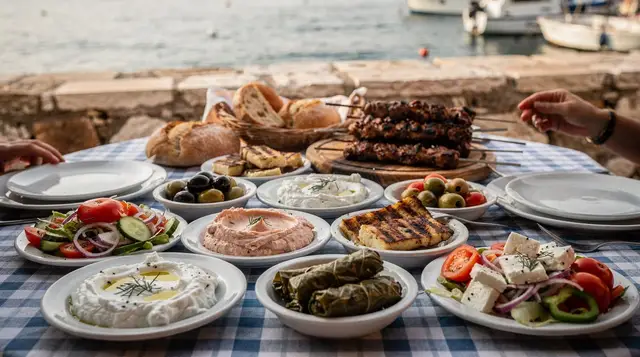
Meze is the Greek tradition of small shared plates consumed slowly alongside spirits — ouzo, tsipouro, or raki. The ritual is slow drinking with constant nibbling: you sip, you eat, you talk. It is an afternoon or early-evening activity, not a prelude to dinner. Ouzeries in Psyrri and around the central market are the best places to experience it in Athens.
The philosophy of meze
The Mediterranean aperitivo tradition takes many forms — Italian cicchetti, Spanish tapas, Lebanese mezze — but the Greek version has a specific character that distinguishes it from the others. In Greece, meze is not a prelude to a meal. It IS the meal, consumed slowly over two to three hours in the company of people you have known for years, in a room that has not changed since your grandfather sat in it.
The word meze comes from the Turkish for “appetiser,” but the Greek practice has evolved its own logic. You order several small plates and a bottle of ouzo or tsipouro; the plates arrive over time rather than all at once; each plate is shared without formal portioning; the spirits are sipped cold, never rushed, and topped up as needed. The conversation is the substrate; the food and drink are the medium.
Understanding this before you walk into an ouzerie in Psyrri changes the experience completely.
| Where | Psyrri, central market area, or Ouzadiko in Kolonaki |
| Cost | Around €35–55 for two with six mezedes |
| Time needed | 2–3 hours, unhurried |
| Best time | Afternoon session (15:00–18:00) |
| Order | A carafe first, then point at the display case |
Ouzo: what it is and how to drink it
Ouzo is Greece’s national spirit — an anise-flavoured eau-de-vie distilled from grape pomace (the pressed grape skins left after winemaking), then redistilled with anise, fennel seed, star anise, coriander, clove, cinnamon, and other aromatics according to each producer’s recipe.
It is produced under a Protected Designation of Origin (PDO) that restricts the name “ouzo” to spirits produced in Greece (and Cyprus, with some conditions). The most celebrated production regions are Lesvos island — home to Ouzo Mini, Barbayiannis, and Plomari — and the city of Tyrnavos in Thessaly.
Flavour profile: Clean anise and fennel on the nose, herbal middle, clean finish. Lesvos ouzo tends to be softer and sweeter; Tyrnavos ouzo is drier and more assertive. Quality varies considerably — the best ouzos have a complexity beyond simple anise; the worst are harsh and one-dimensional.
How to drink it: Ouzo is poured over ice (the ice causes the louche effect — the spirit turns milky white as water is released), or served neat at room temperature alongside a small glass of water to add drop by drop. Adding water rather than ice gives more control over dilution. Drinking ouzo neat without water or ice is technically acceptable but unusual — it is a very strong spirit (typically 40–46% ABV) that benefits from dilution.
The cardinal rule: ouzo is always consumed with food. Drinking it on an empty stomach is considered both unpleasant and unwise.
What to order with it:
- Grilled or fried octopus (htapodi)
- Marinated anchovies (gavros marinatos)
- Taramosalata (fish roe dip)
- Fried whitebait (marithes tiganites)
- Saganaki (fried or grilled cheese)
- Grilled shrimp
Price: A glass of quality ouzo at an ouzerie costs €5–8. A bottle of Plomari or Barbayiannis in a supermarket runs €10–18.
Tsipouro: the stronger, rougher cousin
Tsipouro is a pomace spirit — distilled directly from the grape skins left after pressing — without the addition of anise. The result is a more rustic, more variable drink than ouzo: higher proof (typically 40–47% ABV), more intensely grapey, with a raw agricultural character that reflects the regional origin of the grapes.
Tsipouro is the spirit of mainland Greece — central and northern Greece particularly, with Thessaly, Macedonia, and Epirus as the major production regions. The Cretan version is called tsikoudia; the island versions (including Santorini’s variant) are called raki. All are the same fundamental category.
There are two main types:
Plain tsipouro (sade): Distilled without anise. The raw grape character dominates. Best consumed with strongly flavoured mezedes — grilled sausage, cured meats, aged cheese.
Tsipouro with anise (me glykaniso): Closer to ouzo in flavour profile, though typically rougher and more intense. The anise softens the fiery edge of the pomace spirit.
The finest tsipouro comes from single-estate producers like Tsililis in Trikala and Barbayannis in Lesvos — the spirit of serious drinkers rather than mass-market production.
Rakomelo: A variant specific to Crete and the Cyclades — raki (tsipouro) warmed in a small pot with honey and cloves, served in a shot glass. Served as a free digestif at the end of meals in some tavernas, particularly in traditional contexts and in winter. Sweet, warming, aromatic.
Raki: the Cretan tradition
Raki is the Cretan name for the pomace spirit — chemically identical to tsipouro but with a Cretan cultural identity attached. It is produced in October-November after the harvest in every village that keeps vines, distilled in family-owned copper stills (called kazania), and shared with neighbours and visitors as a gesture of hospitality.
In Crete, you are offered raki as a reflex — when you arrive at a restaurant, when you finish a meal, when you enter a shop that sells any food product. Declining is possible but mildly rude; accepting and sipping is the expected gesture even if you do not finish the glass.
In Athens, raki has a less embedded cultural position than tsipouro or ouzo but is increasingly available at Cretan-themed restaurants and at wine bars that carry a regional spirits list.
Choosing between ouzo, tsipouro and raki as a first-timer
If you’ve never tried any of the three, ouzo is the easiest entry point — the anise flavour is recognisable and the dilution with ice or water makes it approachable. Tsipouro suits drinkers who prefer a more raw, spirit-forward character without the anise sweetness. Raki, if you find it on a Cretan-themed menu, is worth trying at least once as a cultural gesture even if you don’t finish the glass — declining outright can read as impolite in a genuinely Cretan setting.
The ouzerie and the mezedopolio
An ouzerie (ouzeri) is the dedicated venue for ouzo-and-meze — a room with marble-topped tables, a display counter of mezedes behind glass, and a list of spirits that is more extensive than the wine list. The mezedopolio is the broader category — a place where the focus is on small plates, with spirits and wine equally available.
Both formats encourage the same behaviour: arrive by 16:00 for an extended afternoon session, or by 19:30 for an early evening one. Order a carafe of ouzo or tsipouro (more economical than bottles), ask to see the day’s mezedes in the display case, and choose four to six items to arrive in sequence. No one will rush you.
Key ouzeries in Athens:
Ouzeri Lesvos near Omonia Square brings the Lesvos ouzo tradition to central Athens — Barbayiannis and Plomari by the glass, grilled octopus, fresh-caught fish, and a crowd that is predominantly from the Lesvos émigré community. A complete ouzo session for two with six mezedes runs €35–55.
Ouzadiko in Kolonaki is the upmarket version — a wider selection, better space, and a price point to match. It attracts the Kolonaki professional crowd rather than the market workers. Good for the meze concept without the grit.
The tavernas of Psyrri — particularly on Pallados and Agias Theklas streets — often function as informal ouzeries for their afternoon trade. The distinction between ouzerie and taverna is not always formal. For a fuller sense of the neighbourhood beyond the ouzeries, the Psyrri bar crawl guide covers where the same streets transition into a nightlife circuit after the meze session winds down.
Near the Central Market (Varvakios): the stalls and small ouzeries around the meat and fish market on Athinas Street cater to market workers finishing early shifts, meaning some open as early as 07:00 for an ouzo-and-tripe-soup breakfast that is not for the faint-hearted but is entirely authentic. See the Central Market guide for the full picture of the market itself.
What to order: a meze guide
The logic of ordering meze is to build variety rather than volume. Start with dips, add a fried element, add a grilled element, and if the session extends, add a more substantial plate.
Dips (spread on bread):
- Taramosalata: whipped carp roe dip, pink or white, creamy and briny
- Melitzanosalata: roasted aubergine dip, slightly smoky
- Htipiti: whipped feta with roasted red pepper — spicier and more assertive than the others
- Tzatziki: cucumber, yoghurt, garlic — the baseline
Fried:
- Marithes tiganites: fried whitebait, crisp and hot, eaten whole
- Garides tiganites: battered fried shrimp
- Kalamarakia: fried baby squid — the Athens version is less battered than the tourist version, just lightly floured and deep-fried
Grilled:
- Htapodi: octopus, typically charcoal-grilled, dressed with olive oil and red wine vinegar
- Loukaniko: grilled pork sausage with orange peel and fennel
- Saganaki: fried graviera or kefalotiri cheese, browned in a pan, served immediately
Cheese and cured:
- Feta with olive oil and oregano
- Pastourma: heavily spiced cured beef, served thinly sliced — one of Greece’s Anatolian heritage foods
- Graviera: sliced and accompanied by a small pot of honey
For a guided introduction to the meze tradition alongside wine, the evening food-and-wine tours build a structured version of the ouzerie experience:
Athens Food and Wine Night TourFor a tour that specifically covers the evening Plaka dinner format including mezedes:
Athens Evening Plaka DinnerEtiquette and customs
A few notes on ouzerie etiquette that make the experience more fluid:
Pace: Drink slowly. Ouzo and tsipouro are not shots; they are hour-long companions. The Greek way is to hold the glass, talk, put it down, eat, pick it up again. A 200ml carafe of ouzo divided between two people across two hours is approximately the right pace.
Bread: Bread arrives automatically and is charged (€0.50–1 per person). Use it to scoop dips; do not hold it for toasting.
Water: Always available and always appropriate to order. A glass of water alongside ouzo is expected.
Ordering more: The display case of mezedes is open for inspection — if something looks appealing, point at it. Spontaneous additions to the order are normal and encouraged.
The bill: Never arrives until you ask for it. This is not slow service; it is the correct format. The table is yours until you indicate otherwise.
Tipping: A small rounding up or 5–10% for attentive service is appreciated but not obligatory in the way it is in some other countries; service charge is not automatically added at most ouzeries.
Group size: Meze scales naturally with more people — larger groups can order a wider spread of dishes without over-committing to any single one, which is part of why the tradition works so well for family gatherings and long friend reunions.
For context on the broader Athens food scene, the best tavernas guide covers the meal format, and Greek street food addresses the quick-eating end of the spectrum. Visitors with a particular interest in Greek spirits alongside wine should read the Greek wine guide for the fuller drinks picture, and the Athens food tours guide for structured experiences that incorporate ouzo and meze stops. If your evening continues past the meze session, the Athens nightlife guide and the Athens rooftop bars guide cover what comes after. Browse all food and drink experiences or explore Psyrri, Monastiraki, and all Athens destinations.
Frequently asked questions about ouzo and meze
What is the difference between ouzo and tsipouro?
Ouzo is a grape-pomace spirit that must by law be flavoured with anise. Tsipouro is a grape-pomace spirit that may or may not contain anise (it is sold both ways). The main practical difference is flavour profile — ouzo is always anise-forward; plain tsipouro is raw and grapey without the herbal notes.
How strong is ouzo?
Typically 40–46% ABV. This is equivalent to vodka or whisky in strength, which is why drinking it without food is inadvisable. The dilution from ice or added water brings the serving strength closer to 20–25%, which is more manageable for an extended afternoon session.
Can I buy ouzo to take home from Athens?
Yes. Airport duty-free shops carry the major brands; wine and spirits shops in Athens stock a much wider range including premium small-producer ouzos not available outside Greece. A bottle of Plomari costs €10–18; premium Barbayiannis aged expressions reach €25–40.
What is the best meze to order for a first-time visitor?
Start with taramosalata (fish roe dip), grilled octopus, and marithes (fried whitebait) — these are the three most representative items and the most likely to be correctly made at any respectable ouzerie. Add saganaki (fried cheese) if you want a more substantial element.
What time should I visit an ouzerie in Athens?
The afternoon session (15:00–18:00) is the traditional meze hour — slow, leisurely, populated by regulars. The early-evening session (19:00–21:00) is busier and more mixed. Ouzeries generally do not function as late-night venues in the way bars do; by 22:00 the meze focus transitions to the taverna and bar circuit.
Is the meze tradition suitable for vegetarians?
Significantly so. Taramosalata, melitzanosalata, htipiti, tzatziki, feta, graviera, and spanakopita are all vegetarian. The fried and grilled meze options lean toward seafood and meat, but a vegetarian can build a full and satisfying meze spread from the dairy and vegetable items alone.
Can I do a food-and-drink night that combines meze with street food?
Yes — many visitors start with a lighter street food stop (see the best souvlaki in Athens guide for the essential comparison) in the early evening, then move to an ouzerie for the slower meze session afterward. The two traditions aren’t competing; souvlaki is quick and functional, while meze is deliberately unhurried, so they work well as sequential rather than combined experiences on the same night.
Athens food experiences on GetYourGuide
Verified deep-linked GetYourGuide tours. Book through these links and we earn a small commission at no cost to you.
GetYourGuide does not provide product photos: on its activity cards, the picture illustrates the type of experience and is not the operator's own photo.

More tours on Viator
Top-rated experiences with verified reviews, bookable on Viator (a Tripadvisor company).
 Viator
The Greek Food Experience (Max 8 persons)
FromEUR 108Check availability → Viator
Cretan Wines & Olive oil tour - The treasures of Crete
FromEUR 120Check availability → Viator
Kalamata- Olive oil & Wine Tour with traditional lunch
FromEUR 110Check availability → Viator