
Athens cooking classes: learning Greek cuisine hands-on
What are the best cooking classes in Athens?
The Athens cooking class formats range from three-hour market-and-cook experiences to full-day sessions with a Varvakios market visit, hands-on cooking, and a sit-down meal. The rooftop classes with Acropolis views are the most-photographed; the market-to-table formats with Varvakios shopping are the most educational. Prices run €70–130 per person in 2026.
Why cook in Athens
A Greek cooking class does something a food tour cannot: it converts observation into understanding. Walking through Varvakios and watching a butcher work is instructive; buying lamb shoulder with a cook who then teaches you to braise it with cinnamon and tomatoes until it collapses into orzo pasta connects the market to the plate in a way that stays with you long after the trip ends.
The Greek recipe canon is also genuinely learnable in a short time. Unlike French cooking, which requires years of technical drilling, Greek home cooking is built around a small number of techniques — slow braising, quality olive oil, correct seasoning with lemon — applied to excellent raw materials. A three-hour class will leave you with four or five dishes you can reproduce at home.
Athens in 2026 offers a range of cooking class formats, from informal home-kitchen sessions to rooftop operations with Acropolis views. This guide covers the main options, what to expect from each, and how to choose the one that suits your interests.
| Where | teaching kitchens in Monastiraki, Plaka, and Psyrri; market classes start at Varvakios |
| Cost | around €70–130 per person, including ingredients, wine, and the meal |
| Time needed | 3 hours (rooftop) to 5 hours (market-to-table or evening dinner formats) |
| Booking | 1 week ahead in June–September, 3–4 days in shoulder season |
| Good for | all skill levels, vegetarians (with notice for vegans) |
Comparing the three class formats
| Format | Length | Best for | Vibe |
|---|---|---|---|
| Market-to-table | 4–5 hrs | learning to shop and cook | educational, hands-on |
| Rooftop (Acropolis view) | 3–4 hrs | photogenic golden-hour experience | scenic, technique-focused |
| Evening dinner | 4–5 hrs | a social, unhurried night out | relaxed, wine-forward |
Market-to-table format: the most educational approach
The market-to-table structure is the most coherent format for a Greek cooking class: the class begins at Varvakios central market, where you shop for the day’s ingredients alongside your instructor; it continues at a teaching kitchen where you cook what you bought; it ends with a shared meal.
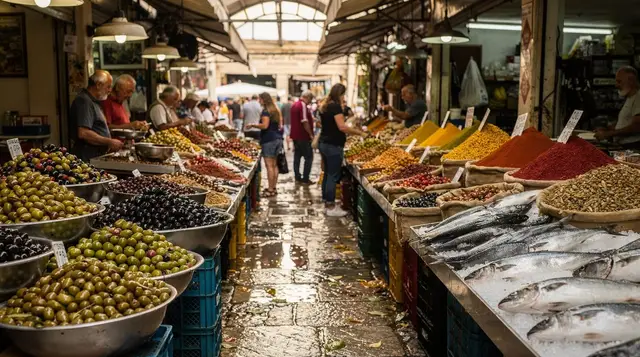
This format teaches three things simultaneously: the market landscape (what seasonal produce looks like, how to choose fish, why the lamb from Naxos differs from mainland lamb), the cooking techniques, and the final dishes. The shopping portion typically takes 45–60 minutes and covers the produce and meat or fish halls, with stops at olive stalls and cheese counters.
Athens Cooking Class with Market Visit and WineThe wine pairing component at the end of this format adds context to the Greek varieties you will use in cooking — white wine in the braising liquid, wine to drink with the finished dishes — and covers basic food-and-wine matching principles.
For a focused market-and-lunch format without the evening extension, the morning class is a practical option for visitors with afternoon plans.
Rooftop cooking classes with Acropolis views
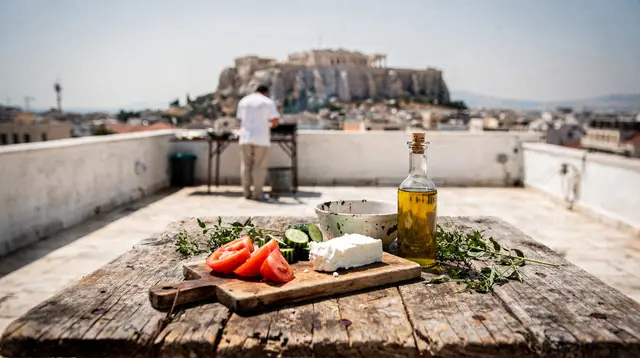
Several Athens cooking class operators have converted rooftop terraces in the Monastiraki and Plaka districts into teaching kitchens with direct Acropolis sight-lines. The combination of hands-on cooking and the view is one of the more memorable experiences the city offers.
Athens Rooftop Cooking ClassThese classes typically run three to four hours and cover four to six dishes: a dip or two (taramosalata, tzatziki), a salad, a pastry element (spanakopita or tiropita), and a main course. The format is hands-on — you prepare each component yourself under guidance — rather than demonstration-and-observe.
The Acropolis-view element is not incidental. Cooking at golden hour with the lit monument visible from the terrace is genuinely affecting, and the rooftop setting makes the class photograph exceptionally well for those who document their travels.
For a rooftop class that specifically incorporates the Acropolis as both a backdrop and a narrative element — the guide contextualises the history of each dish within Athenian food history:
Athens Cooking Class with Acropolis ViewEvening cooking and dinner format
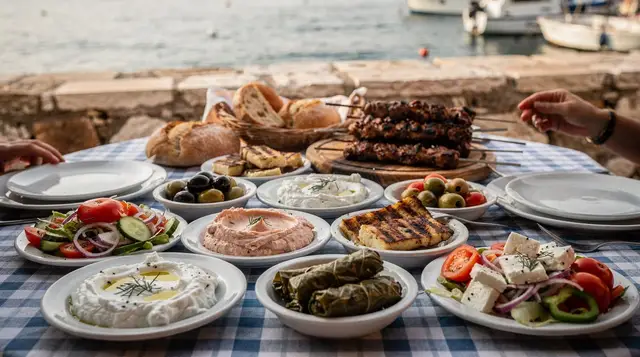
The evening cooking class that culminates in a sit-down dinner is the most social format — longer, more relaxed, more wine-forward, and designed to feel like cooking with friends rather than attending a lesson.
These classes typically begin around 18:00, run four to five hours, and cover a complete three-course Greek menu. The pace is slower than the afternoon formats; there is more time for questions, more time to understand why a technique works, and more time at the table with the food and wine you have made.
Athens Cooking Class with DinnerThe menu for an evening class typically covers:
- Starter: seasonal mezedes (dips, cheese, olives, cured meats)
- First course: a cooked starter (stuffed tomatoes or peppers, saganaki, spanakopita)
- Main course: one of the great Greek braises — moussaka, lamb giouvetsi (with orzo), arnaki fricassee (lamb with avgolemono)
- Dessert: galaktoboureko (custard pie) or walnut cake with honey
Wine is served throughout, typically two to three pairings covering white, red, and sometimes a dessert wine or tsipouro digestif.
What you will typically cook
Greek cooking class menus in Athens generally draw from the following repertoire:
Cold starters and dips:
- Tzatziki: strained yoghurt, cucumber, garlic, olive oil, dill
- Taramosalata: carp roe, bread, lemon, olive oil — whipped smooth
- Melitzanosalata: roasted aubergine mashed with garlic and olive oil
- Htipiti: roasted red pepper and feta
Pastries:
- Spanakopita or tiropita: filo assembly, filling ratios, oven technique
- Bougatsa: custard cream filling, filo layering
Main courses:
- Moussaka: the béchamel technique (flour, butter, milk, egg yolks); layering aubergine, meat sauce, and béchamel; correct oven temperature
- Lamb giouvetsi: lamb shoulder braised with orzo in tomato and cinnamon
- Fasolada: white bean soup with olive oil
- Stuffed peppers or tomatoes (yemista) with rice, herbs, and pine nuts
Desserts:
- Loukoumades: the yeast dough technique, frying temperature, honey dressing
- Galaktoboureko: semolina custard, filo wrapping, sugar syrup
- Melomakarona (seasonal, Christmas context): honey cookies with orange and walnuts
Choosing the right class
Morning market formats (09:00 start): Best for visitors who want the market experience as a centrepiece and don’t mind finishing by early afternoon. More energetic, more produce-focused.
Afternoon rooftop formats (14:00–17:00 start): Best for visitors who want the Acropolis-view experience at its most photogenic (golden hour falls toward the end of class in most seasons). Less market-focused, more focused on technique.
Evening dinner formats (18:00 start): Best for visitors who want a sociable, unhurried experience. More wine, more conversation, longer meal. Better suited to solo visitors or couples who enjoy mixing with other guests.
Group size. Most Athens cooking classes run with six to twelve participants. Smaller groups (six or fewer) allow more hands-on time per person; larger groups are more sociable but mean more observation time. Check the maximum group size before booking.
Level. All Athens cooking classes are designed for complete beginners. The Greek recipe canon does not require advanced technique — it requires attention, quality ingredients, and the willingness to use olive oil generously.
Shared vs private. Most listed classes are shared sessions with other travellers, which keeps the price down and adds a social element. Private classes — for a single family or small group — cost more but let you set the pace, focus on specific dishes (a vegetarian-only menu, for instance), and avoid waiting on slower participants. If you are travelling with young children or have a specific dietary need beyond the standard accommodations, a private booking is usually worth the extra cost.
After the class: continuing to cook Greek food
A cooking class in Athens creates a reference set you can build from at home. The key purchases to make before leaving:
- A tin of quality Greek extra-virgin olive oil (Cretan EVOO, PDO Kalamata)
- Santorini fava (yellow split peas) — sold in 500g bags at Varvakios and good food shops
- Greek rigani (dried oregano) — mountain-sourced, intensely flavoured
- Dried Greek mountain thyme
- A bottle of quality mastiha liqueur for cooking and cocktails
These are the backbone ingredients of the dishes you will have made in class, and they are available in Athens considerably cheaper than abroad.
Packing ingredients home
Olive oil travels well in checked luggage if sealed in its original tin or bottle and wrapped in clothing to protect against breakage — decant into a smaller travel-friendly container if you are worried about weight. Dried herbs, fava beans, and rusks pack easily in hand luggage. Liquids like mastiha liqueur must go in checked bags due to airline liquid restrictions, unless bought after security at the airport’s duty-free shops. If you are flying home the same day as your class, ask the instructor for shops near your hotel that stock the same ingredients — most teaching kitchens are happy to point you toward a trusted grocer rather than a tourist-priced shop.
For context on the broader food landscape, the Athens food tours guide covers guided eating experiences, and the Varvakios market guide gives detail on shopping for the raw materials. The best tavernas in Athens shows how the dishes you learn to cook appear on restaurant menus. The Greek street food guide covers the quick-eating versions of many class staples (tiropita, loukoumades). For wine pairings with what you cook, the Greek wine guide covers the regional matches. The classes are also covered in the broader food and drink experiences hub and the dedicated cooking experiences in Athens section. Explore Monastiraki and Psyrri for the neighbourhoods where most teaching kitchens operate.
Frequently asked questions about Athens cooking classes
How long do Athens cooking classes last?
Most classes run three to five hours. The market-to-table format with a Varvakios visit runs four to five hours (one hour market, two to three hours cooking, one hour eating). Rooftop classes without a market visit run three to four hours. Evening dinner classes run four to five hours including the meal.
Do I need cooking experience to join an Athens cooking class?
No. All cooking classes in Athens are designed for complete beginners. The Greek recipe canon does not require advanced technical skills. Instructors explain techniques from scratch and accommodate slow workers. The emphasis is on understanding the logic of the cuisine rather than professional kitchen speed.
What is included in the cost of an Athens cooking class?
All ingredients, the teaching kitchen space, a guide or instructor, all food prepared during the class, and typically two to three glasses of wine. Some formats include a market visit; some include a sit-down meal at the end (beyond the tasting of what you cooked). Check the specific listing for what is included. Prices run €70–130 per person in 2026.
Can vegetarians join Athens cooking classes?
Yes. Greek cooking contains a large plant-based repertoire (dips, stuffed vegetables, bean dishes, spanakopita), and most operators accommodate vegetarian requests. Strict vegans should notify in advance; the default curriculum includes feta and eggs in some dishes, but alternatives can be arranged. See the Athens vegetarian and vegan guide for broader context.
How far in advance should I book an Athens cooking class?
Small-group classes (six to eight people) book out quickly, particularly in high season (June–September) and around Easter. Book at least one week ahead for summer classes; three to four days is usually sufficient in the shoulder season. Morning market-to-table classes on weekends fill fastest.
What should I wear to an Athens cooking class?
Comfortable clothes you do not mind getting splashed with olive oil or tomato sauce. Most classes provide aprons; some provide chef’s whites. Closed-toe shoes are sensible in a working kitchen. For rooftop classes, a light layer for the early-evening terrace is useful in spring or autumn.
Are Athens cooking classes suitable for children?
Some are, though most operators design the pace and knife work for adults. If travelling with children, ask specifically about a family-friendly or kid-focused session before booking a standard adult class — hot stoves, sharp knives, and a three-to-five-hour format are not ideal for younger children.
Athens food experiences on GetYourGuide
Verified deep-linked GetYourGuide tours. Book through these links and we earn a small commission at no cost to you.
GetYourGuide does not provide product photos: on its activity cards, the picture illustrates the type of experience and is not the operator's own photo.
More tours on Viator
Top-rated experiences with verified reviews, bookable on Viator (a Tripadvisor company).
 Viator
Athens Greek Cooking Class Pita Gyros from Scratch with a Local
FromEUR 110Check availability → Viator
Savor Nafplio Cooking Class
FromEUR 115Check availability → Viator
Corfood bites - Cooking classes by Christos
FromEUR 110Check availability → Viator