
Athens wine tasting experiences: the complete guide
What are the best wine tasting experiences in Athens?
Athens wine tastings range from guided sessions with a sommelier covering five to eight Greek varieties (€35–60 per person) to combined wine-and-food evenings with Acropolis views. The best formats pair Assyrtiko, Xinomavro, and Agiorgitiko with matched food, explained by a guide who can contextualise the Greek appellation system.
Athens as a wine tasting destination
Wine tourism in Greece has traditionally been a Santorini or cellar-door activity — the island wineries, the volcanic views, the Assyrtiko grown on pre-phylloxera vines. But Athens has developed its own wine tasting landscape in the past decade, driven partly by the city’s expanding wine bar scene and partly by operators who recognised that the city’s millions of annual visitors represent a ready audience for Greek wine education in a convenient urban format.
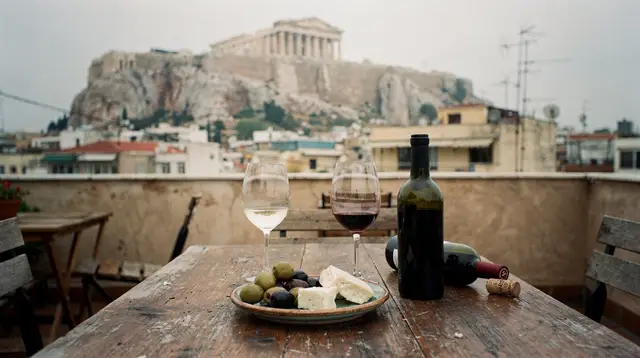
The Athens wine tasting experience has structural advantages over regional cellar-door alternatives. It covers the breadth of Greek wine — not just the varieties of a single terroir — and it pairs the wine with Greek food in the context where both were designed to be consumed: an evening in the city, with the Acropolis visible from a terrace, the conversation flowing toward history and culture as easily as it flows toward the wine.
This guide covers the main formats, what to expect at each, the Greek varieties you will encounter, and how to continue exploring independently.
| Cost | Around €35–100 per person depending on format |
| Time needed | 1.5–4 hours |
| Where | Rooftop terraces near the Acropolis, wine bars in Koukaki and Monastiraki |
| Best time | Evening (18:00–19:00 start) for atmosphere and cooler temperatures |
| First wine to try | Assyrtiko (white, Santorini) |
Choosing a format: which tasting suits you
| Format | Duration | Cost | Best for |
|---|---|---|---|
| Sommelier-led tasting | 2–2.5 hrs | €45–70 | Structured learning, five to eight varieties |
| Wine and cheese pairing | 1.5–2 hrs | €40–60 | Understanding matching principles concretely |
| Evening food-and-wine tour | 3–4 hrs | €70–100 | A full evening out, neighbourhood context |
| Independent wine bar visit | Flexible | €9–18 per glass | Budget-conscious, self-paced exploration |
If you want maximum structure and a guide who can answer any question, book the sommelier-led format. If your evening is really about a fun night out with wine as one element among several, the food-and-wine tour delivers more overall experience per euro. Independent wine bars are the best value if you already have some wine knowledge and prefer to explore at your own pace.
Sommelier-led guided tastings
The most structured format: a guide with formal qualifications leads a group of six to twelve through five to eight Greek varieties, explaining the appellation system, the viticulture of each region, and the sensory profile of each wine.
Athens Wine Tasting with Sommelier and Acropolis ViewA well-run sommelier-led tasting covers:
Whites: Assyrtiko from Santorini (the benchmark), Moschofilero from Mantinia (floral, aromatic), Malagousia from Macedonia (peach and herb, fuller body), and possibly a barrel-aged Nykteri to show what age does to Greek white wine.
Reds: Agiorgitiko from Nemea (approachable, plum-dominant), Xinomavro from Naoussa (structured, tannic, the Nebbiolo analogue), and sometimes a Mavrodaphne dessert wine or a blend to close.
The sommelier explains the geography — Santorini’s volcanic soil, Naoussa’s altitude and continental climate, Nemea’s warm Peloponnese terroir — and connects each wine to the food tradition of its region. Xinomavro makes most sense described alongside slow-braised lamb from northern Greece; Assyrtiko belongs with grilled squid or fresh sea bream; Moschofilero pairs logically with spring salads and fresh cheese.
Duration: two to two-and-a-half hours. Price in 2026: €45–70 per person, typically including five to eight wine pours and light accompaniments (bread, olive oil, cheese, olives).
Wine and food pairing experiences
The pairing format is the most naturally Athenian tasting structure — Greek wine has always been consumed with food rather than as a standalone experience, and the tasting that integrates both makes the matching principles concrete.
Athens Wine, Acropolis and Cheese TastingThese sessions pair four to six wines with specifically matched Greek cheeses and mezedes:
- Assyrtiko with graviera and capers — the saline mineral character of the wine echoes the briny condiment; the cheese provides fat to soften the acid
- Xinomavro with aged kefalotiri — the tannic red and the hard salty cheese neutralise each other’s intensity, leaving the underlying fruit and complexity of both
- Moschofilero with fresh mizithra — the aromatic white and the delicate fresh cheese are both light enough that neither overwhelms
- Agiorgitiko with fig preserves and walnut — the soft red and the sweet-savoury pairing show how Greek wine was traditionally drunk at the end of a meal
Duration: one-and-a-half to two hours. Price: €40–60 per person.
For a small-group format focused on depth over breadth — fewer wines explored at greater length, the small-group tasting allows more extended conversation with the guide about each variety.
Evening wine and food tours
The combined food-and-wine evening is the most sociable and most extended version of an Athens wine experience — closer to a guided dinner with wine pairings than to a formal tasting.
Athens Food and Wine Night TourThese tours typically run three to four hours and cover four or five food stops with matching wine at each. The routing through Plaka, Monastiraki, or Psyrri puts the wine in neighbourhood context — an Assyrtiko with grilled octopus at a Psyrri ouzerie, a glass of Agiorgitiko with lamb skewers at a Monastiraki taverna.
For the dedicated wine-and-nightlife combination that extends into the bar circuit after the tasting component:
Athens Wine, Nightlife and Cocktail TourThe Greek wine varieties you will encounter
Understanding the six to eight varieties that appear most frequently in Athens tastings gives you a framework before the glass arrives.
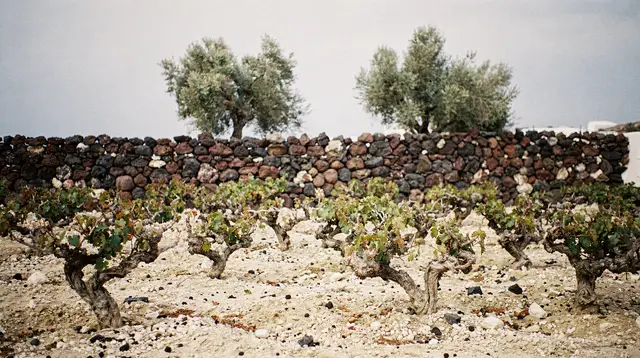
Assyrtiko: Dry white, volcanic soil, Santorini. High acid, mineral, salinity. The signature Greek white internationally. Unoaked: citrus and stone; barrel-aged (Nykteri): honey and toast.
Moschofilero: Dry white, mountain altitude, Mantinia in the Peloponnese. Floral (rose petal, pink grapefruit), aromatic, light body. Drink young and cold.
Malagousia: Dry white, rescued from extinction in the 1980s, now grown across northern and central Greece. Peach, apricot, white herbs. Medium body. More weight than Moschofilero, less acid than Assyrtiko.
Robola: Dry white, Kefalonia island. Citrus and mineral, clean finish. The island’s signature; Gentilini is the primary producer.
Agiorgitiko: Red, Nemea in the Peloponnese. Plum, cherry, smooth tannins. The easiest entry into Greek reds for visitors accustomed to international varieties. Quality ranges from commercial-accessible to seriously complex (Gaia Agiorgitiko 18.5, Papaioannou Terroir).
Xinomavro: Red, Naoussa in Macedonia. High acid, firm tannins, red cherry, dried herbs, tomato notes when young. Ages beautifully over ten-plus years. The comparison to Barolo or Burgundy is not marketing — it reflects a genuine structural similarity to Nebbiolo and Pinot Noir. The most intellectually interesting of the Greek reds.
Mavrodaphne of Patras: Fortified sweet red, Patras. Dark, rich, coffee and raisin. The equivalent of a Recioto or Ruby Port. Drunk with dessert or on its own.
Retsina: White wine treated with Aleppo pine resin. Acquired taste. The craft revival (Gai’a Ritinitis Nobilis, Papagiannakos) has produced premium versions that rehabilitate the category. Best with fried fish.
Wine bars and independent exploration in Athens
Beyond organised tastings, Athens has a credible wine bar scene for independent exploration.
The Athens Wine Club near Kolokotroni Street runs regular informal tasting evenings alongside a wine-by-the-glass menu heavy with Greek PDO varieties. The format is convivial rather than educational — staff can answer questions but the emphasis is on enjoyment.
To Katsaros in Koukaki operates a wine list built almost entirely on Greek natural wine — low-intervention, low-sulphur producers from Santorini, Naoussa, and the Peloponnese. A glass runs €9–15; the list changes seasonally.
Heteroclito near Monastiraki is a wine bar that serves Greek wines alongside charcuterie and cheese from around Greece — a compact but exceptionally curated selection. A glass of correctly aged Xinomavro with a plate of pastourma is one of the city’s underrated pleasures. Glass €10–18.
For wine shopping to take home, Oinoscent near Syntagma and Fine Wines in Kolonaki carry the widest selections, including aged Xinomavro and single-vineyard Assyrtiko at collector prices.
Planning your tasting visit
Best timing: Evening tastings (starting 18:00–19:00) are optimal — the temperature has dropped, the light is better for wine assessment, and the transition from tasting to dinner or bar circuit is natural. Midday tastings exist and are practical but lack the atmospheric context.
Group size matters: Small-group tastings (six to eight) allow more back-and-forth with the guide than larger tours. If learning is the priority, prioritise size limits over price.
What to wear: Smart-casual. Wine tasting in Athens is not a formal occasion; it is a social one. Clean clothes that you are comfortable sitting and walking in are sufficient.
For the context on what you are tasting, the Greek wine guide covers varieties and regions in depth. For island tastings in Santorini specifically, the Santorini wine tours guide addresses the cellar-door experience. Browse all wine tasting experiences. If you are combining wine with a broader food itinerary, the Athens food tours guide and best tavernas in Athens guide cover complementary ground, and the ouzo and meze guide is a useful companion for the spirit-and-small-plates side of Greek drinking culture.
Frequently asked questions about Athens wine tasting
How much does a wine tasting experience in Athens cost?
Guided tastings with a sommelier run €45–70 per person for five to eight wines and light accompaniments. Wine-and-food evening tours covering multiple stops cost €70–100 per person. Small-group tastings focusing on three to four wines at greater depth cost €35–55. All prices in 2026.
Do I need to know anything about wine to join an Athens wine tasting?
No. All formats are designed to be accessible for complete beginners while remaining interesting for experienced wine drinkers. Guides calibrate their explanations to the group’s knowledge level. The only preparation that helps is reading a brief overview of the main Greek varieties — the Greek wine guide covers this in twenty minutes.
Which Greek wine should I try first?
Assyrtiko from Santorini is the universal recommendation — it is the most internationally distinctive Greek wine (volcanic minerality, high acidity) and the one most likely to change your perception of what white wine can taste like. Agiorgitiko from Nemea is the approachable red entry point for visitors new to Greek reds.
Can I buy Greek wine to take home from Athens?
Yes. Airport duty-free stocks the major commercial labels. Wine shops in Athens (Oinoscent, Fine Wines, market stalls around Varvakios) carry a far wider range including small-producer and aged wines not available abroad. A bottle of quality Santorini Assyrtiko costs €15–30 in an Athens wine shop; the same bottle outside Greece may cost twice that.
Are there wine tastings in Athens that combine with visiting the Acropolis?
Yes. Several formats specifically combine the wine tasting with Acropolis views from a rooftop terrace. The view changes the experience — tasting Assyrtiko from Santorini while looking at the Acropolis from a Monastiraki rooftop contextualises Greek culture in a way no museum exhibit can replicate.
How do Athens wine tastings compare to Santorini wine tours?
Athens tastings cover the breadth of Greek wine from multiple regions; Santorini tastings focus on Santorini-specific wines (Assyrtiko, Nykteri, Vinsanto) with the cellar-door context of the island winery. For a complete picture, combining both — a Santorini day-trip winery tour during a broader Greece visit that includes Athens — is the ideal. The Santorini wine tours guide covers the island experience in full.
Should I book a wine tasting before or after visiting the Acropolis?
After works better for most itineraries. Sightseeing the Acropolis is best done early morning before the heat builds, while a wine tasting suits the evening slot when temperatures drop and the pace naturally slows. Booking the tasting as your evening activity after a full day of sightseeing is the most common and comfortable sequence.
Are Athens wine tastings suitable for a small private group or celebration?
Yes. Several operators offer private sommelier sessions that can be tailored for a birthday, anniversary, or small group celebration, often with the option to add a rooftop or Acropolis-view setting. Book at least a few days ahead for a private session, since these need more coordination than a standard group slot.
Greek food & wine experiences on GetYourGuide
Verified deep-linked GetYourGuide tours. Book through these links and we earn a small commission at no cost to you.
GetYourGuide does not provide product photos: on its activity cards, the picture illustrates the type of experience and is not the operator's own photo.
More tours on Viator
Top-rated experiences with verified reviews, bookable on Viator (a Tripadvisor company).
 Viator
Cretan Wines & Olive oil tour - The treasures of Crete
FromEUR 120Check availability → Viator
Santorini Wine Stories: Daytime Tour with Tasting & Lunch
FromEUR 150Check availability → Viator
Kalamata- Olive oil & Wine Tour with traditional lunch
FromEUR 110Check availability → Viator