
What to do in Athens when it rains: 12 rainy day ideas
What should I do in Athens on a rainy day?
Athens' museums are among the best in Europe and entirely indoor: the Acropolis Museum, National Archaeological Museum, and the three Kolonaki museums (Benaki, Cycladic Art, Byzantine) cover you for multiple rainy days. The Athens Central Market, covered bazaars in Monastiraki, and the city's Byzantine churches are equally good options. Rain is infrequent in summer but common November through March.
Athens and rain: more manageable than you think
Athens gets roughly 115 rainy days per year, mostly concentrated between October and April. Summer visitors (June through August) will almost certainly see nothing but blue skies; spring and autumn travellers have a realistic chance of at least one wet day. Winter visitors should plan for rain as the norm.
The good news: Athens has more genuinely excellent indoor activities than most cities its size. The concentration of world-class museums, covered markets, and interesting architecture is high enough that a rainy day in Athens can be one of your best days in the city. The Acropolis is dramatically less crowded in the rain; the museums are calmer; the cafés in Plaka and Kolonaki are full of locals rather than tour groups.
This is a practical guide to 12 specific options, not a list of vague suggestions. Every item here has an address, an approximate cost, and an honest assessment of how much time it deserves.
| Rainy days/year | Around 115, mostly Oct–Apr |
| Best rainy-day pick | Acropolis Museum (fully covered, less crowded) |
| Free options | Byzantine churches, Monastiraki shops |
| Cost range | Free to around €20 per museum |
| Getting around | Metro — fastest and driest option |
The 12 ideas at a glance
| Idea | Time needed | Approx. cost | Fully indoors |
|---|---|---|---|
| Acropolis Museum | 2–2.5 hrs | €20 | Yes |
| National Archaeological Museum | 3–4 hrs | €20 | Yes |
| Kolonaki museum cluster | Full day | €8–12 each | Yes |
| Central Market | 1–1.5 hrs | Free to browse | Covered |
| Monastiraki shops | 1–2 hrs | Free to browse | Mostly |
| Stoa of Attalos | 45–60 min | Included in Agora ticket (€20) | Partly covered |
| Byzantine churches | 5–15 min each | Free | Yes |
| Cooking class | 3–4 hrs | €60–85 | Yes |
| Café culture | Open-ended | €4–8 | Yes |
| Benaki Thursday evening | 2–3 hrs | Free after 18:00 | Yes |
| Concert Hall (Megaron) | 2–3 hrs | €15–80+ | Yes |
| Light-rain Acropolis | 1.5–2 hrs | Standard ticket | Outdoor, weather-dependent |
The museums: the obvious answer, done right
Acropolis Museum (2–2.5 hours, €20)
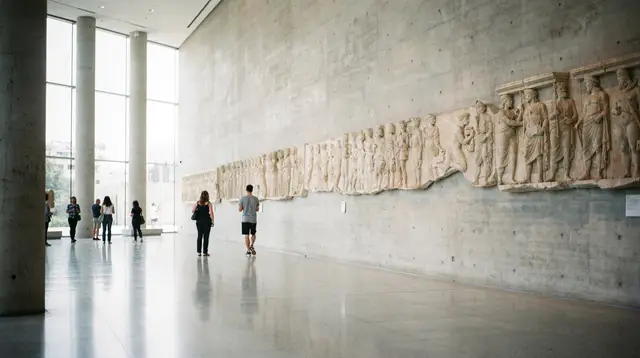
Rain is arguably the best time to visit the Acropolis Museum. The building is entirely indoors and fully climate-controlled. The queues that stretch 30–40 minutes on a clear July day vanish in wet weather. The Parthenon Gallery on the top floor has a glass roof that lets natural light in; the museum is better lit on a bright overcast day than in direct summer sun.
The Parthenon frieze at eye level, the original Caryatids, the Mycenaean-era artefacts from the slopes — this is a two-hour experience on any day, but the relative quiet of a rainy morning makes it particularly worthwhile.
Book ahead if visiting in peak season even in rain; the museum can fill regardless of weather.
Full guide: Acropolis Museum guide Book a small-group tour of the Acropolis Museum
National Archaeological Museum (3–4 hours, €20)
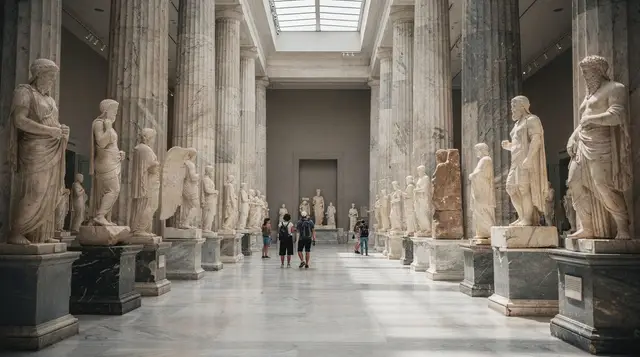
The largest museum in Greece and one of the finest archaeological collections in the world. Mask of Agamemnon, Artemision Bronze, Antikythera Mechanism, Akrotiri frescoes — a rainy day here is time well spent. The museum is 20 minutes north of the tourist centre (metro to Victoria), which means it is less impulsively visited than the Acropolis Museum; give it a morning or an afternoon with a proper plan.
Full guide: National Archaeological Museum guide
The Kolonaki museum cluster (full day, €8–12 per museum)
Three major museums within 20 minutes walk of each other on Vassilissis Sofias Avenue: the Museum of Cycladic Art (Cycladic figurines and ancient Greek art, €12), the Benaki Museum of Greek Culture (5,000 years of Greek history in a neoclassical mansion, €12), and the Byzantine and Christian Museum (the world’s best Byzantine art collection, €8).
All three together fill a full day: Metro to Evangelismos, walk west to Cycladic Art Museum, work east through the afternoon. See the full Athens museums overview for sequencing advice.
Book a combo ticket covering Athens’ major museumsMarkets and covered spaces
Athens Central Market (Varvakios Agora)
The covered central market on Athinas Street, open Monday through Saturday 07:00–17:00, is one of the most viscerally alive spaces in Athens and entirely under cover. The meat hall (west side of Athinas) contains a sequence of butchers’ stalls displaying whole lambs, hanging offal, and cuts that would be labelled and shrink-wrapped in every other European city. The fish market (east side) is similarly direct: live shellfish, whole fish on ice, the full Mediterranean catch.
This is not a tourist attraction in the crafted sense — it is a working market that has operated on this site since 1884. It is loud, smells strongly, and requires some tolerance for the unmediated reality of food production. It is also remarkable. Arrive by 09:00 for maximum activity. The surrounding streets on Athinas and Evripidou are lined with wholesale spice, herb, and food supply shops where the smell alone — oregano, dried chamomile, cumin — is worth the detour.
Monastiraki flea market
The permanent shops around Monastiraki Square sell antiques, second-hand goods, military surplus, vintage clothing, and Orthodox religious objects under cover or in storefronts that stay open in the rain. The famous Sunday market extends outdoors into Avyssinias Square and is impractical when wet; the permanent shops on Ifestou Street and the surrounding lanes are fine in rain and interesting regardless of weather.
Prices vary from genuinely good (old jewellery, vintage textiles, icons) to tourist-level (machine-made “ancient” figures). Bargaining is expected in the antique shops; fixed prices in the newer retail operations.
The Stoa of Attalos (Ancient Agora Museum)
The Stoa of Attalos — a reconstructed ancient colonnade at the western edge of the Agora archaeological site — houses the Agora Museum and provides 115 metres of covered arcade that is partly usable in light rain. The museum itself documents daily life in classical Athens: ceramic oil lamps, bronze coins, terracotta figurines, and the bronze balloting mechanism used in Athenian democracy. Admission (included in the €20 Agora site ticket) is worth it in its own right; the covered colonnade is a bonus.
Byzantine churches: free and architecturally significant
Athens has several Byzantine churches that are free to enter and open daily, most of which are overlooked by visitors focusing on ancient sites. All are small — five to fifteen minutes each — but the interiors are worth the stop, and they are entirely dry.
Kapnikarea (Ermou Street): a twelfth-century Byzantine church sitting in the middle of Athens’ main shopping street, effectively an island in pedestrian traffic. The interior dome mosaic and iconostasis are original or near-original. Open most mornings.
Agios Eleftherios (behind the Metropolitan Cathedral, Monastiraki): sometimes called the “little cathedral,” this twelfth-century church is built partly from recycled blocks of ancient temples. The exterior frieze reuses classical decorative elements in a way that is architecturally bizarre and historically fascinating.
Agia Dynamis (Mitropoleos Street): the smallest church in Athens, partly submerged below street level as modern development raised the ground around it. Tenth-century foundations; still an active church.
Indoor food experiences
Athens cooking class
Several operators run half-day cooking classes (typically 10:00–14:00 or 18:00–22:00) covering Greek recipes using market ingredients. Most include a market visit to the Central Market as part of the session. A typical class costs €60–85 per person, includes all ingredients and a full meal at the end, and runs regardless of weather. These book out in peak season — reserve in advance.
Café culture in Plaka and Kolonaki
Athens has a sophisticated café culture that is not reducible to tourist-facing espresso bars. In Plaka, the cafés on Kidathineon and Adrianou Streets fill with locals as well as visitors; a long breakfast or mid-afternoon coffee with Greek pastry (bougatsa, koulouri, or a slice of walnut cake) costs €4–8 and is a legitimate way to spend an hour out of the rain.
In Kolonaki, the café scene is more upscale and more explicitly Athenian: professionals, academics, and well-dressed locals at marble tables. Kolonaki Square and the streets immediately north have the best concentration.
Indoor arts and theatre
Benaki Museum late Thursday opening
The Benaki Museum offers free entry on Thursday evenings after 18:00. The building empties out from about 19:00 onward, and the café-restaurant terrace (covered and heated in winter) serves dinner while the galleries remain open until midnight. This is one of the genuinely civilised ways to spend a rainy Thursday evening in Athens.
Classical music at the Athens Concert Hall (Megaron)
The Athens Concert Hall on Vassilissis Sofias hosts orchestral, chamber, and opera programming throughout the season (September through June). Tickets range from €15 for smaller recitals to €80+ for major international orchestras. The building is one of the finer concert halls in southern Europe — good acoustics, comfortable seating, a genuinely Athenian audience. Check the Megaron website for current programming.
When the Acropolis is worth visiting in light rain
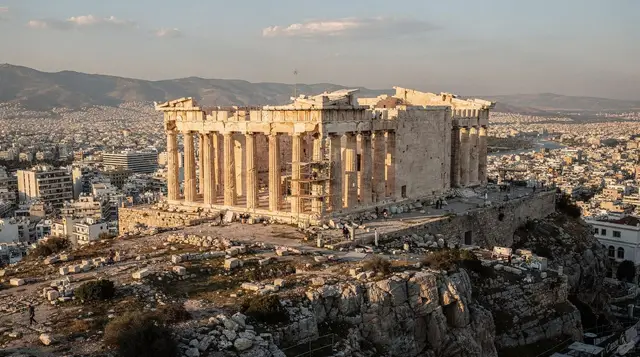
A note against the obvious advice: if rain is light — drizzle rather than downpour — the Acropolis site itself can be exceptional. Crowds thin dramatically at the first drop of water. The stone glistens. Photographers find light conditions closer to those in the official architectural photographs. The site closes for heavy rain and lightning, but steady light rain is often fine.
Check conditions before deciding to skip it. The Acropolis in light rain with a handful of other visitors is a different experience from the summer peak-hour crowds, and not necessarily a worse one.
See the Acropolis tickets guide for entry logistics.
Rainy-day day trips: what to skip, what still works
Not every rainy day has to stay in the city. Day trips built around covered sites hold up reasonably well: the Acropolis Museum alternative for a wet morning is easy to swap in, but if you already have a day trip booked, some travel better than others in rain. Delphi’s site and museum combine an outdoor hillside walk with a genuinely excellent covered museum, so a wet Delphi day is not wasted — see the Delphi day trip guide. Island day trips are the ones to reconsider: choppy winter seas can delay or cancel ferries, and an island visit is largely an outdoor, beach- and view-dependent experience that rain undermines completely.
Private National Archaeological Museum tour — a full rainy day covered in one bookingPlanning a full rainy day in Athens
A realistic itinerary for a full rainy day:
Morning (09:30–12:30): Acropolis Museum. Three hours including a coffee at the museum café at the halfway point. Arrive when it opens to beat any groups that arrive mid-morning.
Lunch (12:30–14:00): Walk to Plaka (seven minutes from the museum). Lunch at a taverna on Kidathineon or Mnisikleous Streets; budget €15–20 per person for a full meal with a glass of wine.
Early afternoon (14:00–16:00): Monastiraki flea market shops (covered) and the Stoa of Attalos if the Agora is open. Or walk north to the Central Market if you skipped it in the morning.
Late afternoon (16:30–18:30): One Kolonaki museum — Cycladic Art or Benaki depending on interest. Metro to Evangelismos or a 20-minute walk from Monastiraki.
Evening: Benaki Museum if it is Thursday (free after 18:00 and open late), or dinner in Kolonaki.
Frequently asked questions about Athens on a rainy day
Does rain significantly affect the outdoor ancient sites?
Yes. The Acropolis, Ancient Agora, and other open archaeological sites are slippery in wet weather — the limestone and marble surfaces become hazardous. Heavy rain also sometimes triggers site closures for safety reasons. Light rain is manageable with appropriate footwear; heavy rain or thunderstorms mean redirecting to indoor options.
Is the Athens metro useful for getting around in the rain?
Yes, significantly. The metro (OASTH) connects the main tourist areas: Acropolis museum is served by Acropolis stop (red line), Monastiraki by Monastiraki (blue and green lines), Kolonaki museums by Evangelismos (blue line), and the National Archaeological Museum by Victoria (green line). A 90-minute ticket costs €1.20; a day pass is €4.50.
Are the markets worth visiting in the rain?
The covered Central Market and the permanent Monastiraki shops are fine in any weather. The outdoor Sunday flea market in Monastiraki’s Avyssinias Square is impractical and partly closed in heavy rain — better on a dry day.
What is the best museum for children on a rainy day?
The National Archaeological Museum, primarily for the Mycenaean gold and the Antikythera Mechanism — both tend to hold children’s attention. The Acropolis Museum is also strong: the glass floor over the archaeological excavation at the entrance fascinates most ages. Allow 90 minutes rather than three hours for a family visit to either.
Are there good bookshops or indoor cultural spaces in Athens?
Yes. Politeia bookshop (Asklipiou Street, Kolonaki) is the best general bookshop in Athens, with a strong English-language section including Greek history and archaeology titles. Eleftheroudakis (Panepistimiou Street) is the largest, with six floors. The Athens Concert Hall (Megaron) has a good arts bookshop open during the day regardless of concert programming.
What if it rains on the day I planned to visit the Acropolis?
If the rain is light, consider going anyway — the site will be dramatically less crowded. If it is heavy, the Acropolis Museum is the best substitute: the museum was designed to give you the Parthenon sculptures regardless of conditions on the hill. See the Acropolis tickets guide and check the best time to visit Athens for weather patterns by month.
Should I cancel a booked day trip if it’s raining in Athens?
Not automatically. Delphi holds up well in rain since its museum is a strong covered fallback alongside the site. Island day trips are the ones to reconsider, since rough winter seas can delay or cancel ferries entirely — check conditions with the operator the day before rather than assuming the trip will run as planned.
Is Athens rainier than people expect for a “sunny Greece” destination?
For summer visitors, no — June through August is reliably dry. For anyone visiting November through March, yes: around 115 rainy days a year fall mostly in this window, and treating winter Athens as guaranteed sunshine is a common planning mistake. See Athens in winter for the month-by-month rain and temperature picture.
Athens museums & heritage on GetYourGuide
Verified deep-linked GetYourGuide tours. Book through these links and we earn a small commission at no cost to you.
GetYourGuide does not provide product photos: on its activity cards, the picture illustrates the type of experience and is not the operator's own photo.
More tours on Viator
Top-rated experiences with verified reviews, bookable on Viator (a Tripadvisor company).
 Viator
Knossos Palace, Museum & Rethymno city Private Tour from Chania
FromEUR 540Check availability → Viator
Santorini Small Group Guided E-bike Tour & Local Tomato Museum
FromEUR 130Check availability → Viator
Acropolis & Acropolis Museum Group tour in German
FromEUR 129Check availability → Viator