Athens in winter: what to expect from November to March
What is Athens like in winter?
Athens in winter (November–March) is mild by northern European standards — average highs of 13–16°C — but wetter and cloudier than the summer image suggests. The Acropolis and ruins are uncrowded, museum visits are a pleasure without queues, and hotel prices are 40–60% lower. January is the coldest and wettest month; March can be beautiful.
The honest picture of Athens in winter
Guidebooks tend to pitch Athens in winter as a secret gem — mild weather, no crowds, locals reclaiming their city. This is mostly true, but it comes with conditions that are worth understanding before you book.
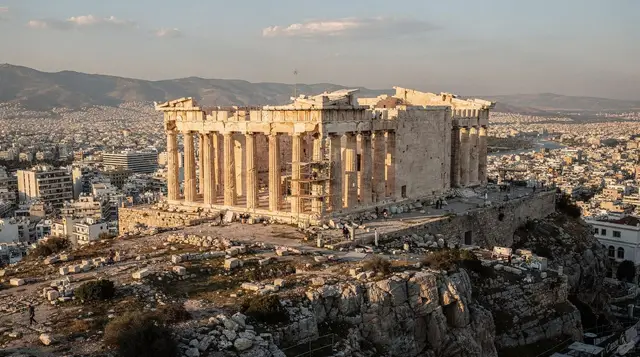
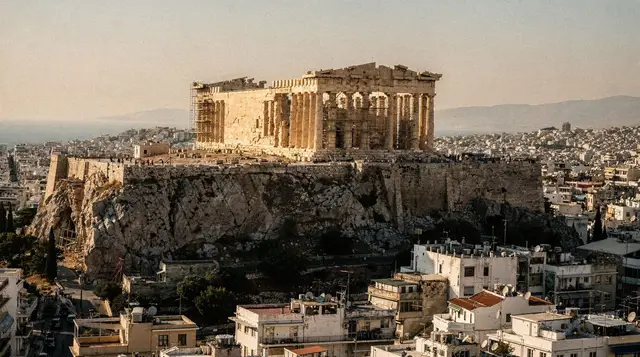
Athens in winter is green and uncrowded. The Acropolis visited on a January morning, with low cloud drifting past the Parthenon and no tour groups in sight, is genuinely extraordinary — a completely different experience from the shoulder-to-shoulder summer visit. Museum visits are a pleasure rather than an endurance test. Hotel prices in the best properties near the Acropolis drop to levels that make premium accommodation achievable.
But Athens in December, January, and February also gets rain — real rain, not a passing shower. January averages 13 rainy days and can bring grey skies for stretches of a week. Night temperatures drop to 6–8°C, which is cold if you are used to Athens’ summer warmth and underdressed for it. Outdoor restaurant seating, a core part of the Athens experience in other seasons, largely disappears.
If you go in with realistic expectations, winter Athens delivers an experience that is harder to find in peak season: an ancient city that feels like a living place, not a tourist corridor.
| When | November to March |
| Daytime temps | 12–17°C, mild but rarely warm |
| Rain | Wettest Dec–Jan (11–13 rainy days/month) |
| Hotel prices | 30–60% below summer peak |
| Best pick | March for weather, January for empty museums |
Month-by-month breakdown
November
The best shoulder-to-winter month. Early November can still produce sunny days with temperatures of 18–20°C. Most tourist sites remain open full hours. The crowds that thinned in October disappear almost entirely. Rainfall increases through the month (around 8 rainy days on average) but storms are usually brief.
Restaurants and tavernas that closed for summer holidays often reopen in October–November, restoring the city’s best dining options. Hotel prices are 30–40% below peak summer.
The National Garden retains its green despite the season. Plaka and Monastiraki feel like actual neighbourhoods rather than tourist corridors.
December
Athens’ Christmas atmosphere is understated relative to northern European cities but genuinely charming. Syntagma Square has a Christmas tree and small market. Monastiraki flea market takes on a festive quality. Loukoumades (honey doughnuts) and tsoureki (sweet bread) appear in bakery windows.
Temperatures: average high 13°C, average low 8°C. Rainfall: about 11 days. Cold evenings require a proper coat; midday can be pleasant in sunshine.
The week between Christmas and New Year is the busiest winter period, with Greek domestic tourism spiking. Hotels fill around 26 December to 2 January — book early if visiting then.
January
The coldest and wettest month. Average highs of 12°C, average lows of 7°C, around 13 rainy days. January is when winter Athens asks the most of visitors. That said, this is also when the Acropolis is least crowded and entrance fees remain at winter rates.
The Epiphany celebration on 6 January (Theofania) is worth seeing if you are in the city: priests bless local waters and throw a cross into the sea at Piraeus, with young men diving to retrieve it — a tradition of particular intensity in port neighbourhoods.
January is not for the sun-seeker but is excellent for the culture traveller. Fill a January Athens trip with the National Archaeological Museum (allow a full day for an unhurried visit), the Benaki Museum, the Museum of Cycladic Art, and the Byzantine and Christian Museum — all uncrowded and deeply rewarding.
February
Similar to January but with slightly longer daylight hours and occasional pre-spring clarity. Athens’ Carnival (Apokries) falls in February or early March depending on the Orthodox Easter calendar. The weeks before Lent bring costume parades, street parties, and a particularly lively Monastiraki. The main Carnival parade happens in late February/early March.
Athens Carnival is a genuine local event rather than a tourist spectacle — families dress in costumes, children throw confetti, and tavernas fill with extended family lunches.
February is also when almond trees begin to bloom in Attica — an early sign of the season turning. The hills around the city get a first dusting of pale pink blossom.
March
March represents the best of Athens in winter terms: drier (averaging 9 rainy days), noticeably warmer (average highs reaching 16–17°C by late month), and with longer days. The spring wildflowers — anemones, poppies, asphodels — begin appearing on the hillsides around the Acropolis and Philopappos Hill.
Greek Independence Day (25 March) is a major national holiday with a military parade along Syntagma Square and Panepistimiou Street. Hotels fill for the long weekend — book ahead if visiting around this date.
By late March, outdoor terraces reopen, tourist sites extend their opening hours, and Athens begins its transition into spring. This is arguably the best time to visit if you want mild temperatures, green landscapes, minimal crowds, and the city at its most authentic.
Winter month by month at a glance
| Month | Avg high | Rainy days | Crowd level | Best for |
|---|---|---|---|---|
| November | 16–18°C | ~8 | Low | Still-warm shoulder season, reopened tavernas |
| December | 13°C | ~11 | Medium (holiday week) | Christmas atmosphere, Epiphany build-up |
| January | 12°C | ~13 | Lowest | Museums and ruins with nobody around |
| February | 12–13°C | ~11 | Low–medium | Carnival build-up, almond blossom |
| March | 16–17°C | ~9 | Rising | Best weather-to-crowd balance |
What to do in Athens in winter
Museums without queues
The Acropolis Museum in winter is a revelation. The same extraordinary collection — the original Parthenon frieze, the Caryatid maidens, the bronze Athena — but in near-silence. Allow 2 hours instead of the rushed 90 minutes of summer. The café with Acropolis views is genuinely pleasant in winter light.
The National Archaeological Museum opens at 8 am (9 am on Mondays) and sees perhaps 10% of its summer visitor numbers in January. You can stand alone in front of the Antikythera Mechanism or the Mask of Agamemnon without competing for position with a tour group.
The Acropolis in winter light
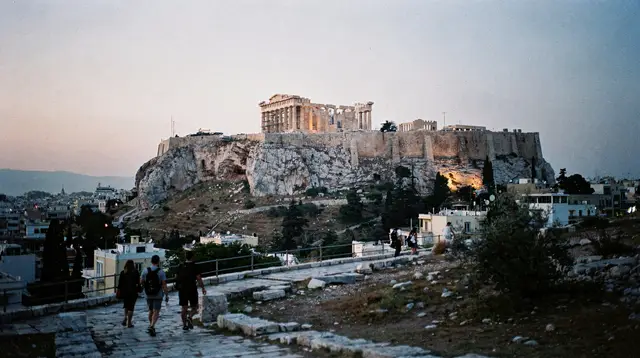
The Acropolis in winter has two major advantages beyond the absence of crowds: the light and the temperature. Winter morning light in Athens — particularly in November and March — is a warm gold that photographers spend entire careers chasing. At 8 am on a clear winter day, the Parthenon columns glow amber rather than the bleached white of summer noon.
Temperature on the hill reaches a comfortable 12–15°C on clear winter days, with a breeze that makes the climb genuinely pleasant rather than a sweaty ordeal.
Early morning Acropolis visit + Museum — best in winter when crowds are minimalNeighbourhood immersion
Winter is when Athenians reclaim the streets. The café culture in Kolonaki, Psyrri, and Exarchia runs full speed through winter; the neighbourhood tavernas that cater more to locals than tourists are busy with family lunches on weekends. This is the Athens that summer visitors rarely see.
Eat: Winter Athenian menus feature stifado (slow-cooked beef and onion stew), fasolada (white bean soup), and revithia (slow-cooked chickpeas) — dishes served in earthenware bowls that make outdoor eating in January sound implausible but taste magnificent.
Explore: Thissio, Plaka, and Monastiraki are all considerably more walkable in 14°C than in 38°C. The Monastiraki flea market is at its most genuine on Sunday mornings in winter, with actual antiques and second-hand goods rather than tourist trinkets.
Day trips in winter
Some day-trip options are better in winter than summer. Delphi, at 600 metres altitude, is often clear and cold in winter while Athens is rainy — occasionally with snow on the surrounding mountains that makes the landscape dramatic. Cape Sounion in winter light has a stormy, Homeric quality that suits the Temple of Poseidon perfectly.
Avoid island day trips in November–February; ferry frequency drops significantly and rough Aegean weather can strand you for an extra night. Delphi and inland trips are the safer winter choice precisely because they don’t depend on the sea.
Delphi day trip from Athens — reliable in winter when ferries aren’tWinter evenings: cafés, tavernas and where locals actually go
With outdoor seating largely gone, Athenian winter social life moves indoors — into small, steamy tavernas with fogged-up windows and into the coffee houses of Kolonaki and Exarchia. This is when the city’s indoor wine bars and mezedopoleia (small-plates taverns) come into their own, often warmer and more atmospheric than their summer terrace equivalents. Expect to eat later than you might in a cold-weather country — 9 pm is normal for dinner, even in January. If you want a single evening that captures this side of the city, a rooftop bar with an enclosed, heated section still delivers the Acropolis-lit-up view without the summer crowds.
Combining winter Athens with the Greek islands
Ferries to the Cyclades run a reduced winter schedule and are more exposed to cancellation from the meltemi’s off-season cousin, southerly winter storms. If an island is non-negotiable, Aegina and Hydra keep more reliable year-round links than the more distant Cyclades — both are workable even in January, weather permitting, and both make sense as a single winter day trip rather than an island-hopping itinerary. Save Santorini or Mykonos for a warmer-season trip; winter ferries there are the least dependable and many island hotels close entirely.
What to pack for Athens in winter
- A proper waterproof jacket (not just a light rain mac)
- Layering options — a wool midlayer for evenings
- Comfortable walking shoes with grip (cobblestones get slippery when wet)
- An umbrella — compact, because Athens wind makes large umbrellas useless
- Warmer clothes than you’d expect for “sunny Greece”
What not to worry about in Athens in winter
- Closed sites: All major archaeological sites and museums remain open throughout winter, though a few small sites (some ancient suburb ruins) reduce hours.
- Bare trees: Athens is Mediterranean; many trees are evergreen, and the olive groves around the city stay silver-grey and beautiful.
- Empty restaurants: Athens’ restaurant scene continues through winter; the city has a strong local dining culture that doesn’t depend on tourist season.
For best-time-to-visit context and a comparison of all seasons, see the full best time to visit Athens guide. For the busiest season contrast, see Athens in summer.
Frequently asked questions about Athens in winter
Does it snow in Athens in winter?
Rarely in the city centre — perhaps once or twice a decade. Snow does fall on the surrounding mountains (Parnitha, Hymettus) and is visible from the city several times each winter. When snow does fall in Athens (typically January), it melts within hours. It is not a concern for travel planning.
Are all sites and museums open in winter?
Yes. The Acropolis, Ancient Agora, Acropolis Museum, National Archaeological Museum, and all major sites are open year-round. Some operate reduced winter hours (typically 9 am–3 pm versus 8 am–8 pm in summer) and may close on additional public holidays. Check individual site websites before visiting.
Is Athens worth visiting in January?
Yes, for culture travellers. January is the least popular month and the least comfortable weather-wise, but it offers the most genuine access to the archaeological sites and museums without crowds. If you want to spend serious time in museums, January is ideal. If your priority is outdoor dining and warm evenings, choose March or November.
How cold does it get at night in Athens in winter?
Athens winter nights average 7–9°C in January, 6–8°C in February, and 10–11°C in March. These are not extreme temperatures, but the Mediterranean humidity makes cool evenings feel colder than the number suggests. Dress for 10°C after dark.
Are there any major events in Athens in winter?
Greek Christmas (25 December), New Year (1 January), Epiphany (6 January), Carnival/Apokries (late February or early March depending on Easter calendar), and Greek Independence Day (25 March). The Athens Marathon takes place in November, drawing international athletes and a festive atmosphere.
Is it worth visiting the Greek islands from Athens in winter?
Only cautiously. Reduced ferry schedules and winter storms make island day trips less reliable between December and February, and many island hotels and restaurants close entirely outside the April–October season. Aegina is the most dependable winter option since it’s close and well-served; save Santorini or Mykonos for warmer months.
Do I need to book restaurants ahead in winter?
Generally no, except around Christmas week and Greek Independence Day weekend, when domestic tourism spikes and popular tavernas in Plaka and Kolonaki fill up. Outside those dates, winter is the easiest season in Athens for walking into a good taverna without a reservation.
Popular Athens tours on GetYourGuide
Verified deep-linked GetYourGuide tours. Book through these links and we earn a small commission at no cost to you.
GetYourGuide does not provide product photos: on its activity cards, the picture illustrates the type of experience and is not the operator's own photo.