The island that was almost the Greek capital
In the 1820s, before Athens had been recaptured from the Ottomans, Aegina briefly served as the capital of the newly independent Greek state. The first modern Greek coin was minted here. Ioannis Kapodistrias governed from a building on the waterfront that still stands. The choice of a functioning port island over the half-ruined city to the north made practical sense at the time.
Athens eventually took its place, and Aegina settled back into the role it has played ever since: working island, agricultural producer, and the most convenient island escape for Athenians. It is 40 minutes by hydrofoil from Piraeus — close enough to be a viable evening trip as well as a day trip, close enough that Athenians own holiday houses here and commute to the city by fast ferry in the morning.
For visitors to Athens, Aegina is the easiest Saronic island day trip and arguably the most varied. It has an ancient temple that stands comparison with anything in Greece, a remarkable early-20th-century pilgrimage church, good swimming beaches, and the most seriously pistachio-obsessed food culture in the country.
| Where | Saronic Gulf, 40 min by hydrofoil from Piraeus |
| Temple entry | €6, daily 8am–8pm summer / 8am–3pm winter |
| Getting to the temple | Taxi ~€15, seasonal bus, or bicycle (13km, ~45 min) |
| Basilica entry | Free |
| Best day-trip window | Morning boat out, afternoon boat back |
Getting there from Piraeus
Ferries and hydrofoils depart from Piraeus ferry port, Gate E8–E9 (and sometimes E6–E7 — check your ticket). Take Metro Line 1 from Monastiraki to Piraeus terminus (22 minutes, €1.20).
Hydrofoil (Flying Cat): 35–45 minutes, approximately €14–18 one way in 2026. Several departures daily; roughly hourly in peak season. The fastest and most practical option for a day trip.
Conventional ferry: 60–75 minutes, €8–10 one way. The car ferry is considerably larger, has open deck space, and a cafeteria — more pleasant for the crossing if you are not in a hurry. It also accepts bicycles, which is relevant if you plan to cycle the island.
A pre-booked ferry ticket to Aegina saves queuing at the port and guarantees a seat on peak-season weekends when the hydrofoils fill up.
A guided day trip to Aegina with swimming covers the main sites with a local guide and includes time at the beach — a good format for first-time visitors who want context without committing to a full private tour.
The Temple of Aphaia
The Temple of Aphaia is the main reason Aegina belongs on any serious visit to the Athens region. Built around 480 BC — roughly contemporaneous with the Parthenon’s predecessor destroyed by the Persians — it is one of the best-preserved Doric temples in existence, standing almost complete on a pine-forested hill in the island’s northeast corner, 13 km from the main port town.
The temple is dedicated to Aphaia, a local Aeginetan goddess associated with Artemis and Athena — a deity worshipped almost nowhere else in the ancient world. What makes the site extraordinary is that 24 of its original 32 columns still stand, giving an immediate sense of a complete temple that the Acropolis, for all its magnificence, cannot quite replicate. The sculpture from the temple’s pediments — depicting episodes from the Trojan War — was sold to Ludwig I of Bavaria in 1812 and now sits in Munich’s Glyptothek, to the ongoing irritation of Greek archaeologists.
Entry is €6, open daily 8 am–8 pm in summer, 8 am–3 pm in winter. Getting there from Aegina port: taxi (about €15 each way), local bus (runs roughly every 90 minutes in season), or bicycle if you are comfortable with 13 km of moderate hills. The last option takes about 45 minutes each way and is excellent.
A private day trip focused on the Temple of Aphaia provides transport, a guide who knows the site in depth, and the freedom to spend as long as you want at the temple — the best option if ancient history is your primary reason for visiting.
A small-group premium Aegina tour covers the temple alongside the island’s other main sites with a capped group size — more personal than a standard coach tour without the cost of going fully private.
Agios Nektarios and the island interior
Five kilometres from the Temple of Aphaia, Agios Nektarios Basilica is one of the largest churches in the Balkans and an active pilgrimage site. Nektarios was a bishop who lived on Aegina in the early 20th century; canonised in 1961, he is revered across the Orthodox world. The vast domed basilica is impressive in scale; the small monastery next door — where Nektarios lived and died — is the more affecting site, preserved largely as he left it. Greek families come here as pilgrims rather than tourists. Dress modestly; entry is free.
The hill village of Paleochora, above the road between port and temple, is the ruined medieval capital — 28 churches clustered on a defensive hillside, unexcavated and largely unvisited. A 30-minute walk from the main road, and genuinely atmospheric.
Pistachios and the port town
Aegina’s pistachios have Protected Designation of Origin status — genuinely different from Turkish or Iranian imports, with a more intense flavour the island attributes to its volcanic soil. The harvest runs August through September; the rest of the year they are sold roasted, salted, in honey, or as cream. Buy from farms on the road to the temple rather than from port stalls — the quality gap is significant.
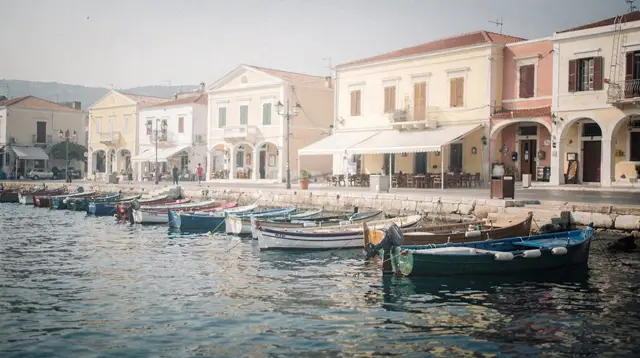
The port town is worth a walk: 19th-century neoclassical waterfront buildings, a morning fish market, and a surviving column of an ancient Temple of Apollo visible from the promenade. The brief-capital history gives it more architectural weight than a standard island port.
An e-bike rental and ferry package to Aegina is one of the most practical ways to see the island: the e-bike handles the hills to the temple, the ferry is included, and you cover the island at your own pace without needing a taxi or bus schedule.
Agistri, beaches, and practical notes
The small island of Agistri, 15 minutes by ferry from Aegina port, has pine forest down to the water and beaches far less crowded than Aegina’s own — worth the detour if swimming is the priority.
A boat tour combining Agistri and Aegina covers both islands with swim stops in the clearest water in the area. A day trip to Agistri, Moni island, and Aegina with lunch adds the uninhabited nature-reserve island of Moni — peacocks and deer, no facilities — to the circuit.
For beaches near the main port, Marathonas (7 km west, sandy, sunbed hire) is the most convenient. Agia Marina on the east coast near the temple is larger and more commercial.
Taxis are available at the port; the local bus to the temple runs roughly every 90 minutes in season. ATMs are at the port; farm shops and countryside tavernas are cash-preferred.
A private Aegina day trip with driver and guide is the most efficient format for covering the temple, the basilica, Paleochora, and a swimming stop without navigating transport independently.
For the broader Saronic picture, the Saronic Islands cruise guide and Hydra, Poros and Aegina cruise guide cover how Aegina fits into a multi-island day. The Greek islands from Athens guide covers the full range, and the Athens 4-day itinerary fits an Aegina day trip into a short Athens visit.
Comparing Aegina with Hydra and Poros
Aegina is not the prettiest Saronic island — Hydra has no cars and a more dramatic amphitheatre harbour, and Poros has a gentler, greener coastline — but it is the only one of the three with a genuinely major ancient site, and its ferry connection is the fastest of the group. Visitors choosing between the three for a single day trip should pick Aegina if ancient history and food are the priority, Hydra for pure atmosphere and a car-free island experience, and Poros for the easiest swimming with the shortest crossing after Aegina itself. Combining two or three in one day is possible on the Saronic cruise routes, but it compresses the Temple of Aphaia into a rushed extra that undersells it — if the temple genuinely interests you, give Aegina its own day.
Cycling the island
Aegina is one of the more rewarding Greek islands for cycling: mostly flat near the port, with a manageable climb toward the Temple of Aphaia in the northeast. The conventional ferry (not the hydrofoil) accepts bicycles at no extra charge, and several rental shops near the port hire both standard and electric bikes by the day. A loop covering the port, Marathonas beach, and the temple runs to roughly 35–40 km round trip — comfortably done on an e-bike in a day, harder but doable on a standard bike for a fit cyclist. Carry water; shade is limited once you leave the port town.
How to shape the day
A day on Aegina works best when you decide at the port what the day is for. If the Temple of Aphaia is the priority, head there first, while the light is soft and the hilltop is quieter, and leave the port town for the end of the day when you are tired and happy to sit by the water. If swimming and food matter more, reverse the order: a slow lunch, a swim, and a short visit to the temple on the way back. Trying to do everything at the same pace tends to leave the temple rushed and the beach cut short.
The island rewards a loose plan. The basilica of Agios Nektarios and the ruins of Paleochora sit on the same side of the island as the temple, so they fit naturally into one outward journey rather than separate trips. The port town, with its waterfront, fish market and pistachio shops, is a good place to finish, and it keeps you close to the boat when it is time to leave.
Take a few small things with you: a hat, water, cash for farm shops and tavernas, and a light layer for the boat, which can be breezy even on a warm day. Comfortable shoes matter at the temple and especially at Paleochora, where the paths are uneven.
Pairing Aegina with the rest of your Athens trip
Aegina sits comfortably alongside the city sights. Many visitors spend a morning at the Acropolis and keep a separate day for the island, rather than squeezing both into the same twelve hours. For a wider look at what else is within reach, the best day trips from Athens and the best islands near Athens put Aegina in context, while the dedicated Aegina island guide goes deeper on the practical details. The ferries from Piraeus guide explains how the boats work, and the Athens in 3 days itinerary shows where an island day can slot in without losing the city’s highlights.
Families will find the island easy: short crossings, simple food and calm swimming spots make it an approachable first island. Travellers who want a longer stay can take a night or two, which turns the trip from a rush between boats into a genuinely slow break, with evenings in the port after the day visitors have gone.
Frequently asked questions about Aegina
Is Aegina worth a day trip from Athens? Yes, particularly for anyone with three or more days in the city. The Temple of Aphaia is one of the best-preserved Doric temples in Greece, the Agios Nektarios basilica is a significant pilgrimage site, and the island’s pistachios and port town add genuine local flavour beyond the ruins. The 40-minute hydrofoil crossing is short enough that Aegina works well even for travellers who dislike long ferry transfers.
Can I visit Aegina without a guided tour? Yes. Ferries run frequently from Piraeus, and once on the island a taxi, seasonal bus or rental bicycle covers the 13km to the Temple of Aphaia. A guide adds historical context and saves you figuring out local transport, but independent travel is entirely practical for confident visitors.