
Hydra, Poros, and Aegina cruise: the classic Saronic day trip
What is the Hydra-Poros-Aegina cruise like?
A full-day boat trip from Athens visiting three Saronic Gulf islands. The cruise departs Piraeus around 08:00 and returns around 19:30. Hydra gets the most time (2–2.5 hours, car-free harbour and lanes). Aegina and Poros each get 1.5–2 hours. Most cruises include a buffet lunch.
The Saronic three-island cruise in detail
The Hydra-Poros-Aegina cruise is Greece’s most popular organised day trip. Every day between April and October, large ferries and smaller boats depart Piraeus carrying passengers to three very different islands in the Saronic Gulf — returning them to Athens by early evening with a complete impression of what makes this stretch of water special.
This guide goes beyond the standard “departs at 8am, lunch included” summary. It covers what each island is actually like during your stop time, how to spend those hours well, and what the experience looks like across different cruise formats.
| Where | Aegina, Poros and Hydra, Saronic Gulf |
| Cost | Around €60–90 per person, buffet lunch usually included |
| Time needed | A full day, roughly 08:00–19:30 |
| Getting there | Departs Piraeus (metro green line, 40 minutes from central Athens) |
| Best time | April–October; book a few days ahead in July–August |
| Island | Time ashore | Best for |
|---|---|---|
| Aegina | 1.5–2 hrs | Pistachios, harbour, quick column-hill view |
| Poros | 1.5–2 hrs | Clock-tower walk, water taxi to Galatas |
| Hydra | 2–2.5 hrs | Car-free harbour, monastery climb, swimming at Kamini |
The three islands: what to expect at each stop
Aegina: first stop, 1.5–2 hours
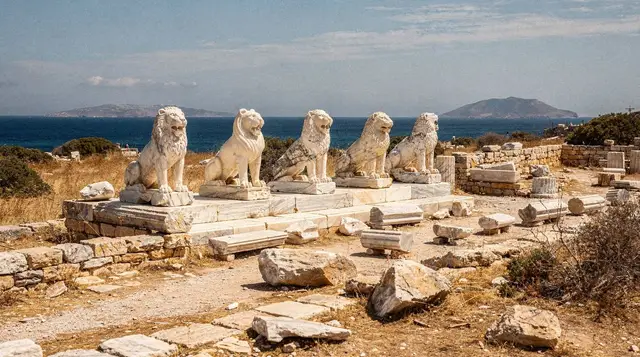
Aegina is typically the first stop, reached around 09:30–10:00. The harbour town is immediately appealing — fishing boats, a fish market that opens before dawn, and a row of neoclassical buildings along the waterfront. Two things are immediately obvious: the pistachio shops (you’ll smell them before you see them) and the single ancient column on a low hill at the harbour’s edge, all that remains of the classical-era Temple of Apollo.
What to do in 1.5 hours at Aegina:
- Walk the harbour promenade and look at the fish market
- Buy pistachio products from a harbour shop (the island’s PDO pistachios are genuinely excellent — smaller and more flavourful than imported nuts)
- Walk 10 minutes to the top of the ancient column hill for views over the harbour
- Have a coffee at one of the waterfront kafeneions
What you cannot do in this time: visit the Temple of Aphaia (13 km away — the island’s best archaeological sight). If the temple is your priority, book an independent day trip to Aegina rather than a cruise.
Read the complete Aegina island guide.
Poros: second stop, 1.5–2 hours
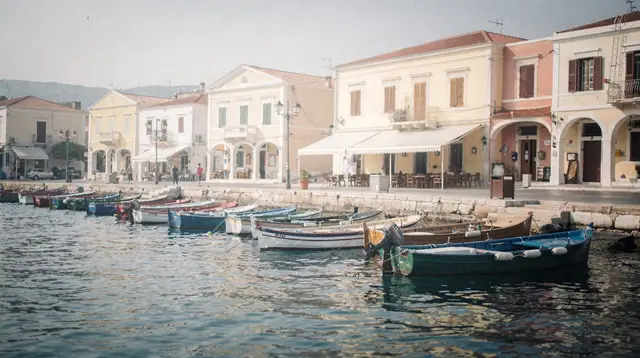
Poros is arrived at around 12:00–13:00. The approach through the narrow channel between Poros and the Peloponnese mainland is one of the most dramatic harbour entrances in the Aegean — you’re looking at the village of Galatas across 200 metres of water, with small water taxis crossing in both directions.
The town of Poros is built on a small peninsula with a clock tower at the highest point. The lanes are pleasant to walk and the overall scale is manageable.
What to do in 1.5–2 hours at Poros:
- Walk the harbour and the lanes up to the clock tower
- Take the small water taxi across to Galatas on the mainland (€1, 2 minutes each way) if you want to say you set foot on the Peloponnese
- Swim from the quayside if the weather is good and there’s time
- Lunch: most cruises serve food on board during the Poros leg rather than at the island itself
Read the complete Poros island guide.
Hydra: third stop, 2–2.5 hours
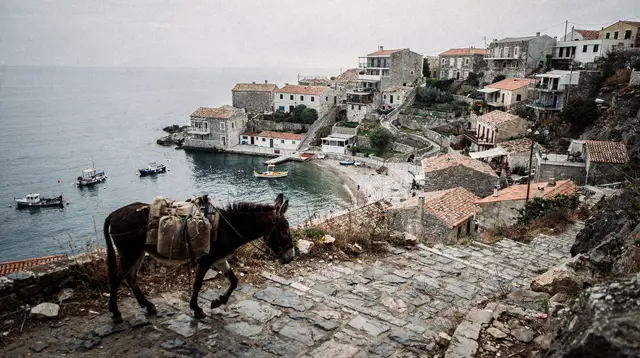
Hydra is the highlight of the cruise for most passengers, and it receives the most time. The boat docks directly at the harbour — neoclassical mansions rising from the waterfront, no vehicles anywhere, donkeys carrying luggage, cats on stone walls. It is exactly as beautiful as its reputation suggests.
What to do in 2–2.5 hours at Hydra:
- Walk the harbour and the main commercial street (5 minutes from the quay)
- Head up any lane away from the main harbour crowd — the town becomes notably quieter 3–4 minutes’ walk in any direction
- Climb to the monastery above the harbour for caldera views (20 minutes’ walking from the quay, steep)
- Swim at Kamini, a 15-minute walk from the harbour — a small cove that is usually less crowded than the main harbour beach
- Eat: several good tavernas are within 5 minutes of the dock; Kamini neighbourhood has slightly better value food
Read the complete Hydra island guide.
Hydra full-day trip with swimming (standalone)Choosing between cruise formats
Standard large-vessel cruise
The most common format: 200–400 passengers, pre-recorded or live commentary, buffet lunch (typically Greek standards — grilled chicken, salad, rice, bread, dessert, water included). Stable, comfortable, economical at around €60–75/adult.
Saronic islands cruise with buffet and port transfersVIP cruise with reserved seating
Same route, better seating position (upper deck, reserved chairs), typically a better meal, and sometimes unlimited non-alcoholic drinks included. Worth the €15–25 premium for the seating alone on a sunny day.
Saronic islands cruise with VIP seatingIsland hopping cruise with transfers
Some operators include hotel pickup and drop-off in Athens rather than just meeting at Piraeus. Useful if you’re unfamiliar with the port logistics and want everything handled.
Saronic island hopping with lunch and transfersPrivate boat charter
For groups of 4–12, a private charter to the same three islands can be cost-competitive with a premium cruise and offers complete flexibility over schedule and pace. Some private operators include snorkelling stops at coves between islands that the large boats can’t access.
How to pace the day
A three-island day is a rhythm more than a list of sights. The mornings are for settling in: find a seat with some shade, put your bag where you can see it, and watch Piraeus slide away. The middle of the day belongs to Poros and the sailing legs, which are the quiet stretches where the buffet, the sea air and the passing coastline do most of the work. The afternoon belongs to Hydra, which is why it is worth arriving there with some energy left rather than tired from rushing at the earlier stops.
At each island, decide in advance what you want from the stop. At Aegina, that might simply be the harbour and the pistachios. At Poros, the clock tower and a coffee. At Hydra, either the climb or the swim, rarely both. Trying to do everything is the surest way to spend your stop checking the time. If you like having a framework, the one-day itinerary from the port shows how to think about a tight schedule, and the Athens in one day from the port guide covers the city side of the same problem.
Who is on board and what the atmosphere is like
Expect a mix of nationalities, families with children, couples, and groups of friends, all following the same loop. The commentary, where it exists, is a general introduction rather than a deep history lesson, so if you want context on what you are seeing, read ahead. The Greek mythology in Athens guide and the Athens history timeline give useful background for the temple column at Aegina and the wider story of the gulf.
The mood on deck is relaxed and slightly social. Many passengers are on a single free day, and many are cruise-ship visitors using a shore day wisely. If that is you, the Piraeus cruise port guide and the shore excursions from Piraeus guide are worth reading before you commit, so you can compare this cruise with other ways of spending the same hours.
Combining the cruise with the rest of your trip
The cruise fits neatly into a longer stay. Many visitors place it on a day after the big sights, when their legs want a rest and the sea is a welcome change from the stone of the Acropolis. It also pairs well with a slower plan built around the how many days in Athens guide and the Athens itinerary planning guide.
If you are building a longer route, the Athens in 3 days itinerary and the Athens 5 days with day trips itinerary both leave room for a boat day. For a first taste of the islands that is less rushed, the first Greek island hop story describes what it feels like to leave Piraeus for the first time, and the guide to which Greek island from Athens helps you decide how much of the gulf you actually want to see.
If the weather turns, the Athens on a rainy day guide is a good fallback, and in the hottest months the Athens in summer heat guide explains how to manage the sun before and after a day on the water.
What to bring on the cruise
- Sunscreen (high SPF — you’re on the water all day)
- A hat and light cover-up for the boat deck
- Water shoes or sandals with grip for rocky Hydra swimming spots
- Cash for drinks, small purchases, and tips at the islands
- A small bag rather than a large suitcase — you’re walking on island cobblestones
- A lightweight jacket or cardigan for the return leg when the sea air is cooler
Departure point and logistics
All Saronic cruises depart from Piraeus. Take the metro green line to Piraeus station (40 minutes from central Athens, €1.20) and walk to the cruise departure gate — usually Gate E6, E7, or E9. The walk from the metro to the correct gate is 15–20 minutes across a large port area. Allow more time than you think you need.
Check your specific departure gate in the booking confirmation the evening before. Arrive 30 minutes before departure time.
For the broader context of island travel from Athens, read the Greek islands from Athens guide, the island hopping from Athens guide, and the best islands near Athens guide.
Getting the most from each stop
Small habits make a short stop feel longer. Walk away from the quay first and come back to the shops and cafés last, since the waterfront will still be there when you return and the quieter lanes reward the early minutes. Keep an eye on the boarding time rather than the clock on your phone alone, and agree a meeting point if you travel in a group. Carry water, and keep a light layer for the sail home.
Families will find the format easy, as children can wander the decks and the harbours are compact; the Athens with kids guide and the kid-friendly day trips from Athens guide offer more ideas for a trip with younger travellers. For a more focused look at the other Saronic options, see the Saronic Islands cruise guide and the Hydra, Poros and Aegina destination pages for detail on each island.
Who this cruise suits (and who it doesn’t)
The three-island cruise suits visitors with a single free day who want a genuine taste of the Saronic Gulf without ferry-booking logistics — families, cruise-ship passengers on a shore day, and anyone short on time. It suits less well those who want to properly explore any one island in depth, since 1.5–2.5 hours per stop is enough to get a feel for a place but not to see it thoroughly. If Hydra in particular appeals to you, consider whether a dedicated day trip or overnight stay (see the Hydra island guide) would serve you better than sharing your time across three islands.
Frequently asked questions about the Hydra-Poros-Aegina cruise
How much time do you get at each island?
Typically 1.5–2 hours at Aegina, 1.5–2 hours at Poros, and 2–2.5 hours at Hydra. Total island time across the day is approximately 5.5–7 hours; the rest is sailing between islands.
Is the cruise suitable for people with mobility issues?
The boat itself is accessible. At Aegina and Poros, the harbour areas are flat and manageable. Hydra involves some stone-paved slopes immediately around the harbour. Getting to viewpoints or swimming spots at Hydra requires walking on uneven ground. The cruise is manageable for those with moderate mobility but not for wheelchair users.
Can you swim during the cruise?
At some stops, yes. Hydra has swimming from rocks near the harbour. Some cruise operators include a scheduled swimming stop between islands. Check the specific itinerary when booking — “swimming included” varies in what it means.
Is the food on board good?
The buffet on standard cruises is adequate — Greek taverna standards, freshly prepared, enough variety for most tastes including vegetarians. Premium cruise food is better. The island stops are short, so relying on the on-board meal is practical.
What is the sea like on the Saronic Gulf?
Generally calm in summer (June–August). Can be choppy in spring (April–May) and autumn (September–October), particularly on the return leg when the afternoon meltemi (northerly wind) picks up. In genuinely rough weather, cruises may be delayed or rescheduled. If you’re prone to seasickness, take medication before boarding.
Should I book in advance or can I book the day before?
Book at least a few days ahead in July and August — popular cruises sell out. In May, June, September, and October, same-day or next-day booking is usually possible.
Saronic island cruises on GetYourGuide
Verified deep-linked GetYourGuide tours. Book through these links and we earn a small commission at no cost to you.
GetYourGuide does not provide product photos: on its activity cards, the picture illustrates the type of experience and is not the operator's own photo.
More tours on Viator
Top-rated experiences with verified reviews, bookable on Viator (a Tripadvisor company).
 Viator
Santorini Catamaran Cruise with Swim-Stops, Greek Meal and Sunset
FromEUR 150Check availability → Viator
Catamaran Cruise in Nafplio | Greek Buffet & Open Bar
FromEUR 125Check availability → Viator
Milos oneiro-kleftiko sailing experience with local guide
FromEUR 140Check availability → Viator