Close enough to touch the mainland
The strait between Poros and the Peloponnese coast is so narrow — barely 200 metres at its tightest point — that the island feels less like an offshore destination and more like a town that has accidentally slid into the sea. Ferries from the mainland port of Galatas chug across every few minutes. The tavernas on the Poros waterfront look directly at the line of eucalyptus trees on the opposite shore.
This proximity to the mainland gives Poros a character quite different from the rockier Saronic islands. The island is substantially covered in pine forest; the famous Lemon Forest — a valley of some 30,000 lemon and bitter-orange trees on the Peloponnese side, reached by a short ferry crossing — is one of the more unusual things in the greater Athens region. The water in the bays between the headlands is calm and clean. The pace is unhurried in a way that feels earned rather than performed.
Poros is the least-photographed of the three main Saronic islands and arguably the most liveable. For visitors doing day trips from Athens, it is the quietest and greenest option — a useful alternative if Hydra feels too chic or Aegina too busy.
| Where | Saronic Gulf, metres from the Peloponnese coast |
| Getting there | Hydrofoil ~1h (€18–25) or ferry ~2h30 (€12–16) |
| Cost | Lemon Forest free; accommodation €70–130/night |
| Time needed | One full day; small enough not to feel rushed |
| Best time | May–June and September |
Getting there from Piraeus
Services depart from Piraeus ferry port, Gate E8–E9. Take Metro Line 1 from Monastiraki to the Piraeus terminus (22 minutes, €1.20) and follow the ferry signs south along the quay.
Hellenic Seaways hydrofoil: approximately 1 hour from Piraeus, fare around €18–25 one way in 2026. Note that most hydrofoil services to Poros also stop at Aegina and Hydra en route — check which stops your service makes.
Conventional ferry: roughly 2 hours 30 minutes, €12–16. The slower boats have open deck space and a canteen — more pleasant in good weather if you are not in a hurry.
Poros is also reachable from Hydra (about 30–40 minutes by hydrofoil), making it a natural second stop on a two-island day. The island hopping from Athens guide covers the multi-island logistics.
The clock tower and the town
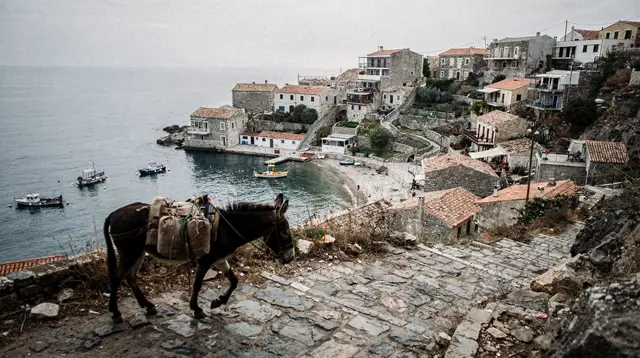
The clock tower on the hilltop above the port is Poros’s most recognisable landmark and the first thing to climb when you arrive. The walk up takes about 10 minutes through the narrow lanes of the old town, past whitewashed houses with blue shutters and cats sleeping in doorways. From the tower you look directly across the strait to the Peloponnese mountains, and back over the red-tiled rooftops of the port and the blue channel below.
The old town sits on a small volcanic outcrop called Sferia — technically a separate islet, connected to the larger Kalavria island by a short causeway. The distinction is invisible on the ground but explains why Poros has an unusually compact, vertical town for an island its size.
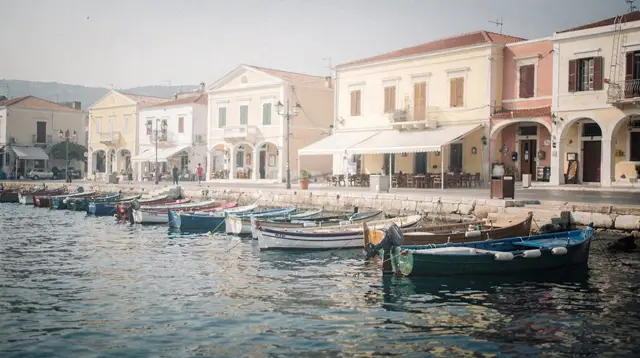
The waterfront promenade below the town is the social centre of the island in the evening: cafes and restaurants with tables extending to the water’s edge, the Galatas ferry arriving and departing every few minutes across the strait, fishing boats tied alongside the tourist vessels. Dinner on this waterfront — grilled octopus, fried courgette flowers, a carafe of local white wine — is one of the more agreeable ways to end a Saronic day.
The Lemon Forest and the interior
Lemonodasos — the Lemon Forest — is not on Poros itself but on the Peloponnese shore directly opposite the port. A small ferry (€1 each way, running constantly) takes you to the Galatas landing in about three minutes, and from there a 20-minute walk through the citrus groves brings you into the forest proper.
The grove covers roughly 25 hectares and contains around 30,000 lemon and bitter-orange trees, some of them several centuries old. In spring the blossom scent is remarkable. In summer and autumn the trees carry fruit. It is cool under the canopy even in July. The forest has a small taverna at its centre that sells fresh-squeezed lemonade, honey, and preserved citrus — straightforward but honest.
The visit is free. Combined with the short ferry crossing it takes about 90 minutes and is the most distinctive thing to do in the Poros area — different enough from a standard island visit to justify the detour.
On the Kalavria island (the larger part of Poros), the ruins of the Temple of Poseidon stand on a plateau in the pine forest, a 40-minute walk from the port or reachable by taxi. The remains are modest — foundations and some column drums — but the wooded setting and the view across the Saronic are worth the effort. The orator Demosthenes, pursued by Macedonian agents after Alexander’s death, took refuge here and chose to die at the site rather than surrender.
Swimming and beaches
Poros has no single spectacular beach but several genuinely pleasant ones, all within easy reach of the port.
Love Bay (Askeli Beach), about 3 km east of the port along the coast road, is the most popular — a long stretch of soft sand with clear water, sunbeds and umbrellas for hire, and a beach bar that operates through the summer. Accessible by water taxi from the port (about €5 each way) or on foot in 40 minutes.
Russian Bay (Rusiko), further east, is quieter — no sunbeds, sand and pebble, excellent water clarity. About 50 minutes’ walk from the port through pine forest.
Neorio, west of the port, has a small beach with a beach club — accessible to non-guests for a small fee.
A full-day swimming excursion around Poros by boat reaches the secluded coves inaccessible by road, with multiple swim stops and lunch included — the most enjoyable way to see the best of Poros’s coastline.
Combining Poros with other islands
Poros sits between Hydra (30–40 minutes by hydrofoil, southwest) and Aegina (50–60 minutes, north) — which means it works naturally as part of a two- or three-island circuit.
A private day trip combining Hydra and Poros is the most flexible two-island format: your own boat means you decide how long to spend at each stop and where to anchor for a swim.
For the full three-island day covering Hydra, Poros and Aegina, the Hydra, Poros and Aegina cruise guide has the timetables and practical advice. The Saronic Islands cruise guide covers the wider context.
A Saronic island-hopping day with lunch and port transfers included covers all three islands in a single organised excursion — the right choice for visitors who want to see the Saronic without managing individual ferry tickets and timetables.
Shaping your day on Poros
The easiest way to enjoy Poros is to resist the urge to schedule it tightly. The island rewards a loose plan: arrive, climb to the clock tower while the light is still soft, then decide between the Lemon Forest, a beach, or simply a long coffee on the waterfront. Because the town, the strait and the main bays are all close together, a change of mind costs very little.
A sensible rhythm for a first visit is to take in the old town and the view early, cross to the Lemon Forest while the groves are still cool, return for a late lunch beside the water, and keep the afternoon for a swim. Nothing here needs a reservation, and nothing punishes a slow start. If you want a fuller sense of how the Saronic day fits together, the Poros island guide walks through the same ground from a slightly different angle.
Travellers arriving from the capital often ask how Poros compares with the other short escapes on offer. The best islands near Athens round-up puts the Saronic group in context, and the best day trips from Athens guide shows where an island day sits among the mainland alternatives such as Nafplio and Delphi.
Eating and drinking
The waterfront is where most visitors eat, and for good reason: the setting is hard to beat, and the menus lean on what a Greek island does well — fresh fish, grilled meat, salads dressed with local olive oil, and plates of small dishes to share. Walk a little beyond the first row of tables and you will often find quieter places where the pace is slower and the cooking is just as good. If you enjoy the ritual of Greek meze, the ouzo and meze guide explains how to order, and the best tavernas in Athens page is a useful reference for what to look for in a genuine family-run place.
The lemon theme carries through to the table. Look for lemonade, citrus preserves and sweets made with the local fruit, which make small and easy souvenirs to carry home.
Making it a family day
Poros suits children unusually well. The old town is small, the ferry across the strait is short enough to feel like an adventure rather than an ordeal, and the calm water in the sheltered bays is forgiving for young swimmers. Hats, water and sun protection matter more than any itinerary, especially in high summer. For more ideas on keeping younger travellers happy, see Athens with kids, the kid-friendly day trips from Athens and the beaches for families guide.
Weather and timing
The shoulder seasons are the sweet spot: the light is gentle, the water is inviting and the walks are comfortable. In midsummer the heat builds through the middle of the day, so plan the longer walks for the morning or late afternoon and use the hottest hours for swimming and a long lunch. The best time to visit Athens and Athens in summer guides give the wider seasonal picture, and the packing list covers what to carry for a day on the water.
Getting to the port without stress
Leave generous time to reach the quay, especially if you are coming from the city centre in the morning. The Athens to Piraeus port guide explains the options, the Athens metro guide covers the rail connection, and the ferries from Piraeus page helps you read the departure boards and pick the right boat. Check your return sailing before you leave the quay in the morning so the evening is relaxed rather than rushed.
Practical notes
Poros town is compact and easy to navigate — the port, the old town on the hill, and the coast road east and west cover everything. ATMs are at the port and town centre; most restaurants accept cards but smaller establishments are cash-preferred.
Accommodation runs €70–130 per night in season — mostly family guesthouses along the port and the Askeli coast road. Poros is considerably cheaper than Hydra for both rooms and food.
For the broader picture of day trips from Athens, the Greek islands from Athens guide covers all Saronic and further-afield options. The Athens 5-day itinerary with day trips has a practical structure that fits Poros alongside the main city sights.
Poros vs Hydra vs Aegina: choosing your Saronic island
The three main Saronic day trips suit different moods, and Poros is often the least considered despite being arguably the best all-rounder.
| Island | Character | Best for |
|---|---|---|
| Poros | Green, relaxed, close to the mainland | Families, swimming, unhurried pace |
| Hydra | Car-free, chic, stone architecture | Photographers, romance, quiet luxury |
| Aegina | Busier, closer to Athens, historic temple | Quick trips, Temple of Aphaia, pistachios |
If you want one island and one only, Hydra wins on distinctiveness and Aegina on convenience — but Poros wins on value and ease with children, since it has neither Hydra’s premium prices nor Aegina’s crowds, and the Lemon Forest gives it something genuinely unique among the three.
Frequently asked questions about Poros
Is Poros a good choice for families with young children? Yes — the calm, shallow water at Love Bay, the short and safe Lemon Forest ferry crossing, and the compact, walkable town make Poros one of the more manageable Saronic islands for families, with less of the steep stair-climbing that Hydra’s car-free hills require.
Can I visit Poros and Hydra in the same day? Yes, they’re about 30–40 minutes apart by hydrofoil, and several combined tours or DIY ferry itineraries cover both in a single long day. Doing so means less time at each island than a dedicated single-island day, so it suits travellers who want a taste of contrast over deep immersion in either place.
Is Poros a good first Greek island? It is a gentle introduction. The scale is small, the pace is easy and the logistics are simple, which makes it a comfortable first taste of island life. The first Greek island hop story and the which Greek island from Athens comparison help if you are still choosing between options, and the Hydra island guide and Aegina island guide cover the neighbours.
Can I combine Poros with the Peloponnese? Because the Lemon Forest and the Galatas shore sit directly across the strait, Poros makes a natural bridge to the mainland. If you want to go further, the Argolis day trip and the Athens Peloponnese itinerary show how to continue towards Epidaurus and beyond.