An island that made a decision and stuck with it
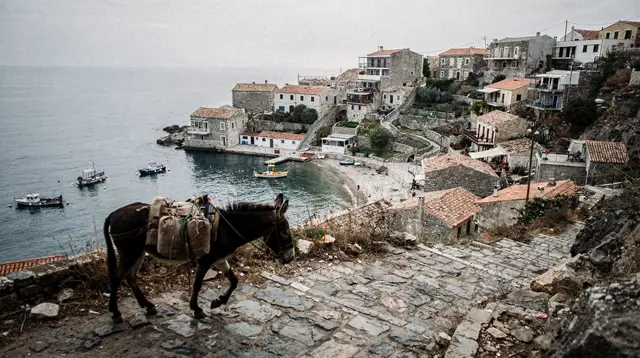
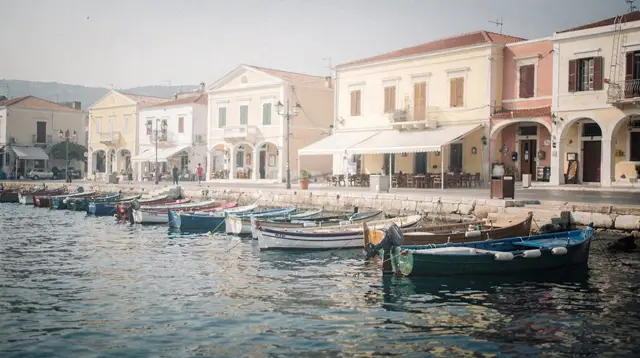
In 1953 the Greek government proposed connecting Hydra’s port to its inland villages by road. The island voted no. That decision, made over seventy years ago, is the reason Hydra looks the way it does today: a horseshoe harbour lined with grey-stone mansions built by 18th-century sea captains, its steep lanes navigable only on foot or by donkey, its waterfront free of the scooters and quad bikes that clutter almost every other Greek island.
There are no motor vehicles on Hydra. None permitted at all, not even for deliveries — freight moves by donkey train, which you will see hauling everything from bottled water to construction materials up the narrow paths above the port. The lack of vehicles is not a gimmick. It shapes everything: the silence above the harbour, the smell of jasmine rather than exhaust, the fact that the island’s interior has barely changed since the captains who built these houses were fighting the Ottomans at sea.
Hydra is the most sophisticated of the Saronic Islands and the most rewarding single day trip from Athens.
Getting there from Piraeus
All ferry and hydrofoil services depart from the Piraeus ferry port — take Metro Line 1 to the Piraeus terminus (25 minutes from Monastiraki, €1.20) and walk south along the quayside to Gates E8–E9.
Hellenic Seaways Flying Cat (hydrofoil catamaran): departs roughly hourly in peak season, journey time 1 hour 40 minutes, fare approximately €32–36 one way in 2026. This is the default choice — fast, comfortable, no need to book far ahead outside August.
Conventional ferry (slower boat): roughly 2 hours 15 minutes, €15–18 one way. Cheaper and more atmospheric but only practical if you have time to spare and enjoy watching islands drift past from an open deck.
Book tickets at the Hellenic Seaways office at the port, online at hellenicseaways.gr, or through any of the organised departures below. Return journeys fill up on summer weekends — buy a return before you board outbound if you have a firm plan to return on a specific sailing.
A private guided day trip with ferry included is the most stress-free format: your guide meets you at Piraeus, handles all tickets, and walks you through the island’s history and architecture before you have free time to swim and explore.
Hydra alone is a long day for one harbour: a Saronic day cruise taking in Hydra, Poros and Aegina with lunch gives each island the hour it actually needs and puts the sailing time to use.
The port and town
Hydra’s port is one of the most immediately striking arrivals in the Aegean. As the hydrofoil rounds the headland the harbour opens up: a crescent of cafes and tavernas at water level, and rising steeply behind them the pale-grey mansions of the 18th-century shipowners who made this island wealthy enough to fund the Greek War of Independence.
Several of these mansions are still family homes, others now operate as boutique hotels. The Lazaros Koundouriotis Historical Mansion near the top of the port is open to visitors (€4 entry) — the interior is preserved largely as it was in the 1780s, with carved wooden ceilings and the original furniture of a prosperous sea captain’s household.
The waterfront itself is lined with cafes, galleries, and the kind of shops that sell linen clothes and hand-painted ceramics rather than plastic Parthenons. Leonard Cohen lived here for much of the 1960s; the artistic community that formed around him set a tone the island has maintained. The photography gallery near the clock tower above the port shows rotating exhibitions of serious work.
Donkeys wait at the port to carry luggage to hotels. You will hear them before you see them.
Walking, swimming, and what to eat
Hydra rewards walking more than almost any island of its size. The path west along the coast from the port to Kamini (15 minutes) and then Vlychos (35 minutes) is the most popular route — flat, shaded, and ending at a small bay with a good taverna and clear water for swimming.
The rocks at Spilia, just below the cannon terrace on the east side of the port, are the locals’ preferred swimming spot — no beach, just flat rocks and deep water that is remarkably clean given the proximity to the harbour.
For longer walks, the path to the monastery of Profitis Ilias (about 1.5 hours each way, steep) rewards with views across to the Peloponnese and, on clear days, the outline of the Attic coast. Take water.
Lunch at one of the port tavernas is fine but overpriced; the better value is 15 minutes’ walk in any direction. At Kamini, Kodylenia’s serves grilled fish and local mezedes at honest prices. At Vlychos, the taverna by the water has fresh seafood and a terrace over the sea.
A full-day swimming trip around Hydra by boat reaches the island’s most secluded coves — accessible only by water — with lunch included and time at multiple stops.
Combined island trips
Hydra pairs well with Poros as a two-island day if you take the first hydrofoil out (around 7–8 am) and are comfortable with a brisk pace. Poros is 30 minutes from Hydra by hydrofoil and has a very different character — greener, quieter, close enough to the Peloponnese mainland that you can almost reach across.
A private two-island trip covering both Hydra and Poros is the most flexible format: your own boat, your own pace, stops wherever the water looks good.
For a larger Saronic circuit, the Hydra, Poros and Aegina cruise guide covers the full three-island itinerary in a single day. It is achievable but involves moving on after two to three hours on each island — fine as an overview, less satisfying than a dedicated day on Hydra alone.
The island hopping from Athens guide has the logistics for multi-day combinations.
Practical notes
There are no ATMs that reliably accept foreign cards — bring cash, or withdraw before leaving Piraeus. Most restaurants accept cards but several do not.
Accommodation ranges from the grand Bratsera Hotel (a converted sponge factory, around €200–300/night in season) to simple rooms above the port for €80–120. Book well ahead for July and August.
The island has a small medical centre but no hospital — the ferry to the mainland is the emergency option.
A full-day Saronic cruise with VIP seating and port transfers is worth considering if you want to see Hydra alongside the other islands with a guided commentary and return transport included — a good option for visitors who prefer not to navigate ferry schedules independently.
The Saronic Islands cruise guide and the Greek islands from Athens overview cover the full range of day trips from the capital if Hydra is part of a broader island plan.
Where the wealth came from
Hydra’s stone mansions weren’t built on tourism or shipping alone — they were built on a specific 18th and early 19th-century boom in maritime trade and, later, blockade-running during the Napoleonic Wars, when Hydriot captains grew rich supplying grain and goods to Mediterranean ports that other fleets couldn’t reach safely.
That wealth funded not just the captains’ houses that still line the port but a significant chunk of the Greek revolutionary war effort in 1821 — Hydra supplied ships, sailors and money disproportionate to its tiny size, and several of its shipowning families (Koundouriotis, Tombazis, Voulgaris) produced admirals and political leaders still commemorated across Greece today. The mansions you see from the ferry are the physical residue of that single, concentrated era of prosperity, which is part of why the island still feels architecturally coherent in a way few others do.
A day trip or an overnight
Hydra rewards more than the standard cruise-ship day trip, but the choice between a single day and staying over depends on what you want from it. A day trip covers the port, a walk to Kamini or Vlychos, lunch and a swim — genuinely satisfying and achievable on the standard hydrofoil schedule. Staying overnight adds the early morning and late evening, when the day-trip crowds have cleared and the port empties out to a fraction of its daytime population — this is when Hydra’s reputation as an artists’ retreat actually makes sense. If your schedule allows even one night, it changes the character of the visit considerably.
Planning the day around the boat
The shape of a Hydra day is set by the sailing times, so it helps to decide early which boat you want and work backwards. Travellers who take an early hydrofoil get the harbour while the cafes are still setting out their chairs, and they have the whole middle of the day for the coastal path and a swim. Those who leave later still enjoy the island, but the walk to Kamini and Vlychos feels more compressed. Whichever you choose, fix your return sailing in your head before you step off the boat, and give yourself a comfortable margin at the quay rather than finishing a last coffee with the clock running. The ferries from Piraeus guide explains how the port works, and the Athens to Piraeus port guide covers the metro and taxi options for reaching the gates.
If you are travelling on a tight schedule, the Piraeus cruise port guide and the shore excursions from Piraeus page are useful companions, since the same harbour serves both ferry passengers and cruise visitors. For a wider sense of what else is within reach by boat, the best islands near Athens comparison puts Hydra next to its neighbours, and the Aegina island guide and Poros island guide are the natural next reads if you are choosing between them.
Slowing down once you arrive
Hydra is an island that punishes hurry. The lanes are steep, the stone is warm underfoot, and the best moments tend to arrive unplanned: a doorway framed with bougainvillea, a donkey waiting patiently in the shade, a gallery that happens to be open. Leave room in the day for wandering without a destination. The grid of lanes behind the harbour is small enough that you cannot truly get lost, and the climb is rewarded almost every time with a view back over the water.
Comfortable shoes matter more here than on most islands, because every route is either cobbled or uneven. A hat, sunscreen and a bottle of water are sensible for the longer paths, and a light layer is welcome on the boat, where the breeze on the open deck can be cooler than you expect. If you swim at Spilia, remember that entry is from the rocks, so shoes you can wear in the water make the experience much easier.
Hydra in a wider Athens trip
Many visitors fold Hydra into a longer stay in the capital, using it as the restful counterpoint to museums and ruins. After a morning at the Acropolis or a heavy day in the city, a day on a car-free island feels like a reset. The best day trips from Athens guide places Hydra alongside the mainland options, and the Athens itinerary planning guide shows how to slot an island day between sightseeing days without exhausting yourself.
For ready-made structures, the Athens in 5 days with day trips itinerary and the Athens in 4 days plan both leave space for a boat day, while the Athens with a cruise stop story and the first Greek island hop account give a more personal feel for what the first island experience is like. If you would rather compare islands before committing, the which Greek island from Athens article lays out the trade-offs, and the Athens travel tips page covers the practical habits that make any excursion smoother.
Who Hydra suits best
Hydra suits people who enjoy atmosphere over activity. Couples, photographers, walkers and anyone who likes to sit with a coffee and watch a harbour will find it hard to fault. Families with older children can manage the paths, though strollers are impractical on stone steps. Travellers who want nightlife, large beaches or a resort feel will be happier elsewhere, and the honest advice is to choose an island that matches the kind of day you actually want rather than the one with the best reputation.
Frequently asked questions about Hydra
Can I visit Hydra as a day trip from Athens, or should I stay overnight? A day trip works well and is what most visitors do — the hydrofoil from Piraeus takes under two hours each way, leaving several hours on the island. Staying overnight is worth considering if you want to experience the port without the day-trip crowds, since Hydra empties out noticeably by early evening once the cruise groups and day-trippers have left.
Are there really no cars or bikes at all on Hydra? Correct — the island banned motor vehicles by referendum in 1953, and the only wheeled transport is a handful of small municipal service vehicles. Everything else moves by foot or donkey, which is a major part of the island’s appeal rather than an inconvenience for most visitors.