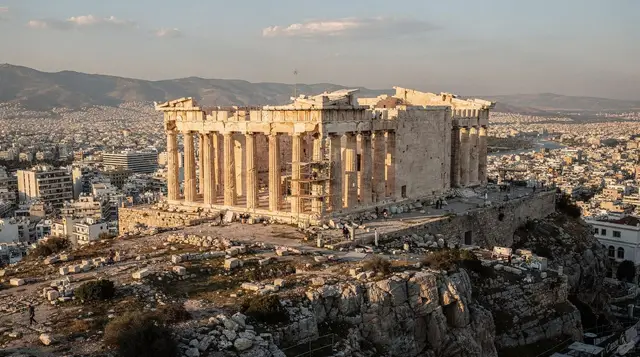
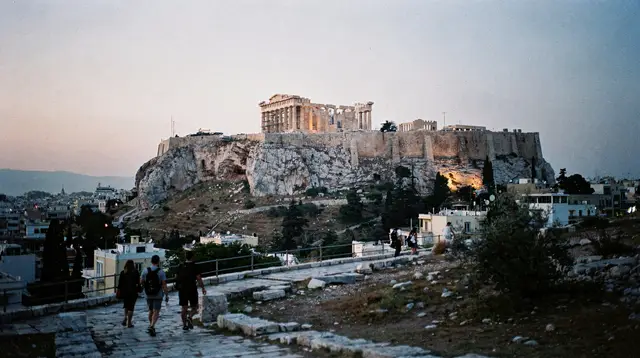
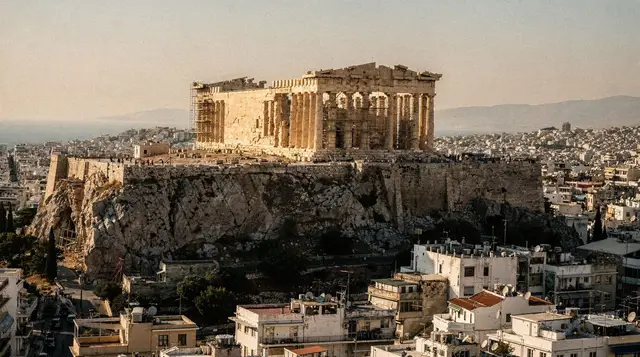
Athens in summer: surviving and enjoying June, July, and August
What is it like to visit Athens in summer?
Athens in summer (June–August) is hot — regularly 35–38°C in July and August — and at its most crowded. The Acropolis requires early-morning visits and pre-booked tickets. Afternoons are best spent at the Athens Riviera beaches or in air-conditioned museums. Evenings are magical: warm, outdoor, and full of life.
Athens in summer: the real conditions
Summer in Athens is intense. The city sits in the Attic basin, surrounded on three sides by mountains and open to the south, which creates a heat trap that pushes temperatures beyond what most northern European visitors expect from a European capital. July and August regularly hit 37–39°C — the hottest reliably experienced anywhere in continental Europe.
This is not a deterrent. Athens in summer is also magnificent: the golden evening light, the outdoor dining culture that erupts the moment the heat breaks at 7 pm, the city’s beaches within 40 minutes of the Acropolis, and the sheer energy of a Mediterranean city in full summer flow. The key is planning around the heat rather than pretending it doesn’t exist.
| When | June–August |
| Typical highs | 29–33°C (June) to 34–38°C (July–August) |
| Cost | peak pricing on hotels, tours and flights — 30–40% above June/September |
| Booking | Acropolis tickets 1–3 weeks ahead; Odeon festival tickets months ahead |
| Best for | festival-goers, beach lovers, night-owls willing to plan around the heat |
Summer at a glance: June vs July vs August
| June | July | August | |
|---|---|---|---|
| Average highs | 29–34°C | 34–36°C | 34–36°C, spikes to 40°C+ |
| Sea temperature | 22–23°C | 24–25°C | 25–27°C |
| Crowds | building | peak | peak, but many locals leave |
| Best for | balance of heat and calm | festival season, nightlife | warmest sea, quieter neighbourhoods |
Month-by-month: June, July, August
June
June is the transition month — summer by any reasonable definition but still manageable without extreme planning. Average highs start at 29°C in early June and reach 33–34°C by the end of the month. Sea temperatures hit 22–23°C, warm enough for swimming.
What June offers: All the summer advantages (long days, beach access, outdoor restaurants) without the worst heat of July–August. The Athens and Epidaurus Festival begins in June — outdoor performances at the ancient Odeon of Herodes Atticus beneath the Acropolis, one of the great event experiences in Europe.
What June requires: Tickets to the Odeon performances book out months ahead. Acropolis crowds are building — book tickets 1–2 weeks in advance and go early morning. The Riviera beaches are busy on weekends but manageable on weekdays.
Best for: Visitors who want summer without the extreme heat. Families with children. Those who want to experience the Athens and Epidaurus Festival.
July
July is peak summer. Average highs of 34–36°C, occasional spikes to 40°C during heat waves. The Acropolis is genuinely dangerous in the middle of the day for the elderly, young children, and anyone with cardiovascular issues. Direct sun on marble amplifies the ambient temperature significantly.
What July offers: Maximum energy. Athens in mid-summer has an extraordinary outdoor culture: rooftop bars with Acropolis views, late-evening dining at midnight, the city beaches at their warmest (26°C), and events running every night. The Odeon of Herodes Atticus season is in full swing.
What July requires: Strict heat management. The 6 am–11 am outdoor window must be respected. Afternoon activities must be air-conditioned. A hotel with a pool is not a luxury — it is a strategic asset. Pre-booked tickets for everything.
Tourist pressure: July is the busiest month. The Acropolis sees its maximum daily visitor numbers (sometimes exceeding the 20,000 daily cap in the summer of 2024). Skip-the-line entry is not optional — it is survival logistics.
Early morning Acropolis + Museum tour — the only sane way to visit in JulyAugust
August maintains July’s heat (average highs 34–36°C, occasional 40°C+ spikes) but adds a peculiar Athens dynamic: many Athenians themselves leave the city in August, particularly the first two weeks. The city can feel simultaneously overcrowded with tourists and oddly empty of locals.
What August offers: Some neighbourhood businesses closing means a quieter local scene, but this also means less authentic Athens. The beaches are at their warmest. The Athens and Epidaurus Festival continues. Sunset light is exceptional.
What August requires: Everything from July applies. Hotel availability tightens around 15 August (Dormition of the Virgin Mary, the most important Orthodox summer holiday — domestic tourism surges). Book accommodation months ahead.
Budget note: Hotels, tours, and flights are at maximum summer pricing in July–August. Anyone who can travel in June or September will save significantly (30–40% on accommodation) and gain meaningfully better conditions.
Summer survival strategy: the Athens heat schedule
The single most important piece of summer Athens advice is to structure your day around the heat, not ignore it.
6–7 am: Wake and prepare. The city is quiet and the air is fresh. Best coffee of the day.
7:30–8 am: Arrive at archaeological sites at opening. The Acropolis at 8 am in July is a genuinely different experience from the 11 am crush: cooler, quieter, with morning light on the marble. Carry 1.5 litres of water minimum.
10–11 am: Start heading toward shade and cool. The Acropolis Museum opens at 9 am and offers both cultural depth and air conditioning — an ideal transition from the outdoor hill to a cool interior.
12–5 pm: Non-negotiable retreat. This is the time for: hotel room (air conditioning is essential, not a luxury — confirm your room has it before booking), Acropolis Museum at leisure, National Archaeological Museum, long lunch at an air-conditioned taverna, or beach day on the Riviera (sea breezes make coastal locations several degrees cooler than the city centre).
5–6 pm: Return to outdoor exploration. Plaka and Thissio become comfortable. The Lycabettus funicular is worth the ride for late-afternoon views.
7 pm onwards: The best of Athens in summer begins. Temperatures drop to 26–28°C. Outdoor tables fill. Rooftop bars open. The city glows.
Summer-specific experiences worth prioritising
Odeon of Herodes Atticus performances
The ancient Roman theatre built in 161 AD beneath the Acropolis south slope hosts the Athens and Epidaurus Festival from mid-June through September. Ballet, opera, classical music, and contemporary theatre are performed in a 5,000-seat stone amphitheatre with the Parthenon illuminated above. This is not optional for culture travellers — it is one of the genuinely great performing arts experiences in Europe.
Tickets sell out weeks to months ahead for popular productions. Book through the Athens and Epidaurus Festival website. Dress smart-casual; bring a light jacket for late-evening performances (temperatures drop after 10 pm even in August).
Athens Riviera beaches
The coastal strip from Glyfada to Vouliagmeni transforms into Athens’ outdoor living room in summer. Tram 5 from Syntagma Square reaches Glyfada in 40 minutes. The organised beaches have sunlounger rental, water sports, bars, and restaurants.
Vouliagmeni is the most elegant option — the sheltered coves, crystal water, and pine-shaded terraces make it feel removed from the city without requiring a long journey. The further south you go (Varkiza, Saronida, Cape Sounion), the less crowded the beaches.
Sunset from Lycabettus Hill
Lycabettus Hill offers Athens’ highest panoramic viewpoint. In summer, the funicular runs until midnight, making it possible to ride up at 8 pm, watch the sunset, and descend in the warm evening air for dinner in Kolonaki. The Aegean horizon from the summit in clear summer weather extends past Aegina and occasionally to Santorini and the Cyclades in extreme conditions.
Lycabettus sunset experience — summer evenings at their most cinematicIsland escapes from Athens
The Saronic Islands — Aegina, Poros, Hydra — are reached by fast ferry from Piraeus in 35–80 minutes. In summer, these islands extend the Athens trip without requiring a separate flight. Hydra is the most atmospheric: car-free, whitewashed, with excellent swimming off flat rocks in clear water. Aegina has better beaches and more infrastructure for families.
For the full island experience, Santorini and Mykonos are 4–8 hours by ferry (or 45 minutes by flight) from Athens. They reach their peak beauty and peak chaos simultaneously in July–August — see the Santorini vs Mykonos comparison before committing.
Practical summer logistics
Accommodation: Book 2–3 months ahead for July–August in quality hotels near the Acropolis. Air conditioning is essential — confirm before booking. Hotels in Koukaki and Plaka have the best position; Monastiraki is noisy at night (the bars run until 4 am). Rooftop pool is a major asset in July–August.
Tickets: All major archaeological sites require pre-booked timed entry in July–August. The Acropolis frequently implements daily visitor caps. Never plan to buy tickets on the day in peak summer.
Acropolis 5-site combo — covers Acropolis, Agora, Roman Agora, Kerameikos, Hadrian’s LibraryWater: Carry water everywhere outdoors. Athens has public drinking fountains near major sites, but a personal bottle (1.5 litres minimum) is essential. Dehydration is a genuine risk in July–August heat.
Dress code: Lightweight, light-coloured, loose clothing. Natural fibres (linen, cotton) work significantly better than synthetics in dry Attic heat. Hat and sunglasses are mandatory for the Acropolis.
Transport: Air-conditioned Metro is the summer friend. Lines 2 and 3 connect Syntagma to Monastiraki (Acropolis direction) and the airport. Line 1 connects to Piraeus for ferry departures. Taxis (Beat app) are air-conditioned and affordable.
Wildfire smoke and air quality
Greece experiences wildfire risk in the drier parts of summer, particularly in Attica and on some islands during prolonged heatwaves. Athens itself is rarely directly affected, but smoke haze can occasionally drift into the city from nearby fires, temporarily reducing air quality and visibility, especially from elevated viewpoints like Lycabettus. If you have respiratory sensitivities, check air quality reports during your stay and treat any smoke haze as a signal to limit strenuous outdoor activity that day, similar to a heat-alert day. This is an occasional summer condition, not a constant one, but worth knowing about if you are travelling during a particularly dry, hot stretch.
Summer with children
Summer in Athens with children works well if the day is built around their limits rather than an adult sightseeing pace. Mornings at the Acropolis should be kept short and reward-focused — the Caryatids and a good vantage photo, rather than an exhaustive perimeter walk — before retreating to the air-conditioned Acropolis Museum, which has genuinely engaging exhibits at child height. Afternoons are best spent at the Athens Riviera beaches, where the shallow, organised stretches at Glyfada and Vouliagmeni Lake suit young swimmers, rather than pushing through a second archaeological site in the heat of the day.
When summer is actually the best time to visit
Despite everything above, summer is not the wrong time to visit Athens. It is the wrong time for visitors who want to wander freely in the midday sun. But for anyone willing to follow a heat-adapted schedule, summer delivers:
- The Athens and Epidaurus Festival — impossible any other time of year
- The beaches at full summer warmth
- Long evening light that lasts until 9 pm
- The full energy of Mediterranean summer street life
- Maximum transport connections to the islands
For a full comparison of all seasons, see the best time to visit Athens guide. For winter as the opposite extreme, see Athens in winter.
Frequently asked questions about Athens in summer
Is it too hot to visit Athens in August?
Not if you plan around the heat. The heat is real — 35–38°C is not comfortable for sustained outdoor activity. But Athens’ archaeological sites are all outdoors, which means visiting in the first 2 hours after opening (8 am) before temperatures peak is essential strategy, not optional advice. Afternoons in museums or at the beach make August very manageable.
What temperature does it get to in Athens in July?
Average daily highs of 34–36°C, with heat waves pushing to 40–42°C several times per summer. Evenings cool to around 24–26°C by 9 pm. The Attic humidity is low, which makes the heat feel drier and less oppressive than equivalent temperatures in central Europe — but the sun intensity at this latitude is extreme.
Are the Acropolis and other sites open in summer?
Yes, and they are at their most extended hours: typically 8 am to 8 pm in summer. However, the Acropolis implements a daily visitor cap in July–August. Booking tickets in advance online (at least a week ahead, often 2–3 weeks for preferred morning time slots) is essential. Walk-up tickets are sometimes available but cannot be relied upon.
Should I go to Athens or straight to the islands in summer?
Both. Athens + a Cycladic island is the standard Greek summer trip for good reason. Allow at least 2–3 days in Athens (Acropolis, Acropolis Museum, Plaka, and a Riviera afternoon) before flying or ferrying to Santorini or Mykonos. See Santorini from Athens and Mykonos from Athens for logistics.
Is June or September better than July–August?
For most visitors, yes. June (second half) and September offer sea temperatures of 23–25°C, ambient temperatures of 28–32°C, significantly reduced crowds, lower prices, and the full cultural programme of the Athens and Epidaurus Festival (which runs through September). The primary summer experience — beaches, outdoor dining, warm evenings — is fully available without the extreme heat.
Is Athens in summer good for a family trip with young children?
Yes, if the schedule is built around short outdoor windows and long indoor or beach breaks — see the Athens beaches for families guide for logistics. A full day of outdoor sightseeing without heat breaks is genuinely hard on young children in July or August; a mixed day of a short morning site visit plus a beach afternoon works far better.
Popular Athens tours on GetYourGuide
Verified deep-linked GetYourGuide tours. Book through these links and we earn a small commission at no cost to you.
GetYourGuide does not provide product photos: on its activity cards, the picture illustrates the type of experience and is not the operator's own photo.