
Best museums in Athens: how to plan your visits
What are the best museums in Athens and how should I plan them?
The Acropolis Museum and the National Archaeological Museum are the two essential stops. Add the Benaki Museum, Museum of Cycladic Art, and Byzantine and Christian Museum if you have more time. Several museums are closed on Tuesdays. Budget two to three hours per venue and use the Evangelismos metro stop for Kolonaki's cluster of three museums.
Athens has more world-class museums than most visitors realise
Most travellers come to Athens for the Acropolis and leave with a sense that they have seen the main event. The museums tend to be secondary in their planning — somewhere to go if it rains, or a quick stop before the airport. This is a mistake.
Athens’ museums hold material that is genuinely irreplaceable: original Parthenon sculptures at eye level, the Antikythera Mechanism, 3,500-year-old Mycenaean gold, Cycladic figurines that changed the course of modern art, and Byzantine icons that would be the centrepieces of major collections in Paris or London. Several of these institutions are among the finest museums in Europe by any measure.
The challenge is sequencing. Athens has ten significant museums within the city centre, most of which deserve more than a rushed 45-minute walk-through. This guide covers the major collections, gives you honest assessments of each, and helps you build a realistic itinerary whether you have one day or four.
| Must-see | Acropolis Museum + National Archaeological Museum |
| Time needed | 2–2.5 hrs and 3–4 hrs respectively |
| Closed days | Tuesdays for Benaki, Cycladic and Byzantine museums (National Archaeological opens at 13:00) |
| Best base | Kolonaki for the museum cluster |
| Tickets | Acropolis Museum and National Archaeological Museum €20 each |
The tier-one museums: non-negotiable
Acropolis Museum
Time needed: 2–2.5 hours
Ticket (2026): €20 / €10 reduced
Closed: 1 January, Orthodox Easter Sunday, 1 May, 25 and 26 December
Location: Southern slope of the Acropolis hill, walking distance from Plaka
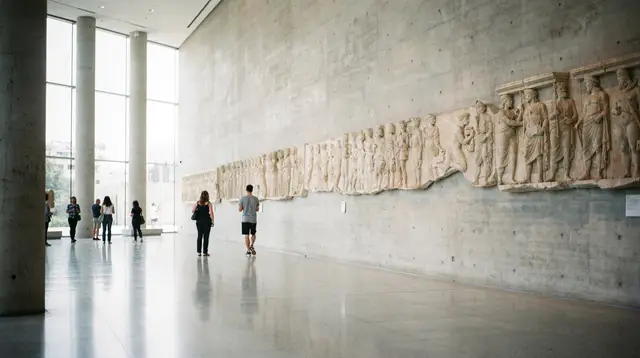
The purpose-built home of the Parthenon sculptures and all major artefacts from the Acropolis. The Parthenon Gallery on the top floor — 160 metres of frieze at eye level, pediment sculptures, original Caryatids — is one of the great museum experiences in the world. The building itself is a significant piece of architecture: glass floors over an active excavation, views of the Parthenon from within.
It is not a comprehensive survey of ancient Greece — that is the National Archaeological Museum’s job. It is an extraordinarily focused engagement with one site and one period (roughly fifth to fourth century BC). Do this one first if you are visiting the Acropolis site the same day; the sequence site-then-museum is more logical than the reverse.
Full guide: Acropolis Museum guide Book a guided tour of the Acropolis Museum
National Archaeological Museum
Time needed: 3–4 hours
Ticket (2026): €20 / €10 reduced
Closed: Opens at 13:00 on Tuesdays
Location: Exarchia neighbourhood, metro to Victoria
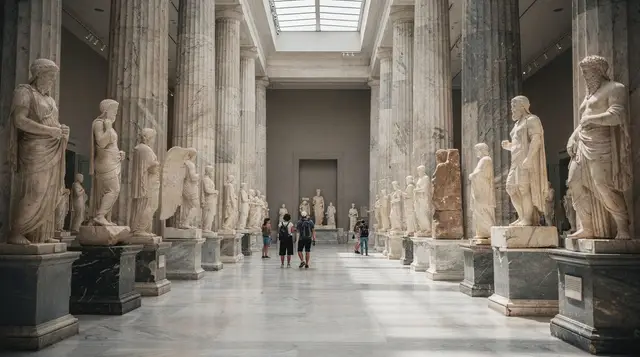
The largest museum in Greece and one of the great encyclopaedic museums of the world. The Mycenaean gold collection (Mask of Agamemnon, Cup of Nestor), the Artemision Bronze, the Akrotiri frescoes, and the Antikythera Mechanism are all here, in a building that covers 7,000 years of Greek history.
It is large and can be tiring. Go with a list of priorities and give yourself permission not to see everything. The Mycenaean Hall (4) and the bronze sculpture galleries (Halls 13–15) are the non-negotiable rooms; the Antikythera Mechanism is five minutes and worth it; the Akrotiri frescoes (Hall 28) are extraordinary. Everything else is a bonus.
The location — about 20 minutes north of the tourist centre — means it gets fewer casual visitors than it deserves, which translates to shorter queues and more space around the objects.
Full guide: National Archaeological Museum guide Get a National Archaeological Museum ticket with audio guide
The tier-two museums: essential for the curious
Benaki Museum of Greek Culture
Time needed: 2–3 hours
Ticket (2026): €12 / €9 reduced
Closed: Tuesdays; permanent collection free on Thursdays 18:00 to midnight
Location: Kolonaki, corner of Koumbari Street and Vassilissis Sofias
The Benaki fills the historical gap between ancient Greece and modern times. Its coverage runs from prehistoric artefacts through Byzantine art, Ottoman-period Greek domestic culture, traditional costume, the War of Independence, and into the twentieth century — a single building that makes the continuity of Greek cultural identity visible.
Highlights: the Byzantine icon collection, the reconstructed traditional Greek interiors (actual rooms reassembled from houses in Macedonia and Epirus), the Fayum portrait paintings, and the El Greco early works on the top floor. The rooftop café-restaurant is excellent.
The Thursday free evening is worth timing your Kolonaki day around.
Full guide: Benaki Museum guide
Museum of Cycladic Art
Time needed: 1.5–2 hours
Ticket (2026): €12 / €9 reduced
Closed: Tuesdays
Location: Kolonaki, 5 minutes walk from Benaki Museum
Holds the world’s finest collection of Cycladic marble figurines from the third millennium BC — the same minimalist forms that influenced Picasso, Brancusi, and Henry Moore. The collection is displayed with outstanding rigour: excellent lighting, honest labelling about provenance, and context that makes the formal qualities of the objects legible without prior knowledge.
The upper floors cover ancient Greek art from 2000 BC to AD 400, with an especially strong collection of gold jewellery and Roman-period glass. One of the most aesthetically satisfying museum experiences in Athens: not overwhelming, physically manageable, and thematically coherent.
Full guide: Museum of Cycladic Art guide
Byzantine and Christian Museum
Time needed: 2 hours
Ticket (2026): €8 / €4 reduced
Closed: Tuesdays
Location: Kolonaki, 10 minutes east of the Benaki Museum on Vassilissis Sofias
The world’s most comprehensive collection of Byzantine art, spanning from the fourth century AD through to the nineteenth. Icons, mosaics, liturgical textiles, carved marble, illuminated manuscripts. One of Athens’ most underrated institutions — rarely crowded, exceptional quality, consistently overlooked by tourists focused on ancient Greece.
The Epitaphios of Thessaloniki (fourteenth-century embroidered liturgical cloth) alone justifies the visit for anyone interested in medieval art. The building’s underground extension is architecturally interesting.
Full guide: Byzantine and Christian Museum guide
Specialist museums worth knowing about
Numismatic Museum (Panepistimiou Street): housed in Schliemann’s former mansion, covers Greek coinage from 600 BC to modern times. Strong for coin collectors; optional for most visitors.
Museum of the Ancient Agora (Thissio): small museum inside the reconstructed Stoa of Attalos adjacent to the Ancient Agora archaeological site. Excellent explanatory material about daily life in classical Athens; usually included in the Agora site ticket.
Kerameikos Museum (Thissio): modest building at the entrance to the Kerameikos cemetery site, with finds from one of the most important ancient Athenian burial grounds. Twenty minutes from Plaka; worth it if cemeteries and funerary art interest you.
These specialist museums rarely feature on first-time itineraries, which is precisely their appeal — you’ll often have entire rooms to yourself. They work best as an add-on to a day already built around a nearby archaeological site (the Kerameikos and Agora museums are effectively included in their site tickets) rather than as standalone destinations worth a special trip.
The Kolonaki museum cluster: a complete day
The Kolonaki neighbourhood contains three major museums within 20 minutes walk of each other along Vassilissis Sofias Avenue: Museum of Cycladic Art (west end), Benaki Museum (centre), and Byzantine and Christian Museum (east end). These three together take about six hours of focused looking.
A realistic Kolonaki museum day:
- 09:30–11:00: Museum of Cycladic Art (arrive at opening to beat any groups)
- 11:15–12:30: Lunch in Kolonaki — dozens of good options within five minutes of either museum
- 13:00–15:00: Benaki Museum
- 15:30–17:30: Byzantine and Christian Museum
Metro: Evangelismos station (blue line) is three minutes walk from the Cycladic Art Museum and gives easy access to all three.
Planning by number of days
One day in Athens
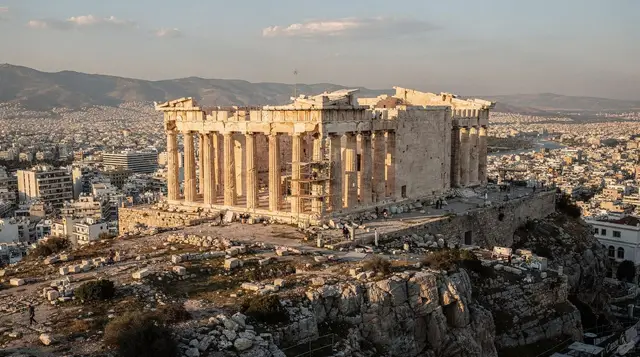
The Acropolis site in the morning, the Acropolis Museum in the afternoon. These two together fill a full day and provide the most concentrated experience of classical Athens. Skip everything else rather than doing it rushed.
See how many days in Athens for the broader trip planning question.
Two days in Athens
Day one: Acropolis site and Acropolis Museum. Day two: National Archaeological Museum (morning, allow three hours), then Plaka for lunch and afternoon. The National Archaeological Museum is the essential second stop after the Acropolis; it gives the context that the more focused Acropolis Museum presupposes.
Three days in Athens
Add the Kolonaki museum cluster (Cycladic Art plus Benaki, or all three if you keep pace). Three museums in the Kolonaki cluster plus the Acropolis complex and the National Archaeological Museum gives you a comprehensive overview of Greek art across all periods.
Four or more days
Add the Byzantine and Christian Museum if not already included, and one of the smaller specialist museums (Agora or Kerameikos) depending on your interests. Allow time for the Acropolis archaeological area itself beyond the museum, and for the Plaka and Athens neighbourhoods that give the ancient material contemporary context.
Practical tips that apply across all Athens museums
Tuesdays: The National Archaeological Museum opens at 13:00 on Tuesdays. The Benaki Museum, Museum of Cycladic Art and Byzantine and Christian Museum are closed on Tuesdays. Plan accordingly.
Queues: The Acropolis Museum has the longest queues in peak summer — book online. The National Archaeological Museum rarely has more than a 10-minute wait. Kolonaki museums almost never have queues.
Combination tickets: Each site and museum sells its own ticket on the official Hellenic Heritage ticketing portal; check there whether a multi-site ticket is offered.
Rainy days: All five museums described here are entirely indoors and make excellent rainy day options. The Benaki and Cycladic Art Museum are particularly good choices when it rains: well-lit, unhurried, and easily accessible from central Athens.
Discount cards and passes worth knowing about
Beyond the individual tickets already mentioned, it’s worth checking whether the Athens City Pass makes sense for your trip — it can bundle museum and archaeological site entry with transport, and whether it pays off depends heavily on how many sites you’re planning to see and over how many days. For most visitors doing the tier-one museums plus the Acropolis site, the individual tickets described above are simpler and usually cheaper than a general city pass.
Photographers should also note that several museums restrict tripods and flash; the best photo spots in Athens guide covers which locations (indoor and outdoor) give the most reliable results.
Sample three-day museum-forward itinerary
For visitors who want museums to anchor their trip rather than be an afterthought, a practical structure:
- Day 1: Acropolis site (morning) and Acropolis Museum (afternoon)
- Day 2: National Archaeological Museum (morning), Exarchia for lunch and its street art, free afternoon or Kerameikos
- Day 3: Full Kolonaki cluster — Cycladic Art Museum, Benaki, Byzantine and Christian Museum
This maps directly onto the Athens in 3 days itinerary, which balances museum time against the ancient sites and neighbourhood exploring most first-time visitors also want. For more general logistics beyond museums, the Athens travel tips guide covers transport, safety and money matters that apply across the whole trip.
Frequently asked questions about Athens museums
Which Athens museum should I prioritise if I only have time for one?
The Acropolis Museum, if your interest is primarily in ancient Greece and you are visiting the Acropolis site. The National Archaeological Museum, if you want the deepest and broadest survey of ancient Greek civilisation. The Benaki, if you want to understand Greek culture across all periods in the most accessible single building.
Are Athens museums free on any days?
Yes. The National Archaeological Museum and the main archaeological sites are free on the first and third Sunday of each month from 1 November to 31 March, plus a few set days such as 6 March, 18 April, 18 May, the last weekend of September and 28 October. The Benaki Museum’s permanent collection is free on Thursday evenings from 18:00 to midnight. The Byzantine and Christian Museum is free on 6 March, 18 April, 18 May, 28 October and on Sundays from November to March. Check individual museum websites for current free day policies.
How do I get between the Acropolis Museum and the National Archaeological Museum?
The most practical option is taxi or rideshare (€6–8, 15 minutes). On foot, it is about 35 minutes heading north through the city grid. There is no direct metro connection: Acropolis Museum is served by the Acropolis metro stop (red line), and the National Archaeological Museum by Victoria (green line); a change at Monastiraki is required, adding 20 minutes.
Do I need to book tickets in advance?
For the Acropolis Museum in July and August, yes — online booking saves 30–40 minutes of queuing. For all other major museums, walk-up entry is generally immediate even in peak season. Online tickets for the National Archaeological Museum are the same price as at the door and convenient but not usually necessary.
Are Athens museums accessible for wheelchair users?
Yes. All five major museums described here are accessible: lifts, ramps, and adapted toilet facilities. The Acropolis Museum and Museum of Cycladic Art are purpose-built modern structures with full accessibility. The National Archaeological Museum and Benaki Museum are in older buildings that have been adapted. Call ahead or check websites if you have specific requirements.
Is a museum pass worth buying for a short Athens trip?
Usually not for trips of two days or less. The individual combo tickets covering the sites you’re actually visiting (such as Acropolis + Acropolis Museum) tend to be cheaper and simpler than a general pass. A broader city pass becomes worthwhile mainly for longer stays covering many sites and using public transport heavily — see the Athens City Pass guide for the specific math.
Athens museums & heritage on GetYourGuide
Verified deep-linked GetYourGuide tours. Book through these links and we earn a small commission at no cost to you.
GetYourGuide does not provide product photos: on its activity cards, the picture illustrates the type of experience and is not the operator's own photo.
More tours on Viator
Top-rated experiences with verified reviews, bookable on Viator (a Tripadvisor company).
 Viator
Knossos Palace, Museum & Rethymno city Private Tour from Chania
FromEUR 540Check availability → Viator
Santorini Small Group Guided E-bike Tour & Local Tomato Museum
FromEUR 130Check availability → Viator
Acropolis & Acropolis Museum Group tour in German
FromEUR 129Check availability → Viator