Athens travel tips: 20 things to know before you go
What are the most essential Athens travel tips?
Pre-book the Acropolis (essential April–October), book each site ticket on the official Hellenic Heritage ticketing portal, download the Athens metro map offline, carry cash for souvlaki and bakeries, and apply the summer schedule (sites before 10 am, museums from noon to 4 pm). These five habits will improve any Athens trip significantly.
These 20 tips come from what actually trips up first-time visitors to Athens — not generic travel advice, but the specific habits that make the difference between a stressful visit and a smooth one.
| Must pre-book | Acropolis timed entry, April–October |
| Acropolis ticket | €30 full price, €15 reduced, all year |
| Cash needed for | Souvlaki shops, bakeries, small tavernas |
| Hottest hours | 12:30–4:30pm (June–August) — plan indoor activities |
| Emergency tourist line | 171 (English-speaking tourist police) |
Before you arrive: the groundwork that matters
1. Pre-book the Acropolis — this is non-negotiable from April to October
The single most impactful planning action you can take for an Athens trip. Without a pre-booked timed entry, you join the walk-up queue at the main gate. In high season (June–August) this queue runs 60–90 minutes. In shoulder season (April–May, September–October) it is typically 20–45 minutes. Either way, you lose time you could be spending inside the site.
The pre-booked Acropolis entry gives you a timed slot and you walk past the queue. Book as early as possible for summer visits — slots sell out weeks ahead by mid-July.
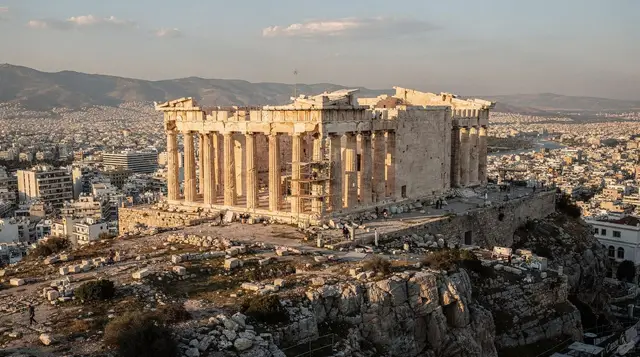
If you prefer a guide alongside, the skip-the-line guided Acropolis tour provides the same queue bypass plus expert interpretation of the Parthenon, Erechtheion and Propylaea.
2. Book your site tickets before you go
Each site sells its own ticket on the official Hellenic Heritage ticketing portal: the Acropolis costs €30 (€15 reduced), the Ancient Agora and the Temple of Olympian Zeus €20 (€10 reduced) each, and the Kerameikos €10 (€5 reduced), all year round. Check the portal to see whether a multi-site ticket is offered. The combo ticket can be booked online with a timed Acropolis slot.
3. Download offline maps before you land
Athens’s narrow Plaka alleys, the archaeological zone and Monastiraki bazaar streets can confuse phone GPS, and international data charges catch out travellers who rely on live navigation. Download an offline Athens map via Google Maps or Maps.me before departure.
4. Check what is free
Greek national museums and archaeological sites — including the Acropolis — are free on the first and third Sunday of each month from November through March, as well as on 6 March, 18 April, 18 May, the last weekend of September and 28 October. If your visit falls on one of these dates, you save the entry fee at each site. Free entry does not waive the timed slot you must still book for the Acropolis.
EU citizens under 18 are always free at Greek national sites (passport or EU student ID required). EU citizens under 25 with valid ID qualify for reduced-price entry at most sites.
Getting around Athens: transport tips
5. The metro is the fastest way to move around
Athens has a clean, reliable metro with three lines. The relevant stations for tourists:
- Monastiraki (lines 1 and 3): central hub for Plaka, the flea market, Ancient Agora access.
- Acropolis (line 2): the closest metro to the Acropolis Museum.
- Syntagma (lines 2 and 3): parliament, high street, airport line connection.
- Omonia (lines 1 and 2): transfer hub for the National Archaeological Museum (walk 10 minutes north).
- Piraeus (line 1): ferries to the Greek islands.
A single ticket costs €1.20 (90-minute validity). A 24-hour pass costs €4.10 and is the best option for a full sightseeing day. Tickets are validated on entry to the platform — blue validators at the turnstiles.
6. Use Beat (not just Uber) for taxis
Beat is a Greek ride-hailing app that works like Uber but uses licensed Athens taxis. Coverage is reliable across central Athens, pricing is metered and transparent, and drivers generally accept the app fare without negotiation. Athens standard taxis are also metered and legal — but if you hail from the street, confirm the meter is running before the journey starts. Between Athens International Airport and central Athens, taxis charge a flat fare per car of €50 by day (5 am to midnight) and €65 at night (midnight to 5 am), tolls and luggage included.
7. Walk more than you think you need to
The central tourist circuit is genuinely compact. Monastiraki to the Acropolis entrance: 10 minutes on foot. Syntagma to Plaka: 8 minutes. Koukaki to Monastiraki: 12 minutes. Athens rewards walking — you discover the city in transit in a way that no metro ride provides. Pack comfortable shoes (see Athens packing list for footwear specifics) and default to walking until the heat makes it impractical.
At the sites: making the most of your visits
8. Arrive at sites at opening time
The Acropolis, Ancient Agora and Roman Agora all open at 8 am. Arriving at 8 am (or 8:15 with your pre-booked ticket) gives you 60–90 minutes before the first tour buses arrive at 9:30–10 am. In summer, you are also visiting in the relative cool of the morning rather than the punishing midday heat. This single habit transforms the quality of any Athens site visit.
The early-morning Acropolis and museum tour is specifically designed to exploit this — the combination of early site access plus the Acropolis Museum before crowds arrive makes it among the best-value tours in the city.
9. The Acropolis Museum deserves 2–2.5 hours
Most visitors allow one hour for the Acropolis Museum and regret it. The collection is one of the world’s best. The third-floor Parthenon Gallery requires time to properly appreciate — the frieze fragments, the metopes, the caryatid column from the Erechtheion — and you need context to understand what you’re looking at versus what is in London’s British Museum. Buy the small museum guidebook at the entrance, or pre-read the Acropolis Museum guide.
10. Don’t skip Kerameikos and the Ancient Agora
Most visitors go to the Acropolis, most do the Acropolis Museum, and a majority do the Roman Agora briefly. Relatively few make it to Kerameikos (the ancient cemetery) or devote serious time to the Ancient Agora. Both are exceptional: the Ancient Agora has the best-preserved ancient building in Athens (the Temple of Hephaestus) and is less overwhelmed by visitors than the Acropolis; Kerameikos has a wonderful small museum and an atmosphere of melancholy antiquity that is entirely its own. Each has its own ticket on the official Hellenic Heritage portal.
Food and drink: eating well in Athens
11. Eat away from the main tourist strips
The restaurants on Adrianou and Mnisikleous streets in Plaka, and on the main tourist drag of Monastiraki Square, charge significantly more than restaurants one or two streets away. The food is generally worse — these spots depend on one-time tourist trade rather than repeat local custom. Walk into Psyrri or Koukaki, find a restaurant with a chalk board menu and Greek customers, and eat there. See best tavernas in Athens for specific recommendations.
12. Carry cash for souvlaki and bakeries
The best souvlaki in Athens comes from butcher-style shops rather than tourist-facing restaurants, and many of these operate cash only. Similarly, the city’s excellent bakeries (spanakopita, tiropita, bougatsa at €2–3.50) are usually cash operations. Having €30–40 in small notes on you at all times is practical.
13. Understand tipping customs
Greece operates on the “round up or leave coins” model rather than the “15–20 %” American convention. At restaurants, rounding up the bill or leaving a €2–5 tip on a €20–30 meal is generous by local standards. Leaving €10 on a €30 bill is excessive unless the service was genuinely exceptional. Tour guides expect a tip (€5–10 per person for a good half-day tour).
Culture and etiquette
14. Greeks eat late — plan accordingly
Athenians eat dinner from 9 pm onwards; restaurants fill up properly after 9:30 or 10 pm. If you arrive at a popular restaurant at 7 pm, you will either get an immediate table (because you are the only customers) or find it hasn’t opened yet. Adapt to local timing for the best experience: eat a light lunch or afternoon snack, explore from 6–9 pm, then sit down to dinner properly after 9 pm.
15. Coffee culture is not fast-food culture
Athens has one of Europe’s most developed coffee cultures, and Greeks do not rush their coffee. A frappe, freddo espresso or freddo cappuccino is expected to last 45 minutes to an hour. The price (€2.50–4) covers an extended table occupancy by implicit social contract. Don’t rush; sit, watch the street, and enjoy it. The Athens coffee culture guide covers the types, the rituals and the best cafes.
16. Learn five Greek words
Greeks respond warmly to visitors who try, however clumsily. “Yassas” (hello/goodbye, formal), “efharisto” (thank you), “parakalo” (please/you’re welcome), “nai” (yes) and “oxi” (no) will open doors that no amount of confident English can. The effort is noticed and appreciated.
Practical logistics
17. The Athens metro goes to the airport — use it
The airport metro (line 3, blue line, toward Dokantos / Airport) runs from Syntagma to Athens International Airport in approximately 40 minutes. It runs from approximately 6:30 am to 11:30 pm. A single ticket costs €9 per person (€16 return). This is significantly cheaper than a taxi (flat fare of €50 by day, €65 at night) and reliable regardless of traffic. Check current timetables: the last airport train from Syntagma runs around 11:30 pm.
18. The Acropolis gets hot — carry more water than you think
The marble platform of the Acropolis is exposed, reflective, and largely shadeless. In July and August, the combination of direct sun overhead and heat reflected from the marble underfoot creates conditions that are genuinely punishing. Carry a minimum of 1 litre of water per person for a 90-minute Acropolis visit in summer. The archaeologial zone has a drinking fountain near the main path — refill there.
19. Use the tourist police number (171)
If you are scammed, pickpocketed, or have any tourist-specific problem, 171 is the tourist police line with English-speaking staff. They are specifically tasked with tourist issues and are more accessible and useful than general emergency lines for non-emergency tourist problems. See is Athens safe for specific scam awareness.
20. Build in afternoon rest in summer
This is not laziness — it is intelligent scheduling. Between roughly 12:30 and 4:30 pm in June through August, Athens is too hot for comfortable outdoor sightseeing. The Athenians know this; the city’s cafe and restaurant culture accommodates it; the hotels have air conditioning for a reason. Use this time for the Acropolis Museum, the National Archaeological Museum, lunch at a properly air-conditioned restaurant, or a rest at your hotel. You will enjoy the 5–9 pm golden hours of the city far more if you haven’t been standing on white marble in 38 °C heat since noon. See Athens in summer heat for the full strategy.
Money and connectivity
21. Get a local SIM or eSIM if you need reliable data
Wi-Fi in Athens hotels and cafés is generally reliable, but you will want mobile data for maps and taxi apps between stops. An EU roaming plan works fine for EU visitors. Non-EU visitors should either activate an international roaming pack before departure or buy a Greek prepaid SIM (available at the airport and at phone shops on Ermou and Athinas streets) — a basic data package typically runs €15–20 for a week and is far cheaper than roaming charges from most non-EU carriers.
22. ATMs are everywhere, but check for fees
Cash machines are common throughout central Athens, particularly around Syntagma, Monastiraki, and the main shopping streets. Bank-branded ATMs (National Bank of Greece, Alpha Bank, Piraeus Bank) generally charge lower fees than the standalone “Euronet”-style machines found in tourist areas, which often add a conversion markup. Withdraw larger amounts less often to minimise per-transaction fees, and decline any on-screen “conversion to your home currency” offer — your own bank’s exchange rate is almost always better.
Seasonal planning: what changes month to month
Athens tips vary meaningfully by season. This is how the core advice above shifts across the year:
| Period | Weather | Crowds | Adjust your approach |
|---|---|---|---|
| Dec–Feb | Mild, rainy spells, 10–15°C | Low | Free first-Sunday museum days apply; pack a light rain layer; sites open but some have shorter hours |
| Mar–May | Warming, 15–23°C, some rain | Moderate, rising toward May | Good balance of comfort and manageable queues; pre-booking still wise for Easter week |
| Jun–Aug | Hot, 28–38°C, dry | Peak | Pre-booking the Acropolis is essential; strict adherence to the morning/evening schedule (tip 20) matters most |
| Sep–Oct | Warm, 22–28°C, drier | High but easing after mid-September | Best overall balance of weather and crowd levels; still pre-book the Acropolis |
The best time to visit Athens guide goes deeper on choosing a season, and Athens in summer heat and Athens in winter cover the two extremes in detail.
Planning resources
For detailed itinerary structures, see Athens 2-day, 3-day and 4-day routes. The Athens itinerary planning guide helps you customise based on interests. For budgeting, the Athens trip budget calculator and the 3-day budget guide give you real numbers.
Frequently asked questions about Athens travel tips
What is the biggest mistake first-time Athens visitors make?
Not pre-booking the Acropolis. The queue at the main gate in high season can be 60–90 minutes, in full sun, in a dense crowd. Pre-booking a timed entry slot costs the same as walk-up entry and eliminates this entirely.
Is Athens suitable for first-time solo travellers?
Yes, unambiguously. Athens is an accessible, well-signed city with a clear tourist infrastructure, a compact walkable centre, and a generally welcoming culture. English is widely spoken in tourist areas, transport is straightforward, and the city does not have the aggressive touteing or scam culture of some Mediterranean destinations.
When do Greek Orthodox holidays affect tourist access?
Key dates: 25 March (Independence Day) — some sites close, parade in Syntagma. Good Friday and Easter Sunday — some closures and schedule changes. 15 August (Assumption of Mary) — religious holiday, many local businesses close. 28 October (Oxi Day) — parade in Syntagma, some closures. Check individual site hours before these dates. The best time to visit Athens guide covers seasonal and holiday considerations.
Do restaurants in Athens have vegetarian and vegan options?
Athens has a growing vegetarian and vegan restaurant scene, particularly in Koukaki, Kolonaki and Psyrri. Traditional Greek cuisine also includes many naturally vegetarian dishes: spanakopita (spinach pie), tiropita (cheese pie), gigantes (giant baked beans), fava (yellow split pea dip), horiatiki (Greek salad). See the Athens vegetarian and vegan guide for specific restaurant recommendations.
Should I rent a car in Athens?
Generally not worth it for an Athens-focused trip. Parking is difficult and expensive; the city centre is restricted (OASA low-emission zone); and the archaeological sites and most tourist neighbourhoods are all accessible on foot or by metro. A car becomes useful only if you are planning to explore the wider Attica region independently. For day trips to Delphi, Cape Sounion or Nafplio, organised tours or the intercity bus network (KTEL) are easier than driving yourself.
Are there good day trips from Athens that don’t require advance planning?
Cape Sounion can be done as a same-day decision via organised tour from Syntagma. The Saronic island ferries from Piraeus run daily and you can often board on the day outside peak season. Delphi and Nafplio–Mycenae are better pre-booked, particularly for guided tours. The day trips hub covers all options with logistics.
How much cash should I carry per day in Athens?
€30–50 in small notes is a comfortable daily amount for souvlaki, bakeries, coffee, tips, and small taxi top-ups, with cards covering restaurants, museum tickets, and larger purchases. Keep it in a couple of places rather than one wallet, and top up from an ATM as needed rather than carrying a large amount at once.
Is tap water safe to drink in Athens?
Yes. Athens tap water is safe to drink and meets EU standards. Many visitors prefer bottled water for taste rather than safety, but there is no health reason to avoid the tap, and refillable bottles work fine at the public drinking fountains near the Acropolis and Monastiraki.
Popular Athens tours on GetYourGuide
Verified deep-linked GetYourGuide tours. Book through these links and we earn a small commission at no cost to you.
GetYourGuide does not provide product photos: on its activity cards, the picture illustrates the type of experience and is not the operator's own photo.