Athens and the Peloponnese: 5-day ancient road trip
How this itinerary works
The Peloponnese is the heartland of ancient Greek history: Mycenae and Tiryns (Bronze Age palace civilisation), Corinth (the wealthiest city in classical Greece), Epidaurus (the finest ancient theatre in the world), Olympia (where the Games were born), and Nafplio (Greece’s first modern capital and one of its most beautiful towns). A rental car unlocks all of this from Athens in five days — driving distances are moderate, roads are generally good, and the scenic route along the eastern Peloponnese coast is genuinely lovely.
Driving note: The Peloponnese is connected to mainland Greece by the Rio–Antirrio bridge in the west and the Corinth isthmus in the east. This itinerary uses the Corinth isthmus route (E94 motorway, well signed). A toll of roughly €3–4 covers the main motorway sections. Collect your rental car in Athens on the morning of Day 2 after your Acropolis visit — you do not need a car in the city.
| Where | Athens → Corinth → Nafplio → Mycenae/Epidaurus → Olympia → Athens |
| Car rental | Around €45–75/day compact incl. basic insurance; CDW upgrade recommended |
| Cost | Around €550–800pp for 5 days incl. car, entries, meals and 3 hotel nights |
| Best time | April–June or September–October; Olympia is very hot in July–August |
| Book ahead | Nafplio and Olympia accommodation 2–3 months ahead for summer |
| Day | Focus | Overnight |
|---|---|---|
| 1 | Acropolis, Ancient Agora, Plaka | Athens |
| 2 | Corinth Canal, Ancient Corinth, Nafplio, Palamidi | Nafplio |
| 3 | Mycenae, Tiryns, Epidaurus | Nafplio |
| 4 | Drive to Olympia, sanctuary and museum | Olympia |
| 5 | Olympia at dawn, drive back to Athens | — |
Day 1: Athens — Acropolis and the ancient city
Morning — Acropolis (07:30–12:00)
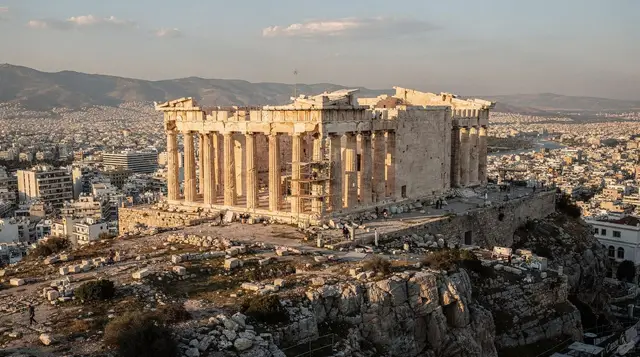
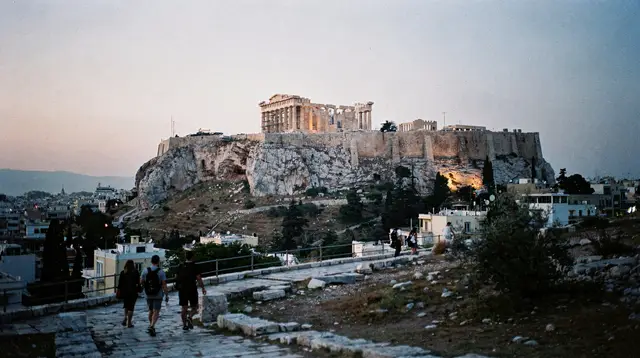
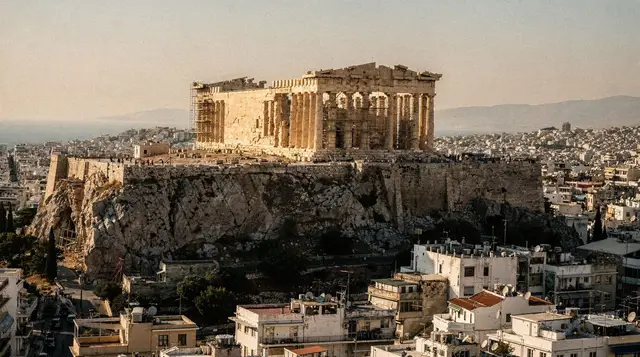
Day 1 is an Athens city day. Pick up the rental car on Day 2 — driving in Athens is unnecessarily stressful and adds no value. Spend the morning at the Acropolis: arrive at the Beulé Gate by 07:30, through the gate at 08:00, 90 minutes on the hill, then 75 minutes in the Acropolis Museum.
Pre-booked Acropolis ticket — skip the walk-up queueFor a guided tour with skip-the-line:
Guided Acropolis tour with skip-the-line accessSee the Acropolis tickets for ticket options.
Afternoon — Ancient Agora and evening in Plaka (13:00–22:00)
Lunch in Plaka (€14–18 per person), then the Ancient Agora (entry €20). The Temple of Hephaestus and Stoa of Attalos museum deserve 90 minutes. Walk into Monastiraki for the flea market and a coffee. Evening dinner in Psyrri — mezze and wine for €35–45 for two.
Day 2: Corinth Canal, Ancient Corinth, and Nafplio
Driving: Athens to Nafplio via Corinth (3.5 hours driving, full day)
Pick up the rental car at 08:00 from your hotel area (all major rental companies have central Athens offices). Take the E94 motorway south-west from Athens.
Stop 1 — Corinth Canal (10:00–10:45): The canal cuts 6.3 km through the Corinth isthmus, 79 metres wide and 79 metres deep, its vertical limestone walls almost perfectly geometric. The view from the road bridge over the canal is vertiginous. A small café and viewing platform on the north side (free). If you want a more dramatic perspective, bungee jumping over the canal is available at the bridge.
The day trip from Athens includes the canal as a stop:
Corinth and canal day trip from AthensStop 2 — Ancient Corinth (11:00–13:30): Ancient Corinth was one of the wealthiest and most strategically important cities in the classical Greek world, positioned to control trade between the Aegean and Ionian seas. The 6th-century BC Temple of Apollo (7 surviving columns) is the oldest standing temple in mainland Greece. The site museum holds the famous Roman mosaics and the Aphrodite/Aphroditos cult objects. Entry ~€10. The Acrocorinth citadel (the enormous rock above the site) is a 20-minute drive up a rough road and offers a spectacular panorama — worth it in cooler months, demanding in summer heat.
Lunch in the village of Ancient Corinth (€12–16 per person).
Drive south to Nafplio (1 hour, 50 km). Check in by 15:30.
Nafplio (15:30–22:00): Nafplio is Greece’s first modern capital (1828–1834) and one of its most beautiful towns: Venetian-era architecture, a web of pedestrianised old-town streets, a harbour front lined with cafés, and the fortress of Palamidi rising 216 metres on the hill above. Walk the old town (30 minutes), climb the 999 steps to Palamidi for the sunset view over the Argolic Gulf (allow 45 minutes up, 30 minutes down; entry ~€8), and have dinner on the harbour front. Nafplio has excellent restaurants by Greek standards — fresh seafood, local Nemea wine, good service. Budget €35–50 for two with wine.
Day 3: Mycenae, Tiryns, and Epidaurus
Morning — Mycenae (08:30–12:00)
Mycenae is 50 minutes north of Nafplio (30 km). Arrive at 08:30 for the early opening — by 10:00 the tour buses from Athens arrive in force. The drive through the Argolic plain, with the mountains of Arcadia rising ahead and Mycenae’s citadel visible as a natural fortress on the last foothill of the range, is already evocative.
The Lion Gate (1250 BC) — two 3-tonne limestone lionesses in heraldic pose above the monolithic lintel — is the oldest monumental sculpture in Europe and still breathtaking. Inside the gate: the Grave Circle A, where Schliemann excavated the gold treasure (now in the National Museum), still visible as a circular stone enclosure. The Treasury of Atreus (15-minute walk down the road from the main site, or a short drive back to the lower car park) is even more remarkable: a corbelled stone dome 14 metres in diameter and 13.5 metres high, built without mortar, still standing after 3200 years. Site + museum entry: combined ticket ~€12.
Allow 2 hours for the upper citadel and Treasury of Atreus combined.
Tiryns (30 minutes south, on the road back toward Nafplio) is the second great Mycenaean citadel — less visited than Mycenae but its Cyclopean walls (limestone blocks weighing up to 15 tonnes, stacked without mortar) are even more massive. Entry ~€6. Allow 45 minutes.
Afternoon — Epidaurus (13:30–17:30)
Lunch in Nafplio (30 minutes from Tiryns), then drive east to Epidaurus (30 km from Nafplio, 40 minutes).
The Theatre of Epidaurus (4th century BC, designed by Polykleitos the Younger) seats 14,000 and has acoustics so precise that a whisper in the orchestra pit carries to the uppermost tier 70 rows above. Drop a coin in the centre of the orchestra and listen from the top — it is genuinely remarkable and not a myth. The theatre was buried for 1500 years and is essentially undamaged; the restoration is minimal and sympathetic.
The Sanctuary of Asclepius surrounding the theatre is the ancient world’s most important healing centre — sick pilgrims came from across the Mediterranean to sleep in the Enkoimeterion (the dream hall) and receive cures from the god of medicine in their dreams. The site museum holds the most complete ancient medical implements collection outside of Rome. Entry (theatre + sanctuary + museum): ~€12.
Return to Nafplio for dinner (second night).
Day 4: Drive to Olympia — the birthplace of the Games
Driving: Nafplio to Olympia (3.5 hours, 250 km)
The drive west to Olympia crosses the Peloponnese from coast to coast. The most scenic route takes the coastal road south through Argos and then west via Tripoli and the Arcadian highlands — genuinely beautiful mountain driving through olive groves and pine forest. The faster route via the E65 motorway is 20 minutes quicker but less interesting. Either way, allow 3.5 hours.
Arrive at Olympia around 13:00–13:30. Lunch in the village of Ancient Olympia (€12–16 per person). Check in to accommodation.
Afternoon — Ancient Olympia (14:30–18:30)
The sanctuary of Zeus at Olympia hosted the Olympic Games from 776 BC to 393 AD — a span of 1169 years. The sacred precinct (Altis) contains the remains of the immense Temple of Zeus (468–456 BC), whose sculptural programme (now in the museum) included the chryselephantine statue of Zeus — one of the Seven Wonders of the ancient world. Twelve metope carvings showing the Labours of Heracles survive in the museum and are among the greatest works of Early Classical sculpture.
Walk the site from the entrance: the Prytaneion (where the Olympic flame was kept), the Heraion (temple of Hera, 7th century BC — the oldest standing temple in Greece), the Pelopion, the Temple of Zeus platform, and the Stadium — the original athletics track, 192 metres long, entered through the Vaulted Tunnel. Running through the tunnel and onto the track is permitted and quietly thrilling.
The Olympia Archaeological Museum (entry combined with site, ~€12) houses the Temple of Zeus east and west pediment sculptures (the Battle of the Lapiths and Centaurs; the chariot race of Pelops), the Nike of Paionios, and — the highlight — the Hermes of Praxiteles (4th century BC), one of the finest surviving marble statues of antiquity. Allow 90 minutes.
Dinner in Ancient Olympia village (€25–35 for two).
Day 5: Return to Athens via the Corinth motorway
Morning — Olympia at dawn (07:00–09:00)
The sanctuary before the tour groups arrive — walk the site at first light when the site gates open. The Temple of Zeus ruins in the early morning, the grass damp, the birds beginning — this is Olympia as it deserves to be experienced.
Drive back to Athens (09:30–13:30)
The fastest return is the E55 north to Patras, then the E65 east to Athens (260 km, 3.5 hours). This route passes through Patras (Greece’s third city, port for ferries to Italy) — stop for a coffee in the harbour area if you have time.
Return the rental car in Athens (most hire companies allow drop-off at a different location from pickup; confirm when booking). Arrive in central Athens by 13:00–14:00.
Final afternoon and evening in Athens (14:00–22:00)
A final afternoon in Plaka or Kolonaki. Use the time for anything the itinerary missed: the Benaki Museum, the National Garden, Anafiotika, or simply a long lunch at a Thissio café terrace with the Acropolis in view. Final dinner in Monastiraki — grilled lamb chops, Greek salad, a carafe of retsina, the floodlit Parthenon visible above the rooftops.
What this route deliberately leaves out
Five days with a car is enough for the eastern and western Peloponnese highlights covered here, but it does not reach the southern Mani peninsula, the Byzantine ghost town of Mystras near Sparta, or the beaches of Kalamata — all genuinely worthwhile if you have a second week or a repeat visit. If ancient theatre and sanctuary sites interest you more than driving distance allows here, note that Delphi (also a UNESCO oracle sanctuary) sits north of Athens rather than in the Peloponnese and is not reachable on this loop — see Athens, Delphi, and Meteora for that separate itinerary.
Doing this route without a car
If driving in Greece is not appealing, most of this itinerary’s stops are covered by organised day trips from Athens instead — the trade-off is less flexibility and an overnight in Athens throughout, rather than in Nafplio and Olympia. See our Nafplio, Mycenae and Epidaurus day trip from Athens and Argolis day trip from Athens guides for the Mycenae/Epidaurus/Nafplio combination, and Ancient Olympia day trip from Athens: is it worth it? for Olympia, though note the latter makes for a very long day given the distance. For a car-free alternative covering similar ancient-history ground closer to Athens, see Athens for history lovers.
Frequently asked questions about Athens and the Peloponnese
Do I need a car for this itinerary, or can I use organised day trips? A car gives you the most flexibility and lets you overnight in Nafplio and Olympia, which this itinerary is built around. Organised day trips from Athens cover Mycenae, Epidaurus, and Nafplio well as a single excursion, and Olympia separately, but you would return to Athens each night rather than experiencing the towns themselves after the tour buses leave.
Is an international driving licence required to rent a car in Greece? Yes, for non-EU/EEA licence holders — bring an International Driving Permit alongside your regular licence. EU licence holders can drive with their standard licence. Confirm requirements with your specific rental company when booking, as policies vary slightly.
Practical tips
Car rental: Pick up in Athens (airport or city), drop off in Athens or Patras (for onward travel). Expect €45–75 per day for a compact car including basic insurance. Full cover (CDW with zero excess) is worth the extra €15/day. Book ahead through a comparison site. An international licence is required for non-EU drivers.
Driving in Greece: Drive on the right. Motorways are well-signed and in good condition. Minor roads in the Peloponnese are narrow, winding, and occasionally shared with goats. Satellite navigation essential — download offline maps before you leave Athens.
Petrol: Fill up in Nafplio before heading to Olympia. Petrol stations in small Peloponnese villages may be closed on Sundays or have erratic hours.
Accommodation: Nafplio has excellent guesthouses in the old town (€80–150 per night, book 2–3 months ahead for summer). Olympia village has a range of hotels (€60–120). Both are small and book out quickly in July–August.
Multi-site tickets: Mycenae, Tiryns, Nafplio’s Palamidi fortress, and Epidaurus each have separate entry fees (€6–12 each). There is currently no Peloponnese combo ticket; budget €50–60 per person for site entries over Days 2–4.
Best time: April–June and September–October. Summer (July–August) is extremely hot in the Peloponnese interior, especially Olympia (in a river valley with no breeze). The Nafplio coast is more bearable.
Extending the trip: Add a night in Hydra by taking the high-speed ferry from Nafplio’s port (Tolon ferry, seasonal) or from Piraeus. See our Greek islands from Athens guide.
Popular Athens tours on GetYourGuide
Verified deep-linked GetYourGuide tours. Book through these links and we earn a small commission at no cost to you.
GetYourGuide does not provide product photos: on its activity cards, the picture illustrates the type of experience and is not the operator's own photo.