Athens for history lovers: 5-day antiquity itinerary
How this itinerary works
Five days for a history enthusiast in Athens is almost exactly the right amount of time: enough to see the major sites in depth, to make it to the Peloponnese for Mycenae and Corinth, and to spend unhurried hours in the museums that most visitors rush through. This is not a sprint itinerary — it is designed for people who read the information panels and want to understand what they are looking at, not just photograph it. Expect 6–8 km of walking per day on the city days, more on the day-trip days. All sites are reachable without a car using guided excursions and public transport.
| Best for | History and archaeology enthusiasts, not a sightseeing sprint |
| Cost | Around €500–750pp for 5 days incl. entries, day trip and meals |
| Tickets | Each ancient site is booked separately on the official Hellenic Heritage ticketing portal |
| Best time | April–May or September–October; museums work year-round |
| Book ahead | Small-group archaeology guides fill weeks ahead in spring/summer |
| Day | Focus | Depth level |
|---|---|---|
| 1 | Acropolis (2hrs), Acropolis Museum (2hrs), Temple of Olympian Zeus | Deep |
| 2 | Ancient Agora, Kerameikos, National Archaeological Museum | Deep |
| 3 | Roman Agora, Tower of the Winds, Byzantine churches, Cycladic Art | Moderate |
| 4 | Mycenae and Epidaurus (or Corinth) day trip | Full day |
| 5 | Delphi day trip or niche Athens museums | Flexible |
Day 1: The Acropolis in depth — early and thorough
Morning — Acropolis at first light with a guide (07:00–12:00)
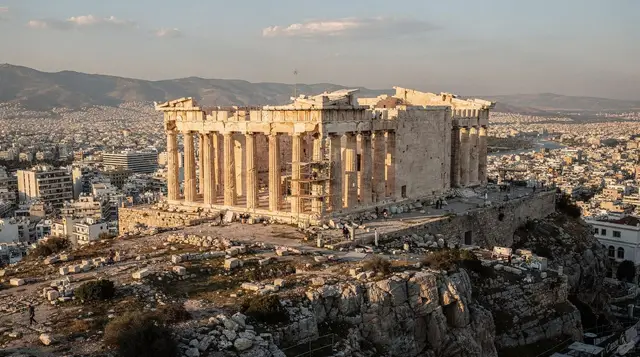
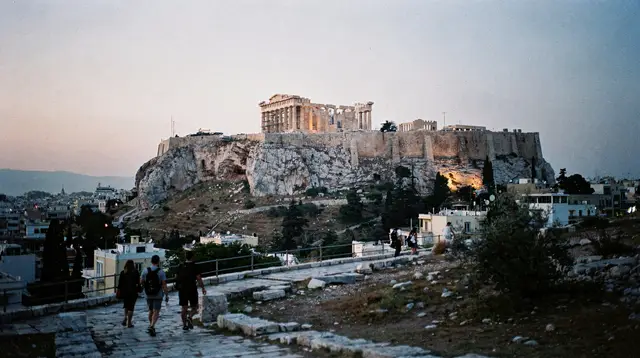
Arrive at the Beulé Gate by 07:00 and position yourself at the gate for the 08:00 opening. As a history enthusiast, the early arrival is not just about avoiding crowds (though it does that too) — it is about being able to stand in front of the Parthenon in the quality of light and silence it deserves.
Pre-book your ticket and consider an early-morning museum combination:
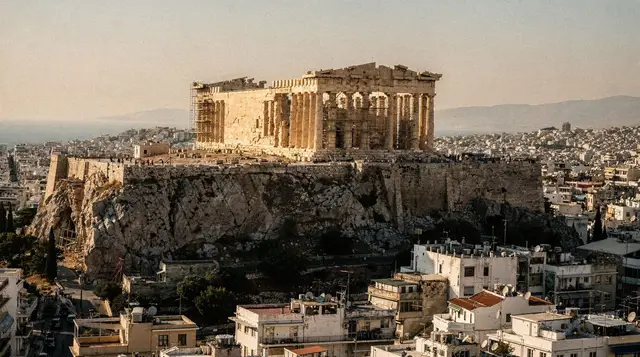
Early-morning Acropolis and museum tour — before the crowdsSpend two full hours on the hill — far longer than the average visitor. Work systematically: start at the Beulé Gate and the Agrippa Monument, move up to the Propylaea (note the deliberate optical refinements in the columns), cross to the Temple of Athena Nike (just restored to its original position on the bastion in a 20-year reconstruction project), examine the Erechtheion’s north porch where Poseidon’s trident marks supposedly remain visible in the bedrock, and finally approach the Parthenon from the west end as ancient visitors would have done. The building is famously imperfect in its “perfect” geometry: every horizontal line has a slight upward curve (entasis) to prevent the optical illusion of sagging — a detail invisible to the casual visitor but fascinating once you know it.
For the guided museum section specifically:
Acropolis Museum guided tour — frieze, sculpture, and storiesThe Acropolis Museum deserves two hours minimum for a history enthusiast. Ground floor: the glass floor over the excavated ancient streets; the finds from the Acropolis slopes including bronze votive objects, terracotta roof tiles, and dedicatory sculptures. Middle floor: the Archaic Korai — the draped female figures from 550–490 BC, their paint traces still visible under UV light. Top floor: the Parthenon Gallery, where the surviving frieze sections alternate with exact plaster casts of the sections in London, Paris, and Rome, the gaps visible and deliberate. The cella pieces — the pediment sculptures of the birth of Athena and the contest with Poseidon — are fragmentary but powerful. Read our Acropolis Museum guide for the detailed room-by-room breakdown.
Afternoon — South slope and five-site combo (13:00–17:30)
Lunch in Plaka (€14–18 per person), then spend the afternoon working through the south slope sites — the Theatre of Dionysus (the world’s first stone theatre, where Aeschylus and Sophocles premiered their tragedies), the Odeon of Herodes Atticus (still used for concerts), the Stoa of Eumenes (2nd century BC colonnaded walkway connecting the two theatres).
Each site on this itinerary (Acropolis €30, Ancient Agora €20, Kerameikos €10, Temple of Olympian Zeus €20) is booked separately on the official Hellenic Heritage ticketing portal; check there whether a multi-site ticket is offered. See the Acropolis tickets for the full breakdown.
Walk to the Temple of Olympian Zeus (south-east of the Acropolis). Only 15 of the original 104 Corinthian columns survive, but the sheer scale — 17 metres tall — makes the incompleteness oddly compelling. The temple was begun in the 6th century BC and not finished until the reign of Hadrian in 132 AD. Adjacent is the Arch of Hadrian, the gate between old Athens (the city of Theseus) and new Athens (the city of Hadrian), its inscription still legible.
Evening — Night walking tour (19:30–21:30)
A night walking tour of Athens’s ancient sites, with the Acropolis floodlit above, is an evocative end to Day 1: Athens night walking tour — the ancient city after dark ---
Day 2: Ancient Agora, Kerameikos, and the National Museum
Morning — Ancient Agora in depth (08:30–12:00)
The Ancient Agora (entry €20) is the most intellectually rewarding site in Athens for a history enthusiast, and also the most underestimated. The Stoa of Attalos museum (itself a reconstruction of a 2nd-century BC Hellenistic shopping arcade) holds case after case of finds from the Agora excavations: a bronze ballot disc from the Athenian democracy; a pottery shard (ostrakon) with Themistocles’s name scratched on it (used in the ostracism votes that could exile any citizen); a klepsydra (water clock used to time speeches); terracotta figurines; coins. Allow 90 minutes.
The Temple of Hephaestus on the Kolonos Agoraios hill overlooking the Agora is the best-preserved Doric temple in the Greek world — it survived because it was converted into a Christian church in the 7th century AD and used continuously until 1834. Note the sculptural programme on the metopes: the Labours of Heracles on the east end, the exploits of Theseus on the south and west.
Late morning — Kerameikos (12:00–13:30)
Walk 15 minutes north-west to the Kerameikos (entry €10). Athens’s ancient ceramics quarter and principal cemetery, excavated by German archaeologists from 1913 onwards. The site is uncrowded and deeply atmospheric. The Sacred Gate (where the Sacred Way to Eleusis began) and the Dipylon Gate (the main city gate through which the Panathenaic procession passed) are clearly visible. The Street of Tombs is lined with original 4th-century BC grave markers — white marble stelae with carved relief portraits of the dead, some of extraordinary quality. The site museum (small, excellent) holds additional finds and explains the topography.
Afternoon and evening — National Archaeological Museum (14:30–19:00)
The National Archaeological Museum on Patission Street (entry €20) is one of the great museums of the world and requires a full half-day for a serious history visitor. Highlights by room:
- Mycenaean collection: The Shaft Grave gold (Mask of Agamemnon, gold cups, bronze daggers with inlaid hunting scenes) from 1600–1500 BC.
- Cycladic collection: The marble figurines from 3000–2000 BC, hauntingly minimal and surprisingly contemporary.
- Sculpture gallery: The Archaic and Classical periods including the Kouros of Sounion (600 BC) and the magnificent Youth of Marathon bronze (325 BC).
- Bronze room: The Poseidon of Artemision (or Zeus — the scholarly argument continues) and the Youth of Antikythera, both pulled from ancient shipwrecks.
- Vase collection: The most comprehensive survey of Greek pottery from Geometric through Red Figure periods.
Dinner near Exarchia or Omonia: these central neighbourhoods have good, unpretentious tavernas serving working Athenians. Budget €20–30 for two.
Day 3: Roman Athens and the Byzantine layer
Morning — Roman Agora and Tower of the Winds (09:00–11:30)
The Roman Agora (ticket price on the official portal) is less visited than its classical counterpart but historically significant: built by Julius Caesar and Augustus between 19–11 BC, it shows Athens’s adaptation to Roman rule. The Tower of the Winds (Horologion of Andronikos Kyrrhestes, 1st century BC) is an octagonal marble tower whose faces are carved with eight wind deities — it functioned as a water clock, sundial, and weather vane simultaneously. The interior once housed a sophisticated hydraulic mechanism fed by a stream from the Acropolis.
Walk east to the Library of Hadrian (entry ~€6) — Hadrian’s enormous 2nd-century AD cultural complex, now reduced to a towering north wall and the traces of its internal colonnaded garden.
Afternoon — Byzantine Athens: churches and the Benaki (12:00–18:00)
Athens preserves a layer of Byzantine history that most visitors skip entirely. The Church of Kapnikarea on Ermou Street (11th century, free entry) stands marooned in the middle of the modern shopping street, its brick and stone masonry entirely intact. The Church of the Holy Apostles in the Ancient Agora (also 11th century) is one of the finest early Byzantine churches in Greece. The Byzantine and Christian Museum on Vassilisis Sofias Avenue (entry €8) houses the best collection of Byzantine art outside Istanbul: icons, mosaics, illuminated manuscripts, and an extraordinary floor of reconstructed early Christian church interiors.
Afternoon break: Kolonaki cafés, then the Goulandris Museum of Cycladic Art (entry €12) — the private collection of Cycladic marble figurines is the finest in the world outside the National Museum, and the curatorial interpretation is excellent.
Evening — Guided mythology or Plaka dinner (19:30) Athens mythology small-group tour — divine stories in situ ---
Day 4: Corinth and Mycenae — Bronze Age and classical Greece in one day
Getting there (07:30)
An organised day trip to Nafplio, Mycenae, and Epidaurus from Athens covers the most important sites of the Mycenaean world plus the Peloponnese’s finest ancient theatre:
Nafplio, Mycenae, and Epidaurus small-group day tripFor the canal and classical Corinth instead:
Corinth day trip with canal and ancient siteIf you can only choose one: Mycenae is the more historically overwhelming. The Lion Gate (1250 BC) is the oldest monumental sculpture in Europe. The Treasury of Atreus (1250 BC) is an engineering marvel — a corbelled stone dome 14 metres across that stood for 2000 years before the Pantheon was built. The grave circles and the museum’s gold collection (including the Mask of Agamemnon’s companions) are essential supplements to what you saw at the National Museum on Day 2.
Epidaurus adds the best-preserved ancient Greek theatre: 14,000-seat capacity, acoustics so precise that a coin dropped in the orchestra pit is audible in the back row. The stadium and sanctuary of Asclepius complete the site.
Return to Athens by 20:00. Light dinner — you will be tired.
Day 5: Delphi or depth in Athens
Option A — Delphi (full day, 08:00–20:00)
The sanctuary of Apollo at Delphi is the most intellectually charged ancient site in Greece for a history enthusiast. The Pythia (oracle), the omphalos stone (the “navel of the world”), the Castalian Spring, the Stadium, and the extraordinary museum with the bronze Charioteer, the Omphalos stone, the Siphnian Treasury frieze — all demand time and attention. The day trip from Athens is 2.5 hours each way but completely worthwhile:
Delphi guided day tour from AthensOption B — Depth in Athens
Use Day 5 for the things the rest of the itinerary left too little time for:
- Piraeus Archaeological Museum (free, rarely visited, extraordinary collection of bronze sculptures)
- Epigraphical Museum on Tositsa Street (the world’s largest collection of ancient Greek inscriptions — extreme niche interest, genuinely riveting)
- Return to the National Archaeological Museum for the rooms you rushed on Day 2
- A slow morning in Thissio with the Apostolou Pavlou promenade view of the Acropolis and a long final lunch at a terrace café
Which Day 4 excursion to choose
If you can only pick one Peloponnese day trip, Mycenae is the more historically overwhelming choice for a history enthusiast — the Lion Gate and Treasury of Atreus predate the classical period you have spent Days 1–3 immersed in, and the connection back to the National Museum’s Mycenaean gold collection from Day 2 makes the whole trip cohere. Corinth suits travellers with a specific interest in Roman-era Greece or early Christianity (St Paul preached here). Ancient Olympia is not reachable as a day trip from Athens at all — if the birthplace of the Games interests you, see our Ancient Olympia day trip from Athens: is it worth it? guide and our Athens and the Peloponnese road-trip itinerary, which covers it properly with a rental car.
Frequently asked questions about Athens for history lovers
Is this itinerary suitable for a casual visitor, or only serious history enthusiasts? It is built for people who genuinely want to read the information panels and understand the archaeology, not just photograph it — the pacing (two hours on the Acropolis alone, a full afternoon at the National Museum) will feel slow to a casual sightseer. If that is not your style, our Athens in 3 days or Athens long weekend itineraries cover the same core sites at a brisker pace.
Should I visit the National Archaeological Museum before or after Mycenae? Before, if possible — this itinerary places the museum on Day 2 and Mycenae on Day 4 deliberately. Seeing the Mask of Agamemnon and the Shaft Grave gold in Athens first makes the empty grave circles at the actual site in the Peloponnese far more meaningful, since you already know what was found there.
Practical tips
Tickets: Each site is booked separately on the official Hellenic Heritage ticketing portal; check there whether a multi-site ticket is offered. See Acropolis tickets.
Opening hours: Most Greek state museums open 08:00–20:00 in summer (reduced hours October–March). Many close Monday or Tuesday. Check before going.
Book guides early: Small-group academic tours and archaeology-focused guides book out weeks ahead in spring and summer. Book as soon as your dates are confirmed.
Crowds: The Acropolis and Mycenae are both mobbed from 10:00–14:00 in summer. The National Museum is always manageable because it is large. Kerameikos and the Kerameikos museum are almost never crowded.
Reference reading: Pausanias’s “Description of Greece” (2nd century AD) is the original guidebook to these sites and available in translation. Mary Beard’s “Parthenon” is the best modern account of the building’s history. Both are worth reading before you go.
Getting around: Most city sites are walkable. Day trips are by organised tour or KTEL bus. See Getting around Athens.
Popular Athens tours on GetYourGuide
Verified deep-linked GetYourGuide tours. Book through these links and we earn a small commission at no cost to you.
GetYourGuide does not provide product photos: on its activity cards, the picture illustrates the type of experience and is not the operator's own photo.