Athens long weekend: the perfect 3-day first-timers plan
How this itinerary works
A long weekend in Athens — Friday evening to Monday morning — is one of the most satisfying short city breaks in Europe. Three full days is enough time to see the Acropolis properly, to actually enjoy Plaka rather than rushing through it, to eat well, and to feel that you understood the city rather than just photographed it. This plan is designed for first-time visitors who want to cover the essential Athens without the frantic energy of a one-day visit. Walking: 8–10 km per day, all flat or gently sloping. No car, no complicated logistics — metro and feet.
The one non-negotiable preparation: book your Acropolis ticket before you arrive. Walk-up queues in summer can consume 90 minutes of a day you cannot afford to lose.
| Best for | First-time visitors, couples, a long weekend break |
| Getting around | Entirely on foot and by metro, roughly 8–10km walking per day |
| Cost | Around €300–450pp for 3 days incl. entries, meals and one evening activity |
| Best time | April–May or September–October |
| Book ahead | Acropolis ticket 24–48hrs; Cape Sounion tour 1–2 days if doing Option A |
| Day | Focus | Evening |
|---|---|---|
| 1 | Acropolis, museum, Plaka, Anafiotika, Monastiraki | Plaka/Monastiraki walking tour or Psyrri dinner |
| 2 | Central Market, Syntagma, Kolonaki, Lycabettus | Cooking class or wine tasting |
| 3 | Cape Sounion sunset or Koukaki/Thissio slow morning | Farewell taverna lunch |
Day 1 (Friday/Saturday): Ancient Athens — from the hilltop down
Early morning — Acropolis at first light (07:30–11:30)
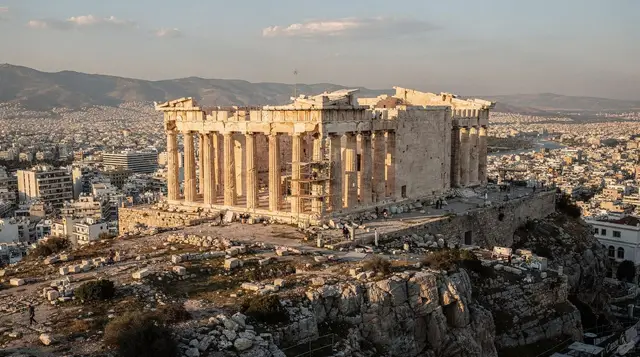
The single best thing you can do with your first morning in Athens is to be at the Beulé Gate entrance by 07:30. The gate opens at 08:00. The first 60–90 minutes on the hill are the only ones when the Parthenon can be experienced with something approaching the serenity it deserves.
Pre-book your ticket:
Pre-booked Acropolis ticket — the essential preparationFor a guided experience that puts the history and mythology into context:
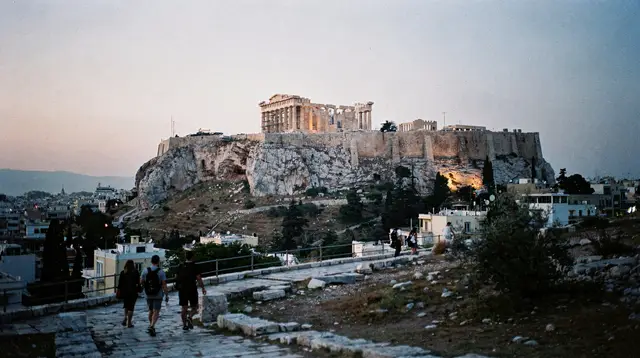
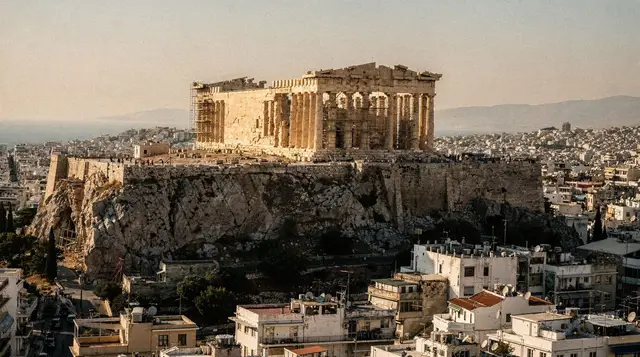
Guided Acropolis tour with skip-the-line accessSpend 90 minutes on the hill. The main circuit: up the Propylaea ramp (the monumental gateway, 437–432 BC), right to the Temple of Athena Nike on its bastion (just restored to its original position after a 30-year archaeological project), across to the Erechtheion with its Caryatid porch (the six maidens supporting the roof on the north side), and around to the Parthenon itself. Look south from the Parthenon’s south side: the Saronic Gulf and Piraeus harbour are clearly visible on clear days — the same view that convinced the ancient Athenians this was the place to build a monument visible from the sea.
Descend the south slope by 09:30, passing the Theatre of Dionysus (the world’s first stone theatre) and the Odeon of Herodes Atticus (still used for summer concerts). Walk five minutes east to the Acropolis Museum (entry €20). The top-floor Parthenon Gallery — a glass room with the actual Parthenon visible behind the frieze — is one of the great museum spaces in Europe. Allow 75 minutes. Our full Acropolis Museum guide walks you through the key rooms.
Midday — Plaka for lunch and exploration (12:00–15:00)
Plaka begins immediately at the base of the Acropolis hill. The main street (Adrianou) is lined with cafés, souvenir shops, and excellent people-watching. For a quieter experience, take the parallel streets: Mnisikleous, Thespidos, and Erotokritou have neo-classical houses, courtyards, and the occasional sitting cat.
Lunch in Plaka: a proper taverna meal (tzatziki and pita to start, grilled fish or moussaka as a main, a carafe of house wine) costs €14–18 per person. Avoid the restaurants on Adrianou’s main strip — the side streets are better quality at lower prices.
After lunch, walk up into Anafiotika — the tiny Cycladic-style neighbourhood built into the north face of the Acropolis rock in the 1840s by craftsmen from Anafi island. The lanes are impossibly narrow and white, the doors are painted blue, and the whole place feels less like Athens and more like a Cycladic island village that wandered into the city by accident. 20 minutes of wandering.
Afternoon — Monastiraki and the Ancient Agora (15:00–18:30)
Walk 15 minutes north-west into Monastiraki. The square itself is the quintessential Athens photograph: the Tzistarakis Mosque, the metro station, and the Acropolis towering above it all. Explore the flea market on Pandrossou and Ifestou streets: backgammon sets, olive-wood bowls, komboloi (worry beads), vintage sunglasses, and Greek honey.
Adjacent to the square: the Ancient Agora (entry €20). The Stoa of Attalos museum (a reconstruction of a 2nd-century BC shopping arcade) holds fascinating everyday objects — voting ballots, water clocks, children’s toys — from classical Athenian life. The Temple of Hephaestus above is one of the best-preserved Doric temples in the world. Allow 60 minutes.
See Acropolis tickets for the ticket breakdown.
Evening — Night Athens and a Plaka dinner (19:00–22:30)
The Athens Plaka and Monastiraki walking tour in the evening hours captures the neighbourhood at its most atmospheric — the Acropolis floodlit above, the streets filling with Athenians:
Plaka and Monastiraki walking tour with local guideAlternatively, make your own evening: rooftop sundowner (€12–16 a cocktail, Acropolis view included), then dinner in Psyrri for mezze — the most enjoyable way to eat in Athens is to order many small things rather than one large thing. Grilled octopus, saganaki, dakos, stuffed vine leaves, Greek salad. €35–45 for two with wine.
Day 2 (Saturday/Sunday): Food, views, and the living city
Morning — Food market and a slow Athens breakfast (09:00–12:00)
The Athens Central Market on Athinas Street opens at 07:00 and is at its most energetic by 08:00–09:00. Two covered halls (fish and meat), a spice market on the street, and working canteens serving the stallholders and early-rising Athenians. This is Athens with its tourist face removed: loud, purposeful, and delicious. A full breakfast from one of the canteens costs €5–7.
A guided food tour is the single best investment of the long weekend — it connects you to the market’s stalls, the neighbourhood bakeries and mezze bars, and the stories behind Athenian food culture:
Original Athens food tour — markets, mezze, and local secretsLate morning — Syntagma and Kolonaki (12:00–14:00)
Walk south-east to Syntagma Square. The changing of the guard at the Tomb of the Unknown Soldier happens every hour on the hour; the full Sunday ceremonial change at 11:00 involves the entire Evzone unit in full regalia and draws a good crowd. The National Garden behind the parliament (free, open until sunset) is 15 hectares of genuine greenery and shade — a civilised pause.
Walk uphill into Kolonaki, Athens’s smartest neighbourhood. The streets climb between marble apartment buildings, independent galleries, and very good coffee shops. A freddo espresso (cold, shaken, the Athenian café standard) costs €3–4. If you have museum appetite left after the Acropolis Museum yesterday, the Goulandris Museum of Cycladic Art on Neophytou Douka Street (entry €12) has the finest private collection of Cycladic marble figurines — hauntingly minimal objects from 3000–2000 BC.
Afternoon — Lycabettus summit (14:30–18:00)
Take the funicular railway (€7 return, departures every 20 minutes) from Aristippou Street up to the summit of Lycabettus Hill at 277 metres. This is Athens’s highest point and the panorama from the top is the clearest geographic picture the city offers: the Acropolis reduced to a small plateau due south, the city spreading across the Attic plain in every direction, Piraeus and the Saronic Gulf beyond, and on a clear day the mountains of the Peloponnese to the south-west.
The Chapel of St George at the summit dates to the 19th century. The hilltop café is worth the overpriced coffee for the terrace view (€6–8). Walk down via the pine-shaded path (20 minutes, well-maintained) to the Lycabettus Street area.
Descend back through Kolonaki to the Benaki Museum on Koumbari Street (entry €12, closed Tuesday) — five floors covering Greek civilisation from the Neolithic to the 20th century, including a remarkable collection of Byzantine jewellery and Greek folk costumes. The rooftop café-restaurant is excellent.
Evening — Cooking class or wine tasting (19:30–22:30)
One of Athens’s great pleasures is its food — and spending an evening either making it or tasting it at a high level is a far better use of time than any nightclub:
Athens cooking class with dinner — learn to make Greek foodOr a wine and cheese pairing with the Acropolis in view:
Athens wine, cheese, and Acropolis views tasting eveningDay 3 (Sunday/Monday): Cape Sounion or a slow final morning
Option A — Cape Sounion (full afternoon and evening)
If you have energy and this is your last full day: Cape Sounion is 70 km south along the coastal road. The Temple of Poseidon stands on a sea-cliff 60 metres above the Aegean, Byron’s name carved into a column, the sunset view across to Kea and Makronisos extraordinary. A small-group tour handles the transport and includes a guide:
Cape Sounion sunset small-group tour from AthensSee our Cape Sounion sunset trip for the independent bus option.
Option B — Slow final morning in Koukaki and Thissio (09:00–14:00)
Koukaki, immediately south of the Acropolis, is the neighbourhood where Athenians who are not performing for tourists actually live. Independent bakeries (a koulouri and a freddo cappuccino costs €3.50), the Saturday farmers’ market on Drakou Street, quiet pedestrianised streets. The Kerameikos cemetery (entry €10) nearby is one of Athens’s most atmospheric and least-visited ancient sites — the funerary stelae with carved portrait reliefs are unexpectedly moving.
Walk north along the Apostolou Pavlou promenade in Thissio — the pedestrianised marble walkway facing directly up at the Acropolis. The café terraces here offer arguably the best ground-level view of the rock in the city. Final lunch at one of the terrace tavernas: a two-course meal with wine and an Acropolis view costs €22–30 per person. A worthy way to end three days in Athens.
Option A vs Option B for Day 3
Choose Cape Sounion if you have not seen a Greek sunset over the sea yet — the Temple of Poseidon at the cliff edge is a genuinely different experience from anything in the city, and the tour handles all the logistics. Choose the slow Koukaki/Thissio morning if you are already tired from two packed days, prefer neighbourhood life to another excursion, or are travelling with young children who would struggle with a 3-hour round trip. Neither choice is wrong — see our Athens Riviera beaches guide for a third option (a shorter beach afternoon) if both Sounion and a slow morning feel like the wrong pace for your group.
Frequently asked questions about Athens long weekend
Is three days enough to see Athens properly as a first-time visitor? Yes, for the essentials. Three days covers the Acropolis and museum without rushing, a full day of neighbourhoods and food culture, and either a day trip or a relaxed final morning. It will not cover everything — the National Archaeological Museum and a Peloponnese day trip are the first things left for a return visit. See How many days in Athens do you actually need? for the fuller breakdown by trip length.
Do I need to book anything besides the Acropolis ticket? The Acropolis ticket is the only genuinely essential pre-booking. Guided tours, the cooking class, and Cape Sounion are worth booking a few days ahead in summer to guarantee availability, but none of them will sell out with the same certainty as walk-up Acropolis queues.
Practical tips
Acropolis tickets: Book online at least 24 hours ahead (48+ hours in summer). The Acropolis ticket is €30 (€15 reduced); each site is booked separately on the official Hellenic Heritage ticketing portal, so check there whether a multi-site ticket is offered. See Acropolis tickets.
Getting around: Most sights in this itinerary are within walking distance of each other. The metro (€1.20 per trip; €4.10 for a 24-hour pass) covers Acropolis, Monastiraki, and Syntagma stations. See Getting around Athens.
Weather: April–May and September–October are the ideal long weekend months — warm, manageable crowds, and outdoor dining at its best. July–August: plan all ancient sites before 10:00 or after 17:00; use museums and cafés at midday. Winter weekends are cool and quiet with very short queues everywhere.
Where to stay: Plaka, Koukaki, or Monastiraki area puts you within 10 minutes of the Acropolis and the key sights. See Where to stay in Athens for neighbourhood comparisons and hotel picks by budget.
Extending the trip: Three days is a proper introduction; four days unlocks Cape Sounion and Athens Riviera without rushing. Five days adds a day trip to Delphi or the start of a Peloponnese journey. See Athens in 4 days and Athens 5 days with day trips.
How many days is enough? Honest answer: three days is a great long weekend that leaves you wanting more. Read our How many days in Athens do you actually need? guide for a fuller breakdown.
Popular Athens tours on GetYourGuide
Verified deep-linked GetYourGuide tours. Book through these links and we earn a small commission at no cost to you.
GetYourGuide does not provide product photos: on its activity cards, the picture illustrates the type of experience and is not the operator's own photo.