
Crete from Athens: ferry, flight, and how long to stay
How do you get from Athens to Crete?
Fly from Athens airport to Heraklion or Chania in 45 minutes (€40–100). Or take the overnight ferry from Piraeus — around 9 hours, departing around 21:00 and arriving early morning. The ferry saves a night's hotel but the flight is faster and often competitively priced.
Why Crete deserves more than a weekend
Crete is Greece’s largest island — 260 km long, with a mountain spine that reaches 2,456 m, distinct regional cuisines, a Minoan Bronze Age civilisation that predates classical Greek culture by a thousand years, and a coastline that ranges from narrow fishing harbours to lagoons that look borrowed from the Caribbean. It is not a scaled-up version of the Cyclades. It is an island that functions more like a small country.
The challenge from Athens is that Crete is genuinely far — there is no quick crossing. But the logistics are manageable, and for visitors with three or more nights available, it rewards properly.
| Where | Chania or Heraklion, Crete |
| Cost | €40–100 flight one way; €45–130 overnight ferry |
| Time needed | 45-min flight or 8.5–9hr overnight ferry |
| Getting there | Athens airport (ATH) or Piraeus port |
| Best time | April–June or September–October |
Getting from Athens to Crete
Flying: the fastest option
The flight from Athens Eleftherios Venizelos Airport (ATH) to Heraklion (HER) takes 45 minutes. To Chania (CHQ), also about 45 minutes. Multiple airlines serve both routes: Aegean Airlines, Sky Express, and seasonally Ryanair and EasyJet. Prices range from €40–100 one way depending on season and how early you book.
Flying is the best choice if you’re short on time, if you’re travelling with young children, or if you want to split your base between eastern Crete (Heraklion, Knossos, Spinalonga) and western Crete (Chania, Rethymno, Balos) — you can fly into one airport and out of the other.
Overnight ferry: saves a hotel night
The overnight ferry from Piraeus to Heraklion or Chania departs around 20:30–21:30 depending on the operator and day. Minoan Lines and ANEK Lines both serve the route. The journey takes approximately 8.5–9 hours, arriving in Crete at 05:30–06:30.
Fares start at around €45 in a reclining seat, €60–80 in a shared cabin, and €90–130 in a private two-berth cabin. The ferries are large car carriers with restaurants, bars, and deck space — think of it as a short cruise rather than a budget option. Taking the overnight ferry out and flying back (or vice versa) is a popular approach that gives you one extra day without an extra night’s accommodation.
Book via Ferryhopper or directly with the operator. In summer, booking two to four weeks ahead is wise for cabin spaces.
East Crete vs west Crete: what to prioritise
West Crete: scenery and old towns
Chania is widely considered the most beautiful city in Crete — a Venetian harbour, Ottoman mosques converted to galleries, a covered food market, and a well-preserved old town where the medieval street pattern is still intact. It is a good base for two nights minimum.
From Chania, the accessible highlights include:
Balos Lagoon and Gramvousa: A shallow turquoise lagoon at the northwest tip of Crete, accessible by boat from Kissamos or by a rough road and then a 20-minute walk. The colour of the water is genuinely extraordinary. An organised boat trip from Chania is the most comfortable way to reach it.
Full-day Balos and Gramvousa boat trip from ChaniaSamaria Gorge: A 16 km hiking trail through the White Mountains, ending at the Libyan Sea. The walk takes 4–6 hours and requires reasonable fitness and proper shoes. The gorge is open from May to October.
Rethymno: A well-preserved Venetian and Ottoman town midway between Chania and Heraklion, with a Venetian harbour, a Renaissance lighthouse, and a working old town that remains relatively un-touristified. Worth a half-day stop.
East Crete: history and unique landscapes
Heraklion is Crete’s capital — functional rather than beautiful but home to the outstanding Heraklion Archaeological Museum, which holds the finest Minoan artefacts in the world including the Phaistos Disc and the famous bull-leaping frescoes from Knossos.
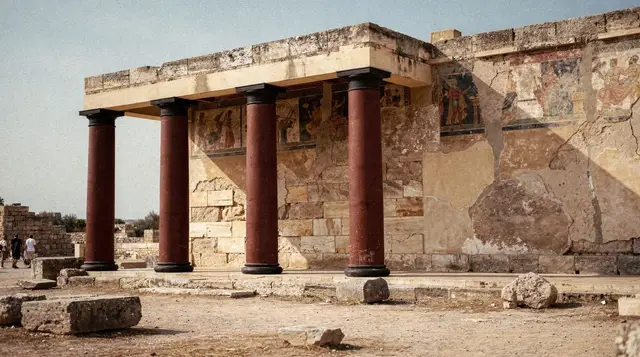
Knossos: 5 km from Heraklion, the ruins of the Minoan palace (partly reconstructed by Arthur Evans in the early 20th century in ways now considered controversial) are the most visited ancient site in Crete. Allow two hours and ideally visit with a guide for context. Admission is €15.
Spinalonga: A Venetian fortress on a small island off the northeast coast of Crete, accessible by boat from Elounda or Agios Nikolaos. It served as Europe’s last functioning leprosy colony until 1957 and is now one of the most visited sites in Crete, partly because of Victoria Hislop’s novel The Island. The boat trip is part of the appeal.
Spinalonga island boat trip from Agios NikolaosElounda and Agios Nikolaos: The Gulf of Mirabello in the northeast is arguably Crete’s most picturesque coastal area. Agios Nikolaos is a pleasant, functioning town on a lake connected to the sea by a narrow channel. Elounda has the island’s highest concentration of luxury hotels.
How many days do you need in Crete?
- 3 nights: Enough to see one half of the island well — either west Crete (Chania, Balos, Rethymno) or east Crete (Heraklion, Knossos, Spinalonga).
- 5–7 nights: Enough to move between Chania and Heraklion at a relaxed pace, with a hiking day in the gorge and a boat excursion.
- 10+ nights: You can drive the coastal road from end to end, explore the south coast (which is far quieter than the north), and reach isolated beaches that require a 4WD track or a long walk.
Crete genuinely rewards longer stays more than almost any other Greek island. The landscape changes dramatically between regions, and the food — especially in small inland tavernas away from the tourist strips — is among the best in all of Greece.
Getting around Crete
Renting a car is by far the best way to explore Crete. Public buses (KTEL) connect the main towns but are slow and don’t reach smaller villages or hiking trailheads. Car rental is available at both airports from around €30–50/day in shoulder season, €60–80/day in peak summer.
The north coast highway is fast and well-maintained. The south coast road is narrower and more spectacular. Inland roads through the Ida and White Mountain ranges require a slower pace but pass through some of the island’s most authentic villages.
Best time to visit Crete
- April–May: ideal hiking weather, wildflowers, sea still cool (18–20°C), significantly fewer tourists.
- June: warm, sea swimmable, Samaria Gorge fully open, accommodation prices not yet at peak.
- July–August: hot (35°C+), very crowded on the north coast, sea warmest (26°C). The south coast is notably quieter.
- September–October: the best time for food (olive harvest begins in October), beach swimming still good through September, temperatures more manageable.
- November–March: Crete has a mild winter and remains open in ways that Cyclades islands don’t. Rainfall mostly in January–February. The mountains have snow from December.
For comparison with other island options, read the Greek islands from Athens guide and use the Athens island ferry vs flight tool.
West vs east Crete: side-by-side
| West Crete (Chania) | East Crete (Heraklion) | |
|---|---|---|
| Signature sight | Balos Lagoon, Samaria Gorge | Knossos, Heraklion Archaeological Museum |
| Old town | Venetian harbour, best-preserved in Crete | More functional, less picturesque |
| Best for | Scenery, hiking, food | Ancient history, Minoan archaeology |
| Boat trip | Balos and Gramvousa | Spinalonga |
| Good base length | 2–3 nights minimum | 2–3 nights minimum |
If you only have one region to choose, history-focused visitors should lean east (Heraklion), while those prioritising scenery, hiking and food should lean west (Chania) — see the dedicated Chania food guide for what to eat once you’re there.
Frequently asked questions about Crete from Athens
Is it worth taking the overnight ferry to Crete?
Yes, especially if you’re trying to maximise your time on the island. The overnight crossing from Piraeus arrives in Crete at dawn, giving you a full extra day. Returning by flight in the evening is an efficient combination. The ferries are comfortable — book a cabin for a better experience.
Which airport in Crete is better: Heraklion or Chania?
Heraklion (HER) has more flights and is better connected to the archaeological sites in the east. Chania (CHQ) has a more beautiful surrounding landscape and is closer to Balos and Samaria Gorge. For a split itinerary, fly into one and out of the other.
Do you need a car in Crete?
For any trip longer than two nights in a single location, yes. Public buses cover the main north coast towns but do not reach beaches, hiking trails, or interior villages. Renting a car unlocks the island properly. International driving licences are accepted.
Is Crete good for families with children?
Excellent. The north coast has long, sandy, calm beaches with shallow water. The south coast is more remote but very beautiful. Knossos is engaging for older children (10+). The island food is varied and generally child-friendly. Water parks and aquariums near Heraklion add options for younger children.
What is Cretan food like?
It’s considered the best regional cuisine in Greece. Key dishes include dakos (dried barley rusk with tomatoes and cheese), lamb slow-cooked in a clay pot (stifado), fried snails with rosemary (chochlioi bourbouristoi), fresh sea urchin, and an extraordinary range of local cheeses. The olive oil is among the best in Europe. Eat in small inland towns rather than harbour-front tourist restaurants for the best experience.
Is Spinalonga worth visiting?
Yes. The combination of the boat trip across the Gulf of Mirabello, the Venetian fortifications, and the weight of the island’s recent history (it was a leper colony until 1957) makes it genuinely moving. Allow three hours including the boat.
Should I split my Crete trip between Chania and Heraklion?
For 5+ nights, yes — flying into one airport and out of the other lets you cover both regions without backtracking. For 3 nights or fewer, pick one region rather than rushing between both; the driving distance between Chania and Heraklion is around 2.5 hours.
Is Crete better than the Cyclades islands (Santorini, Mykonos) for a first Greek island trip?
They serve different trips. Crete rewards longer stays, a rental car, and an interest in food and hiking as much as beaches. The Cyclades suit shorter 2–3 night stays built around iconic views and nightlife. Many visitors combine both across a longer Greece trip.
Greek island adventures on GetYourGuide
Verified deep-linked GetYourGuide tours. Book through these links and we earn a small commission at no cost to you.
GetYourGuide does not provide product photos: on its activity cards, the picture illustrates the type of experience and is not the operator's own photo.
More tours on Viator
Top-rated experiences with verified reviews, bookable on Viator (a Tripadvisor company).
 Viator
Santorini Catamaran Cruise with Swim-Stops, Greek Meal and Sunset
FromEUR 150Check availability → Viator
Sailing trip to the Top Coasts of Crete, Daily/Multi-day
FromEUR 990Check availability → Viator
Private Overview of Santorini: Full-Day Customizable Experience!
FromEUR 200Check availability → Viator