Athens on a rainy winter day — why it's better than you think
I woke up to rain on my second morning in December Athens and felt, briefly, that familiar low-grade holiday disappointment — the kind you work to suppress because you know rationally it’s irrational. I went out anyway. It was the best day of the trip.
| When | December–February, Athens’s rainiest and mildest months |
| Typical high | Around 13–15 °C, mild enough to walk in |
| Crowds | A fraction of summer — Acropolis queues near zero |
| Prices | Hotel rates often 40–50% lower than July |
| Pack | A waterproof layer and proper walking shoes for slippery marble |
Winter Athens vs summer Athens
| Winter (rainy season) | Summer (peak season) | |
|---|---|---|
| Acropolis crowds | Around 30 visitors at a time possible | 10,000+ before lunch |
| Temperature | Mild, 13–15 °C, comfortable for walking | Often 35 °C+, midday sightseeing is punishing |
| Hotel prices | 40–50% lower than July | Peak rates, book well ahead |
| Best activities | Museums, markets, cafés, quiet site visits | Beaches, evening walks, island day trips |
| Downside | Some rainy days, shorter daylight | Heat and crowd management dominate the day |
December in Athens is mild enough to walk in — highs around 13-15 degrees — with actual genuine rain that arrives in patterns rather than the relentless summer heat. The city changes character when it rains, and the change is an improvement in almost every way except the dryness of your shoes.
The Acropolis in the rain: the thing nobody admits
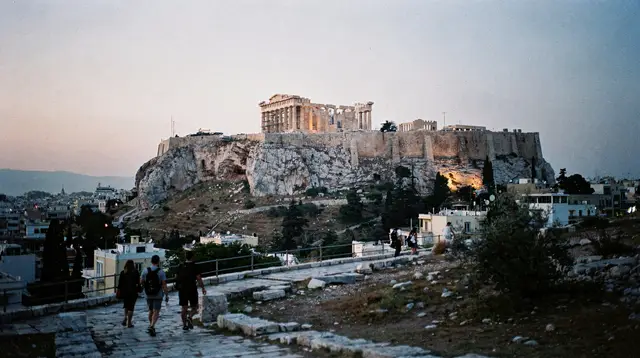
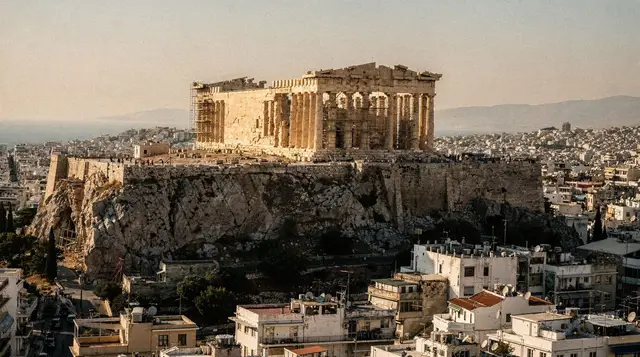
Here is what nobody mentions in the travel content about the Acropolis: the Parthenon marble in wet weather turns the colour of old ivory, and the sky behind it — typically a flat, overexposed blue in summer photographs — becomes the kind of atmospheric grey that makes the whole structure look like something from a painting rather than a tourist attraction.
I went up on my rainy December morning with perhaps thirty other people on the entire site. Thirty. In July the same site holds 10,000 people before lunch. I stood in front of the Erechtheion for a full ten minutes without another person walking into my sightline. The caryatids — or rather their museum-quality replicas — stood in the wet air looking exactly as dignified as they’re supposed to, and the theatre of Dionysus below was empty and silver with rainwater.
Bring a waterproof layer and proper walking shoes. The marble paths become genuinely slippery when wet. The site stays open in light rain; check the website if there’s a storm forecast, as they occasionally close briefly.
Tickets are available year-round, and queues in December are essentially nonexistent. Pre-booking is no longer strictly necessary in winter but still worth doing.
On a wet morning I like having the entry sorted before I leave the hotel, so there is nothing to do at the gate except walk in. A pre-booked Acropolis entrance ticket with an optional audio guide keeps the phone in your pocket and out of the drizzle. If you would rather have someone explain what you are looking at while you pick your way across the slippery stone, the Parthenon guide is a good primer, and the Acropolis tickets guide explains the options side by side.
Museums: the real reason to visit Athens in winter
The Acropolis Museum below the hill is magnificent in any weather, but a rainy day afternoon in December is the ideal conditions. You’re inside, warm, and sharing the space with a fraction of the summer crowd.
The museum is one of the best-designed archaeological museums in the world — the ground floor glass allows you to see the excavations beneath the building while you walk over them; the top floor gallery is oriented precisely to align with the Parthenon it faces through its panoramic windows. The caryatids of the Erechtheion — the originals, the ones the replicas are standing in for up on the hill — are displayed at close range in a long gallery with lighting that seems almost theatrical.
Allow three hours. Most people give it two and leave frustrated that they didn’t see the full context of each gallery. Rent the audio guide or download the app. The Acropolis Museum guide goes gallery by gallery if you want a plan before you arrive.
A good way to use a grey day is to pair the hill and the museum, so the weather decides the order rather than the other way round. A combined Acropolis and museum visit with an audio guide suits that approach: if the sky clears, you do the open-air part first; if it closes in again, you duck inside. The Acropolis vs Acropolis Museum comparison helps you decide how to split your time between the two.
The National Archaeological Museum on Patision Street is a separate institution and equally essential — the Mask of Agamemnon, the Antikythera Mechanism, rooms of Cycladic figurines that look like they arrived from the future rather than the Bronze Age. This is a half-day minimum, and a rainy afternoon makes it an obvious choice. If the weather turns properly grim, the museums overview lists the other indoor options, and the rainy day guide strings several of them into a workable plan.
Coffee as shelter: the Greek approach to bad weather
Athenians do not cancel their social lives for rain. What they do is move them indoors and extend them by approximately two hours. The cafés in Exarchia and Kolonaki fill up faster on rainy mornings, the windows steam gently, the conversation level rises. Sitting in a Greek café on a rainy December day is one of the most pleasant inactive things I’ve done in any city.
Order a freddo cappuccino — yes, even in December, this is not negotiated by season here — find a table by the window, and do nothing intentional for an hour. The Athens coffee culture piece has the full breakdown of what to order and where; but the rainy-day discovery is that any café with fogged windows and occupied tables is fine.
Markets, food halls and indoor Athens
The central market on Athinas Street — the Varvakios Agora — is covered and entirely weather-proof. A rainy morning here is a particularly good time to go: the fish hall smells even more aggressively of brine, the light through the iron-and-glass roof is soft and diffuse, and the stall holders are in a more conversational mood than the rush of a dry summer morning.
The surrounding streets hold small shops selling everything from spices to hardware to religious icons. The whole district rewards wandering without a plan.
For lunch on a rainy day, the tavernas around the market area are the best option in the city — cheap, covered, reliably good, and attended by people who work in the area rather than tourists. A bowl of hot fasolada (bean soup) on a cold December afternoon is genuinely one of the great simple pleasures this city offers.
Plaka in winter: an experiment
The tourist-facing restaurant touts disappear when the rain comes to Plaka. The shopkeepers stand in their doorways looking philosophical. The streets are yours.
Walking Plaka on a rainy winter morning, with the Byzantine churches locked but their exterior stonework darkened with rain, and the Acropolis above occasionally visible through gaps in low cloud — this is a different neighbourhood from the summer version. More honest. More like an actual old place and less like a film set.
Stop in at any of the small Greek folk art shops that sell ceramics, handmade textiles and wooden objects. The proprietors are pleased to have a browser, the prices are better than in summer, and you’ll have their full attention for a conversation about what they’re selling.
The practical case for winter Athens
The best time to visit Athens guide covers the seasonal considerations in full, but the December case is simple: prices drop significantly (hotel rates in the centre can be 40-50% lower than July), the major sites are accessible without crowd management, and the city functions as a city rather than a tourist operation.
The packing list is worth a look before you go, and the winter guide covers what the season looks like beyond the rainy days. If you only have a short stay, the one-day itinerary is easy to swap around when the forecast changes, and the Athens travel tips cover the basics of getting around when the streets are wet.
Bring rain gear. The weather is genuinely variable — a week can include two rainy days and five mild sunny ones, or it can rain consistently for days. Plan for indoor options and treat the sunshine as a bonus.
If you’re building a winter itinerary and want a guided anchor to structure the visit around, the Athens highlights walking tour runs year-round and is genuinely better in winter — smaller groups, unhurried pace, your guide actually able to hear the questions.
Athens in the rain is Athens being honest with you. The summer version is a performance the city puts on for its guests; the winter version is what the city actually is. I’ve since visited in both seasons. The rain day I had in December is the one I remember most clearly.
Frequently asked questions about Athens on a rainy winter day — why it’s better than you think
Does rain ever close the Acropolis? Light rain doesn’t close the site, but the marble paths become genuinely slippery, so wear proper shoes. In storms with lightning or very heavy rain, the site can close temporarily for safety — check the current status if the forecast looks severe on the day you’re planning to go.
Is winter really a good time for a first visit to Athens, or is it better for a second trip? It works well for either. First-timers get the major sites without crowd stress, which arguably makes for a better introduction than a rushed, overheated summer visit. The trade-off is shorter daylight hours and the chance of a genuinely wet day, so build in indoor backups like the museums and the covered central market.
Popular Athens tours on GetYourGuide
Verified deep-linked GetYourGuide tours. Book through these links and we earn a small commission at no cost to you.
GetYourGuide does not provide product photos: on its activity cards, the picture illustrates the type of experience and is not the operator's own photo.