Athens on a budget: how to see the city without overspending
Athens gets unfairly lumped in with expensive European capitals in some budget travel conversations. It shouldn’t. Compared to Paris, Amsterdam, or London — cities with comparable historical weight — Athens is a genuine bargain, and a few strategic choices can keep a two or three-day trip very affordable without sacrificing the experiences that matter.
| Daily food budget | Around €15–25/day eating like a local |
| Transport | Metro single ticket around €1.20, valid 90 minutes |
| Free sights | Anafiotika, Lycabettus climb, National Garden, churches |
| Biggest fixed cost | Acropolis ticket, €30 standard price (€15 reduced) |
| Best-value zone to stay | Between Monastiraki and Thissio |
Budget vs mid-range: where the money actually goes
| Budget approach | Mid-range approach | |
|---|---|---|
| Meals | Souvlaki, bakery pies, market self-catering, ~€15–25/day | Sit-down tavernas most meals, ~€35–50/day |
| Sightseeing | Free walks, Lycabettus, Acropolis ticket only | Acropolis plus museum entries, a guided tour or two |
| Transport | Metro and walking only | Occasional taxis for convenience |
| Accommodation area | Monastiraki–Thissio hostels or budget hotels | Syntagma or Plaka mid-range hotels |
| One splurge worth it either way | A single food or walking tour for orientation | Same — it pays back in local knowledge |
The Acropolis: where to spend and where to save
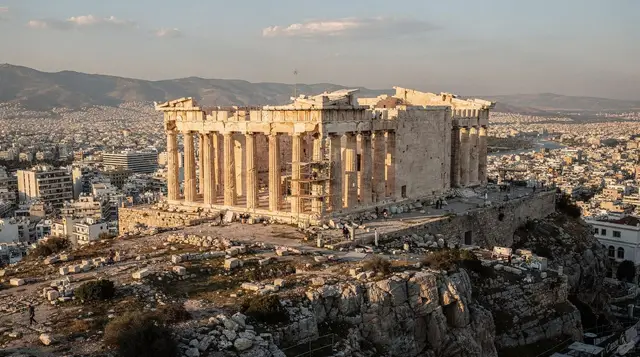
Let’s address the biggest line item first. The Acropolis standard ticket costs €30 all year (€15 reduced; with reductions for students and EU citizens under 25). That’s non-negotiable if you want to go up the hill, and you should — it’s one of the genuinely unmissable human-made places on earth.
What you can save on: the queue. If you buy a pre-booked timed-entry ticket, you pay the same price as the on-site ticket but save potentially hours of queue time in the sun. Not a budget saving, but a time saving that lets you use those hours for free things.
For real value, the five-site combo ticket covers the Acropolis, Ancient Agora, Roman Agora, Kerameikos, and Hadrian’s Library for considerably less than purchasing each site individually. If you’re spending two full days sightseeing, this is the smartest ticket purchase you can make.
Free access to state archaeological sites (including the Acropolis) is available on the first and third Sunday of each month from 1 November to 31 March, and on 6 March, 18 April, 18 May, the last weekend of September and 28 October. Free entry does not waive the timed slot you must reserve for the Acropolis, so check the official Hellenic Heritage ticketing portal before you travel. The trade-off: free Sundays are significantly more crowded.
Eating cheaply and well
Athens is one of the better cities in Europe for budget eating, if you eat like a local rather than like a tourist.
Street food: souvlaki from a pita shop (gyros, souvlaki, or kebab wrapped in flatbread with tzatziki, tomato, and onion) costs €2.50–3.50 at most neighbourhood places. It’s an excellent and filling meal. The Monastiraki area has several souvlaki shops on Mitropoleos Street; the ones slightly off the tourist axis are usually better and cheaper.
Bakeries: a cheese pie (tyropita) or spinach pie (spanakopita) from a bakery costs €1.50–2.50 and makes a complete breakfast or snack. Bakeries are everywhere in Athens; chain bakeries like Grigoris and Takis are reliable and cheap.
Tavernas vs tourist restaurants: the price gap between a proper Greek taverna and a tourist restaurant near the Acropolis can be 40–60%. Two streets into Psyrri or Thissio and prices drop noticeably. Look for daily specials handwritten on a board (called “tis imeras” or “mageirefta” — cooked dishes of the day), which are always the best value: stewed meat, moussaka, pastitsio, stuffed vegetables, cooked fresh that morning for €7–10 for a full plate.
Markets: the Athens Central Market on Athinas Street (between Monastiraki and Omonia) has fruit, vegetables, olives, cheese, and bread at prices significantly below what you’ll pay in tourist-area shops. A self-catering lunch bought here costs almost nothing.
Coffee: Greek coffee culture means that a freddo espresso or frappé at a café costs €2–3 and comes with the unspoken expectation that you can sit for as long as you like. No one will rush you. Use this as a rest strategy during the hot midday hours.
Free and low-cost sightseeing
The best things in Athens aren’t always the expensive ones.
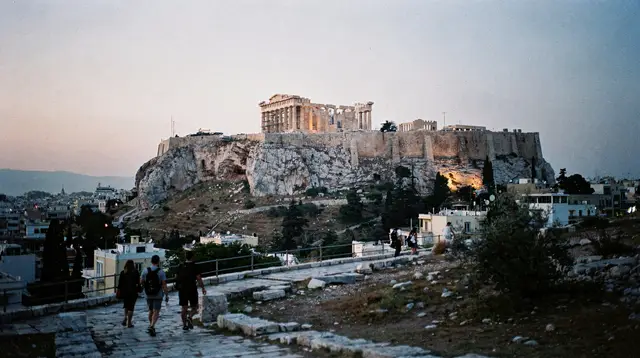
Walking the Thissio–Monastiraki–Plaka pedestrian loop: the path that circles the base of the Acropolis hill is completely free and covers the Ancient Agora exterior, the Kerameikos area, and the most beautiful neighbourhood streets in the city. Budget two hours and wander. It’s one of the finest urban walks in Europe.
Anafiotika: the tiny Cycladic-style village neighbourhood built into the north slope of the Acropolis rock. No entry fee. Completely extraordinary.
Lycabettus Hill: you can walk up for free (there’s a funicular if you prefer, for a modest fee). The view from the top is the best panoramic view in Athens — better than any of the rooftop bars, and free. Go for sunset.
The National Garden: a large, shaded, genuinely relaxing park behind the Parliament building. Free entry, good for recovering from the midday heat.
The Benaki Museum of Greek Culture: not free, but the main building on Koumbari Street has outstanding collections of Greek art spanning several millennia, and the rooftop café has good views. Ticket prices are modest.
Churches: Athens has dozens of Byzantine churches, many of them small, atmospheric, and completely overlooked by most visitors. Entry is free.
Budget transport
The metro is the fastest, cheapest, and most reliable way to move around Athens. A standard single-journey ticket (valid for 90 minutes, including transfers between metro, bus, and tram) costs €1.20 in 2023. The airport metro link is separate and more expensive, but still cheaper than a taxi in most circumstances.
Taxis in Athens are not expensive by Northern European standards — a central-city journey is typically €4–8 — but add up if you’re taking several per day. Use the metro for anything within the central ring and save taxis for situations where the metro genuinely doesn’t serve the route.
For getting to Piraeus for ferries or for reaching the airport, the metro is the correct answer. Don’t take a taxi to Piraeus from central Athens if a metro line goes there directly.
Where to splurge if the budget allows one upgrade
If you’re keeping to a tight budget but have room for one organised experience, the Athens original food tour is the investment that gives you the most return. It includes food — real quantities of food — so counts partly as a meal cost, and the market and neighbourhood access it provides gives you a map of where to eat cheaply for the rest of your trip. It pays back in practical knowledge.
For the comprehensive Athens experience with the Acropolis context done properly, the Athens highlights walking tour provides the best tour value — covering Plaka, the Agora, and key Acropolis context in a small-group format.
Budget accommodation without compromising location
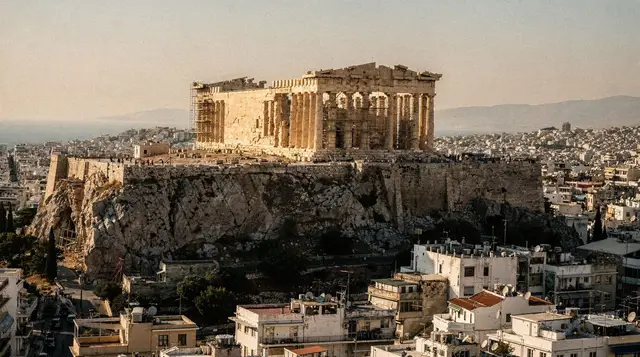
Central Athens has good-value accommodation options that don’t require sacrificing location. The best-value zone for budget travellers is broadly the area between Monastiraki and Thissio — close enough to walk everywhere, not quite on the tourist main drag where prices peak.
Hostels in Athens are genuinely good by European standards — several in the Monastiraki and Psyrri areas have rooftop terraces with Acropolis views, included breakfast, and private room options that compete favourably with budget hotel pricing. Check review platforms for the current recommendations; the hostel scene in Athens has improved consistently over the past few years.
For private accommodation, the traditional mid-range hotel zone around Syntagma and Plaka is more expensive than the equivalent in Psyrri or Thissio. A quick search filtering by neighbourhood makes the price difference apparent. The where to stay in Athens guide gives neighbourhood-by-neighbourhood recommendations at different price points.
Free things worth building your trip around
Several of the best Athens experiences cost nothing:
The Ancient Agora exterior walk: you need the site ticket to enter the museum and the Temple of Hephaestus area, but the Stoa of Attalos (the rebuilt ancient shopping colonnade) is visible and partially accessible from the Adrianou Street side. The view of the Acropolis from the Agora is excellent and free.
Changing of the Guard at the Greek Parliament: takes place on the hour at the Tomb of the Unknown Soldier in Syntagma Square. The full ceremonial changing happens every Sunday at 11 am. Worth seeing at least once; it’s genuinely distinctive — the evzone soldiers in traditional costume perform a slow, precisely choreographed routine.
Lycabettus Hill: the walk up is free. The funicular costs a few euros. The view from the top is the best panoramic view in Athens and does not require a ticket of any kind.
The National Garden: a large formal park directly behind the Parliament building, completely free, with a small but well-tended zoo and a children’s playground. Good for a midday rest in the shade.
Street art in Psyrri and Exarchia: Athens has one of the most developed street art scenes in Europe, with large-scale commissioned murals alongside more spontaneous work. Walking the back streets of Psyrri with your eyes up is a free art experience in its own right.
Read the how many days in Athens guide to figure out your optimal trip length — more days spread the fixed costs (accommodation, transport to/from the airport) over more experiences, which improves the budget maths significantly. Two full days in Athens is the minimum; three is better value per day than two.
Frequently asked questions about Athens on a budget
Is the Athens City Pass worth it for a budget trip? It depends on how many paid sites and how much transport you’ll actually use — check the Athens Card worth it guide and add up your planned visits before buying, since passes only save money if you use enough of what’s bundled. For a genuinely tight budget focused mostly on free sights and one ticketed site, paying individually is often cheaper.
Can I really do Athens on a budget in high summer, or does the heat force extra spending on taxis and air-conditioning? It’s harder in July and August, since heat pushes people toward taxis and paid air-conditioned refuges more than in cooler months. The Athens August heat survival guide has the free and cheap ways to escape the midday heat — museums, shaded parks, a swim — that keep a summer budget trip realistic.
Popular Athens tours on GetYourGuide
Verified deep-linked GetYourGuide tours. Book through these links and we earn a small commission at no cost to you.
GetYourGuide does not provide product photos: on its activity cards, the picture illustrates the type of experience and is not the operator's own photo.