The Athens dishes I still dream about — food memories that lasted
The test of a dish is whether you think about it afterwards. Not whether you enjoyed it at the time — that’s a lower bar — but whether it lodges itself in memory with the specific detail of flavour and texture and place that makes you want to return to eat it again.
Athens lodged several in me on my first visit, and they’ve stayed. I’m writing this some years later and I can still recall each one with the kind of specificity that usually fades from food experiences. Here they are.
| Dish | Where | What to look for |
|---|---|---|
| Grilled octopus | Piraeus harbour tavernas | Beaten and sun-dried before grilling, charred exterior |
| Cheese saganaki | Monastiraki tavernas | Menu names the cheese (kasseri, kefalotyri) — a red flag if it doesn’t |
| Fasolada | Neighbourhood tavernas, especially Exarchia | Simple, unglamorous, olive oil pooling on top |
| Grilled lamb chops (paidakia) | Monastiraki Sunday flea market | Heavily charred, sold by the piece, no sauce needed |
| Yoghurt with honey and walnuts | Plaka cafés | Thick strained yoghurt, thyme honey, mid-morning |
Octopus on a Piraeus quay
The first and most persistent: grilled octopus eaten at a small table on the harbour at Piraeus, mid-afternoon, the water reflecting the hulls of moored freighters. The octopus had been beaten on the quay — the traditional tenderising method — and then dried in the sun before being grilled over charcoal. It arrived in thick slices, charred on the outside with a dense, almost smoky crust, and the inside was tender without being soft.
There was olive oil and red wine vinegar. There was half a lemon. There was a carafe of white wine I hadn’t ordered that appeared with the compliments of the owner who had seen me watching the boats. I ate alone and slowly and the afternoon extended around the meal in a way that feels, in retrospect, like the best possible version of what travel can be.
Finding octopus this good in Athens requires going where the fish is freshest — Piraeus itself, or the harbour tavernas near the fish market in the central market district. The Greek street food guide has notes on where to find the best grilled seafood in and around the city.
Cheese saganaki in Monastiraki
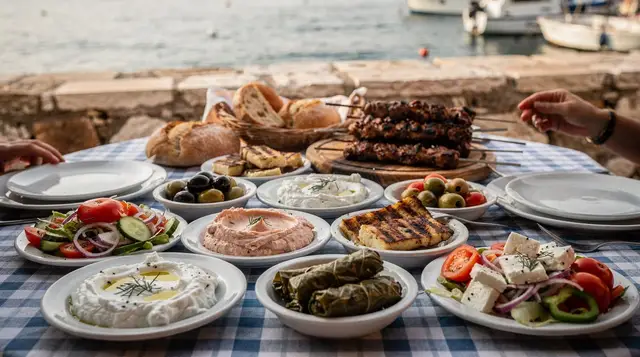
A small frying pan arrived at the table with a slab of kasseri cheese that had been seared in butter until the exterior was golden-brown and slightly crisp and the interior was molten. There was a squeeze of lemon. That was the entire dish.
The cheese itself tasted like something between halloumi and provolone but with more depth and a slight sheep-milk tang. The browned butter had absorbed the cheese’s oils during frying. The lemon cut through both. The bread I used to mop up the pan was not refined bread; it was the dense, chewy village bread that Greek bakers make correctly and which gets harder to find outside of actual villages.
Saganaki — the pan, and by extension the cooking method — is done badly all over Athens and done correctly in maybe a third of the places that serve it. The correct version uses actual Greek cheeses: kasseri, kefalotyri, graviera. The incorrect version uses imported halloumi and serves it without lemon. You can tell before it arrives by whether the menu specifies the cheese type.
A bowl of fasolada in Exarchia
Greece’s national soup is fasolada: white beans, olive oil, tomato, carrot, celery, onion, plenty of oregano. It is not a glamorous dish. It is not the dish you photograph or describe enthusiastically to people. It is the dish you remember.
I had a bowl of it in a small soup kitchen-style taverna in Exarchia on a cold January evening — the only non-Greek at three of the four occupied tables, the television on the wall showing a football match, the bread basket refilled without asking. The beans were soft from long cooking. The olive oil floated on the surface in pools. The tomato base was present but not dominant. It tasted, with no affectation intended, like the food you want when you’ve been outside in the cold for too long.
The lamb at the Sunday market
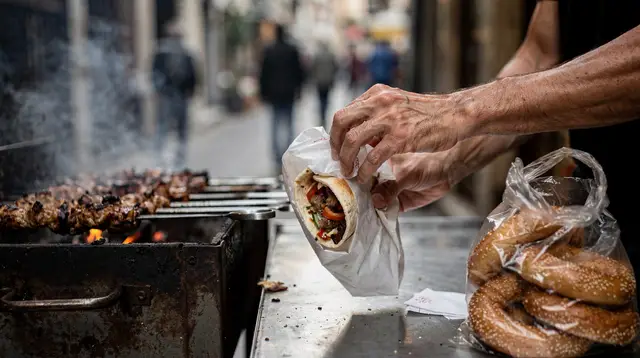
On Sunday morning in Monastiraki, the flea market spills across several streets and there are food vendors among the second-hand merchandise. One of them was grilling lamb chops — paidakia — over a small charcoal grill set up on the pavement, selling them by the piece wrapped in paper to people walking past.
I bought three and ate them standing up. The chops were small and heavily charred at the bone, the meat pink and fatty at the centre, heavily seasoned with oregano and salt. The fat had rendered completely and gone slightly crisp on the exterior. There was no sauce, no accompaniment, no table. This was the best lamb I have ever eaten and I don’t expect to equal it.
Honey and walnuts on yoghurt in a Plaka café
This is the dish that sounds most unremarkable and was, in context, possibly the most perfect. Strained Greek yoghurt — not the yoghurt sold as “Greek style” in other countries, which is a different category of thing — thick enough to hold the back of a spoon without sinking, served in a small bowl with a generous pour of thyme honey and crushed walnuts.
The yoghurt had an acidic tang that cut through the sweetness of the honey. The walnuts added a slight bitterness. The whole thing was cold and the honey had been warmed slightly by the room temperature. It was 10 a.m. and I had just come down from the Acropolis and I sat in a small Plaka café and ate it in about six slow minutes and could not imagine wanting anything else.
Where to find this quality today
The food experiences that lodge in memory are rarely in tourist restaurants or on curated food tour itineraries — they’re the spontaneous encounters with the right thing at the right time. But you can improve your odds substantially by going to the right neighbourhoods at the right time of day.
The original Athens food tour is the best guided introduction to the city’s food geography — it covers the market, the street food, the neighbourhood specialities, and gives you the vocabulary to keep finding good things after the tour ends. For a more focused experience around cheese, wine and the elevated end of Greek culinary tradition, the Athens wine and cheese experience near the Acropolis is excellent.
The best tavernas in Athens guide and the Athens food tours overview both have specific venue recommendations that have been verified rather than guessed.
Practical notes: what these dishes actually cost
None of the meals above required a splurge budget. Grilled octopus as a shared plate typically runs €12–18 in a neighbourhood taverna; saganaki is one of the cheapest starters on any menu, usually €6–9; a bowl of fasolada rarely tops €6–7; three lamb chops from a market grill cost only a few euros each; yoghurt with honey and walnuts is a €4–6 café order. The lesson isn’t that Athens is cheap across the board — it’s that the dishes worth remembering are rarely the expensive ones. If you’re planning meals around a wider budget, the Athens on a budget guide has fuller numbers, and the Athens vegetarian and vegan guide is useful if some of the above (the octopus, the lamb) don’t apply to your diet — fasolada and saganaki both travel well as vegetarian options.
What makes Athens food different
Greek cooking in Athens operates from a fundamentally different premise than most restaurant cooking in Europe. The philosophy is not addition — not building complexity through technique — but selection: the right ingredient, simply treated, at the right moment. The octopus is not transformed by the cooking; it is revealed by it. The fasolada is not sophisticated; it is correct.
This requires good ingredients and restraint in equal measure. The Athenian kitchen has historically had both. The olive oil here is among the best in the world; the cheese tradition is deep and varied; the produce from the surrounding Attica and Peloponnese regions is grown for flavour rather than transport tolerance.
The food I still dream about from Athens is not the food of a particular restaurant or a particular chef. It’s the food of a culture that knows what it’s doing with what it has. That knowledge is on offer to anyone willing to sit down, eat slowly, and let it work.
Frequently asked questions about Athens dishes I still dream about — food memories that lasted
Do I need a guided food tour to find dishes like these, or can I just wander? Wandering works, but it’s slower and more hit-or-miss — most of the memorable meals above were genuine chance encounters. A guided option like the original Athens food tour compresses the learning curve into a few hours and teaches you what to look for afterwards, which is arguably more valuable than the meal itself.
Is street food in Athens safe to eat? Yes, at the busy, high-turnover stalls that locals actually queue at — like the Sunday market grills in Monastiraki. Turnover is the key signal: food cooked to order and sold quickly is generally safer and better than anything sitting under a heat lamp.
Athens food experiences on GetYourGuide
Verified deep-linked GetYourGuide tours. Book through these links and we earn a small commission at no cost to you.
GetYourGuide does not provide product photos: on its activity cards, the picture illustrates the type of experience and is not the operator's own photo.