48 hours in Athens: a story of too much coffee, sore feet, and total awe
I arrived in Athens on a Thursday evening with a vague plan, a roller bag, and a healthy scepticism about whether a city famous for being a two-night stopover could actually earn more than two nights. Forty-eight hours later, I was extending my stay. Here’s what those two days actually looked like.
| Where | Athens, focused on the historic centre |
| Time needed | 48 hours, arriving one evening and leaving two days later |
| Cost | Roughly €120–180/person for tours, meals and a rooftop drink |
| Getting there | Walkable centre; Acropolis, Plaka, Monastiraki, Psyrri all close together |
| Best time | Shoulder season (May shown here) for cooler mornings |
The two days, at a glance
| Morning | Afternoon | Evening | |
|---|---|---|---|
| Day 1 | Acropolis + museum, early tour | Lunch in Psyrri, walk to Thissio and the Agora | Rooftop terrace at sunset, Acropolis view |
| Day 2 | Bakery breakfast in Plaka | Food tour through Central Market, Lycabettus Hill climb | Late dinner in Psyrri with the food-tour guide’s recommendation |
Day one: the Acropolis before the crowds, then getting lost on purpose
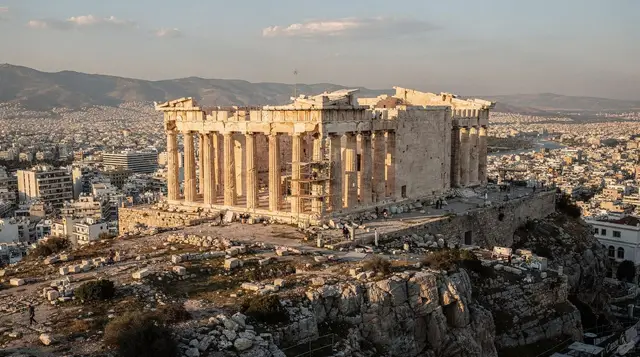
I’d booked an early morning Acropolis and museum tour weeks in advance, partly because I’d read enough horror stories about queues to take the pre-booking advice seriously. My guide, a quietly enthusiastic Athenian archaeologist, met our small group at 8 am at the foot of the hill. The first thing she said was: “Look around. This is the emptiest you’ll see this place today.”
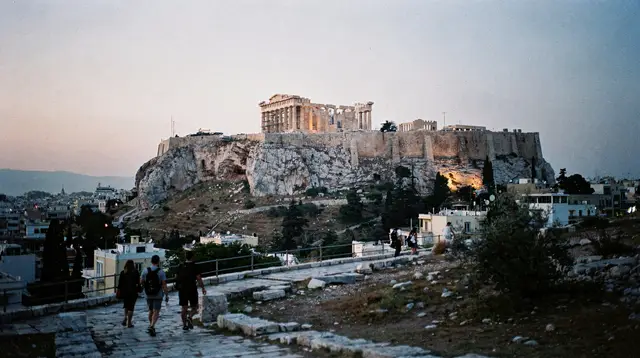
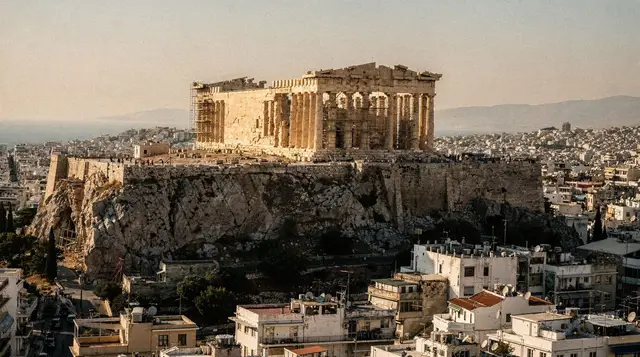
She was right. In May, by 10 am, the Propylaea gate is shoulder-to-shoulder. At 8, it’s just the birds, the first tour groups, and the long blue shadows of early morning. We moved slowly — pausing at the Erechtheion to look at the Caryatids properly, stopping at the south edge of the hill for the view over Plaka and Anafiotika below. I kept looking at the city spreading out beyond the hill and thinking: that’s all down there to explore.
The Acropolis Museum came after. Two hours that I’d thought would feel academic turned out to be one of the best museum experiences of my travelling life. The original frieze slabs alongside casts of the sections taken to London; the Caryatids standing in a row, lit from above; the city visible through the glass floor below your feet. It’s one of those places that earns every superlative thrown at it.
By 11:30, I was out, slightly stunned, and famished. I walked north into Monastiraki and made a decision that improved the rest of my time in Athens considerably: I turned away from the tourist restaurants and walked into Psyrri. A handwritten chalkboard outside a narrow doorway offered a lunch deal — Greek salad, fried courgette fritters, a small carafe of wine — for a price that felt implausible given the quality. I ate slowly and watched the neighbourhood go about its business.
The afternoon was purely impulsive. I walked south to Thissio along the pedestrianised path below the hill, then back through the Ancient Agora — where you can stand where Socrates actually argued philosophy and feel the conceptual weight of that fact land on you unexpectedly. By 4 pm I was back in my hotel, sandals off, wondering how I’d covered so much ground.
Evening: I’d heard about the rooftop bars in Monastiraki from several people and resolved to be there before sunset rather than after. I positioned myself at a rooftop terrace with a view directly toward the Acropolis at 6:30, ordered a local Assyrtiko wine, and waited. The light shifted from white to gold to amber. The limestone caught it and held it. Other people around me quietly stopped talking.
Day two: food, an unexpected hill, and a walk that tied everything together
The second morning I had no agenda until 11 am, which is exactly the right state to be in when you’re in Athens. I walked into Plaka before the tourist foot traffic built up — the lanes genuinely feel like a Cycladic village in the early morning — and found a tiny bakery selling cheese pies so fresh they were still warm. I ate one standing on a street corner and decided that this was the best possible Athens breakfast.
At 11, I joined the Athens original food tour. I almost hadn’t booked it — food tours can feel performative, with guides explaining things you could discover yourself — but this one was different. We went to Athens Central Market, where the fish and meat halls are an experience regardless of whether you intend to buy anything. We visited an olive oil specialist who talked about varietals with the focus of a wine sommelier. We tasted loukoumades — honey-soaked doughnut balls — at a place that has been serving them from the same spot since the 1960s.
The tour finished near Monastiraki at about 2:30, and I spent the afternoon doing something I’d almost talked myself out of: walking up Lycabettus Hill. It’s a proper climb — about 300 metres of steep path — but the view from the top is what Athens looks like when it’s showing off. The entire city laid out below you, the Acropolis small in the middle distance, the sea glinting toward Piraeus. I stayed until sunset and then walked slowly back down through the quieter streets of Kolonaki.
The last evening I ate late — 9:30, which in Athens is perfectly normal — at a taverna in Psyrri recommended by my food tour guide. Slow-cooked lamb, a cucumber salad with fresh herbs, retsina that I initially approached with suspicion and finished happily. The table next to me had three generations of a Greek family celebrating something. Dishes kept arriving. It lasted hours.
What surprised me most
I’d expected to be impressed by the ancient things, and I was. But I hadn’t expected the city itself — the living, imperfect, vibrant contemporary city — to be equally compelling. Athens is not just a backdrop for ruins. It’s a city that’s genuinely interesting to walk through, eat in, and spend time in.
The 48-hour frame forced a kind of focus that actually served the experience. I didn’t try to see everything. I couldn’t. What I had instead was a handful of encounters that were each, in their own way, complete: the Acropolis in morning quiet, the market alive with noise and smell, the family dinner stretching past midnight next to me. None of these required elaborate planning. Most required only showing up at a reasonable time and being willing to be surprised.
The practical layer
A few things I got right and a few I’d do differently:
What worked: booking the early morning Acropolis tour weeks ahead. The food tour on day two. Getting to the rooftop before sunset rather than after. Walking everywhere rather than taking taxis.
What I’d do differently: I skipped the Ancient Agora interior on day one because I thought I’d run out of time. I didn’t run out of time; I spent 20 minutes sitting in a café instead. The Agora — the public heart of ancient Athens, where democracy was debated and goods were traded — is one of the most humanly interesting ancient sites in the city. It’s shaded, it’s undervisited relative to its importance, and the Temple of Hephaestus standing at its western edge is one of the best-preserved ancient temples in the world. Go there.
I also wish I’d booked a night walking tour on the first evening rather than the rooftop alone. The rooftop was excellent; the context a good guide provides for what you’re looking at would have made it richer.
What 48 hours gets you and what it doesn’t
Forty-eight hours gets you: the Acropolis and museum, a solid neighbourhood overview, one excellent meal, a sense of the evening culture, a long walk. It does not get you: Delphi, Cape Sounion, or any real time in the city’s more peripheral neighbourhoods. It doesn’t get you the slow mornings where Athens reveals itself to you at its own pace.
The 2-day Athens itinerary I’d loosely followed got me to the essential landmarks. What it couldn’t plan for was the quality of the accidental discoveries: the rooftop at golden hour, the bakery at 8 am, the family celebrating next to me. Those required only a bit of wandering and a willingness to walk away from the obvious choices.
If you’re planning a first trip, read the how many days in Athens guide before you commit to two nights. Forty-eight hours is a start. Three or four days would have been better — and on my next visit, that’s exactly what I’m giving it.
The things I’d tell a friend planning the same trip
Book the early morning Acropolis tour before you book anything else. It sets the tone for the whole visit — the hill before the crowds, with a guide who can make the ancient material feel genuinely alive rather than a series of ruins to document. Once that’s in place, the rest of the planning becomes easier.
Spend at least one evening in Psyrri rather than the main Monastiraki strip. The restaurants on the tourist corridor are fine; the ones two streets into Psyrri are better and cheaper. Follow the sound of conversation and the smell of grilling meat, and don’t insist on a menu with photographs.
Walk the Thissio–Monastiraki–Plaka pedestrian loop twice: once in the morning when it’s quiet, once in the early evening when the café terraces fill up and the light on the Acropolis above starts its golden-hour transformation. It’s one of the best urban walks in Europe and it costs nothing.
Give yourself at least one morning with no fixed plan. Athens rewards the unscheduled hour — the accidental bakery, the small church you duck into out of curiosity, the street that leads somewhere unexpected. The Athens 2-day itinerary gives you the framework; the best parts of the experience will come from the gaps in it.
Frequently asked questions about 48 hours in Athens
Is 48 hours really enough to see Athens properly? It’s enough for the essential centre — the Acropolis and museum, a solid neighbourhood overview, one great meal, one memorable evening — but not for day trips like Delphi or Cape Sounion, or for the city’s quieter peripheral neighbourhoods. If those matter to you, the how many days in Athens guide makes the case for three or four days instead.
What’s the single most important thing to book in advance for a 48-hour trip? The early morning Acropolis slot. Everything else in a tight 48 hours can be adjusted or improvised, but a missed or late Acropolis booking costs you the best light, the smallest crowds, and throws off the rest of the day’s pacing.
Popular Athens tours on GetYourGuide
Verified deep-linked GetYourGuide tours. Book through these links and we earn a small commission at no cost to you.
GetYourGuide does not provide product photos: on its activity cards, the picture illustrates the type of experience and is not the operator's own photo.