How to avoid the Acropolis crowds in 2025 and beyond
The Acropolis receives around 3.5 million visitors per year. In summer, that translates to more than 10,000 people per day on peak dates, filtered through a handful of entrance gates onto a hill with a finite amount of standing room. Managing this experience well requires a few specific strategies. None of them are complicated; all of them make a real difference.
| Book ahead | Timed-entry ticket, essential in peak season |
| Best windows | 8:00–9:30 am or 5:00–7:30 pm |
| Avoid | 10 am–4 pm in July/August, and free-entry Sundays |
| Best gate | Southeast, off Dionysiou Areopagitou street |
| Best season for calm | September–October, especially after 9 am |
Crowd levels by time window
| Window | Crowd level | Notes |
|---|---|---|
| 8:00–9:30 am | Lowest | First 30 minutes after opening are quietest of the day |
| 9:30 am–4 pm | Highest | Large tour groups dominate; avoid in July/August if possible |
| 4–5 pm | Still busy | Late-morning crowd hasn’t fully cleared |
| 5:00–7:30 pm | Thinning, golden light | Second-best window overall |
| Free-entry Sundays | Extremely high | Skip if your dates happen to coincide |
Step one: book your ticket before you arrive in Athens
This is no longer optional advice — it’s the baseline. The on-site ticket booths at the Acropolis have queues that regularly stretch to 90 minutes during peak season, in full sun, on an exposed hillside. There is no reason to join that queue.
Buy a pre-booked timed-entry Acropolis ticket from home and go directly to the pre-booked ticket holders’ gate. Walk past the queue. The time you save is not trivial.
Alternatively, book a guided tour that includes entry and handles the ticketing for you — the early morning Acropolis and museum tour is designed around the opening-time timing that avoids the worst of the crowds, and the guide adds interpretive value that the self-guided visit can’t replicate.
If you’re planning to visit multiple sites, the five-site combo ticket covers the Acropolis alongside the Ancient Agora, Roman Agora, Kerameikos, and Hadrian’s Library — all on one purchase, all with skip-the-queue access.
Read the full Acropolis tickets guide before you book. It covers pricing, timed entry slots, how far in advance you need to book for different travel dates.
Step two: time your arrival correctly
The avoiding Acropolis crowds guide breaks this down in full, but the key windows are:
8:00–9:30 am: best for crowd management and cool temperatures. The site opens at 8 am; the first 30 minutes are as quiet as they get. If you have any flexibility, this is the optimal window.
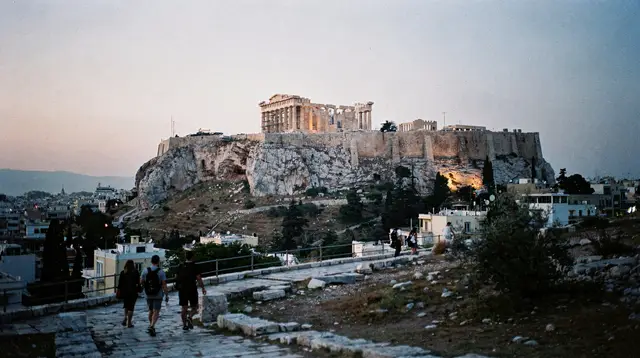
5:00–7:30 pm: the second-best window. The large organised tour groups that dominate the late morning begin to clear out in the afternoon. By 5 pm the crowd thins, the temperature has dropped from its midday peak, and the light is better than at any other time of day — the marble goes golden. The site closes at 8 pm in summer.
Avoid 10 am–4 pm in July and August. This is the worst window by every measure: hottest temperatures, highest crowd density, flattest light. If this is when you’re on the hill, you’re not doing the site a favour.
Weekdays beat weekends. In 2025, the difference is meaningful — weekends see stronger domestic tourism from Greeks visiting Athens, and Sunday midday in particular can be very crowded. Aim for Tuesday through Thursday if you have flexibility.
Skip free-entry Sundays. Greece offers free entry to state archaeological sites on certain Sundays (the first and third Sunday of each month, from 1 November to 31 March). The Acropolis on a free Sunday is extremely crowded. If the date you’re visiting happens to be one of these, factor that in.
Step three: use the right entrance gate
Most visitors queue at the main northwest entrance — the gate off Theorias Street, closest to Monastiraki. This is where the longest queues form.
There is a southeast entrance gate on the Dionysiou Areopagitou pedestrian street, near the Theatre of Dionysus. This gate is noticeably less crowded at most times of day, partly because it’s less well-signed from the tourist approach routes. If you’re coming from Plaka or the Acropolis Museum, use this gate. Your pre-booked ticket works at either entrance.
Step four: move against the crowd flow within the site
Once you’re through the gate, most visitors follow an almost identical route: up through the Propylaea, immediately toward the Parthenon, then cluster around the north-facing view, then the Erechtheion, then back down.
If you move in the opposite sequence — entering, turning immediately right toward the Erechtheion and the north edge of the hill, then looping to the Parthenon from the east — you’ll spend your first 20 minutes where other people are finishing, and by the time you reach the Parthenon from the east, you’ve had time to settle in before the main cluster hits.
The view from the south edge of the hill — looking out over Anafiotika and Plaka toward the sea — is consistently less crowded than the north and west sides and is arguably the most interesting perspective on how the Acropolis relates to the city below it.
Step five: spend time at the adjacent sites
One of the most effective crowd-avoidance strategies isn’t about the Acropolis itself — it’s about where you go afterwards. The Ancient Agora, immediately northwest of the Acropolis hill, is one of the most interesting and most under-visited ancient sites in Athens. It’s shaded by trees, it has the beautifully preserved Temple of Hephaestus, and on a busy summer day it contains a fraction of the Acropolis crowd.
The Theatre of Dionysus, on the south slope below the Parthenon, is where Athenian tragedy was born — Sophocles, Aeschylus, Euripides all had premieres here. It’s directly on the Acropolis site but almost always much quieter than the hill above.
The Odeon of Herodes Atticus, a well-preserved Roman theatre on the southwest slope, is used for performances during the Athens Epidaurus Festival every summer. The exterior is visible from the site for free even without a concert ticket.
Using a guide service effectively
If you’ve never been to the Acropolis before, a guided visit significantly improves the experience regardless of crowd levels. The interpretive context — what each building was for, how the Parthenon changed over time, what the Propylaea gate system meant architecturally — makes everything more legible. And a guide knows which approach routes avoid the worst clusters, which time windows to use within the site for photographs, and how to sequence the visit for the best experience.
The Athens highlights walking tour covers the Acropolis alongside Monastiraki, Plaka, and the central food market — a useful way to orient yourself in the city as a whole while getting the site with guided interpretation.
The 2-day Athens itinerary and 3-day itinerary both incorporate the Acropolis timing strategies outlined here. And if you’re connecting from a cruise port, the Athens cruise port and Acropolis tour manages the entire day — including Piraeus port transfers — so you don’t spend your limited time navigating logistics.
Managing crowds within the site
Even with a well-timed arrival, the site itself has congestion points. Knowing where crowds cluster helps you navigate around them.
The Propylaea gate: the main entrance structure is a bottleneck. In the morning, the crowds flow through from west to east (the natural uphill direction). Moving against this flow — entering through the Propylaea but then immediately turning right to explore the north edge before heading to the Parthenon — puts you out of step with the main movement and consistently less crowded positions.
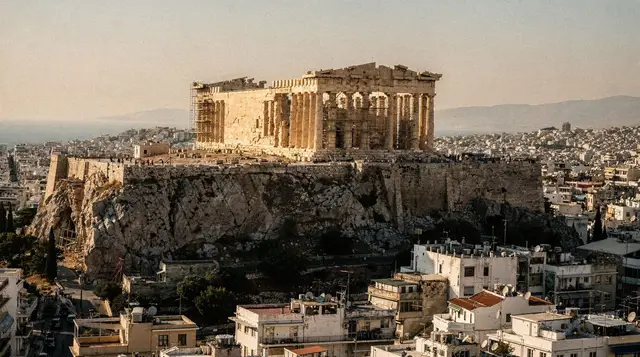
The Parthenon north face: this is where everyone positions themselves for the classic photograph. The east and south sides of the Parthenon are consistently less crowded and, depending on the time of day, have better light. The south side also has the direct view over Plaka and Anafiotika — one of the most beautiful views from the hill.
The Erechtheion Porch of the Caryatids: this faces north and is most photographed from a platform directly in front of it. The crowds cluster on that platform. Walking around to the east side gives you a different angle and space to breathe.
The Theatre of Dionysus: on the south slope below the main hill, this site is within the Acropolis ticket area but is almost always much quieter than the hilltop. The theatre is where Sophocles, Aeschylus, and Aristophanes had premieres — it’s one of the most historically charged performance spaces in the world — and you may find yourself there essentially alone even on a busy summer day.
One more timing consideration: the shoulder season
The crowd advice above is written primarily for the peak summer months (June through August). In spring (April–May) and autumn (September–October), the same strategies apply but produce even better results. A 9 am Acropolis visit in late October has the site feeling almost private. The weather is mild, the light is warm and low, and the autumn colours on the surrounding hillsides add a dimension that summer doesn’t offer.
If your travel dates are flexible, read the best time to visit Athens guide — May and October are the most consistent recommendations for the ideal combination of weather, light, and manageable crowd levels.
The bottom line: three strategies cover 90% of the crowd problem. Book in advance, arrive before 9:30 am or after 5 pm, and use the southeast entrance gate. Everything else is optimisation toward a better experience on top of an already good one.
Frequently asked questions about How to avoid the Acropolis crowds in 2025 and beyond
Does the pre-booked ticket guarantee a specific entry time, or just entry that day? It’s a timed-entry slot — you’re expected to arrive within your booked window, though most sites allow some flexibility either side. Arriving well outside your slot risks being asked to wait or rebook, so treat the time as a real commitment, not a loose suggestion.
Is the southeast gate harder to find, and is it worth the extra walking? It takes a little more orientation since it’s less signposted from the main tourist approach routes, but it’s genuinely worth it — the queue difference at peak times can be significant. If you’re coming from Plaka or the Acropolis Museum, it’s actually the more direct route, not a detour.
Acropolis & ancient site experiences on GetYourGuide
Verified deep-linked GetYourGuide tours. Book through these links and we earn a small commission at no cost to you.
GetYourGuide does not provide product photos: on its activity cards, the picture illustrates the type of experience and is not the operator's own photo.