Athens vs other European capitals: how it actually compares
I’ve spent time in most of the cities that get described as “must-see European capitals.” Rome, Lisbon, Prague, Vienna, Amsterdam, Barcelona. I visited Athens for the first time expecting it to feel like one more entry in a familiar category — a city with old things and good food and a reputation slightly larger than the reality. It didn’t feel like that at all. Here’s how Athens actually sits in the European capital conversation.
| Strongest suit | Ancient sites directly woven into daily city life |
| Closest comparison | Rome, for ancient-city density; Lisbon, for neighbourhood character |
| Weaker point | Tourist-site interpretation and signage vs Rome or Amsterdam |
| Cost vs Western Europe | Meaningfully cheaper for equivalent quality |
| Evening culture | Among the latest and most genuine in Europe |
Athens vs the usual comparisons
| Athens | Rome | Lisbon | Prague | |
|---|---|---|---|---|
| Ancient sites | Dominant, visible from daily city life | Extraordinary, more scattered through the city | Minimal by comparison | Minimal by comparison |
| Neighbourhood character | Plaka, Psyrri, Anafiotika all distinct | Trastevere is the closest equivalent | Alfama, heavily discovered | Žižkov, still fairly local |
| Food cost vs quality | Strong value, indigenous wine varietals | Excellent but pricier | Strong value | Strong value |
| Evening culture | Very late, dinner at 10 pm is normal | Late, but earlier than Athens | Late, similar rhythm to Athens | Earlier overall |
| Cost of a 3-day trip | Generally cheaper than all three | Mid-to-high | Cheaper | Cheaper |
The ancient layer
Athens has something no other European capital has: a genuinely intact ancient city on top of which the modern city was built and around which it still organises itself. Rome comes closest — the Forum, the Colosseum, the Palatine Hill are all still there, extraordinary and embedded in the urban fabric. But Rome’s ancient monuments are scattered through the city in a way that makes them feel like exhibits within a museum of modernity.
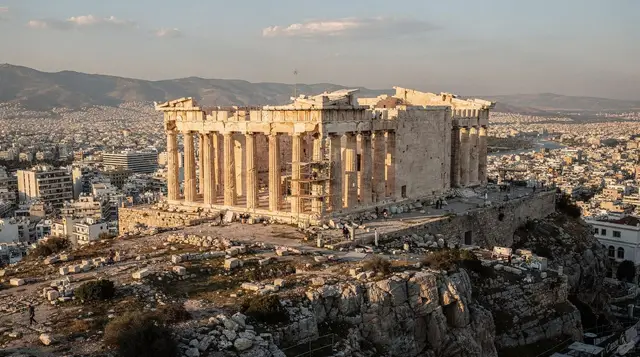
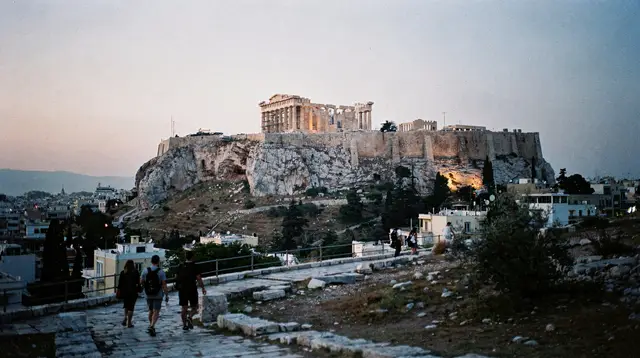
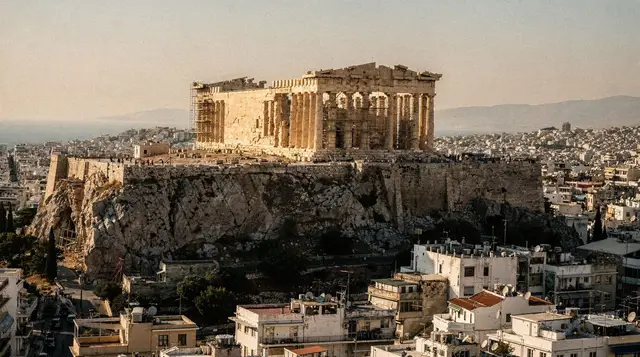
Athens is different. The Acropolis isn’t embedded in the city — it’s above the city, on a limestone hill that’s been inhabited and sacred for 3,500 years, visible from most of the central neighbourhoods. Standing in Monastiraki square and looking up at the Parthenon, you’re not experiencing a relic preserved in a museum context. You’re looking at the original location of a building that shaped the entire trajectory of Western architecture and civic thought. The weight of that is hard to shake.
The Acropolis Museum, which I hadn’t expected to rate as highly as the site itself, also has no close equivalent in European comparative terms. It’s purpose-built, thoughtfully curated, and holds the original sculptures from a site that most other world-class archaeology museums have been trying to acquire pieces of for centuries. If you visit the British Museum in London and see the Parthenon Marbles, you’ll spend time in Athens standing in the spaces where they belong.
The Acropolis, Ancient Agora, Roman Agora, Kerameikos, and Hadrian’s Library — five sites that in any other city would each be the headline attraction. In Athens they’re the ancillary programme. Each site is ticketed separately on the official Hellenic Heritage ticketing portal; a third-party combo ticket is also sold.
The neighbourhood character
Plaka is Athens’s old town — a tourist area, certainly, but one with genuine residential life still running through it. The lanes are narrow and step-connected, the architecture is vernacular, and Anafiotika, the sub-neighbourhood built directly into the northern slope of the Acropolis rock by 19th-century builders from the Cycladic island of Anafi, is a direct visual quotation of a whitewashed island village transplanted into a European capital. It’s strange, beautiful, and entirely genuine.
Psyrri is the more honest comparison point to neighbourhoods like Alfama in Lisbon or Žižkov in Prague: formerly working-class, now partially creative-class, with good food and a street-art scene and late bars and the kind of slightly rough-edged charm that gets described as “authentic” in every travel piece written about every city. But unlike Alfama, which has been so thoroughly discovered that its authenticity is now largely curated, Psyrri still has actual workshops and printing shops and hardware stores alongside the restaurants and cocktail bars.
The food question
Athens is not as dominant a food city as San Sebastián or Barcelona or Copenhagen. But it’s better than almost everywhere else. The combination of excellent raw materials — the olive oil, the cheeses, the fish from multiple seas, the seasonal vegetables — with a genuinely deep culinary tradition produces food that rewards attention. The Athens food tours are one of the better introductions to a city’s food culture that I’ve encountered anywhere in Europe; the original Athens food tour hits markets, family tavernas, and specialist shops in a way that makes Rome’s food tours look cursory.
The wine is a specific point of distinction. Greece has indigenous grape varieties — Assyrtiko, Xinomavro, Agiorgitiko, Moschofilero — that are genuinely unlike anything grown elsewhere, and the wine culture in Athens is advanced enough that you can drink very well without paying Parisian prices. The Athens wine and cheese experience with Acropolis views makes this accessible even if you only have an evening to spare.
Where Athens is harder than other capitals
The city is not frictionless. Taxi apps and public transport have improved substantially, but Athens requires a bit more navigation effort than Lisbon or Vienna. The heat in summer is more intense than almost anywhere else on the European capital circuit. Some of the areas around Omonia Square can be rough; the tourist literature tends to gloss over this, and it’s worth being aware of.
The tourist infrastructure — the quality of interpretation at sites, the clarity of signage, the museum shop offerings — doesn’t quite reach the heights of Rome or Amsterdam. Some of the restaurants in the immediate orbit of Monastiraki Square trade on location rather than quality. These are relatively minor complaints, but they’re real.
The surprise factor
What distinguishes Athens from the other European capitals I’ve visited is the gap between expectation and reality. Rome, Lisbon, Prague — all are excellent cities that are roughly as good as their reputation suggests. Athens tends to be rated lower (the pollution, the graffiti, the rough edges) and experienced as higher by many first-time visitors who discover the neighbourhood character, the food, the evening culture, and the extraordinary concentration of ancient significance.
The Athens highlights walking tour is a good introduction to that totality — not just the sites, but the city as a living place. And the Athens highlights walking tour covers Monastiraki, Plaka, the Acropolis base, and the central market in a way that gives you a genuine picture of the place within a few hours.
The evening culture comparison
This is where Athens most obviously separates itself from other European capitals. Lisbon has good evening culture; Barcelona is famously late; but Athens operates on a schedule that is genuinely different. Dinner at 10 pm is normal. Tavernas in Psyrri are still filling tables at midnight on a Tuesday. The concept of a “nightcap” is foreign because the concept of dinner being over before 11 pm is also foreign.
The result is an evening culture that feels organically paced rather than performed — people eating and drinking because they want to, not because a clock tells them this is dinner time. For a visitor used to the 7:30 pm dinner service of Northern European cities, it takes a single evening in Athens to understand that you’ve been eating dinner at the wrong time your whole life.
The Athens night walking tour is a useful introduction to the evening city — the streets at 9 pm, the taverna culture, the way the neighbourhoods change after dark. And if you want to see the nightlife dimension properly, the original VIP pub crawl covers the bar and club landscape in Monastiraki and Psyrri with local guides.
The value comparison
Athens is notably less expensive than most Western European capitals for the same level of travel quality. A meal that would cost €40 per person in Vienna or Amsterdam costs €18–25 in Athens. Museum tickets are modest. Accommodation in centrally located hotels is cheaper than equivalent options in most Mediterranean capitals.
This cost advantage is one reason why Athens makes sense as a destination in its own right, not just a gateway. You get more for the same budget: more meals, more wine, more museum visits, one more day trip. The Athens on a budget guide shows exactly how the numbers work.
Is Athens worth visiting? Yes — and I say this as someone who arrived sceptical. It belongs in the first tier of European capitals, not because it’s perfectly polished, but because it offers something the polished ones don’t: the ancient world, directly legible, still present in the geography of the living city. That’s not replicable anywhere else in Europe.
The specific things Athens does better than anywhere else
A list, honestly made:
The ancient site within the city: the Acropolis is not a museum relic or an isolated archaeological zone. It’s the dominant feature of an active capital city, visible from the supermarkets and the café tables and the metro platforms. No other European capital has an equivalent.
The combination of outdoor ancient sites: the Acropolis, the Ancient Agora, the Kerameikos cemetery, the Roman Agora, the Temple of Olympian Zeus, and Hadrian’s Arch can all be walked to in an afternoon from the same central point. In Rome, the comparable sites are spread across the city.
The wine: Greek wine, especially from indigenous varietals, is genuinely underrated on the European wine map. The Athens wine and cheese experience with Acropolis views is a good starting point, but the better discovery is navigating wine bars in Thissio and Psyrri and asking for something local and specific.
The evening atmosphere: specifically the late-dinner culture, the taverna pace, and the quality of people-watching from an outdoor table at 10:30 pm. No other Northern European capital does this; Athens, like Lisbon and Seville, has cracked the formula for cities that come alive after dark.
Read the is Athens safe guide before you book if that’s part of your assessment, and the best time to visit Athens for the seasonal considerations. Then book the flights.
Frequently asked questions about Athens vs other European capitals
Is Athens as walkable as Rome or Lisbon? Broadly yes for the historic centre — Plaka, Monastiraki, Psyrri, Thissio and the Acropolis area are all close together and comfortably walkable. It’s less consistently walkable than Lisbon once you go further out, since Athens sprawls more, but the getting around Athens guide covers the metro network that fills the gap well.
Which European capital should I pick if I only have time for one this trip: Athens or Rome? If ancient sites are the priority and you want them woven into an active, affordable capital rather than a museum-city experience, Athens edges it, partly on value. If you want the single largest concentration of Renaissance and Baroque art and architecture alongside the ancient layer, Rome has the edge. Both reward more than a rushed 48 hours — see the how many days in Athens guide for planning either as a full trip rather than a stopover.
Popular Athens tours on GetYourGuide
Verified deep-linked GetYourGuide tours. Book through these links and we earn a small commission at no cost to you.
GetYourGuide does not provide product photos: on its activity cards, the picture illustrates the type of experience and is not the operator's own photo.