Is Athens worth visiting? An honest answer
The question comes up in travel forums constantly: “Is Athens actually worth visiting, or is it just a stopover for the islands?” It’s a fair question, and it deserves an honest answer rather than the automatic enthusiasm of a promotional travel piece. Here’s my genuine assessment.
| Short answer | Yes, for almost any type of traveller who prepares a little |
| Minimum stay to judge fairly | 3 nights |
| Best for | History lovers, food travellers, city walkers |
| Biggest drawback | Summer heat, and the touristy core if you don’t wander |
| Best time to visit | April–May or Sept–Oct |
The case for Athens, honestly made
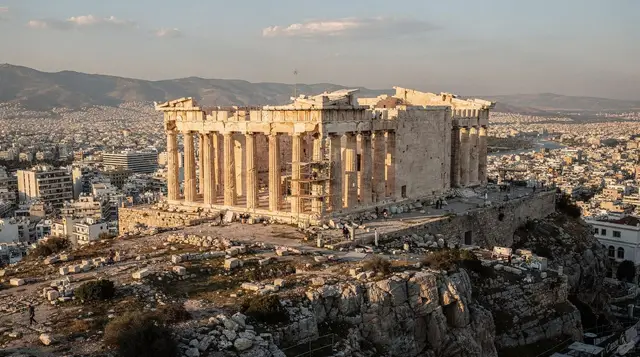
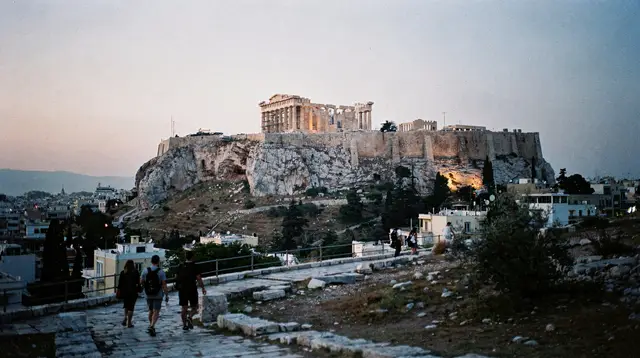
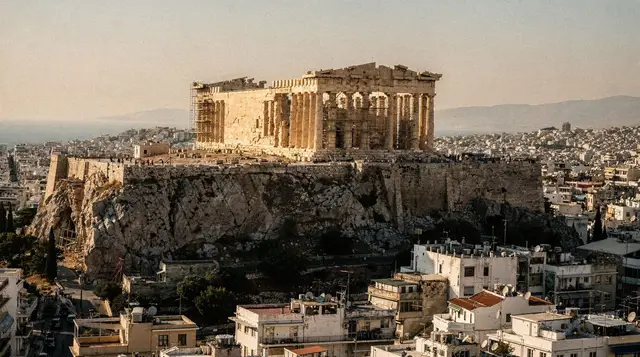
The Acropolis is real. I write this as someone who has seen a lot of ancient sites and has become, over the years, somewhat resistant to the hype that surrounds them. The Acropolis is different. It’s not primarily the architecture — though the Parthenon, seen in person, is more impressive than any photograph conveys — it’s the location. A limestone hill, rising 150 metres above the city, crowned by a building constructed 2,500 years ago that has influenced every civic and religious building in the Western world since. You stand on the south edge of the hill and look out over Plaka and Anafiotika toward the sea, and the entire city organises itself around this hill in a way that feels not historical but present.
The early morning Acropolis tour gives you the site before the crowds, with interpretive context that makes everything more legible. Even if you normally avoid guided tours, this one is worth it.
The Acropolis Museum is one of the finest museums I’ve visited in Europe. Not because it has the most objects — it doesn’t — but because it’s purpose-built, beautifully lit, and curated around a single coherent subject: the hill above your head and the 3,000 years of human activity it represents. The Caryatids from the Erechtheion stand in a row in natural light. The frieze from the Parthenon — the sections still in Athens — runs along the top floor, with plaster casts filling the gaps where the originals were taken to London. It’s a quiet, powerful argument about what belongs where.
Beyond the ancient material: Athens is a genuinely interesting contemporary city. Psyrri has the particular urban vitality of a neighbourhood that’s half creative-class, half still itself. The food is excellent — the Athens food tours will take you into markets and family kitchens that no amount of independent wandering would find easily. The Athens original food tour is among the better food experiences in any European city. The evening culture — the late dinners, the rooftop bars, the taverna culture of eating slowly with wine — is worth experiencing on its own terms.
The legitimate drawbacks
Athens is not frictionless, and pretending otherwise does potential visitors a disservice.
Parts of the city are rough. The area around Omonia Square has been struggling with drug use and petty crime for years; the streets immediately around the Central Market have always been edgy; Exarchia has had its political volatility. None of these areas are dangerous in the way that “dangerous” reads in certain cities — violent crime targeting tourists is genuinely rare — but they’re not the curated-for-visitors streetscapes of Vienna or Amsterdam. Read the is Athens safe guide for a calibrated assessment.
The tourist zone is touristy. The restaurants on and immediately around Monastiraki Square know that their customers are passing through and won’t return, and price and quality accordingly. A visitor who stays only in the tourist corridor — Monastiraki, main Plaka, Syntagma — will have a mediocre food and retail experience. Getting two streets further in any direction fixes this immediately, but it requires a bit of willingness to wander away from the obvious.
The summer heat is significant. In July and August, the Acropolis hill at noon is a serious physical challenge. The city was not built for air conditioning and the August heat affects everything: the pace of the day, the energy levels, the quality of the outdoor sightseeing experience. The Athens in August guide addresses this properly; the short version is that the heat is manageable with the right daily structure.
The island question. Athens is often positioned as a gateway — you fly in, do two nights, then take the ferry to Santorini. For many travellers, this is genuinely the right itinerary. But Athens is not just a gateway, and treating it as one means leaving before the city has had a chance to show what it actually is. Three nights rather than two makes a considerable difference.
Who is Athens best for?
History and archaeology enthusiasts: emphatically yes. The concentration of important ancient material in Athens — the Acropolis, the Agora, the National Archaeological Museum — has no equal anywhere in Europe.
Food travellers: yes, with the caveat that you need to eat in the right places. The Athens food tours and the neighbourhood tavernas in Psyrri and Thissio will satisfy serious food travellers.
City walkers: yes. Athens is one of the better walking cities in Europe — the pedestrianised zone around the Acropolis base, the neighbourhood street life, the hills with views — all reward foot travel.
First-time Greece visitors: yes. Athens is a natural starting point — logistically (it’s the main international gateway), historically (it’s where the classical civilisation that defines Greece in the Western imagination was centred), and practically (understanding Athens makes the islands more legible, not less).
Travellers who want everything to be easy: with caveats. Athens requires slightly more active engagement than a city like Vienna or Prague, where the tourist infrastructure is flawless. If you prepare properly — book Acropolis tickets in advance, know which neighbourhoods to explore, have a food strategy — the experience is excellent. Walking in unprepared and expecting everything to fall into place can produce a more mixed result.
Athens as a gateway, compared
| 2 nights (gateway only) | 3+ nights (proper visit) | |
|---|---|---|
| What you see | Acropolis, Plaka, one meal out | Acropolis, museum, neighbourhoods, a day trip |
| Impression left | ”Nice ruins, busy square" | "One of the better city breaks in Europe” |
| Food experience | Whatever’s near the hotel | Proper tavernas in Psyrri or Koukaki |
| Common regret | Feeling rushed, seeing only the surface | Rarely — the extra night is what most visitors wish they’d added |
This table is really the whole argument in miniature: Athens on two nights is a reasonable gateway experience; Athens on three or more is a genuinely different, better trip, and the extra night costs less than most people assume.
The verdict
Yes, Athens is worth visiting — genuinely, without the asterisk. It’s among the more interesting cities I’ve spent time in, it offers things no other city offers, and the combination of ancient history, neighbourhood character, good food, and Mediterranean warmth makes a well-planned visit satisfying at multiple levels.
The experience question: what kind of traveller gets the most from Athens
The travellers who leave Athens most enthusiastic tend to share a few characteristics: they’re interested in history and don’t need to be to enjoy museums; they’re willing to walk; they eat with curiosity rather than caution; they’re flexible enough to follow a recommendation from a local rather than a list.
The travellers who leave Athens most disappointed also share characteristics: they expected everything to be convenient and frictionless; they ate in the restaurants closest to the hotel; they tried to cover too many sites in too little time; they spent their evenings watching English-language TV in the room because they were tired.
This sounds like a distinction about personality type, and it partly is. But it’s also a distinction about preparation. The traveller who reads the Acropolis tickets guide before arriving, who books the Athens highlights walking tour for the first morning, who identifies a few tavernas in Psyrri in advance — that traveller and the one who shows up with no plan and ends up queuing for two hours in the sun are having different experiences of the same city.
The things that genuinely surprised me
I expected the ruins. I didn’t expect the quality of the food. I didn’t expect the rooftop bar sunset to make other people go quiet. I didn’t expect the Acropolis Museum to be as good as it is. I didn’t expect Anafiotika — a neighbourhood that looks like it was dropped from the Cyclades onto the side of a cliff — to exist at all. I didn’t expect to find a city that was this alive at 11 pm on a Tuesday, with families and old couples and young professionals all eating together in the same neighbourhood.
The Athens wine and cheese experience with Acropolis views captures one of the pleasures of Athens that gets overlooked in the ancient-monument focus: the quality of the local wine and the culture of slow, convivial eating and drinking. Athens does this as well as anywhere in the Mediterranean.
Read how many days in Athens before you book. Three days is the right minimum for a visit that gets past the surface. The Athens 3-day itinerary is a reasonable framework. And don’t be put off by the voices that tell you Athens is just a stopover — those voices are usually speaking from a two-night visit that didn’t give the city enough time, or from a trip that was spent in the wrong places eating the wrong food. Athens is not just worth visiting. For the prepared and curious traveller, it’s one of the genuinely great city experiences in Europe.
Frequently asked questions about Is Athens worth visiting? An honest answer
Is Athens worth visiting if I’m not particularly interested in ancient history? Yes, though the calculation changes slightly. The food scene, the neighbourhood walking, the coffee culture, and the evening life all stand on their own regardless of how you feel about ruins. Pair a lighter dose of ancient sites with more time in Psyrri and Koukaki and the trip still delivers.
How many nights in Athens is enough to form a fair opinion? Three nights is the honest minimum. Two nights is workable as a gateway stopover before the islands, but most of the disappointed reviews you’ll read online come from visitors who gave the city less time than that and judged it on the tourist core alone.
Popular Athens tours on GetYourGuide
Verified deep-linked GetYourGuide tours. Book through these links and we earn a small commission at no cost to you.
GetYourGuide does not provide product photos: on its activity cards, the picture illustrates the type of experience and is not the operator's own photo.