Greek Orthodox Easter in Athens: what it's actually like
Greek Orthodox Easter falls on a different date than Western Easter — sometimes the same weekend, sometimes weeks apart — and if your trip to Athens happens to coincide with it, you are in for something genuinely extraordinary. I arrived in Athens on a Thursday before Orthodox Easter without fully understanding what I’d stepped into. By Saturday night, I had a complete picture.
| Where | Citywide, with the biggest gatherings around Monastiraki and neighbourhood churches |
| Cost | Free to attend; book accommodation and restaurants months ahead |
| Time needed | Holy Thursday evening through Easter Sunday lunch, ideally |
| Getting there | Any Athens neighbourhood church, or the main squares near Monastiraki |
| Best time | Good Friday evening (Epitafios) and the Holy Saturday midnight service |
Holy Week in Athens
The days leading up to Easter Sunday are called Holy Week — Megali Evdomada in Greek — and the city observes them with a seriousness and warmth that co-exist in a way that feels uniquely Greek. Shops close early. Traffic around the major churches becomes a polite chaos. Bakeries fill up with tsoureki, the brioche-like Easter bread plaited with red-dyed eggs, and kourabiedes, the white almond shortbreads that also appear at Christmas. The city doesn’t feel subdued exactly — Athens is never subdued — but there’s a different quality to the noise.
Good Friday is when the atmosphere becomes unmistakable. Every neighbourhood church stages an Epitafios procession — a flower-covered bier representing Christ’s burial, carried slowly through the streets with candles and chanting while a brass band plays the funeral march. In Plaka, which sits directly below the Acropolis, the procession winds through the narrow whitewashed lanes with astonishing atmospheric effect. The entire neighbourhood comes out: old women in black, teenagers on phones who nonetheless hold candles, children sitting on parents’ shoulders.
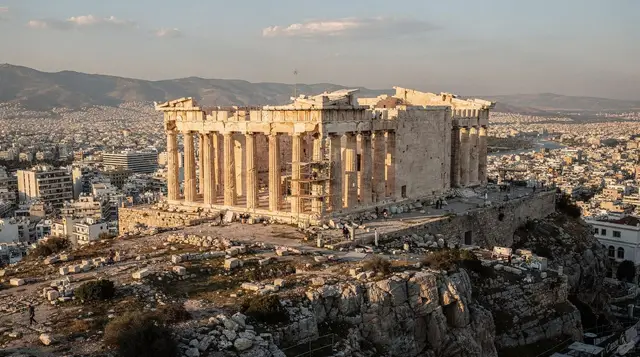
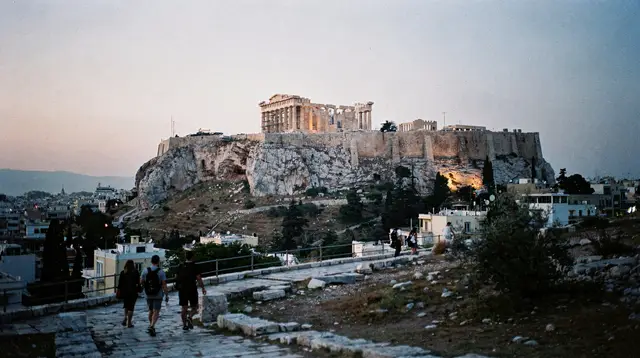
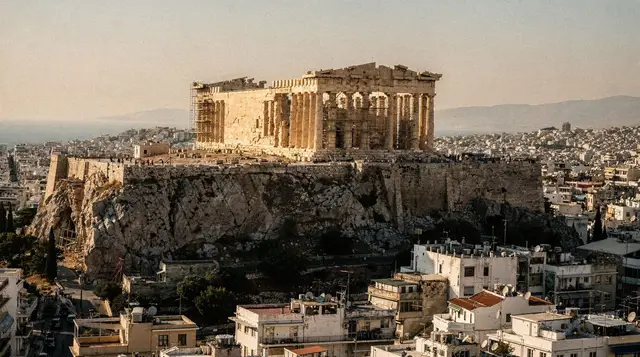
I stood in a lane in Plaka on Good Friday evening and watched the procession pass by candlelight with the Acropolis lit up on the hill above. It’s one of the most striking images I’ve seen in years of travel.
Holy Saturday and the midnight service
This is the centrepiece of Greek Easter, and if you experience nothing else, experience this.
The midnight resurrection service — Anastasi — takes place simultaneously in every Orthodox church in Greece. In Athens, the biggest public celebration traditionally takes place around the Monastiraki area and in the squares around the Acropolis. As midnight approaches, churches fill completely. People crowd into squares and streets outside, holding unlit candles.
At the stroke of midnight, the priest emerges and calls: “Christos Anesti” — Christ is risen. The response: “Alithos Anesti” — truly, he is risen. The first flame passes from candle to candle from the altar, then from person to person through the congregation, then outside into the streets, passed hand to hand until the entire neighbourhood is lit. It spreads faster than you’d expect — within three minutes of midnight, thousands of candles are burning simultaneously and the streets are filled with light.
At that same moment, fireworks explode from every direction. In Athens this can be intense — large professional fireworks from organised locations, but also neighbourhood-level fireworks set off from rooftops and street corners in what sounds like joyful chaos. Church bells ring across the city. People embrace.
I was standing in a small square near Anafiotika with strangers around me, holding a candle someone had lit for me when they saw I didn’t have one. I’d been given the candle by a woman of about 70 who smiled and said “Christos Anesti” in the direction of my flame. I said it back, and she seemed pleased.
Easter Sunday: the lamb, the wine, the tables
After the midnight service, Greeks traditionally go home to eat magiritsa — a lamb offal soup with rice and lemon that breaks the Lenten fast — and then sleep. Easter Sunday itself is the big feast.
If you’re in Athens with Greek friends or acquaintances, the Easter Sunday lunch is the social event of the year: a whole lamb on a spit, cooked slowly from the morning, with innumerable side dishes, wine, and tsikoudia or tsipouro for those who insist. Family tables go on for hours. In the parks and squares of Thissio and Plaka and along the hills below the Acropolis, you’ll see families setting up portable spits as early as 8 am, the smell of roasting lamb drifting through the entire neighbourhood by noon.
Most restaurants are closed on Easter Sunday (the feast is a home occasion), but the ones that are open will typically be doing lamb and all the traditional sides. Book well in advance.
Choosing where to watch the midnight service
Not every neighbourhood church experience is the same, and picking one deliberately makes a real difference to the evening.
| Neighbourhood | Atmosphere | Best for |
|---|---|---|
| Monastiraki squares | Large, loud, fireworks-heavy | First-timers who want the full spectacle |
| Plaka side streets | Intimate, candlelit, Acropolis backdrop | A quieter, more visually striking experience |
| Anafiotika | Very small, mostly locals | Travellers who want to feel genuinely absorbed rather than watching from outside |
| Thissio | Family-oriented, spacious, good Acropolis sightlines | Visiting with children |
Arrive at your chosen spot by 11 pm at the latest — later than that and you’ll be squeezed to the edges of a crowd rather than positioned to see the priest emerge with the flame.
Good Friday during the day
Good Friday itself is a quieter, more solemn day before the evening’s Epitafios processions. Many shops close by early afternoon, and the mood across the city shifts noticeably — this is not a day for boisterous sightseeing. If you’re not attending a service, it’s a good day to visit the Acropolis Museum, which typically keeps modified but open hours, or to walk the quieter parts of Plaka before the evening processions fill the streets.
Practical notes for visiting at Easter
The timing of Orthodox Easter shifts each year relative to the Western calendar — check before you book. In 2024, it fell in early May, meaning the weather was already warm and the days long. In some years it falls in April, occasionally in late March.
Expect reduced hours or closures at museums and major sites during Holy Week, particularly Good Friday. The Acropolis itself may have modified hours — check before you go, and consider booking a pre-booked Acropolis entry to avoid any booking-window issues at the gate.
Hotels fill up quickly for the Easter weekend. Athens sees strong domestic tourism during this period — Greeks from other cities often come to the capital for the celebrations, and international visitors who time their trip deliberately are a growing share of Easter weekend guests. Book accommodation several months in advance.
Transport around midnight on Holy Saturday is complicated — taxis are in high demand, metro services may be modified, and the streets around major churches become pedestrian zones. Build that into your plans: find a position before 11 pm and stay put.
Is it worth timing a trip around?
Emphatically yes, if you have any flexibility. Easter is the moment when Athens is most fully itself — most concentrated in its identity, most open to strangers participating in the celebration, most visually arresting. The city does not put on a tourist performance. This is simply what Greeks do at Easter, and visitors are welcome to watch, follow, and be absorbed into it.
Red eggs, tsoureki, and the food of Easter
Easter food in Greece is specific and deeply traditional, and food travellers who visit during Holy Week have access to things that aren’t available the rest of the year.
Tsoureki is the Easter bread — plaited brioche-like loaves flavoured with mahlab (a cherry stone spice) and mastic, with hard-boiled eggs dyed deep crimson nestled into the folds. The red colour represents the blood of Christ in Orthodox tradition; cracking your egg against someone else’s on Easter Sunday is a ritual game — whoever’s egg survives intact wins, and is said to have good luck for the year. Bakeries in Athens sell tsoureki throughout Holy Week, and the smell wafting from the windows is one of the distinct sensory experiences of the season.
Magiritsa is the soup eaten after the midnight resurrection service to break the Lenten fast. It’s made from lamb offal — liver, lungs, heart — with rice, spring onions, dill, and a sharpening of lemon. The taste is complex and rich in a way that registers as exactly right at 1 am after a night of candles and church bells. Most Greeks eat it at home; a few Athens tavernas in Psyrri and Plaka serve it specifically on Holy Saturday night. Ask your hotel for a recommendation.
The Easter Sunday lamb is the centrepiece. If you’re in Athens with any Greek connections, the invitation to a family Easter lunch is one of the most generous things that can happen to you as a traveller. If you’re eating independently, look for tavernas in Thissio and Monastiraki advertising whole-roast lamb — kokoretsi (lamb offal wrapped in intestine and roasted on a spit) is also traditional and extraordinary, if you approach it with an open mind.
For a full picture
For a full picture of Athens and the best time to visit, read the best time to visit Athens guide. Easter sits near the top of that list for most travellers willing to plan around the date.
If you’re combining the Easter visit with sightseeing, the Athens 3-day itinerary gives you a framework that can be adjusted to put the midnight service at its centre. Budget accommodation at Easter fills six to eight weeks out; aim for earlier. And bring a candle to the midnight service — buy one at any church in the days before, for a token amount — so you have one ready to light when the flame passes through the crowd.
Sightseeing during Easter week
One practical note: many state museums and archaeological sites have modified opening hours during Holy Week. Good Friday is the most significant closure day. The Acropolis may operate on reduced hours; call ahead or check the Greek Ministry of Culture website a few days before you travel.
On the flip side, Easter week is not the absolute peak of tourist season — that’s July and August — and the combination of spring weather, the extraordinary Easter events, and slightly lower-than-summer tourist numbers makes it genuinely one of the best times to visit. A pre-booked Acropolis timed-entry ticket remains advisable, but you won’t face the same queue pressure as a midsummer weekend.
The weather in late April (when Orthodox Easter often falls) is typically excellent for sightseeing: temperatures in the low-to-mid 20s, occasional showers but mostly sunshine, the spring wildflowers still in evidence on the Acropolis hill and the slopes below. It’s the Athens that locals who have moved away dream about when they’re stuck in winter somewhere cold. Come in Easter week and you’ll understand why.
Frequently asked questions about Greek Orthodox Easter in Athens
Do I need to be Orthodox or religious to attend the midnight service? No. Visitors are welcome at every stage — the Epitafios processions and the midnight Anastasi service are public, outdoor-facing events, and Greeks are generally pleased to see travellers taking a genuine interest. Dress respectfully, keep phone use discreet during the service itself, and follow the lead of people around you for the candle-lighting and the “Christos Anesti” exchange.
Are restaurants open on Easter Sunday in Athens? Most are closed, since the day is a home-and-family occasion built around the whole roast lamb. A handful of tavernas, particularly in Thissio and Monastiraki, stay open and serve the traditional lamb menu, but they fill up fast — book as far ahead as you can, ideally as soon as your travel dates are confirmed.
Popular Athens tours on GetYourGuide
Verified deep-linked GetYourGuide tours. Book through these links and we earn a small commission at no cost to you.
GetYourGuide does not provide product photos: on its activity cards, the picture illustrates the type of experience and is not the operator's own photo.