Why I went back to Athens — the city that earns a second look
My first visit to Athens lasted four days and I left thinking it was fine. The Acropolis was magnificent in the way that all the superlatives about it are correct. The food was good. The city was chaotic and loud and slightly difficult to navigate in a way I found draining rather than charming.
| First trip | 4 days, Monastiraki, the ancient layer only |
| Return trip | 9 days, Koukaki, neighbourhoods and layers |
| What changed | Where I stayed, lunch habits, and giving Exarchia a chance |
| Cost | No extra cost — the difference was choices, not budget |
| Best time | Any season; the effect is about pace, not weather |
“I’ve done Athens,” I told people when I got back. This was wrong.
Something nagged at me over the following months — not a specific memory, more a sense that I’d looked at the city rather than into it, that I’d ticked sites rather than absorbed neighbourhoods, that the Athens I’d seen was the correct tourist Athens and not the actual place. Fourteen months later I booked a flight back. I stayed nine days and haven’t stopped thinking about it since.
Here’s what changed.
What I got wrong the first time
I stayed near Monastiraki. This is a reasonable choice — central, walkable to everything — but it meant I was in the most touristified square kilometre of the city every time I left the hotel. I ate where I could see other tourists, which is not where you eat well in Athens. I gave Plaka three hours and decided I understood it. I never went to Exarchia. I never went to Koukaki.
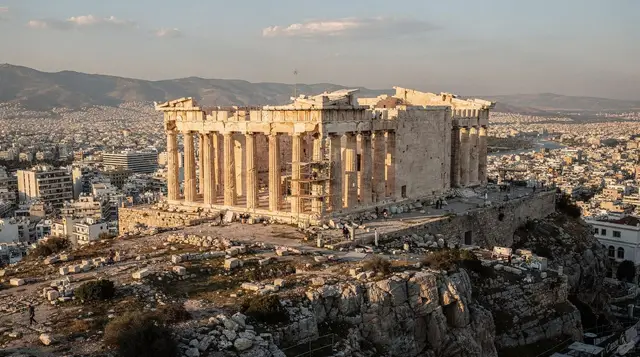
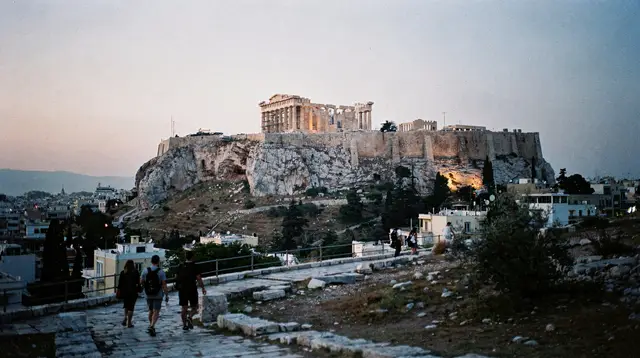
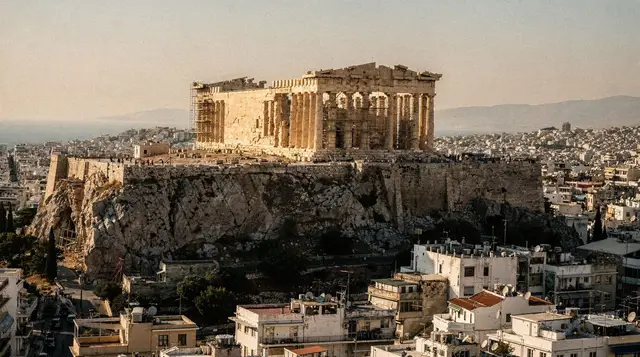
The Acropolis I saw from below more than I explored above. I rushed the Acropolis itself — an hour on site, barely enough to walk the perimeter — and skipped the museum entirely because I was tired. I didn’t take any of the city’s guided walking options, which meant I arrived at sites without context and left with facts but not understanding.
The return: what I did differently
I stayed in Koukaki — the neighbourhood south of the Acropolis hill. Quieter, more residential, excellent coffee shops, an easy walk up to the monument from the south. The perspective of the city changes when you’re sleeping somewhere that has a Tuesday-morning vegetable market and a dry cleaner and a neighbourhood bar with regulars.
I ate lunch. Properly, with time. The midday meal in Athens is the main event, and my first trip I kept eating at tourist restaurants in the evenings when the best kitchens had already given their best performance hours earlier. The psistaria (grilled meat restaurants) that fill at 2 p.m. with Athenians who have spent the morning working have a completely different energy and quality from the evening tourist restaurants.
I went back to the Acropolis for three hours and spent a good thirty minutes just sitting on the ground near the eastern end of the Parthenon, reading the history of what I was looking at. Nothing replaces the experience of understanding what you’re seeing while you’re seeing it.
The neighbourhood that changed everything
Exarchia on my return visit became my anchor. People attach warnings to this neighbourhood — the anarchist graffiti, the political murals, the reputation for tension — but in practice it is simply a dense, living, intellectually active neighbourhood full of bookshops, independent cafés, music venues and people who are genuinely pleased to have visitors who aren’t just passing through to take a selfie.
The food in Exarchia is cheap and honest. The cafés do not charge tourist premiums. The bar scene runs late and loud and local. I spent an evening at a mezedopoleio on Kallidromiou Street with a group of people I’d met that afternoon at the Sunday flea market on the same street, eating small plates and drinking wine until well past midnight, and this was the evening that unlocked Athens for me.
Nobody had brought me to Exarchia on my first trip because I hadn’t asked. I hadn’t asked because I hadn’t known to ask. This is the circular problem of first visits — you don’t know what you’re missing because you don’t know it exists.
What Athens rewards
Athens rewards return visitors specifically because it is layered in a way that requires multiple exposures. The ancient layer — the Acropolis, the Agora, the Temple of Hephaestus — is the one that visitors arrive expecting. But the Byzantine layer (over fifty churches in the city centre alone), the Ottoman layer (the street plan of much of Monastiraki and Psyrri follows Ottoman-era routes), the Neoclassical layer (the University triangle and the elegant 19th-century buildings), and the contemporary layer (the street art, the coffee culture, the neighbourhoods gentrifying and the ones holding out against it) — each of these requires time and intention to see.
A three-day first visit gives you the ancient layer. Five days starts to give you the Byzantine and the food. A week or more begins to give you the contemporary city.
| Time in Athens | What you realistically see |
|---|---|
| 3 days | The Acropolis, the main museums, Plaka — the ancient layer |
| 5 days | The above, plus proper lunches, one or two residential neighbourhoods, some Byzantine churches |
| 7+ days | All of the above, plus Exarchia or Koukaki as a base, day trips, and the contemporary city |
If you only have three days, the Athens in 3 days itinerary is built around exactly this reality — it doesn’t pretend you’ll get the full layered experience, and it prioritises accordingly. If you can stretch to five, look at the Athens in 5 days with day trips itinerary instead.
The Athens highlights walking tour is the thing I wish I’d done on day two of my first visit — it covers the layers in a way that builds context and makes everything you see subsequently more legible. For the specific evening experience, the Plaka evening dinner gives you the neighbourhood’s history over food in a way that sits completely differently when you’ve already spent a day getting lost in its streets.
What I tell people now
I tell people to stay a full week if they can. I tell them to book accommodation in a residential neighbourhood rather than the tourist centre. I tell them to read something about the city before they go — a history, even a summary — because the density of what Athens is layered over repays context in a way that few other cities do.
And I tell them, if they’ve been once and thought it was fine, to go back.
The city Athens actually is takes time to find. But it’s there, unmistakably, in a Koukaki café on a Tuesday morning, or a late night in Exarchia, or a slow afternoon walk through Thissio while the light changes on the hill above. For a framework that helps you find it, where to stay in Athens and the first-timers’ weekend itinerary are genuinely useful starting points.
If you’re planning your first trip, not your second
Not everyone has the luxury of a return visit built into their plans, so the honest shortcut is this: front-load the choices that made my second trip better rather than waiting a year to discover them. Book a residential neighbourhood like Koukaki over the tourist-centre hotels near Monastiraki. Build in at least one long lunch instead of stacking sightseeing through the middle of the day. And give yourself permission to skip a site rather than rush it — an unhurried hour at the Acropolis beats a frantic two. The where to stay in Athens guide covers the neighbourhood trade-offs in more depth than I can here, and it’s the single decision that reshaped my second trip the most.
Athens doesn’t give itself up easily. That turns out to be exactly the point.
Frequently asked questions about Why I went back to Athens — the city that earns a second look
Is Athens worth more than a long weekend? For most travellers, yes — three days covers the essential ancient sites, but the neighbourhoods, the food culture and the Byzantine layer genuinely need more time to register. If a weekend is all you have, the Athens first-timers’ weekend itinerary is built for exactly that constraint and prioritises accordingly.
Which neighbourhood should a first-time visitor actually stay in? Koukaki is the best general-purpose choice: residential enough to feel like the real city, but a short, flat walk from the Acropolis and central sites. Monastiraki is more convenient for sightseeing logistics but puts you in the most touristed square kilometre of the city for every meal and evening.
Popular Athens tours on GetYourGuide
Verified deep-linked GetYourGuide tours. Book through these links and we earn a small commission at no cost to you.
GetYourGuide does not provide product photos: on its activity cards, the picture illustrates the type of experience and is not the operator's own photo.