Athens in 1 day: the perfect first-timer express itinerary
How this itinerary works
One day in Athens sounds impossibly short — and yet the city rewards a well-planned sprint. The secret is to start at the Acropolis before the crowds arrive, then let the rest of the day unfold at ground level through Plaka and Monastiraki. You will cover roughly 6 km on foot, all flat or gently sloping, and you will see the essential ancient and modern faces of Athens in a single long day. Pre-booking your Acropolis ticket is non-negotiable — the queues at the gate can swallow an hour you simply do not have.
| Where | Acropolis, Plaka, Monastiraki, Syntagma — all central, walkable |
| Time needed | A full day, roughly 07:00–21:00 |
| Cost | Around €60–90pp for entries, meals and a coffee stop |
| Getting around | Entirely on foot, about 6km, flat to gently sloping |
| Book ahead | Acropolis ticket, 24–48hrs minimum, especially May–September |
| Time | Stop | Duration |
|---|---|---|
| 07:00–09:30 | Acropolis | 90 min |
| 09:30–11:00 | Acropolis Museum | 60–75 min |
| 12:00–14:00 | Plaka lunch and lanes | 2 hrs |
| 14:00–17:30 | Anafiotika, Monastiraki, Ancient Agora | 3.5 hrs |
| 17:30–21:00 | Syntagma, sundowner, Psyrri dinner | 3.5 hrs |
Day 1: Athens from dawn to rooftop
Morning — Acropolis before the heat (07:00–12:00)
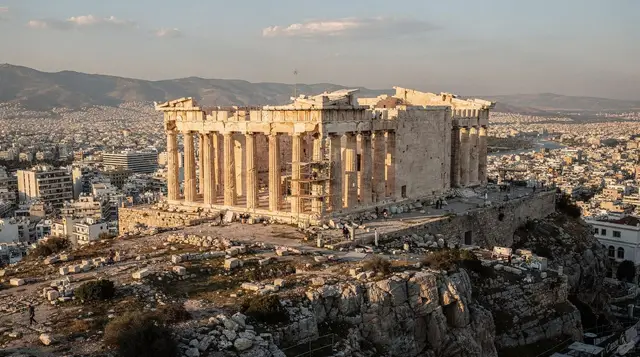
Arrive at the Beulé Gate on the south-west slope of the Acropolis hill by 07:00. In summer this is already warm; in spring and autumn it is golden and cool. The site opens at 08:00 (check seasonal hours), but arriving early means you walk the Propylaea ramp as the marble catches the first light, and the Parthenon stands against a clear blue sky with almost no other visitors in frame.
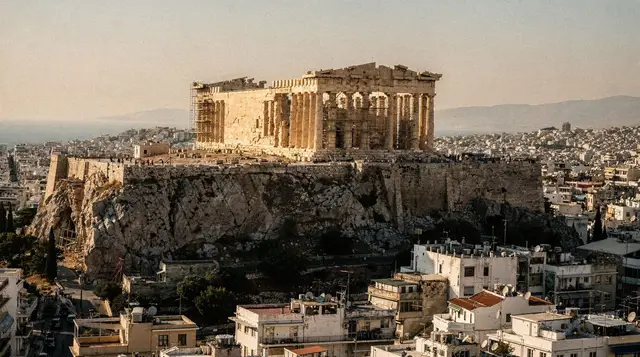
Allow 90 minutes on the hill itself. The Parthenon, Erechtheion, Temple of Athena Nike, and the panoramic view south toward the sea are all within a compact circuit. Wear closed shoes with grip — the ancient limestone is polished and treacherous for sandals. Bring at least 1.5 litres of water; there is a kiosk near the exit but it sells at tourist prices.
Pre-book your entry:
Skip the queue with a pre-booked Acropolis ticketIf you prefer commentary with your climb, a skip-the-line guided tour keeps the history vivid without the need to squint at information boards:
Acropolis guided tour with skip-the-line accessBy 09:30 descend via the south slope, passing the Theatre of Dionysus and the Odeon of Herodes Atticus. From here it is a five-minute walk east to the Acropolis Museum.
Spend 60–75 minutes in the museum (entry €20). The ground floor displays finds from the Acropolis slopes; the second floor shows the Archaic sculptures in a haunting procession; the top floor’s glass gallery holds the surviving Parthenon frieze sections, with the gaps where the Elgin Marbles once sat left deliberately visible. The café terrace on the second floor has a direct sightline to the Parthenon — a good spot for a coffee break before the next leg.
For the museum section alone with a knowledgeable guide, see the Acropolis Museum guide.
Late morning — Plaka lanes and a proper Greek lunch (12:00–14:00)
Walk five minutes north from the museum into Plaka, Athens’s oldest residential neighbourhood. Avoid the souvenir-heavy main drag on Adrianou Street and instead duck into the quieter parallel lanes: Mnisikleous, Thespidos, and Erotokritou. These streets are lined with neo-classical townhouses, bougainvillea, and the odd cat asleep on a doorstep.
For lunch, aim for a taverna on a side street rather than the main tourist axis. Budget €14–18 per person for a two-course meal: start with tzatziki and grilled pita, then order a main of grilled sea bass or moussaka. Local house wine is roughly €5 per carafe. Ask for the daily specials board — it will always be cheaper and fresher than the printed menu.
Afternoon — Monastiraki and the Ancient Agora (14:00–17:30)
Walk ten minutes north-west through Anafiotika — the Cycladic-style white cube houses tucked into the Acropolis rock, built in the 19th century by craftsmen from Anafi island — and descend into Monastiraki.
The Monastiraki flea market sprawls across Pandrossou Street and Ifestou Street and is liveliest on Sunday mornings, but on any day you will find olive-wood kitchenware, vintage film cameras, backgammon sets, and bootleg football shirts. Prices are negotiable after 16:00 when stallholders want to clear stock.
Directly adjacent is the Ancient Agora (entry €20), the commercial and civic heart of classical Athens. The reconstructed Stoa of Attalos houses an excellent small museum. The Temple of Hephaestus, visible from the Agora path, is one of the best-preserved temples in the Greek world and dramatically undervisited compared to its neighbour on the hill above. Allow 45 minutes.
If you have limited time and want a structured walking experience that links the Acropolis area with Plaka and Monastiraki, the Athens Plaka & Monastiraki walking tour covers the ground efficiently:
Plaka & Monastiraki walking tour with local guideEvening — Syntagma, rooftop sundowner, and a final meander (17:30–21:00)
Walk 15 minutes east to Syntagma Square. At 17:45 on the hour there is a changing of the guard at the Tomb of the Unknown Soldier, performed by the Evzones in their traditional kilts and pom-pom shoes — two minutes of perfectly choreographed formality that every visitor watches at least once.
From Syntagma, head up Ermou Street (pedestrianised) for an evening stroll. The street transitions from international chains near Syntagma to local shoe shops and bakeries as you approach Monastiraki again.
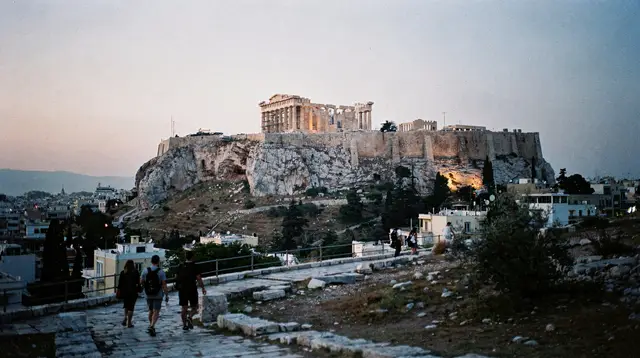
For a sundowner with the best possible view, choose one of the rooftop bars along Mitropoleos or Adrianou Street with a direct Acropolis sightline. The Acropolis is floodlit after dark, and the contrast of white marble against the indigo sky is the image you will take home. A cocktail runs €12–16; the view is free.
Dinner: return to a taverna in Psyrri or Monastiraki for mezze. Ordering four or five small plates between two people — grilled octopus, saganaki (fried cheese), dakos (Cretan barley rusk), stuffed vine leaves, and a Greek salad — costs €30–40 for two including a carafe of local wine.
What to pack for a one-day sprint
Travel light but not underprepared: closed-toe shoes with grip (the Acropolis marble is polished smooth and genuinely dangerous in flip-flops or dress shoes), at least 1.5 litres of water, sunscreen and a hat for the exposed hilltop, and a light layer for the evening if you are visiting outside summer. A small day bag is fine — none of the day’s sites have significant security queues beyond the Acropolis gate itself. See our full Athens packing list for a broader checklist if you are also planning further days, and Visiting Athens in summer heat: how to handle it if your one day falls in July or August.
If you arrive by cruise ship instead
This itinerary assumes you are sleeping in Athens the night before and after. If you are instead ashore for the day from a cruise ship at Piraeus, the transfer time to and from the port changes your available window significantly — see our dedicated Athens from the cruise port itinerary, which builds in the Piraeus transfer and a stricter return buffer.
Frequently asked questions about Athens in 1 day
Is one day really enough to see Athens? Enough to see the essentials, not enough to see everything. This plan covers the Acropolis, its museum, Plaka, Monastiraki, and the Ancient Agora — the core of what makes Athens Athens. It leaves out the National Archaeological Museum, Lycabettus Hill, and any day trip, all of which are worth a return visit. See How many days in Athens do you actually need? for how one day compares with longer stays.
What is the single most important booking for a one-day visit? The Acropolis ticket, without question. Everything else in this itinerary (lunch, the flea market, an evening drink) has no queue and no booking window — but Acropolis walk-up queues in peak season can consume an hour you cannot spare on a single day.
Practical tips
Acropolis tickets: Book online 24–48 hours ahead, especially May–September. The Acropolis ticket costs €30 (€15 reduced) and each other site, such as the Ancient Agora, is booked separately on the official Hellenic Heritage ticketing portal. See the full breakdown in our Acropolis tickets.
Heat: In July and August the Acropolis hill reaches 38°C by 11:00. The 07:00–09:30 window is essential in summer. Bring a hat, sunscreen (SPF 50+), and more water than you think you need.
Shoes: Marble is slippery. Trainers or walking sandals with grip are essential; flip-flops are a hazard.
Transport: Athens has an excellent metro. A single ticket costs €1.20 (or €4.10 for a 24-hour pass). The Acropolis metro station (Line 2, red) drops you five minutes from the Beulé Gate.
How many days? One day is a sprint. If you can extend, even a second day transforms the experience — see our Athens in 2 days itinerary for what you would add. For a fuller picture of how to pace Athens, read How many days in Athens do you actually need?.
Best time to visit: Spring (April–May) and autumn (September–October) offer ideal temperatures and manageable crowds. Read our full Best time to visit Athens guide before you book.
Popular Athens tours on GetYourGuide
Verified deep-linked GetYourGuide tours. Book through these links and we earn a small commission at no cost to you.
GetYourGuide does not provide product photos: on its activity cards, the picture illustrates the type of experience and is not the operator's own photo.